
Best Fence for Dogs in Loves Park, IL: Safe Yard Planning for Cold Weather
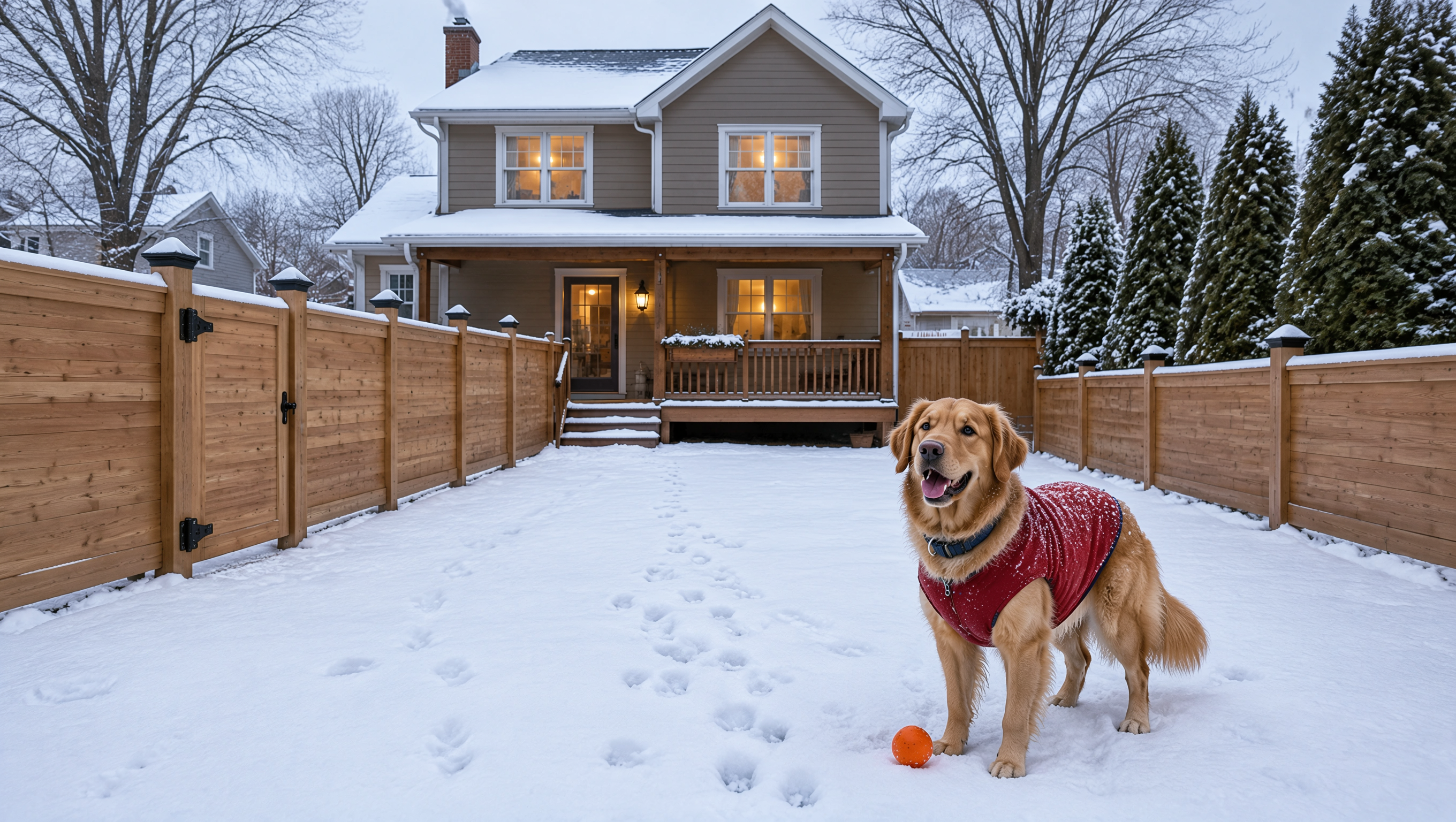
The best dog fence for a Loves Park yard should stay secure even when snow, frozen ground, wind, and changing temperatures affect the property. Wood, vinyl, chain link, and aluminum can all work for pets, but winter planning should focus heavily on gate access, bottom gaps, drainage, snow buildup, visibility, and your dog’s jumping or digging habits.
Think Beyond Summer Pet Containment
A fence that works perfectly during warmer months can behave differently once winter arrives.
Cold-weather conditions may introduce new concerns such as:
Snow covering ground gaps
Gates dragging or freezing in place
Soil movement around posts
Snowbanks reducing effective fence height
Hidden digging areas
Ice around walkways and entrances
Before choosing a fence, think about how your dog will use the yard from November through early spring, not only during summer.
Match the Fence to Your Dog’s Behavior
There is no single fence material that is best for every dog.
Start with your pet.
Consider whether your dog tends to:
Jump
Dig
Climb
Chase wildlife
React to neighboring dogs
Rush gates
Patrol the fence line
These behaviors can be more important than the dog’s size alone.
A calm dog may do well with an open fence, while a reactive or highly athletic dog may need more privacy and careful height planning.
Solid Wood Can Reduce Winter Distractions
A wood privacy fence can work well for dogs that become excited by movement outside the yard.
Solid boards can reduce views of:
Other dogs
Pedestrians
Wildlife
Passing vehicles
This may be especially helpful in winter when bare trees and less landscaping leave surrounding activity more visible.
Wood can also be adapted around uneven yards and different property layouts.
Homeowners should still inspect boards, rails, posts, and gates regularly because winter moisture and seasonal weather can expose weak areas.
Board-on-Board Can Improve Screening
Board-on-board wood fencing uses overlapping boards that reduce direct sightlines.
This can be useful for dogs that react strongly to neighboring activity.
Because wood naturally expands and contracts, the overlapping design can maintain more consistent screening than simple boards with narrow gaps between them.
The tradeoff is that wood requires more routine maintenance than vinyl, aluminum, or chain link.
Vinyl Offers Consistent Privacy
Full-privacy vinyl is another strong option for dogs that benefit from less outside visibility.
It offers:
Solid visual screening
Smooth surfaces
No routine staining or sealing
Relatively simple cleaning
Vinyl can work well along busy side yards or neighboring properties.
However, very cold weather can make vinyl less flexible, so hard impacts from snow shovels, snowblowers, or equipment should be avoided.
Chain Link Can Work for Dogs That Like Open Views
Chain link may be a practical choice when privacy is not necessary.
It works well for:
Larger yards
Long fence runs
Active dogs
Open visibility
Because air moves through the mesh, chain link catches less wind than solid privacy fencing.
For dogs that become reactive when they see people, animals, or traffic, however, the openness may be a disadvantage.
Aluminum Can Work for Calm Dogs
Aluminum can provide a clean, open boundary with relatively straightforward maintenance.
Before choosing it for a dog yard, review:
Picket spacing
Fence height
Bottom clearance
Dog size
Smaller dogs may need narrower spacing.
Dogs that react strongly to outside movement may also benefit more from a solid fence.
Watch the Bottom of the Fence Before Snow Arrives
One of the most important fall checks is the lower fence line.
Look for gaps caused by:
Erosion
Slopes
Soil settlement
Digging
Post movement
Snow can hide these openings later.
A gap that disappears under snow is still an escape point once your dog starts investigating it.
Check especially around corners, gates, and low areas.
Snowbanks Can Reduce Effective Fence Height
Heavy snow piled beside a fence can create an unexpected problem for dogs that jump or climb.
A snowbank may effectively give the dog a higher starting point.
Avoid creating large piles directly beside the fence, particularly in areas where your dog frequently runs or watches outside activity.
Snow storage should be part of winter pet-safety planning.
Keep the Main Pet Gate Easy to Reach
The gate used for everyday pet access should remain practical during snow season.
Before winter, consider where snow is normally:
Shoveled
Blown
Piled
Avoid putting the primary pet gate in a spot that repeatedly becomes blocked.
Even a secure gate becomes inconvenient if you need to dig it out every time the dog goes outside.
Check Gate Clearance
A gate that barely clears the ground in fall may start dragging once snow, ice, or frozen debris accumulates.
Open and close the gate several times before winter.
Check whether it:
Drags
Sags
Misses the latch
Rubs against a post
Has uneven gaps
Repair alignment problems before cold weather makes them harder to address.
Use a Secure Latch
Pet gates should close reliably without needing to be lifted, pulled, or forced.
Check the latch for:
Loose hardware
Misalignment
Wear
Weak mounting points
Dogs that jump or push against gates may need additional attention to latch placement and security.
The latch should remain practical for homeowners while being difficult for the dog to accidentally open.
Inspect Both Gate Posts
Gate problems are often blamed on hinges or latches when the real issue is post movement.
Check both the hinge and latch posts for:
Leaning
Base movement
Erosion
Rot on wood posts
Soil gaps
If either post shifts, the gate opening can change.
Repeated latch adjustments may not solve a structural post problem.
Consider a Two-Gate Entry for Door Dashers
Dogs that rush through openings may benefit from a small transition area with two barriers.
This can provide extra control near:
Driveways
Side-yard entrances
Frequently used gates
A second barrier can be especially useful when visitors, deliveries, or snow removal require frequent gate use.
Watch Drainage Around Pet Areas
Water can affect both fence stability and pet security.
After rain or snowmelt, inspect for:
Standing water
Soft soil
Washout
Erosion
Downspout runoff
Erosion can create gaps under the fence, while saturated soil can contribute to post movement.
If the same area repeatedly develops openings, drainage may need attention rather than simply filling the gap.
Slopes Need Extra Planning
Uneven ground can create larger openings underneath the fence.
Pay particular attention where the fence:
Changes elevation
Meets a gate
Crosses a slope
Turns a corner
Depending on the fence system, sections may need to be stepped or installed to follow the grade more closely.
For smaller dogs, even a modest gap can matter.
Keep Climbing Aids Away From the Fence
Winter storage can accidentally create escape opportunities.
Avoid placing items such as:
Firewood
Outdoor furniture
Storage bins
Snow piles
directly beside the fence if your dog is a jumper or climber.
These objects can provide extra height or leverage.
Plan for Winter Wind
Solid wood and vinyl privacy fences catch more wind than open chain link or aluminum.
For exposed Loves Park yards, pay extra attention to:
Long privacy runs
Corners
End posts
Gate posts
If a privacy section already moves noticeably in fall wind, it should be inspected before winter.
Stable posts are essential for both fence durability and pet containment.
Create a Safe Winter Routine
The fence is only one part of cold-weather yard safety.
Before letting your dog out, periodically check:
Gate operation
Snow accumulation
New ground gaps
Fallen branches
Damaged panels
Winter weather can change the yard quickly.
A brief visual check can help catch problems before your dog does.
Which Fence Is Best for Your Dog?
Choose wood or full-privacy vinyl if reducing outside visual distractions is important.
Choose chain link if your dog does well with open visibility and you need practical containment.
Choose aluminum if you want an open, decorative boundary and your dog’s size and behavior fit the spacing.
The best choice is the one that works with your dog, yard, gates, drainage, and winter conditions together.
Request a Free Dog Fence Estimate
Arrow Fence helps Loves Park homeowners plan pet-friendly fencing around privacy, gates, ground gaps, slopes, drainage, and winter access.
Whether you are considering wood, vinyl, chain link, aluminum, mixed materials, repair, or a new installation, Arrow Fence can help you review practical options for your yard and your dog.
Contact Arrow Fence at arrowfencerockford.com to request a free estimate for your fence project.
