
Best Fence for Dogs in Roscoe, IL: Safe Yard Planning for Cold Weather
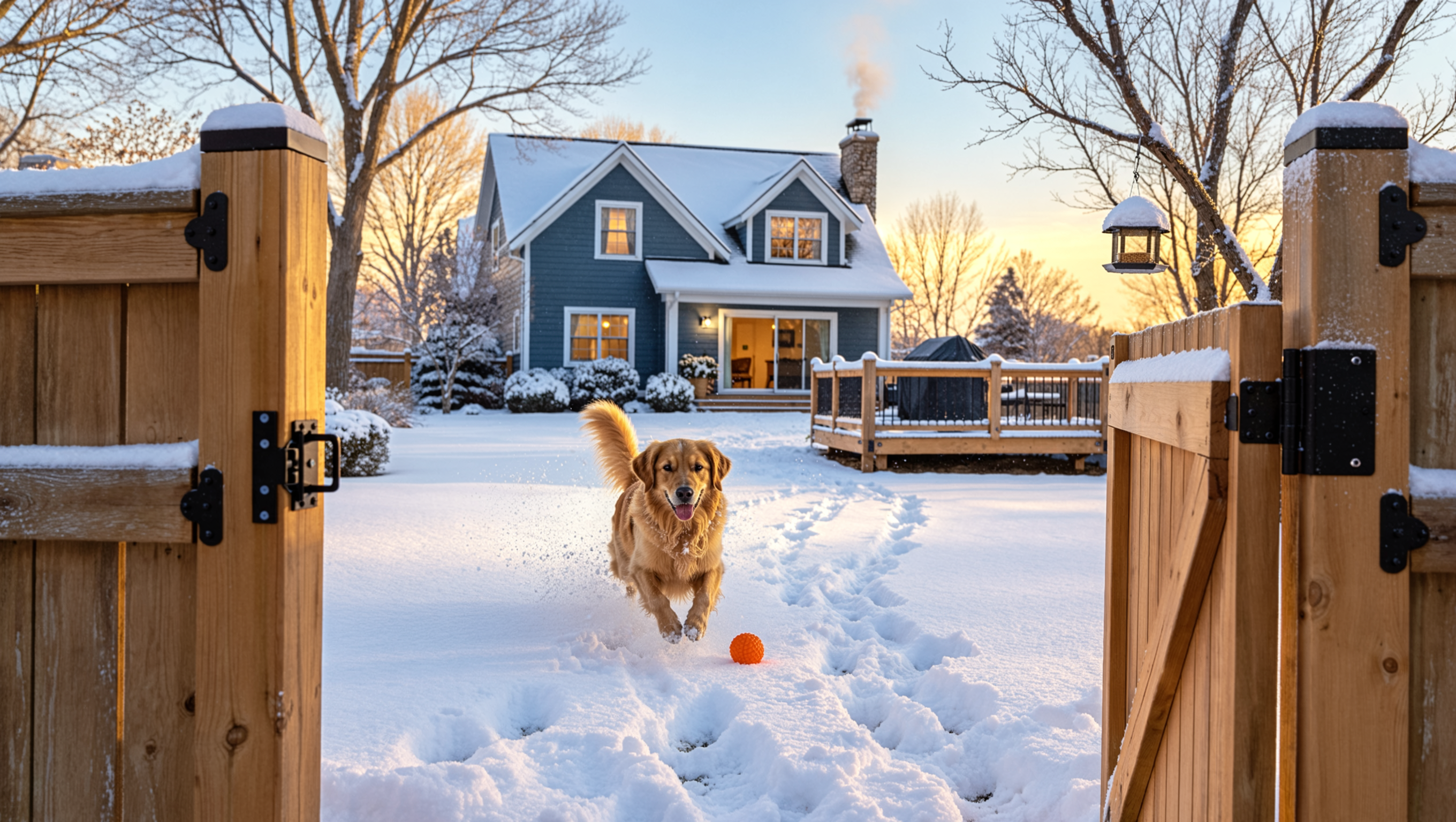
A good dog fence in Roscoe should match your pet’s size, behavior, and daily routine while also accounting for winter conditions. Wood, vinyl, chain link, and aluminum can all work, but cold-weather planning should focus on secure gates, bottom gaps, snow buildup, drainage, visibility, and areas where frozen or shifting ground may affect the fence.
Start With Your Dog, Not the Material
Before choosing a fence, think about how your dog behaves outside.
Some dogs stay close to the house. Others patrol the property line, dig near corners, react to passing animals, or jump when excited.
Consider whether your dog tends to:
Dig
Jump
Climb
Chase wildlife
Bark at neighboring activity
Push against gates
The fence should be selected around those habits rather than appearance alone.
Decide How Much Visibility Your Dog Should Have
Some dogs are calmer when they cannot see everything happening beyond the yard.
Others enjoy open views without becoming overstimulated.
That makes visibility an important design decision.
For reactive dogs, solid fencing may help reduce visual triggers such as:
Other dogs
Pedestrians
Vehicles
Wildlife
For calmer dogs, an open style may provide enough containment without making the yard feel closed in.
Wood Can Provide Strong Visual Screening
Wood privacy fencing is often a good fit for dogs that benefit from reduced outside activity.
Solid vertical or board-on-board styles can provide substantial screening.
Wood also works well for properties with:
Patios
Neighboring yards
Uneven layouts
Targeted privacy areas
The tradeoff is maintenance. Posts, rails, boards, and gates should be inspected regularly, especially before winter.
Vinyl Can Offer Privacy With Less Surface Upkeep
Full-privacy vinyl is another option for dogs that react to outside movement.
It provides a smooth surface and consistent screening without regular staining or sealing.
Vinyl can work well around:
Side yards
Backyard play areas
Neighbor-facing boundaries
In very cold weather, vinyl can become less flexible, so avoid hard impacts from snow-removal tools or equipment.
Chain Link Works Well for Open, Practical Containment
Chain link can be a strong choice for dogs that do not need visual privacy.
It is often useful for:
Larger yards
Long property lines
Active dogs
Open backyard layouts
Because air moves through the mesh, chain link also catches less wind than solid privacy fencing.
However, dogs that become highly reactive to outside activity may do better with a more screened design.
Aluminum Can Work for the Right Dog
Aluminum fencing provides an open, decorative boundary.
It may be a good fit for calmer dogs when the spacing, height, and bottom clearance are appropriate.
Before choosing aluminum, review:
Picket spacing
Dog size
Ground gaps
Jumping behavior
Small dogs may need narrower openings, while dogs that react strongly to outside movement may need more privacy.
Pay Attention to the Bottom Edge
The lower part of the fence is one of the most important areas for pet security.
Walk the full perimeter and look for gaps caused by:
Erosion
Digging
Slopes
Soil settlement
Post movement
A gap that seems minor to a homeowner may be large enough for a determined dog.
Check these areas before snow covers them.
Watch for Digging Near Corners and Gates
Dogs often focus digging in predictable places.
Corners and gates are common because they offer:
Outside smells
Visible activity
Frequent movement
If your dog is a digger, monitor these areas closely.
A barrier or other site-specific solution may be needed depending on the soil and fence type.
Snow Can Change Effective Fence Height
Accumulated snow can create an unexpected climbing or jumping advantage.
If snow is piled directly against the fence, a dog may gain several extra inches of height.
Avoid storing large snow piles next to sections where the dog is likely to jump or climb.
This matters most near:
Gates
Corners
Neighbor-facing sides
Snow placement should be part of winter yard planning.
Keep the Main Gate Reliable
For most dog owners, the gate is used more often than any other part of the fence.
Before winter, make sure it:
Opens smoothly
Closes fully
Latches securely
Does not drag
Has no oversized gaps
A gate that needs to be pushed or lifted into place is already showing a problem.
Cold weather can make that issue more inconvenient.
Check Gate Posts, Not Just the Latch
If a latch stops lining up, do not immediately assume the latch itself is the problem.
Inspect both gate posts.
Look for:
Leaning
Soil movement
Rot on wood posts
Erosion
Loose hardware
A shifting hinge or latch post can change the entire gate opening.
Correcting the support problem is usually more effective than repeatedly moving the latch.
Plan Gate Location Around Winter Use
Think about how the yard is accessed during snow season.
Where does snow usually get:
Shoveled
Blown
Piled
The main pet gate should not sit in the most inconvenient snow-storage area.
A practical winter route can make daily dog care much easier.
Consider a Separate Equipment Gate
If you need backyard access for a mower, trailer, or landscaping equipment, a separate wider gate may be useful.
This can keep the daily pet entrance smaller and easier to manage.
Wide gates need stronger support, so they should be planned carefully rather than added later.
Slopes Can Create Pet Escape Points
A fence crossing uneven ground may leave larger bottom gaps.
Pay special attention where the fence:
Goes downhill
Crosses a grade change
Meets a gate
Turns a corner
Depending on the system, sections may need to be stepped or installed to follow the terrain more closely.
For small dogs, even moderate openings may matter.
Drainage Can Affect Fence Security
Water movement can gradually create problems around the fence line.
Check for:
Standing water
Erosion
Soft soil
Washout
Downspout discharge
Poor drainage can create openings underneath the fence or contribute to post movement.
If the same area repeatedly develops gaps, correcting the water issue may be more effective than filling the opening again.
Cold Weather Can Expose Weak Posts
Winter conditions can make an already unstable post more noticeable.
Moist soil can freeze, thaw, and settle over time.
Inspect posts before winter if you notice:
Leaning
Wobbling
Gaps around the base
A secure pet fence depends on stable support throughout the perimeter.
Avoid Leaving Climbing Aids Near the Fence
Outdoor storage can create escape opportunities.
Keep items such as:
Firewood
Storage bins
Patio furniture
Large planters
Snow piles
away from the fence if your dog is a jumper or climber.
A secure fence can become less effective if the dog has something nearby to use as a step.
Trim Vegetation Along the Fence Line
Dense plants can hide:
Ground gaps
Digging
Damaged boards
Loose hardware
Trim shrubs, vines, and tall grass enough to inspect the lower edge.
This is especially useful before winter when leaves and snow can make the fence harder to see.
Check for Winter Debris Hazards
Strong wind, snow, and ice can bring branches down.
Inspect nearby trees and remove obvious hazards that could damage:
Panels
Rails
Gates
Posts
A fallen limb can create an opening before you notice it.
This is especially important for dogs that are left outside briefly without constant supervision.
Consider a Two-Gate Setup for Escape-Prone Dogs
Some dogs rush openings as soon as a gate moves.
A small transition area with two barriers can provide extra control near:
Driveways
Side entrances
Frequently used gates
This setup can be especially helpful when deliveries, visitors, or snow removal create more gate traffic.
Choose Height Based on the Dog
Fence height should reflect the dog’s behavior, not just its breed or current size.
Consider whether your dog:
Jumps when excited
Climbs
Uses nearby objects for leverage
A fence that works for a calm dog may not work for an athletic or persistent jumper.
Applicable local requirements should also be reviewed when selecting height and placement.
Mixed Materials Can Solve Different Problems
One fence material does not have to handle the entire yard.
A Roscoe property might use:
Solid vinyl near a busy neighboring side
Chain link along a less active rear boundary
Aluminum near landscaping
Wood around a patio
This can create privacy where needed while preserving airflow and visibility elsewhere.
Inspect the Yard After the First Snow
Even after the fence has been prepared, winter can change conditions.
After early snow events, check:
Gate operation
Snow buildup
New gaps
Fallen branches
Fence movement
A quick perimeter check can catch changes before they turn into a larger containment problem.
Request a Free Dog Fence Estimate
Arrow Fence helps Roscoe homeowners plan dog-friendly fencing around privacy, gate security, ground gaps, slopes, drainage, winter access, and everyday yard use.
Whether you are considering wood, vinyl, chain link, aluminum, mixed materials, repair, or a new installation, Arrow Fence can help you review practical options for your property and your dog.
Contact Arrow Fence at arrowfencerockford.com to request a free estimate for your fence project.
