
Best Fence for Dogs in Rockford, IL: Safe Backyard Options for Fall
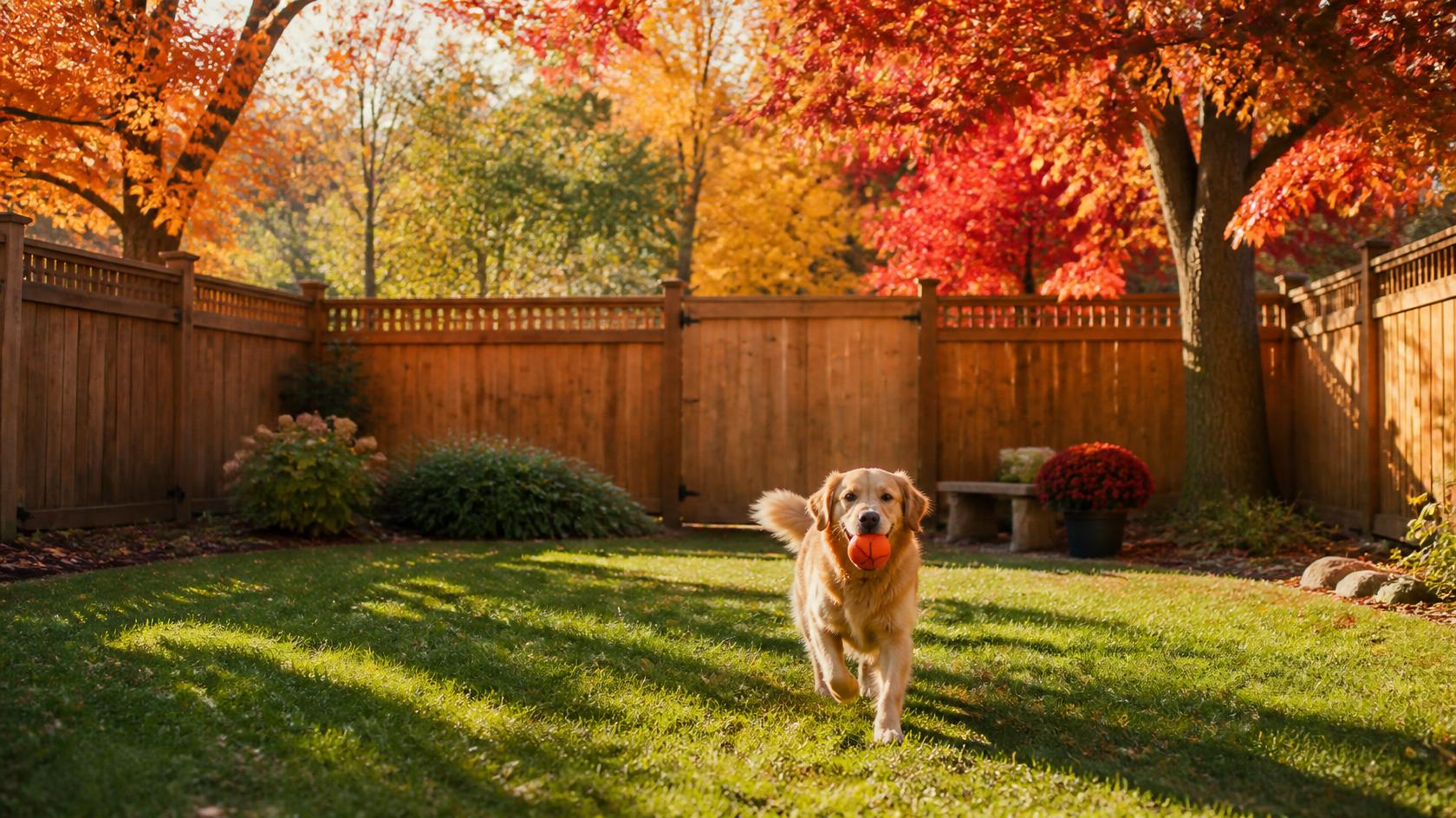
The best fence for dogs in Rockford depends on the dog’s size, behavior, jumping ability, digging habits, and need for visual privacy. Wood, vinyl, chain link, and aluminum can all work, but fall is a good time to check gates, ground gaps, drainage, leaves, and weak sections before colder weather arrives.
Start With Your Dog, Not Just the Fence Material
Choosing a dog-friendly fence starts with understanding how your pet behaves outdoors.
A fence that works for a calm small dog may not work for a larger dog that jumps, digs, or reacts to movement outside the yard.
Before choosing a fence, think about whether your dog:
Jumps
Climbs
Digs
Chases wildlife
Reacts to pedestrians
Watches neighboring dogs
Pushes against gates
Tries to squeeze through openings
Rockford homeowners should also consider yard size, privacy, maintenance, and how the fence will perform through fall and winter.
Solid Wood for Dogs That Need Privacy
Solid wood fencing can work especially well for dogs that become distracted by outside activity.
Closely spaced boards help block views of:
Other dogs
Wildlife
Pedestrians
Vehicles
Neighboring yards
Sidewalk activity
Reducing those sightlines may help create a calmer backyard environment for some pets.
Wood also offers a traditional appearance that works naturally with decks, patios, landscaping, and mature trees.
The main consideration is maintenance. Before winter, homeowners should check for loose boards, cracks, splinters, rot, and weak rails.
Board-on-Board Wood for Better Screening
Board-on-board fencing uses overlapping boards to reduce visible gaps.
That can be helpful for dogs that notice even small openings between standard vertical boards.
This style works well along:
Shared property lines
Road-facing boundaries
Pet areas
Side yards
Outdoor living spaces
Because wood expands and contracts with changes in moisture and temperature, the overlapping design can help maintain stronger visual coverage over time.
Vinyl Privacy Fencing
Full-privacy vinyl is another strong option for dogs that need a solid visual barrier.
It provides consistent screening and does not require routine staining or painting.
Vinyl can be especially useful for homeowners who want:
Backyard privacy
Fewer visual distractions for pets
A smooth fence surface
Lower routine maintenance
Its solid panels also have few obvious footholds for dogs that try to climb.
Vinyl still needs inspection, particularly around posts, gates, rails, and panel connections.
Chain Link for Practical Dog Containment
Chain link is often a practical choice for dogs that do not require visual privacy.
It can work well for:
Large yards
Dog runs
Side-yard enclosures
Longer property boundaries
Its open design allows airflow and visibility.
Black vinyl-coated chain link can also blend more quietly into landscaping than standard galvanized fencing.
The main drawback is that dogs can see everything happening outside the yard.
For dogs that bark or rush the fence when they see people or animals, a solid material may be a better fit.
Add Privacy Only Where the Dog Needs It
Some homeowners do not need solid fencing around the entire yard.
A mixed layout can work well when a dog reacts mainly along one side of the property.
For example, homeowners may use:
Vinyl privacy along a busy sidewalk
Wood near neighboring dogs
Chain link along a quiet rear boundary
Aluminum near landscaping
This can provide visual screening where it matters while keeping other areas more open.
Aluminum for Calm Dogs and Open Views
Aluminum fencing can work well for pets that are calm and unlikely to climb or squeeze through openings.
It provides:
Open views
Decorative appearance
Relatively simple maintenance
Good visibility across the yard
Before choosing aluminum, check:
Picket spacing
Fence height
Ground clearance
Dog size
Small dogs may be able to fit between wider pickets or beneath sections where the ground changes elevation.
Choose the Right Fence Height
Fence height should match the dog rather than follow a one-size-fits-all rule.
Consider:
Breed size
Jumping ability
Athletic behavior
Whether the dog stands against the fence
Whether nearby activity encourages jumping
A taller fence may be appropriate for large or energetic dogs.
Homeowners should also avoid placing climbable objects close to the fence.
These may include:
Benches
Storage containers
Firewood
Large planters
Play equipment
Even a well-designed fence may become easier to escape if something nearby provides extra height.
Check for Fall Ground Gaps
Fall is a good time to inspect the bottom of the fence.
Ground gaps often develop near:
Gates
Slopes
Drainage paths
Low spots
Uneven terrain
These openings may become escape points for small dogs.
They can also grow larger through fall rain, winter moisture, and spring snowmelt.
Walk the entire fence line before winter and look for areas where soil has washed away.
Watch for Digging Areas
Some dogs repeatedly return to the same digging locations.
Common spots include:
Fence corners
Gates
Areas near trees
Loose soil
Spots where wildlife passes
Depending on the situation, homeowners may consider:
Buried mesh
Gravel borders
Reinforced lower sections
Landscape edging
It is also important to check whether the opening is actually caused by drainage rather than digging.
Make Gates the Strongest Part of the Fence
A secure yard depends heavily on its gates.
Before fall weather gets worse, check that each gate:
Closes completely
Latches securely
Does not sag
Has stable hinges
Has minimal side gaps
Does not drag on the ground
Gate alignment can change as soil shifts or posts move.
A gate that barely closes in fall may become more difficult to use once snow or frozen ground arrives.
Consider a Double-Gate Entry for Door Dashers
Dogs that rush through open gates may benefit from an extra transition area.
A small double-gate setup can create a second barrier between the dog and:
Driveways
Sidewalks
Front yards
Streets
This can be useful for households where gates are opened frequently for visitors, yard work, or deliveries.
Keep Fall Leaves Away From the Fence
Leaves can create problems when they collect along the fence line.
Wet leaf piles may:
Hide ground gaps
Hold moisture against wood
Cover damaged hardware
Block drainage
Make inspection harder
Clear leaves from posts, gates, and lower fence sections before winter.
This is especially important around wood fencing and low areas where water tends to collect.
Check Drainage Before Winter
Fall rain can reveal drainage problems that may affect pet security.
Look for:
Water flowing beneath the fence
Eroded soil
Exposed footings
Mud near gates
Low areas holding water
Drainage problems can gradually create larger ground gaps.
These areas may become harder to inspect once snow covers the yard.
Trim Branches Near the Fence
Fall is also a good time to look at trees surrounding the dog yard.
Branches hanging directly over the fence may become heavier under snow or ice.
Trim damaged or low branches that could:
Fall onto panels
Bend chain link
Damage gates
Create a climbing opportunity
Keeping vegetation away from the fence also makes inspections easier.
Prepare Wood Fencing for Colder Weather
Wood fencing should be checked for:
Loose boards
Rot
Cracks
Weak rails
Worn finish
Post movement
Do not leave wet leaves or mulch piled against the bottom of the boards.
If protective finishing is needed, follow the product’s temperature and weather requirements rather than applying it in unsuitable conditions.
Prepare Vinyl for Cold Conditions
Vinyl requires less routine surface care, but cold-weather inspection still matters.
Check for:
Cracked panels
Loose rails
Gate movement
Weak hardware
Post shifting
Vinyl can become less flexible in severe cold, so avoid impacts from shovels, vehicles, or snow-removal equipment when panels are frozen.
Inspect Chain Link Before Snow Arrives
Chain link dog fencing should be checked for:
Bent mesh
Loose ties
Weak tension
Damaged rails
Gate problems
Gaps along the bottom
Small openings may be harder to see once leaves and snow begin covering the ground.
Repairing them in fall can make the yard more secure through winter.
Compare the Best Dog Fence Options
Wood
Best for dogs that need privacy and strong visual screening.
Vinyl
Best for solid screening with lower routine maintenance.
Chain Link
Best for practical containment, long boundaries, and larger exercise areas.
Aluminum
Best for calm pets where open views and decorative appearance are preferred.
Mixed Materials
Best for yards where dogs need privacy only in certain areas.
Know When a Repair Is Enough
Not every pet fence problem requires replacement.
Repairs may be enough for:
One loose board
Minor chain link damage
Gate adjustment
Broken hardware
Small ground gaps
One unstable section
Replacement may make more sense when:
Multiple posts are failing
Several sections are leaning
Gates repeatedly shift
Damage is widespread
The fence is too short
The current material no longer fits the dog's behavior
A fall inspection can help homeowners make that decision before winter limits access to the yard.
Request a Free Dog Fence Estimate
Arrow Fence helps Rockford homeowners plan safer backyard fencing for dogs, families, privacy, and everyday outdoor use.
Whether you are considering wood, vinyl, chain link, aluminum, fence repair, replacement, or more secure gates, Arrow Fence can help you compare practical options for your property and your pet.
Contact Arrow Fence at arrowfencerockford.com to request a free estimate for your dog-friendly fence project.
