
Best Fence for Kids and Pets in Galena, IL: Backyard Safety Guide
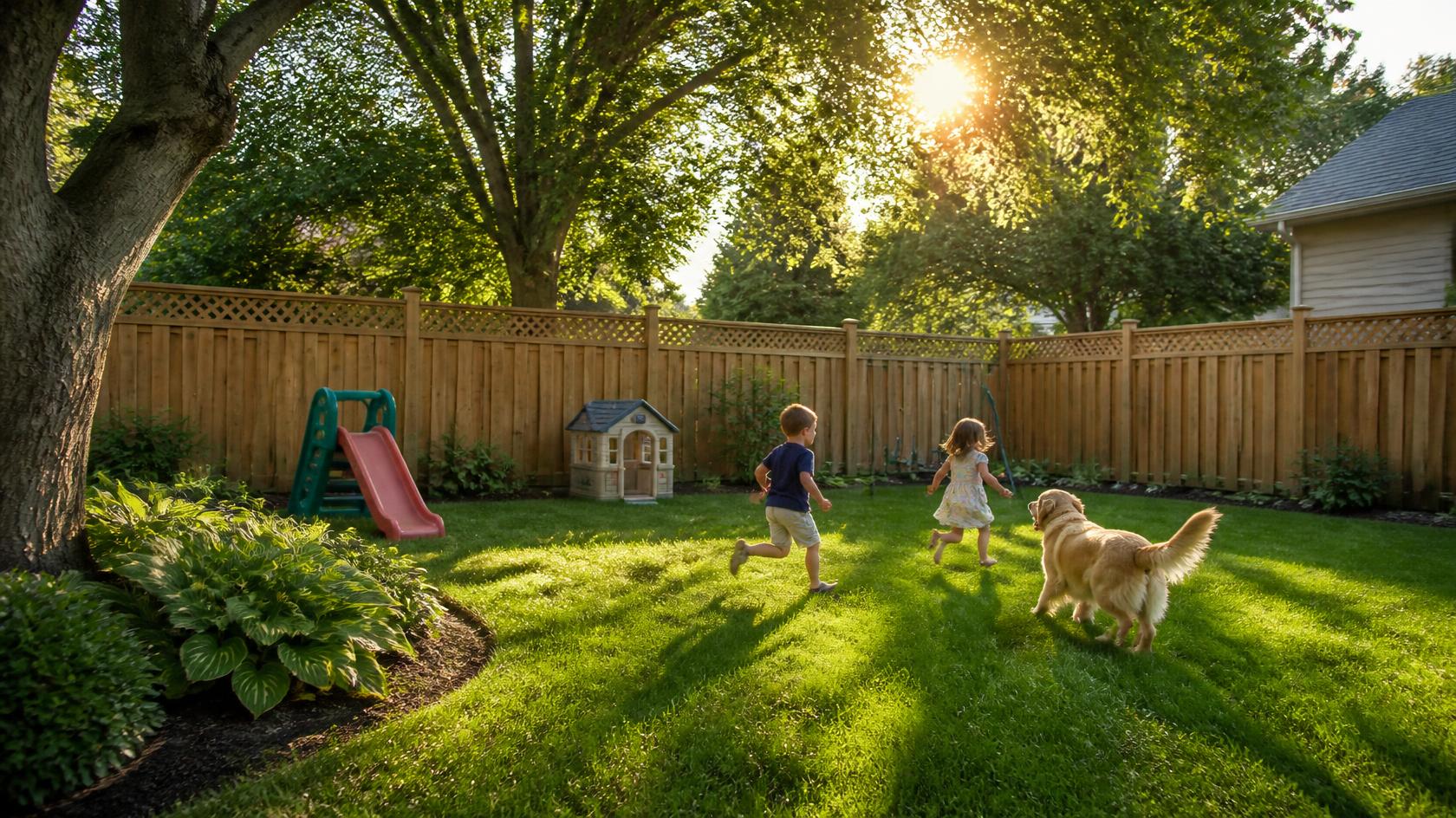
The best fence for kids and pets in Galena should provide secure containment, reliable gates, appropriate height, limited ground gaps, and a layout that fits how the backyard is used. Wood, vinyl, chain link, and aluminum can all work, but the right choice depends on privacy needs, pet behavior, yard slopes, maintenance preferences, and how children move through the space.
Start With How the Yard Is Used
A family fence should do more than mark the property line.
Think about how the backyard functions every day.
You may need fencing around:
Play areas
Pet areas
Patios
Gardens
Side yards
Driveway access
Outdoor seating
Families with young children and active dogs may need a different layout than households with older children and a calm pet.
The safest design starts with actual backyard use.
Secure Gates Are a Priority
Gates are one of the most important parts of a family fence.
A gate should:
Open and close smoothly
Latch reliably
Stay aligned
Have stable posts
Avoid large side gaps
For homes with children, latch placement should be considered carefully.
Pet owners should also make sure dogs cannot push, nose, or squeeze through the opening.
A gate that needs to be lifted or forced into position should be repaired.
Consider a Separate Equipment Gate
Families may need wider access for:
Riding mowers
Trailers
Landscaping equipment
Large outdoor furniture
It can be useful to separate this wider opening from the everyday gate used by children and pets.
A smaller daily-use gate may be easier to manage while the equipment gate stays closed most of the time.
Wood Fencing for Privacy
Solid wood can be a good option for families that want both containment and privacy.
It can help block views of:
Neighboring yards
Roads
Pedestrians
Other dogs
That visual screening may be helpful for pets that become excited by outside activity.
Wood also offers several design options, including:
Solid vertical
Board-on-board
Shadowbox
For family use, inspect wood periodically for splinters, loose boards, protruding hardware, rot, and damaged rails.
Vinyl for Smooth, Consistent Screening
Vinyl can also work well for families.
Full-privacy vinyl offers:
Solid visual screening
Smooth surfaces
No routine staining
Consistent panel coverage
This can be useful around play areas, patios, and pet zones.
Homeowners should still inspect vinyl for cracked components, loose rails, shifting posts, and gate alignment.
Chain Link for Practical Containment
Chain link can be a practical choice when open visibility is preferred.
It works well for:
Dogs
Larger yards
Side-yard enclosures
Play areas
Parents may appreciate being able to see through the fence while children are outside.
The tradeoff is limited privacy.
For dogs that react strongly to neighboring activity, a more solid material may work better.
Aluminum for Open Family Spaces
Aluminum fencing can provide a clean, open appearance.
It may work well around:
Landscaped yards
Gardens
Patio areas
Open property boundaries
Before choosing aluminum for a home with small children or pets, check:
Picket spacing
Ground clearance
Gate openings
Smaller pets may need tighter spacing than a standard open design provides.
Match Fence Height to the Household
There is no single fence height that works for every family.
For pets, consider:
Size
Jumping ability
Climbing behavior
Reactivity
For children, think about how the fence defines the play area and separates it from driveways, roads, or other parts of the property.
The goal is to create an appropriate boundary without choosing height based on appearance alone.
Applicable local requirements should also be reviewed before installation.
Check the Bottom of the Fence
Ground gaps can create problems even when the fence is tall enough.
Inspect areas near:
Gates
Slopes
Low spots
Drainage paths
Small dogs may squeeze underneath.
Young children may also find larger openings interesting enough to investigate.
Ground clearance should be planned as carefully as fence height.
Watch for Digging
Some dogs focus on escaping underneath the fence.
If digging is a concern, consider options such as:
Reinforced lower sections
Gravel borders
Buried mesh where appropriate
Landscape edging
First determine whether the opening is caused by the pet or by erosion.
A drainage problem should be fixed rather than treated only as a pet issue.
Slopes Need Careful Planning
Sloped yards can create uneven openings beneath fencing.
Depending on the material, the fence may be:
Stepped
Installed to follow the grade more closely
Families with small pets should pay extra attention to transitions between levels.
Gate locations on slopes also need enough clearance to operate properly.
Keep Play Areas Away From Gates
If possible, avoid placing the main play area directly next to the most frequently used gate.
Children playing near the entrance can make it harder to manage:
Deliveries
Visitors
Pets
Equipment access
A layout with some separation between play space and yard access can make everyday use easier.
Reduce Climbing Opportunities
Objects near the fence can become unintended climbing aids.
Avoid placing items such as:
Benches
Storage bins
Firewood
Large planters
Play equipment
directly against the fence if children or pets could use them to gain extra height.
The area along the fence should remain visible enough for regular inspection.
Check for Sharp or Loose Components
Family fencing should be inspected for anything that could create a hazard.
Look for:
Splintered wood
Protruding fasteners
Bent wire
Broken pickets
Loose hardware
Cracked panels
Small defects are often easier to repair before they become larger problems.
Think About Privacy Around Family Spaces
Not every part of the yard needs the same level of screening.
Families may prefer stronger privacy near:
Patios
Play areas
Pools where applicable requirements are met
Outdoor dining spaces
Other areas may remain more open.
Mixed layouts can help create privacy without making the entire property feel enclosed.
Drainage Affects Safety Too
Water can change the ground around a fence.
Heavy rain or snowmelt may create:
Mud
Erosion
Ground gaps
Post movement
Gate misalignment
Check areas where children and pets regularly move.
A muddy low spot near a gate can become both an access problem and a sign that drainage needs attention.
Prepare for Galena Weather
A family fence in Galena needs to handle northern Illinois weather.
That includes:
Wind
Rain
Snow
Ice
Freeze-thaw cycles
After severe weather, check:
Posts
Gates
Latches
Panels
Ground gaps
Winter and spring soil movement can affect a fence even when no visible storm damage occurred.
Keep Snow Away From Gates
Winter access should be considered during fence planning.
Avoid regularly piling snow where it blocks:
The main gate
Pet access
Walkways
Snow-removal equipment should also have enough room to avoid striking fence panels or posts.
Repair Problems Before They Affect Security
Small fence problems can quickly affect containment.
Repair warning signs such as:
Loose boards
Bent mesh
Leaning posts
Broken panels
Weak latches
Sagging gates
If multiple areas are failing, a larger replacement may be more practical than repeated repairs.
A Simple Family Fence Checklist
Before choosing or inspecting a fence, check:
Gate security
Fence height
Ground gaps
Picket or opening size
Sharp edges
Loose hardware
Pet behavior
Yard slopes
Drainage
Winter access
The best family fence is one that fits the people, pets, and property together.
Request a Free Fence Estimate
Arrow Fence helps Galena homeowners plan fencing for children, pets, privacy, backyard use, and secure gate access.
Whether you are considering wood, vinyl, chain link, aluminum, fence repairs, replacement, or a new installation, Arrow Fence can help you compare practical options for your property.
Contact Arrow Fence at arrowfencerockford.com to request a free estimate for your backyard fence project.
