
Best Fence Material for Freeport, IL: Comparing Maintenance and Durability
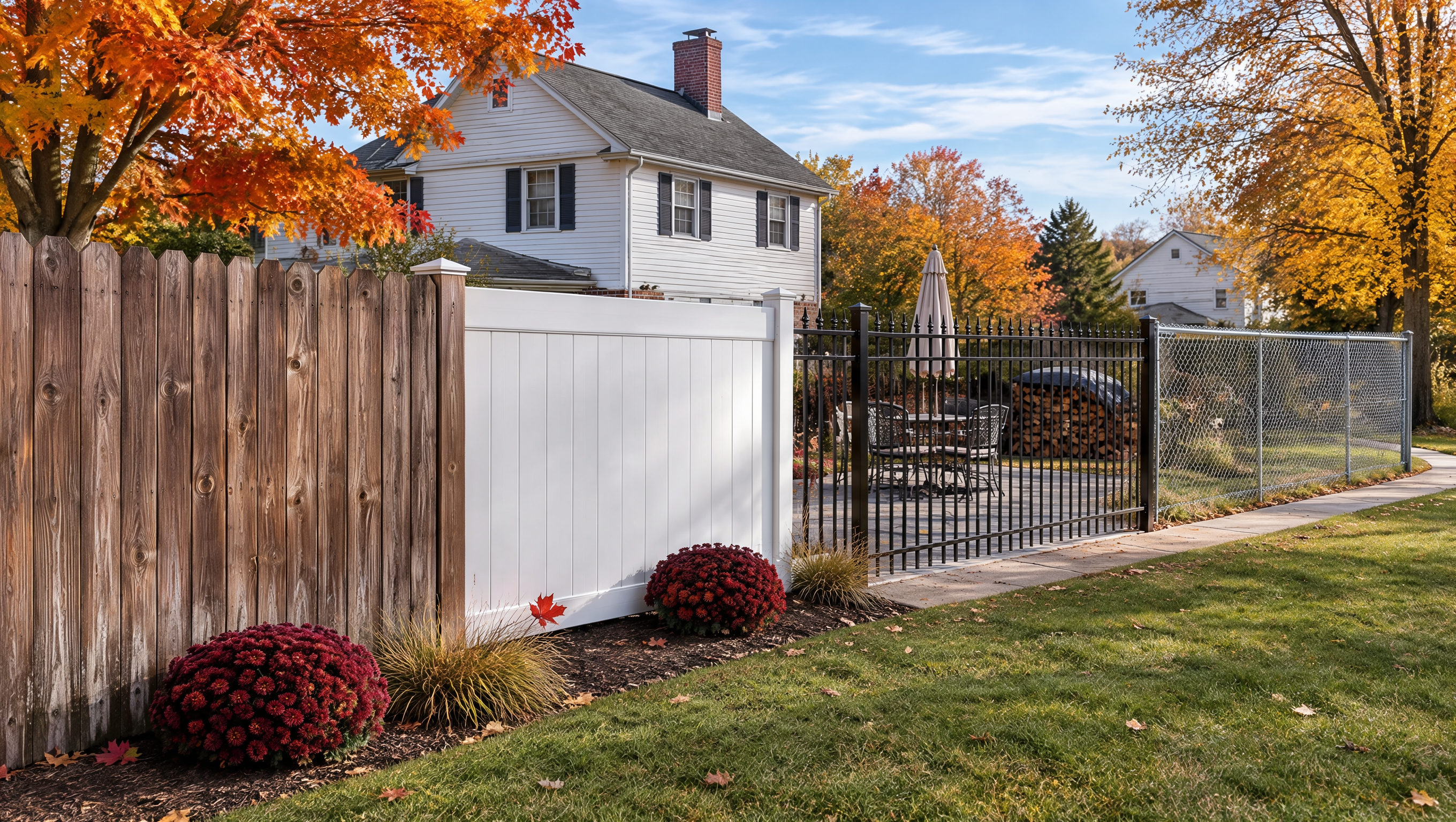
The best fence material for a Freeport property depends on how much maintenance you want to handle, how much privacy you need, and how the fence will be used. Vinyl, chain link, and aluminum generally require less routine surface maintenance than wood, while wood remains a strong choice for homeowners who value natural appearance, privacy, and design flexibility.
Start With More Than Appearance
Fence material affects much more than how the yard looks.
Before choosing, consider:
Privacy
Pet containment
Maintenance
Wind exposure
Gates
Yard size
Long-term repairs
A material that works well for a small privacy patio may not be the best choice for a large dog yard or an exposed property boundary.
Freeport homeowners should compare how each option performs over time, not just how it looks when first installed.
Wood: Natural Appearance and Flexible Design
Wood remains a popular choice for homeowners who want a warm, traditional look.
It works especially well for:
Backyard privacy
Patios
Side yards
Pet areas
Wood can also be customized into several styles, including solid vertical, board-on-board, shadowbox, and horizontal fencing.
That flexibility makes it easier to adjust the design around different parts of the property.
Wood Maintenance Requirements
Wood typically requires more routine attention than vinyl, aluminum, or chain link.
Homeowners should watch for:
Loose boards
Rot
Cracked rails
Moisture damage
Failed fasteners
Gate movement
Depending on the product and finish, periodic staining or sealing may also be recommended.
For homeowners willing to handle more upkeep, wood can still provide a strong balance of appearance and privacy.
How Durable Is Wood?
Wood durability depends heavily on maintenance, drainage, and how well the fence is protected from prolonged moisture.
Problems are more likely to develop when:
Wet leaves collect along the base
Water sits around posts
Boards remain damaged
Rails stay loose
Vegetation traps moisture
Regular inspection can help extend the useful life of individual boards and sections.
One advantage of wood is that localized damage can often be repaired without replacing an entire fence run.
Vinyl: Strong Privacy With Less Surface Maintenance
Vinyl is a good option for homeowners who want strong screening with less routine refinishing.
Full-privacy vinyl can create a clean barrier around:
Backyards
Patios
Side yards
Pet areas
Vinyl does not require regular painting, staining, or sealing.
Typical maintenance focuses more on cleaning and checking the supporting structure.
Vinyl Maintenance Is Simple but Still Important
Low maintenance does not mean no maintenance.
Homeowners should still inspect:
Posts
Rails
Gates
Hardware
Panel alignment
If the ground shifts or a gate post moves, the vinyl fence can still develop alignment problems.
Drainage and soil stability remain important regardless of the material.
Vinyl Durability in Freeport Weather
Vinyl can perform well through Midwest seasons when properly installed.
Homeowners should remember that severe cold can make vinyl less flexible.
Avoid hard impacts from:
Snow shovels
Snowblowers
Vehicles
Yard equipment
Existing cracks or loose components should be addressed before winter whenever possible.
Chain Link: Practical Durability for Larger Areas
Chain link is often chosen when homeowners need practical containment without full privacy.
It works well for:
Larger yards
Dog areas
Long fence lines
Utility spaces
The open mesh allows airflow and keeps the yard visually open.
Black vinyl-coated chain link can also blend more naturally into landscaping.
Chain Link Maintenance
Chain link generally requires limited routine surface maintenance.
Homeowners should still check:
Mesh tension
Top rails
Terminal posts
Ties
Gates
A loose terminal post can affect a larger section because it helps maintain tension in the mesh.
Localized repairs are often possible when the framework remains stable.
Chain Link and Wind Exposure
One advantage of open chain link is that wind can move through the mesh.
That creates less wind resistance than solid privacy fencing.
This can be useful on exposed Freeport properties.
If privacy slats or screens are added, however, the fence catches more wind and the support system should be evaluated accordingly.
Aluminum: Open Views With Straightforward Upkeep
Aluminum is a strong option when homeowners want a more decorative fence without blocking views.
It can work well around:
Landscaping
Gardens
Open backyards
Decorative boundaries
Aluminum does not provide full privacy, but it offers a clean, open appearance.
Its routine maintenance is generally straightforward.
Aluminum Maintenance and Durability
Homeowners should periodically check:
Posts
Connections
Gates
Picket alignment
Because aluminum fencing has clean lines, small alignment changes can be easy to notice.
The material itself may remain in good condition even if soil movement causes a post to shift.
For pet owners, picket spacing and ground clearance should also be reviewed carefully.
Which Material Requires the Least Routine Maintenance?
For homeowners focused mainly on minimizing surface upkeep, vinyl, aluminum, and chain link are generally easier to maintain than wood.
Vinyl
Best for homeowners who want strong privacy with minimal refinishing.
Aluminum
Best for homeowners who want an open, decorative fence with simple routine care.
Chain Link
Best for practical containment and larger areas with limited surface maintenance.
Wood
Best for homeowners who value customization and natural appearance and are comfortable with more regular maintenance.
Which Material Provides the Most Privacy?
Wood and vinyl are the strongest choices when screening is the main priority.
Wood offers several privacy styles and more design flexibility.
Vinyl provides consistent solid panels with less routine surface care.
Chain link and aluminum keep the yard more open and do not provide the same level of screening.
Which Material Works Best for Dogs?
The best choice depends on the dog.
Wood or vinyl may work well for dogs that react to outside movement because solid fencing blocks more visibility.
Chain link may work well for dogs that are calm around:
People
Neighboring pets
Wildlife
Aluminum may work for calmer dogs when picket spacing and ground gaps are appropriate.
Fence height, gates, digging, and ground clearance matter just as much as the material itself.
Gates Can Affect Durability
A durable fence still needs a well-supported gate.
Gates experience more movement than standard fence sections.
Pay attention to:
Hinge posts
Latches
Hardware
Gate framing
Ground clearance
Wide gates place additional stress on support posts.
If larger equipment needs backyard access, decide on the opening width before installation.
Drainage Matters for Every Material
No fence material can completely overcome poor ground conditions.
Water can contribute to:
Post movement
Erosion
Ground gaps
Gate misalignment
Before installation, inspect the proposed fence line after rain.
Look for standing water, soft ground, and runoff near future post locations.
Stable drainage can make a major difference in long-term fence performance.
Consider Wind Before Choosing Solid Privacy
Solid wood and vinyl privacy fences catch more wind than open fencing.
This matters on long, exposed runs.
Extra attention should be given to:
Corners
End posts
Gate posts
If full privacy is only needed in one part of the yard, homeowners may want to combine solid fencing with chain link or aluminum elsewhere.
This can reduce wind resistance while preserving privacy where it matters.
Think About Winter Maintenance Too
Freeport winters can expose weak fence components.
Before snow arrives, homeowners should inspect:
Posts
Gates
Ground gaps
Rails
Hardware
Snow should not be piled heavily against weak sections.
Snow-removal equipment should also have enough clearance to avoid striking panels, posts, or gates.
Mixed Materials Can Be a Practical Choice
Some properties do not need one material everywhere.
A mixed layout might use:
Vinyl near a patio
Chain link around a dog area
Aluminum near landscaping
Wood along a neighbor-facing boundary
This can balance privacy, maintenance, appearance, and cost across the property.
The best fence does not always need to be the same on every side.
Which Fence Material Is Best for Your Freeport Property?
Choose wood if natural appearance and design flexibility are most important.
Choose vinyl if you want strong privacy with less routine surface maintenance.
Choose chain link if practical durability and containment are the priority.
Choose aluminum if you want an open, decorative fence with straightforward upkeep.
The right choice depends on the yard, pets, privacy needs, and how much maintenance you want to handle long term.
Request a Free Fence Estimate
Arrow Fence helps Freeport homeowners compare wood, vinyl, chain link, and aluminum fencing based on maintenance, privacy, pets, yard layout, and Midwest weather.
Whether you are planning a new installation, replacement, or mixed-material layout, Arrow Fence can help you review practical options for your property.
Contact Arrow Fence at arrowfencerockford.com to request a free estimate for your fence project.
