
Best Fence Materials for Oregon, IL: Wood, Vinyl, Chain Link and Aluminum
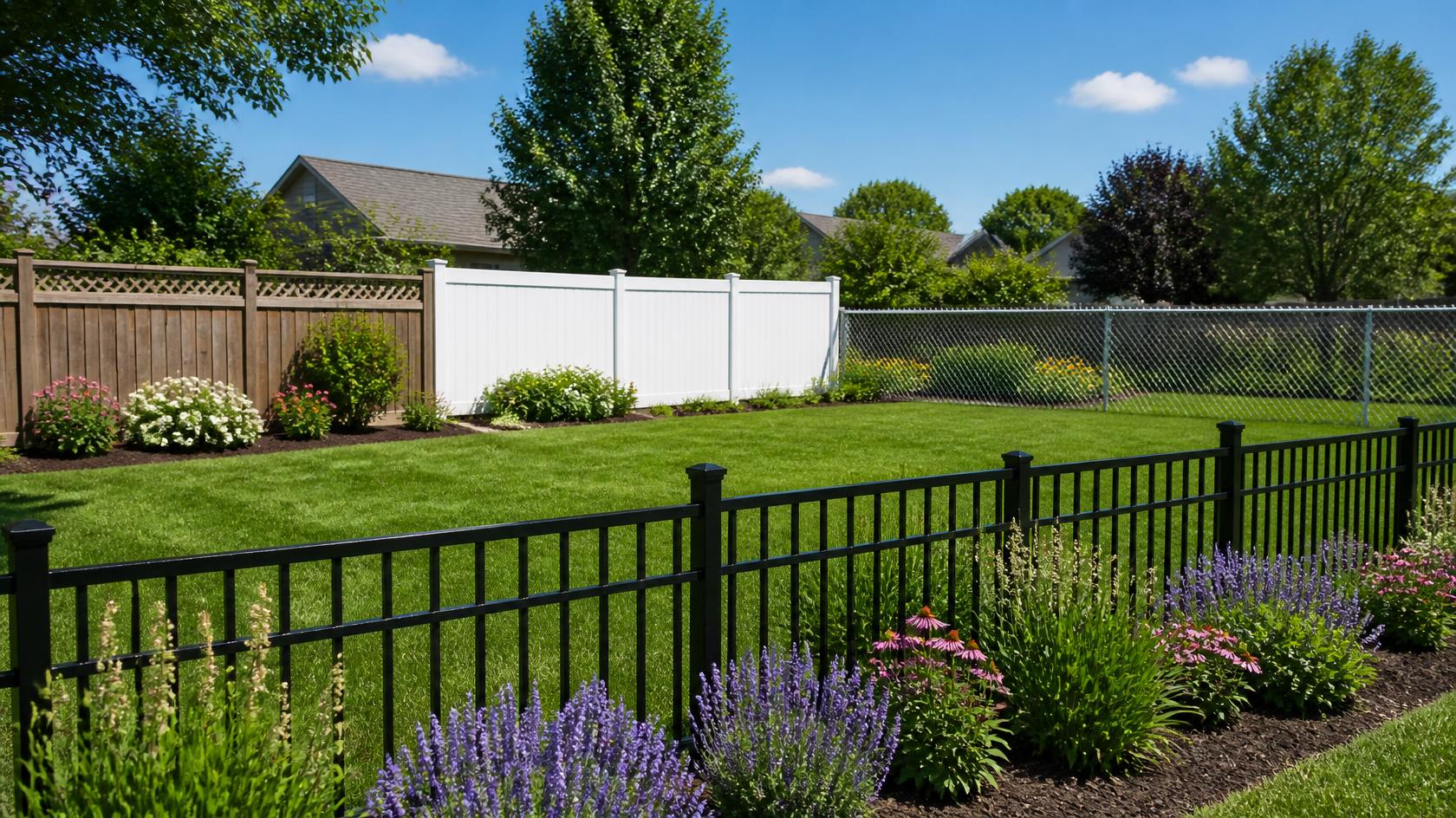
The best fence material for an Oregon, IL property depends on what matters most: privacy, pet containment, maintenance, appearance, airflow, or budget. Wood offers natural character and strong privacy, vinyl provides a lower-maintenance option, chain link works well for practical containment, and aluminum is a good fit for decorative areas where homeowners want open views.
Start With the Purpose of the Fence
Choosing a fence material is easier when the property goal is clear.
Homeowners may need fencing for:
Backyard privacy
Dogs or other pets
Property definition
Outdoor living areas
Side-yard screening
Garden protection
Decorative boundaries
Equipment access
A material that works well for one purpose may not be the best choice for another.
For example, aluminum may look attractive around landscaping, but it will not provide the same privacy as solid wood or vinyl.
Wood Fencing: Natural and Flexible
Wood remains a popular choice for homeowners who want a traditional residential appearance.
It works especially well for:
Privacy
Backyard enclosures
Patios
Pet areas
Side yards
Wood also offers more design flexibility than many manufactured systems.
Common styles include:
Solid vertical
Board-on-board
Shadowbox
Horizontal fencing
Stain and finish choices can also change the appearance considerably.
Where Wood Works Best
Wood can be a strong choice for homeowners who want privacy without a manufactured look.
It blends naturally with:
Mature trees
Decks
Gardens
Traditional homes
Landscaped yards
It can also be adjusted more easily around custom layouts or unusual property features.
What to Consider With Wood
Wood needs more ongoing maintenance than vinyl or aluminum.
Homeowners should periodically watch for:
Rot
Loose boards
Cracks
Splinters
Worn finishes
Gate problems
Moisture near the base of the fence is especially important.
Leaves, mulch, and soil should not remain piled against wood for long periods.
Board-on-Board Wood for Stronger Privacy
Board-on-board fencing uses overlapping boards.
This helps reduce sightlines that can appear as wood naturally expands and contracts.
It can be useful near:
Shared property lines
Patios
Neighboring dog areas
Roads
It uses more material than a simpler vertical design, but it can provide more consistent screening.
Shadowbox Wood for More Airflow
Shadowbox fencing alternates boards on opposite sides of the rails.
It allows more airflow than a completely solid fence while still creating partial privacy.
This style may work well for larger yards where homeowners want separation without making the entire space feel enclosed.
The main tradeoff is that it does not provide full privacy from every angle.
Vinyl Fencing: Lower Routine Maintenance
Vinyl can be a good fit for homeowners who want privacy with less surface maintenance.
It does not require regular:
Painting
Staining
Sealing
Routine care generally involves cleaning and checking posts, rails, gates, and hardware.
For homeowners who do not want to refinish a fence periodically, this can be a major advantage.
Full-Privacy Vinyl
Full-privacy vinyl uses solid panels to block views.
It can work well around:
Backyards
Patios
Pools where appropriate requirements are met
Pet areas
Side yards
It provides a consistent appearance and does not develop the small board gaps that may occur naturally with wood.
Semi-Private Vinyl
Semi-private vinyl includes openings that allow more light and airflow.
This can be useful where homeowners want some separation without a completely solid barrier.
It may also work better in areas where full privacy is unnecessary.
For pet owners, opening sizes should be reviewed carefully.
What to Consider With Vinyl
Vinyl is lower maintenance, but it is not maintenance-free.
Homeowners should still watch for:
Loose rails
Post movement
Gate misalignment
Cracked components
Impact damage
During severe cold, vinyl can become less flexible.
Avoid hitting frozen panels with snow-removal equipment or other hard objects.
Chain Link Fencing: Practical and Efficient
Chain link is a useful option when the main goals are containment and property definition.
It works well for:
Dogs
Larger yards
Long boundaries
Side-yard enclosures
Utility areas
Because air passes through the mesh, it catches less wind than solid privacy fencing.
Black Vinyl-Coated Chain Link
Black vinyl-coated chain link can blend more naturally into landscaping than standard galvanized fencing.
It may be a good choice for homeowners who want practical containment without making the fence visually dominant.
This can work particularly well around:
Larger backyards
Pet areas
Rear property lines
Can Chain Link Provide Privacy?
Standard chain link provides very little visual screening.
Privacy slats or screening can be added, but this changes how the fence behaves.
Additional privacy material:
Increases wind resistance
Requires stronger framework
May need periodic adjustment
If full privacy is the main goal, wood or vinyl may provide a cleaner solution.
Aluminum Fencing: Open and Decorative
Aluminum is a strong option for homeowners who want an open, finished appearance.
It works well around:
Gardens
Landscaped areas
Walkways
Front yards
Decorative boundaries
The open design allows views through the fence and usually lets wind pass through easily.
What Aluminum Does Well
Aluminum provides:
Clean appearance
Open visibility
Relatively simple maintenance
Resistance to rust
It can be especially attractive around homes where blocking the view would make the yard feel smaller.
What Aluminum Does Not Provide
Aluminum is not a full privacy material.
It may also be less suitable for very small pets if picket spacing or ground clearance creates openings.
Before choosing it, homeowners should consider:
Pet size
Picket spacing
Ground gaps
Privacy expectations
Which Material Is Best for Privacy?
For strong backyard privacy, wood and vinyl are usually the primary options.
Wood
Good for homeowners who want:
Natural appearance
Custom styling
Strong screening
Flexible design
Vinyl
Good for homeowners who want:
Consistent privacy
Lower routine surface maintenance
Clean lines
No regular staining
The better choice depends largely on appearance and maintenance preference.
Which Material Is Best for Dogs?
Several materials can work for pets.
Wood
Useful for dogs that react to outside activity because solid boards can block views.
Vinyl
Also provides strong visual screening and a smooth surface.
Chain Link
Works well for practical containment and larger yards.
Aluminum
Can work for calm dogs when spacing and height are appropriate.
Pet behavior should influence the decision as much as pet size.
Which Material Needs the Least Maintenance?
Vinyl and aluminum generally require less routine surface care than wood.
Chain link is also relatively simple to maintain.
Wood needs more periodic attention because it may require:
Staining
Sealing
Board replacement
Surface repairs
Homeowners should choose a material that fits the amount of upkeep they realistically want to handle.
Which Material Works Best in Windy Areas?
Open fence styles usually allow more airflow.
Chain link and aluminum create less wind resistance than solid privacy fencing.
Solid wood and vinyl can still perform well, but:
Post stability matters
Gate posts need proper support
Connections should be secure
Wind exposure should be considered during installation, especially on open properties.
Consider Oregon, IL Weather
Fence materials in Oregon need to handle northern Illinois conditions such as:
Wind
Rain
Snow
Ice
Freeze-thaw cycles
Storms
Weather affects more than panels.
Posts, soil, drainage, and gates can all shift over time.
Seasonal inspection is important regardless of the material.
Drainage Matters for Every Fence
No fence material can overcome poor drainage indefinitely.
Water can:
Erode soil
Expose footings
Create ground gaps
Affect gates
Shift posts
Before installation, check for:
Low areas
Standing water
Downspout discharge
Runoff
Erosion
Good drainage helps protect every fence system.
Sloped Yards Need Material-Specific Planning
Uneven terrain can affect how a fence is installed.
Depending on the material, sections may be:
Stepped
Installed to follow the grade more closely
Wood often offers greater flexibility because boards can be adjusted individually.
Vinyl, chain link, and aluminum use system-specific installation methods.
Pet owners should pay extra attention to gaps where the grade changes.
Gates Should Influence Material Choice
The fence material also affects gate design.
Think about whether the yard needs:
Walk gates
Mower access
Double gates
Equipment gates
Wide openings require stronger posts and hardware.
Do not choose the fence material without also planning how the property will be accessed.
Mixed Materials Can Work Well
A single property does not always need one fence material everywhere.
A homeowner might use:
Wood privacy near a patio
Vinyl along a shared boundary
Chain link around a dog area
Aluminum near landscaping
Mixed layouts can help balance:
Privacy
Maintenance
Appearance
Budget
Open views
This approach can be especially useful on larger properties.
Compare Materials Based on Long-Term Use
A fence should still fit the property several years after installation.
Ask:
Will privacy needs change?
Will the yard be used for pets?
Will equipment need access?
Do I want regular maintenance?
Will landscaping grow near the fence?
Will snow removal affect gates?
Thinking beyond installation day often leads to a better material choice.
Quick Material Comparison
Wood
Best for:
Natural appearance
Custom privacy
Flexible design
Consider:
Higher maintenance
Moisture
Rot
Refinishing
Vinyl
Best for:
Strong privacy
Lower routine maintenance
Consistent appearance
Consider:
Cold-weather impact
Replacement components
Wind exposure
Chain Link
Best for:
Pets
Larger yards
Practical containment
Long boundaries
Consider:
Minimal privacy
Mesh tension
Gate maintenance
Aluminum
Best for:
Decorative areas
Open views
Landscaping
Consider:
Limited privacy
Pet spacing
Ground gaps
Ask These Questions Before Choosing
Before selecting a fence material, homeowners may want to ask:
How much privacy do I really need?
How much maintenance do I want?
Is the fence primarily for pets?
Is the property exposed to wind?
Does the yard have slopes?
Are there drainage problems?
How many gates are needed?
Will equipment need access?
Do I want open views or full screening?
The answers usually make the material decision much easier.
Request a Free Fence Estimate
Arrow Fence helps Oregon homeowners compare wood, vinyl, chain link, and aluminum fencing based on privacy, pets, maintenance, yard layout, and long-term use.
Whether you are planning a new backyard fence, replacing an older fence, adding gates, or improving a specific section of the property, Arrow Fence can help you review practical material options.
Contact Arrow Fence at arrowfencerockford.com to request a free estimate for your fence project.
