
Best Fence Options in Clinton, WI for Pets and Privacy
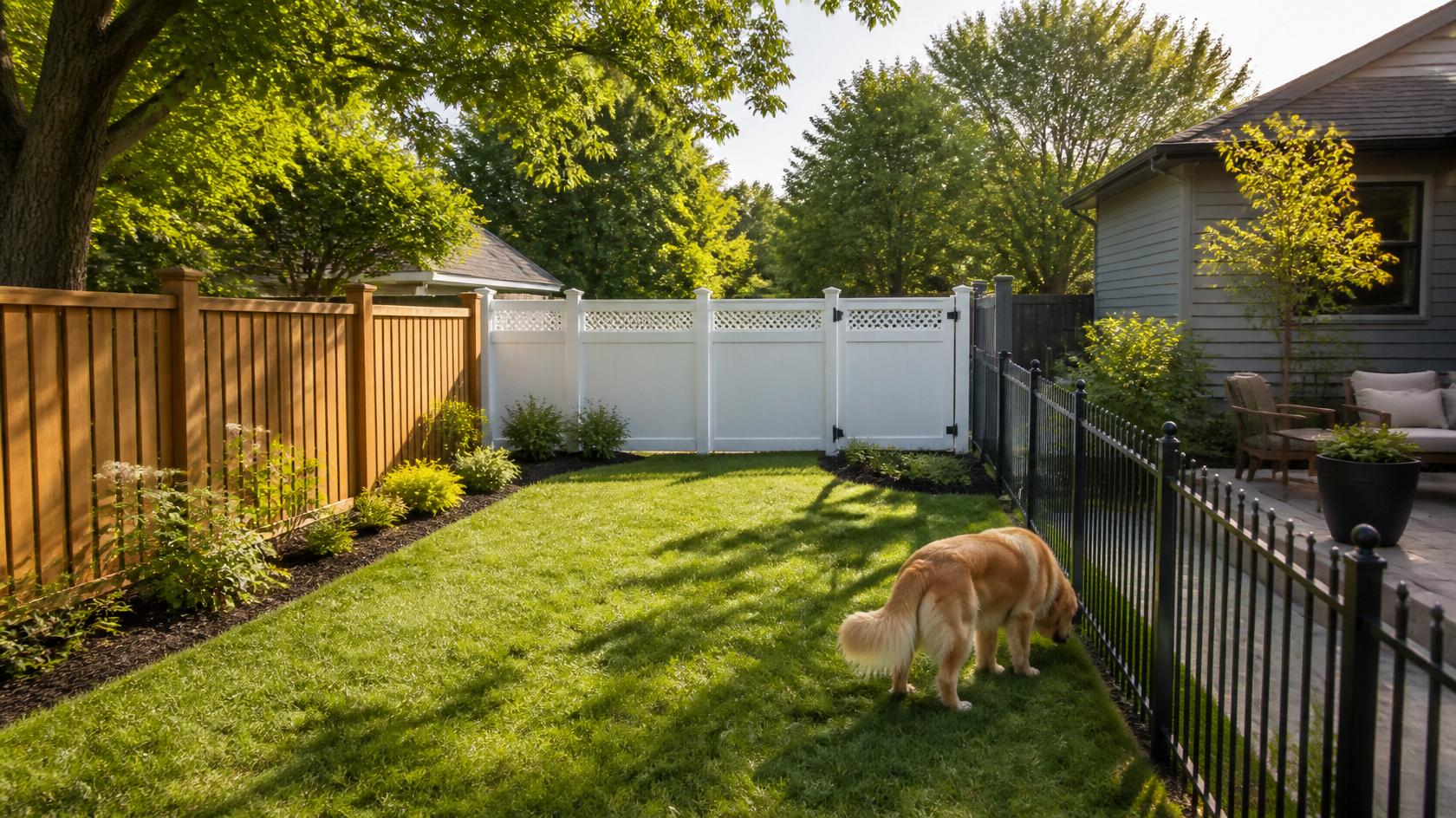
Clinton homeowners looking for both pet security and backyard privacy can choose from wood, vinyl, chain link, aluminum, and mixed-material fence layouts. Solid wood and vinyl are especially useful for blocking outside views, while chain link and aluminum can work well where open visibility is preferred.
Start With Your Pet and Your Privacy Needs
A fence that works well for one household may not be the right choice for another.
Before choosing a material, think about how your pet uses the yard and how much privacy your family wants.
Consider:
Dog size
Jumping ability
Digging habits
Reaction to people or animals outside
Yard size
Nearby roads or sidewalks
Neighboring patios
Gate access
Landscaping
Maintenance preferences
The best fence should create a secure space for pets while making the backyard more comfortable for everyday use.
Solid Wood Privacy Fencing
Wood is one of the strongest options for combining privacy with pet containment.
Closely spaced boards can block views of:
Neighboring dogs
Pedestrians
Wildlife
Vehicles
Nearby yards
Outdoor gathering areas
This can be helpful for dogs that become excited or distracted by activity outside the property.
Wood also offers a natural appearance that works well with decks, patios, mature trees, and traditional homes.
The main consideration is upkeep. Wood should be inspected periodically for loose boards, cracks, rot, splinters, and worn finishes.
Board-on-Board Wood Fencing
Board-on-board fencing uses overlapping vertical boards.
Because wood naturally expands and contracts with moisture and changing temperatures, small gaps can appear in traditional vertical fencing.
The overlapping design helps reduce those sightlines.
This style can work especially well along:
Shared property boundaries
Pet areas
Patios
Road-facing sections
Neighboring yards
Board-on-board fencing provides strong visual screening and a substantial finished appearance.
Shadowbox Wood for More Airflow
Shadowbox fencing offers partial privacy while allowing more air through the fence.
Boards alternate on opposite sides of the rails, creating a finished look from both directions.
It may work well for larger yards or areas where homeowners want some screening without creating a fully enclosed feeling.
The tradeoff is that shadowbox fencing does not provide complete privacy from every angle.
For reactive dogs, a solid wood or vinyl fence may be a better choice.
Vinyl Privacy Fencing
Vinyl is another practical option for homeowners who want both privacy and secure pet containment.
Solid vinyl panels provide consistent screening and have a smooth surface without splinters.
Vinyl also does not require regular painting, staining, or sealing.
It works well around:
Backyards
Pet areas
Patios
Shared property lines
Play spaces
Side yards
Routine maintenance generally involves occasional cleaning and checking gates, posts, rails, and hardware.
Full-Privacy Vinyl for Reactive Dogs
Some dogs bark, chase, or become excited when they can see activity outside the yard.
Full-privacy vinyl panels create a continuous visual barrier that can block views of:
Neighboring pets
Wildlife
Pedestrians
Traffic
Nearby outdoor activity
The smooth panels also provide few obvious footholds for climbing.
Because solid vinyl catches more wind than open fencing, stable posts and proper installation are especially important.
Semi-Private Vinyl for a More Open Feel
Semi-private vinyl includes small openings that allow more airflow and light.
This style may work well in areas where homeowners want separation without complete screening.
It can be useful along:
Side yards
Garden spaces
Larger backyards
Wind-exposed sections
Pet owners should check the spacing carefully, especially if they have small dogs or puppies.
Chain Link for Practical Pet Containment
Chain link is a durable and practical choice for many pet owners.
It can work well for:
Large backyards
Dog runs
Side-yard enclosures
Long property boundaries
Dedicated pet spaces
Black vinyl-coated chain link can blend into landscaping more naturally than standard galvanized fencing.
Its open design also allows airflow and visibility.
However, chain link provides little privacy on its own.
Dogs that react strongly to outside activity may also become more distracted when they can see through the fence.
Adding Privacy to Chain Link
Privacy slats or screening can be added to certain chain link sections.
This may be useful along:
Neighboring property lines
Road-facing boundaries
Pet areas
Utility spaces
Homeowners should remember that adding screening reduces airflow through the mesh and increases wind pressure on the fence framework.
For full backyard privacy, solid wood or vinyl may be more suitable.
Aluminum Fencing for Calm Pets
Aluminum fencing provides a decorative boundary while keeping the yard visually open.
It may work well for calm pets that do not need a solid privacy barrier.
Aluminum can complement:
Landscaped yards
Gardens
Patios
Pools
Walkways
Pet owners should carefully review picket spacing and ground clearance.
Small dogs may be able to fit through wider openings, especially near slopes or gates.
Choose Fence Height Based on Pet Behavior
Fence height should be selected based on the pet, not just the appearance of the yard.
Consider whether your dog:
Jumps
Climbs
Chases wildlife
Stands against the fence
Tries to escape when excited
Large or athletic dogs may require taller fencing than smaller or calmer pets.
Homeowners should also keep benches, storage boxes, firewood, or other objects away from the fence if pets could use them to gain extra height.
Pay Attention to Ground Gaps
A tall fence can still be ineffective if large gaps develop underneath.
Ground gaps may appear around:
Slopes
Gates
Drainage areas
Low spots
Uneven terrain
Puppies and small dogs require particular attention.
The lower fence line should be checked regularly, especially after heavy rain or spring snowmelt.
Plan for Dogs That Dig
Some dogs may try to dig beneath a fence.
Possible solutions include:
Buried mesh
Gravel borders
Reinforced lower sections
Landscape edging
Monitoring common digging areas
Homeowners should also determine whether openings are being caused by the pet or by erosion.
Water runoff can gradually remove soil beneath a fence and create similar escape gaps.
Make Gates Secure
Gates are often one of the most important parts of a pet enclosure.
A pet-friendly gate should include:
Stable posts
Strong hinges
Dependable latches
Minimal side gaps
Appropriate ground clearance
If children also use the yard, latch placement should reduce the chance of accidental opening.
Gates should be checked regularly because repeated use and seasonal soil movement can affect alignment.
Consider a Double-Gate Area
For dogs that rush toward open gates, a small double-gate or transition area can provide another layer of security.
This type of layout can be useful near:
Driveways
Sidewalks
Front yards
Frequently used entrances
It can also make deliveries, landscaping work, and everyday entry easier to manage when pets are outside.
Create a Dedicated Pet Area
Some Clinton properties may not need the entire backyard enclosed for pets.
A smaller dog run or dedicated pet area can provide:
Easier supervision
Less fencing to inspect
Separation from gardens
Easier maintenance
Convenient access from the house
Wood, vinyl, or chain link can all work depending on the desired privacy level.
Combine Materials for Different Areas
Using one material everywhere is not always necessary.
A mixed-material layout might include:
Vinyl privacy fencing near neighbors
Wood around a patio
Chain link around a dog run
Aluminum near landscaping
This approach can balance privacy, pet security, maintenance, and appearance.
It can be especially practical for larger yards.
Keep Landscaping Away From Escape Points
Plants can make a fence look more attractive, but they should not hide problems along the fence line.
Keep enough space to inspect:
Ground gaps
Posts
Gates
Fence bases
Avoid placing large planters, firewood, benches, or storage containers where pets could use them for climbing.
Branches should also be trimmed before they begin rubbing against the fence or creating storm-damage risks.
Plan Around Drainage
Water movement can affect any fence.
Heavy rain and snowmelt may:
Wash soil away
Create gaps beneath panels
Affect gate alignment
Expose footings
Loosen posts
Fence placement should work with the natural drainage of the property.
Low areas should be checked after storms, particularly when pets use the yard every day.
Compare the Best Fence Options
Wood
Best for natural appearance, strong privacy, and dogs that benefit from blocked views.
Vinyl
Best for consistent privacy with lower routine maintenance.
Chain Link
Best for durable containment, dog runs, and larger boundaries.
Aluminum
Best for open views and calm pets when picket spacing is appropriate.
Mixed Materials
Best for homeowners who need privacy in some sections and open fencing in others.
Prepare Pet Fencing for Clinton Weather
Fencing in Clinton needs to handle Wisconsin wind, rain, snow, ice, storms, and repeated freeze-thaw cycles.
Homeowners should periodically:
Check posts after storms
Test gates and latches
Inspect boards, panels, and rails
Check chain link tension
Watch for erosion
Look for new ground gaps
Trim nearby branches
Clear heavy snow carefully
Spring is an especially useful time to inspect pet fencing because snowmelt and ground movement can create openings that were not present before winter.
Repair Damage Before It Becomes an Escape Risk
Small fence problems should not be ignored when pets rely on the enclosure.
Watch for:
Loose boards
Bent mesh
Cracked panels
Damaged rails
Weak latches
Leaning posts
New gaps beneath the fence
Minor issues can often be repaired individually.
Replacement may make more sense when several sections are failing or the existing fence no longer provides enough privacy or pet security.
Request a Free Fence Estimate
Arrow Fence helps Clinton homeowners plan fencing for pets, privacy, families, and everyday backyard use.
Whether you are considering wood, vinyl, chain link, aluminum, fence repair, replacement, or secure new gates, Arrow Fence can help you compare practical options for your property.
Contact Arrow Fence at arrowfencerockford.com to request a free estimate for your pet-friendly privacy fence project.
