
Best Fence Options in Dixon, IL for Families and Pets
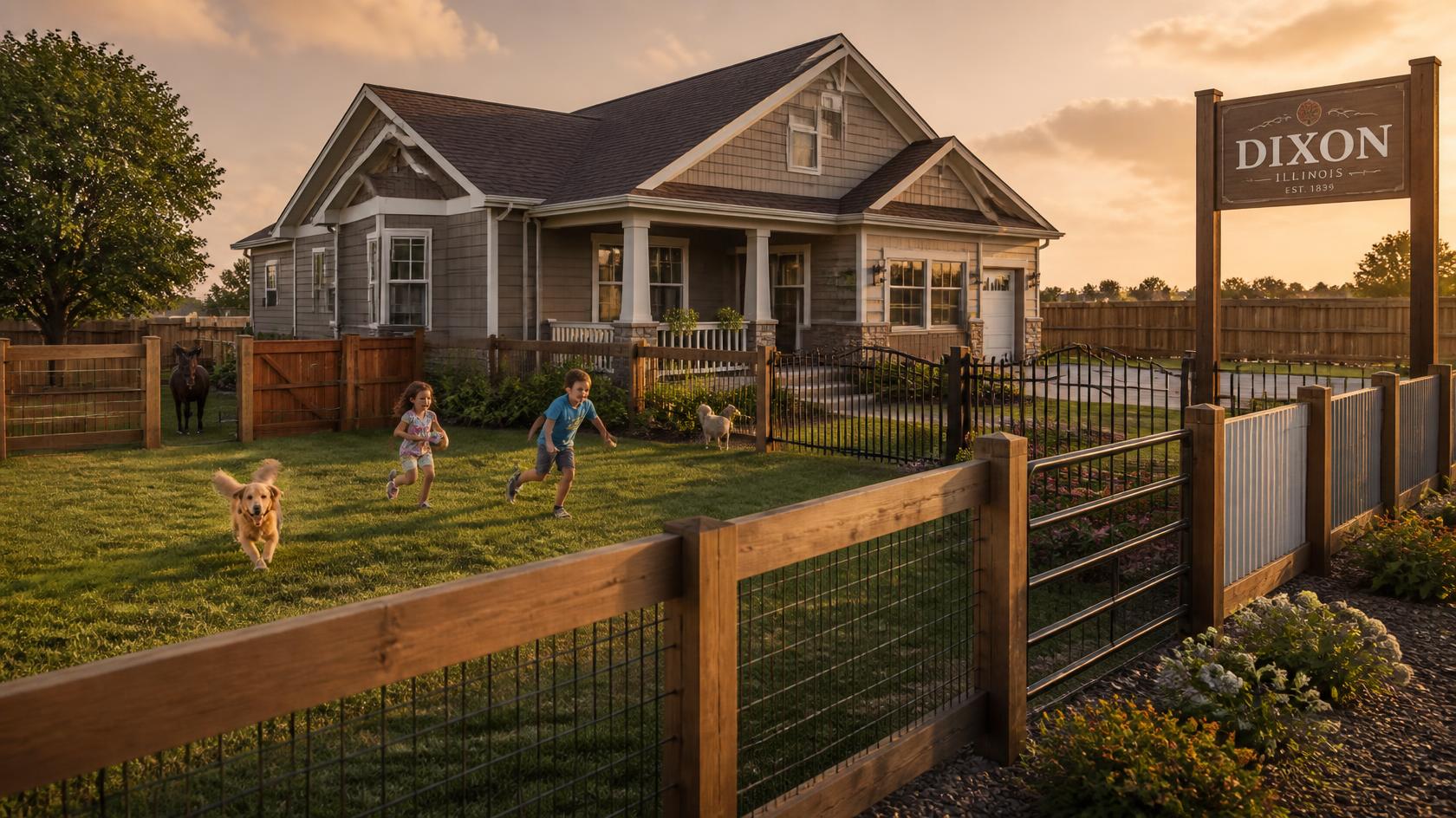
Dixon families with children and pets need fencing that balances safety, privacy, visibility, durability, and easy access. Wood, vinyl, chain link, aluminum, and mixed-material layouts can all work well depending on the yard size, pet behavior, maintenance preferences, and how the family uses the outdoor space.
Start With How Your Family Uses the Yard
A backyard fence should make everyday life easier.
For families, that may mean creating a secure area for children to play, keeping dogs safely contained, adding privacy from neighbors, or making the yard feel more organized.
Before choosing a fence, think about:
Children’s play areas
Dog size and behavior
Privacy needs
Gate locations
Yard size
Landscaping
Driveway access
Maintenance preferences
Slopes and drainage
Outdoor living spaces
The best fence is one that fits the household instead of forcing everyone to work around the fence.
Wood Privacy Fencing for a More Secluded Yard
Wood is a strong option for families that want privacy along with secure containment.
Closely spaced boards can help block views from:
Neighboring yards
Sidewalks
Roads
Nearby patios
Passing vehicles
Other pets
This can make patios and play areas feel more private.
Solid wood may also be useful for dogs that bark or become excited when they see people, wildlife, or neighboring pets outside the yard.
Wood also has a natural appearance that works well with decks, gardens, trees, and traditional homes.
Board-on-Board Wood for Added Screening
Board-on-board fencing uses overlapping boards to reduce direct sightlines.
Because wood naturally expands and contracts with moisture and temperature changes, small gaps may develop between standard vertical boards.
Overlapping boards help maintain more consistent privacy.
This style can work particularly well around:
Play areas
Shared property lines
Patios
Dog areas
Road-facing sections
It creates a substantial appearance while maintaining the natural character of wood.
Vinyl Privacy Fencing for Busy Households
Vinyl can be a practical option for families that want privacy with less routine maintenance.
It does not need regular painting, staining, or sealing.
Full-privacy vinyl panels can work well around:
Backyards
Play areas
Patios
Dogs
Shared property lines
The smooth surface also avoids splinters, which may appeal to households with children spending a lot of time outside.
Routine upkeep generally involves occasional cleaning and checking gates, posts, rails, and hardware.
Semi-Private Vinyl for More Light and Airflow
Not every family wants the backyard completely enclosed.
Semi-private vinyl allows more light and airflow while still providing separation from neighboring properties.
It can work well along:
Side yards
Gardens
Larger backyards
Patio edges
For families with small dogs, spacing should be checked carefully.
If stronger screening or pet containment is the main priority, full-privacy panels may be more appropriate.
Chain Link for Active Backyards
Chain link is practical for families that need durable containment without blocking the view.
It can work especially well for:
Large backyards
Dog runs
Side-yard enclosures
Play areas
Long property boundaries
Black vinyl-coated chain link can blend into landscaping more subtly than traditional galvanized fencing.
Its open design also allows parents to maintain wider views across the yard.
The main drawback is privacy.
Homeowners who want more screening may use privacy slats selectively or combine chain link with another material.
Aluminum for Open, Decorative Boundaries
Aluminum fencing can give a yard a more polished appearance while keeping views open.
It may work well around:
Landscaped spaces
Patios
Walkways
Gardens
Pool areas
Families with dogs should carefully review picket spacing and ground clearance.
Small pets may be able to fit through wider openings.
Because aluminum is open rather than solid, it is usually better for families that prioritize visibility over full privacy.
Match the Fence to Your Dog
Pet behavior should play a major role in fence selection.
Consider whether your dog:
Jumps
Climbs
Digs
Chases wildlife
Reacts to neighboring dogs
Barks at pedestrians
Pushes against gates
Solid wood or vinyl can be especially useful for reactive dogs because they block outside views.
Chain link may work well for calmer dogs that benefit from airflow and visibility.
Fence height should also be matched to the dog’s size and athletic ability.
Keep Ground Gaps Small
A secure fence needs attention at ground level.
Gaps may develop because of:
Uneven terrain
Slopes
Drainage
Soil erosion
Gate clearance
These openings can become escape points for puppies and small dogs.
Families should inspect the bottom of the fence after heavy rain, snowmelt, and seasonal ground movement.
Plan for Dogs That Dig
Some dogs will dig near the fence line.
Possible solutions may include:
Buried mesh
Gravel borders
Reinforced lower sections
Landscape edging
Monitoring frequent digging areas
Homeowners should also distinguish between pet digging and erosion.
Runoff can gradually remove soil beneath fencing and create similar openings.
Choose Safe, Reliable Gates
Gates are one of the most important parts of a family-friendly fence.
A secure gate should include:
Stable posts
Strong hinges
Dependable latches
Minimal side gaps
Appropriate ground clearance
Latch placement should reduce accidental opening by young children.
Self-closing hardware may also be useful in certain situations.
Gates should be tested regularly because repeated use and shifting ground can affect alignment.
Add a Wider Gate for Equipment
Families often need more than a standard walk gate.
Wider access may be helpful for:
Riding mowers
Trailers
Landscaping equipment
Bicycles
Outdoor furniture
Construction materials
Planning a wider opening before installation can prevent the need for future modifications.
Wide gates need strong posts and durable hardware to remain properly supported.
Create Separate Activity Zones
Fencing can help organize the backyard into spaces for different activities.
For example, a yard may include separate areas for:
Children’s play
Dogs
Gardens
Outdoor dining
Storage
Utility equipment
A smaller pet enclosure may keep dogs away from gardens or play equipment.
Short internal fence sections can also help create clearer boundaries inside a larger backyard.
Keep Play Equipment Away From the Fence
Outdoor furniture and play equipment should not become unintended climbing aids.
Avoid placing items such as:
Playsets
Benches
Storage boxes
Large planters
Stacked firewood
directly beside the fence.
Children and pets may use these items to gain extra height.
Keeping the fence line open also makes inspections, mowing, and maintenance easier.
Consider Mixed-Material Fencing
One fence material does not have to serve every part of the property.
A mixed layout might include:
Vinyl privacy fencing near a patio
Wood along a neighboring boundary
Chain link around a dog area
Aluminum near landscaping
This allows each part of the yard to have the level of privacy, visibility, and security it needs.
Mixed materials can be especially useful on larger Dixon properties.
Plan Around Landscaping
Landscaping can soften the appearance of a fence, but it should not make the fence difficult to inspect.
Leave enough space for:
Mowing
Trimming
Cleaning
Repairs
Gate movement
Dense shrubs can hide loose boards, damaged panels, ground gaps, or pet digging.
Branches should also be trimmed before they begin rubbing against the fence.
Think About Slopes and Uneven Ground
A sloped yard requires careful fence planning.
Depending on the fence type, sections may be:
Stepped
Installed to follow the grade more closely
The goal is to create a consistent fence line without leaving unnecessary openings beneath it.
Pet owners should pay particular attention to low areas.
Protect Drainage Around the Fence
Water movement can affect posts, gates, and the soil beneath the fence.
Heavy rain and snowmelt may:
Wash soil away
Create ground gaps
Affect gate alignment
Expose footings
Cause posts to shift
Fence placement should work with the natural drainage of the property.
Low areas should be reviewed before installation and checked after severe weather.
Compare the Best Fence Materials for Families
Wood
Best for strong privacy, natural appearance, and dogs that benefit from blocked views.
Vinyl
Best for privacy with lower routine maintenance and a smooth surface.
Chain Link
Best for durable containment, larger yards, and open visibility.
Aluminum
Best for decorative boundaries where homeowners want to maintain open views.
Mixed Materials
Best for households that need different levels of privacy and security in different parts of the yard.
Prepare Fencing for Dixon Weather
Fencing in Dixon needs to handle northern Illinois wind, rain, snow, ice, storms, and repeated freeze-thaw cycles.
Families should periodically:
Check posts after storms
Test gates and latches
Inspect boards, panels, and rails
Look for ground gaps
Check chain link tension
Watch for erosion
Trim nearby branches
Clear heavy snow carefully
Spring is an especially useful time to inspect the lower fence line after snowmelt and seasonal ground movement.
Repair Problems Before They Affect Safety
Fence damage can quickly become a concern when children or pets depend on the enclosure.
Watch for:
Loose boards
Cracked panels
Bent mesh
Weak latches
Broken rails
Leaning posts
Ground gaps
Minor issues can often be repaired individually.
Replacement may make more sense when several sections are failing or the current fence no longer provides the privacy, security, or layout the family needs.
Request a Free Fence Estimate
Arrow Fence helps Dixon homeowners plan fencing for families, pets, privacy, play areas, and everyday backyard use.
Whether you are considering wood, vinyl, chain link, aluminum, fence repair, replacement, or secure new gates, Arrow Fence can help you compare practical options for your property.
Contact Arrow Fence at arrowfencerockford.com to request a free estimate for your family-friendly fence project.
