
Best Fence Options for Dogs in Loves Park, IL: Privacy, Visibility and Security
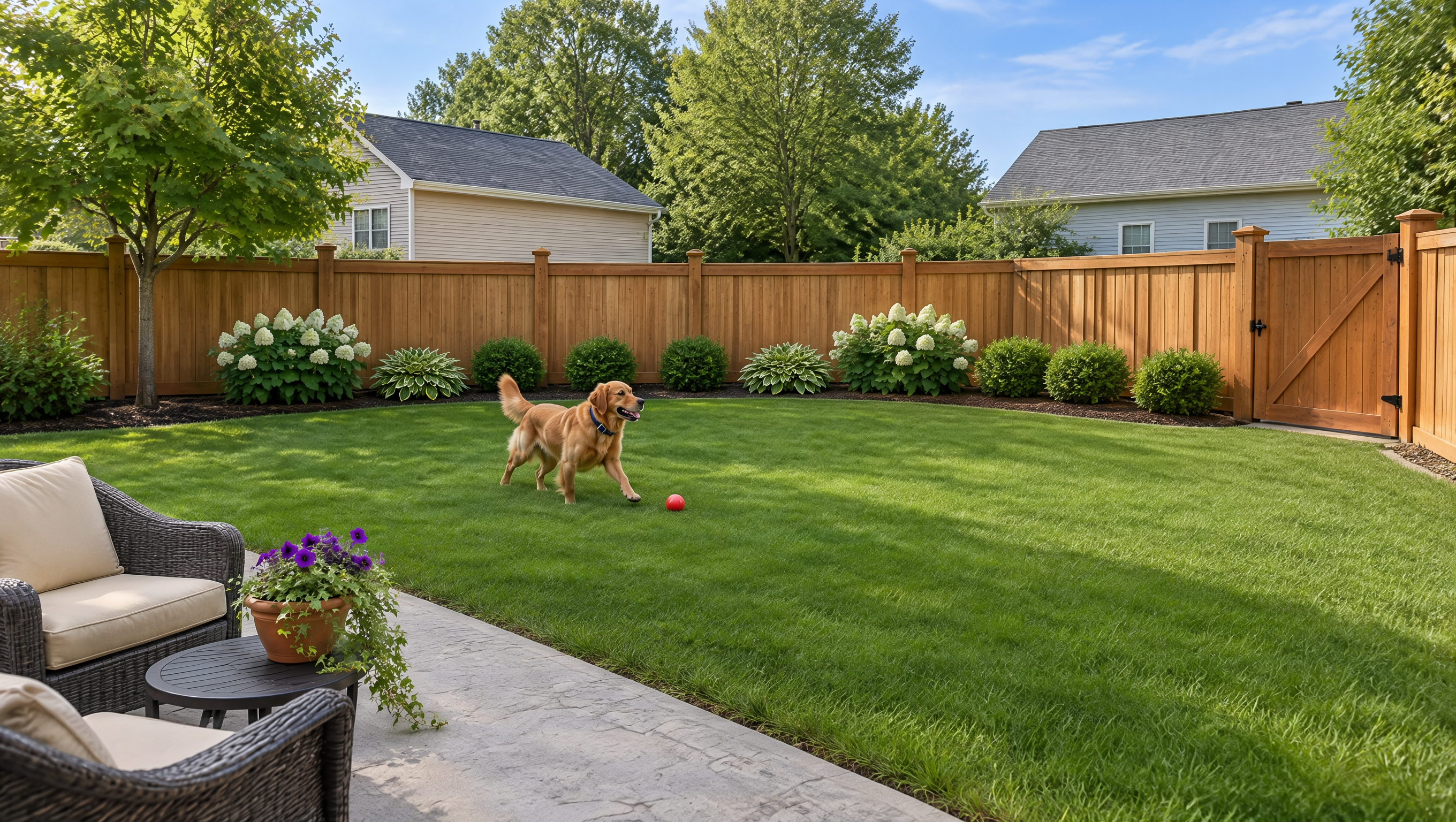
The best fence for dogs in Loves Park depends on more than pet size. Homeowners should consider jumping, digging, reactivity, visibility, gate security, ground gaps, and yard layout. Wood and vinyl provide strong visual privacy, while chain link and aluminum keep the yard more open. The safest choice is the one that matches the dog’s behavior and the property.
Start With Your Dog’s Behavior
A fence should be planned around the dog that will actually use the yard.
Before choosing a material, think about whether your dog:
Jumps
Digs
Climbs
Chases wildlife
Reacts to pedestrians or other dogs
Rushes open gates
These behaviors can affect fence height, privacy, gate placement, and the amount of visibility that makes sense.
A calm dog may do well with an open fence, while a reactive dog may benefit from a more solid barrier.
Wood Privacy Fence for Dogs That Need Less Visibility
Solid wood can be a practical choice when outside activity causes barking, pacing, or fence-line running.
A wood privacy fence can reduce views of:
Neighboring dogs
Pedestrians
Vehicles
Wildlife
Common styles include solid vertical and board-on-board fencing.
Board-on-board uses overlapping boards, which can help reduce sightlines as wood naturally expands and contracts.
Wood also offers flexibility around slopes and unusual yard layouts.
Consider Wood Maintenance
Wood provides strong privacy, but it requires more routine attention than some other materials.
Homeowners should periodically check for:
Loose boards
Splinters
Rot
Damaged rails
Leaning posts
Gate problems
For dogs that push against or patrol the fence, loose boards should be repaired promptly.
A small opening can quickly become a larger escape point.
Vinyl for Consistent Visual Privacy
Full-privacy vinyl is another strong option for dogs that benefit from limited visibility.
Solid panels can reduce distractions while providing:
Consistent screening
Smooth surfaces
Lower routine surface maintenance
No regular staining or sealing
Vinyl can work well around backyards, patios, and side yards where privacy is important for both homeowners and pets.
Vinyl Still Needs Structural Checks
Vinyl does not rot like wood, but posts and gates can still move.
Inspect for:
Uneven panels
Loose rails
Gate alignment problems
Ground gaps
Shifting posts
Drainage and soil stability still matter because the fence depends on solid post support.
During very cold weather, vinyl can become less flexible, so hard impacts should be avoided.
Chain Link for Dogs That Do Well With Open Views
Chain link can be a practical option for larger yards and active dogs when visual privacy is not necessary.
Its advantages include:
Open visibility
Good airflow
Practical containment
Suitability for longer fence runs
Black vinyl-coated chain link can blend more subtly into landscaping than traditional galvanized fencing.
For a dog that is calm around outside activity, this can be a straightforward solution.
When Chain Link May Not Be Ideal
Some dogs become more reactive when they can see everything outside the yard.
An open chain link fence may allow constant views of:
Other pets
Walkers
Delivery activity
Wildlife
If visual triggers are already a problem, solid wood or vinyl may be a better fit.
Privacy slats can add screening to chain link, but they also increase wind resistance and change the appearance of the fence.
Aluminum for Calm Dogs and Open Yards
Aluminum fencing can provide an attractive boundary while maintaining open views.
It may work well for dogs that:
Do not squeeze through narrow openings
Are not strong climbers
Do not react heavily to outside movement
Before choosing aluminum, check:
Picket spacing
Fence height
Ground clearance
Dog size
Small dogs may need a different style if the openings are too wide.
Fence Height Should Match the Dog
There is no single fence height that works for every dog.
Consider:
Size
Jumping ability
Climbing habits
Energy level
Nearby distractions
A smaller athletic dog may require more height than a larger but calmer pet.
Also remove or relocate objects near the fence that could become climbing aids, such as benches, storage bins, or stacked materials.
Applicable local requirements should be reviewed before finalizing height.
Ground Gaps Are a Major Security Issue
A secure fence needs attention at the bottom as well as the top.
Check for gaps caused by:
Slopes
Erosion
Uneven ground
Soil settlement
Gate clearance
Smaller dogs may be able to escape through openings that seem minor.
These areas should be inspected regularly, especially after heavy rain.
Plan for Dogs That Dig
Some dogs try to go under a fence rather than over it.
If digging is a concern, pay extra attention near:
Corners
Gates
Soft soil
Frequently used fence lines
Possible solutions may include reinforced lower areas or other barriers where appropriate.
Before filling a gap, determine whether it was created by the dog or by drainage and erosion.
Gates Need Strong Security
Gates are often the most vulnerable part of a pet enclosure.
A dog-friendly gate should have:
Stable posts
Reliable hinges
A secure latch
Minimal side gaps
Appropriate bottom clearance
The gate should close naturally without needing to be lifted or forced.
A gate that repeatedly loses alignment may have a post or framing problem.
Think About Latch Placement
Latch design and placement matter for dogs that push, jump, or paw at gates.
The latch should be secure and easy for the homeowner to operate without making accidental opening likely.
If children also use the yard, think about how the gate functions for the entire household.
Hardware should be inspected periodically for looseness or wear.
Consider a Two-Gate Entry
A dog that rushes toward openings may benefit from a small transition area with two barriers.
This can be useful near:
Driveways
Front yards
Frequently used entrances
A two-gate arrangement gives homeowners another layer of control when visitors, deliveries, or yard work require regular access.
Separate Pet Access From Equipment Access
A daily-use pet gate does not always need to serve as the mower or equipment entrance.
A second wider gate can provide access for:
Riding mowers
Trailers
Landscaping equipment
Keeping the everyday gate smaller can make it easier to manage around dogs.
Wide gates should also have strong support because additional weight can contribute to sagging.
Slopes Require Extra Attention
A sloped yard can create openings underneath the fence.
Depending on the material, sections may be stepped or installed to follow the grade more closely.
Pay particular attention where slopes meet:
Gates
Corners
Low areas
These transition points can create pet escape gaps if they are not planned carefully.
Drainage Can Change Fence Security
Rain and snowmelt can alter the ground under a fence.
Poor drainage may cause:
Erosion
Ground gaps
Post movement
Gate misalignment
Before installation, identify where water naturally travels through the yard.
After heavy rain, recheck those areas for new gaps or soil movement.
Privacy vs Visibility: Which Is Better?
There is no universal answer.
Choose more privacy when your dog:
Reacts strongly to outside movement
Runs the fence line
Barks at neighboring pets
Needs fewer visual distractions
Choose more visibility when your dog:
Is calm around outside activity
Benefits from an open yard
Does not need visual screening
The goal is to match the fence to the dog’s behavior rather than choosing privacy or openness by default.
Mixed Materials Can Work Well
A backyard can use different materials in different areas.
For example:
Vinyl privacy near a busy side yard
Wood along a neighboring property
Chain link along a quieter rear boundary
Aluminum near landscaping
This can balance pet security, privacy, appearance, and openness.
Think About Winter Access
Loves Park winters can affect gates and the lower fence line.
Plan for:
Snow piles
Shoveled paths
Gate swing
Snowblower routes
Avoid placing the primary pet gate where snow regularly collects.
Snow can also hide ground gaps, so these should be corrected before winter when possible.
Dog Fence Planning Checklist
Before installation, review:
Dog behavior
Fence height
Privacy needs
Visibility
Ground gaps
Digging areas
Gate locations
Latch security
Slopes
Drainage
Equipment access
Winter access
A safe fence should work with both the dog and the yard.
Request a Free Dog Fence Estimate
Arrow Fence helps Loves Park homeowners plan fencing for dogs, privacy, visibility, backyard use, and secure gate access.
Whether you are considering wood, vinyl, chain link, aluminum, mixed materials, repair, or replacement, Arrow Fence can help you compare practical options for your property and your pet.
Contact Arrow Fence at arrowfencerockford.com to request a free estimate for your dog fence project.
