
Best Fence Options for Evansville, WI Pet Owners
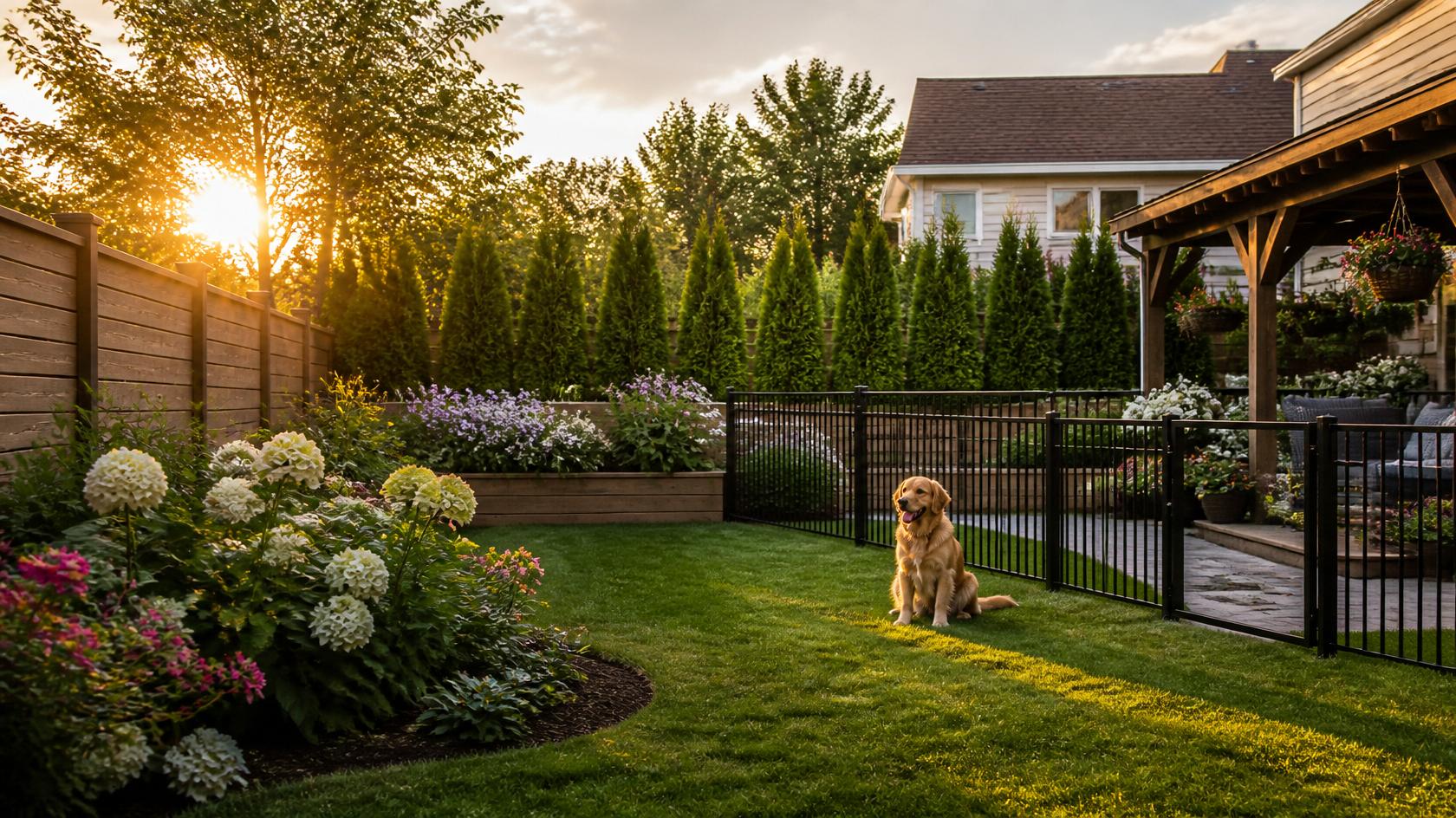
The best fence for an Evansville pet owner depends on the pet’s size, energy level, jumping ability, and digging habits. Wood and vinyl offer privacy, chain link provides durable containment, and aluminum can work well for calm pets when picket spacing and gate security are carefully planned.
Start With Your Pet’s Behavior
Choosing a pet fence is not only about selecting a material. The fence must match how your pet behaves outdoors.
Some dogs are calm and stay close to the house. Others jump, dig, climb, chase wildlife, or react to people and animals passing the yard. Small dogs may squeeze through narrow openings that would never be a concern for larger breeds.
Before selecting a fence, consider:
Your pet’s size and breed
Jumping or climbing ability
Digging habits
Reaction to outside activity
Time spent unsupervised
Number of pets using the yard
Gate access and daily routines
Planning around these details can create a safer enclosure and reduce the risk of escapes.
Wood Privacy Fencing for Reactive Dogs
Wood privacy fencing is a strong choice for dogs that bark, pace, or become excited when they see pedestrians, vehicles, wildlife, or neighboring pets.
Solid boards block most outside views and can make the backyard feel calmer. They also provide privacy for the household.
Popular wood styles include:
Solid vertical-board fencing
Board-on-board fencing
Horizontal wood fencing
Shadowbox fencing
Lattice-top privacy panels
Board-on-board fencing uses overlapping boards, helping reduce gaps as the wood naturally expands and contracts.
Wood can also be customized for unusual yard layouts. However, it needs regular staining, sealing, and inspections for loose boards, rot, splinters, and storm damage.
Pet owners should check the lower portion of the fence frequently. A loose board or small area of decay may quickly become an escape point.
Vinyl Fencing for Privacy and Easier Care
Vinyl fencing provides solid coverage without routine painting or staining. It does not splinter or absorb moisture like wood, making it appealing for busy pet owners.
Solid vinyl panels can limit visual distractions and prevent pets from pushing their noses through openings.
Vinyl options may include:
Full-privacy panels
Semi-private fencing
Decorative lattice tops
Picket-top privacy panels
Wood-look finishes
For small pets, full-privacy panels are often more secure than semi-private designs. Any openings between boards should be narrow enough to prevent the pet from squeezing through.
Strong installation is important because solid vinyl panels catch wind. Posts, rails, and footings must be able to handle Evansville’s storms, snow, and seasonal ground movement.
Chain Link Fencing for Active Pets
Chain link fencing is durable, practical, and useful for larger yards. It allows pets to see their surroundings while keeping the boundary clearly defined.
Black vinyl-coated chain link often blends with landscaping better than standard galvanized fencing.
Chain link may work well for:
Large dogs
Active pets
Dedicated dog runs
Wide backyard boundaries
Homes that do not need full privacy
Owners who prefer limited maintenance
Some dogs may try to climb chain link. Others may bark more because they can see people and animals beyond the yard.
Privacy slats or screening can reduce visibility, but these additions increase wind pressure. The posts and framework must be strong enough to support them.
Aluminum and Ornamental Fencing
Aluminum and ornamental fencing offer an attractive, open appearance. They can work for calm pets that do not react strongly to outside activity.
These fences are often used near patios, gardens, pools, and landscaped areas. They require relatively little maintenance and do not block the view.
However, picket spacing is critical. Small dogs may fit between widely spaced pickets, and some pets may be able to push through decorative openings.
An aluminum or ornamental fence may be appropriate when:
The pet is too large to fit through the pickets
Open visibility is preferred
The yard needs a decorative boundary
The pet is not likely to climb or jump
Gate hardware is secure
Homeowners should confirm that the selected height and spacing fit their specific pet.
Choosing the Right Fence Height
The correct fence height depends on the pet’s size and athletic ability.
A smaller dog may be safely contained by a shorter fence, while a large or energetic dog may need a taller enclosure. Dogs that can climb or jump should not have access to rails, furniture, wood piles, or landscaping that could serve as a step.
Changes in ground elevation also matter. A fence may be tall on one side of the yard but much easier to jump where the ground rises.
A property review can help identify areas where additional height or reinforcement may be necessary.
Preventing Dogs From Digging Under a Fence
A secure fence above ground may not stop a determined digging dog.
Possible solutions include:
Buried wire along the fence line
Reinforced lower rails
Landscape edging
Gravel barriers
Concrete mowing strips
Dig-resistant mesh
Supervised outdoor time
The best option depends on the soil, fence material, and severity of the digging behavior.
Homeowners should also watch for natural erosion. Heavy rain and melting snow can create gaps below panels even when the pet did not dig them.
Planning Pet-Safe Gates
Gates are among the most common weak points in pet enclosures.
A gate should close easily, latch securely, and remain aligned through seasonal changes. Self-closing hinges may be helpful for households where children, visitors, or service providers regularly enter the yard.
Useful pet-safe gate features include:
Strong latches
Reinforced frames
Minimal ground clearance
Self-closing hinges
Double-latch systems
Smooth interior hardware
Stable gate posts
Some homes benefit from a small enclosed transition area with two gates. This can reduce the chance of a pet escaping when someone enters or leaves.
Selecting the Best Gate Location
Gate placement should support both pet safety and everyday convenience.
A walk gate is commonly installed between the driveway and backyard. A wider double gate may be needed for riding mowers, trailers, landscaping equipment, or future backyard projects.
Before choosing a location, consider:
Driveway and sidewalk access
Distance from roads
Garbage and recycling areas
Utility meters
Patio entrances
Mowing routes
Drainage
Future sheds or pools
Placing the most frequently used gate away from traffic can provide an added layer of safety.
Fence Ideas for Multiple Pets
Households with multiple pets may need more than one enclosed area.
A smaller dog run can provide controlled exercise space while protecting gardens or high-traffic lawn areas. Separate sections may also help when pets need individual outdoor time.
A mixed layout could include:
Vinyl privacy fencing around the main yard
Chain link around a dedicated dog run
Decorative aluminum near the patio
A separate gate for pet-care access
Planning separate zones can make feeding, training, cleanup, and yard maintenance easier.
Fencing for Small Evansville Backyards
Tall solid fencing can provide privacy in a smaller yard, but it may also make the space feel enclosed.
Light-colored vinyl can help brighten the area. Horizontal wood boards may make a narrow yard appear wider. Privacy panels can also be limited to sections where neighboring views are strongest.
For small pets, avoid decorative openings and large gaps beneath gates. Every transition between the fence, home, and ground should be checked carefully.
Fencing for Larger Properties
Larger properties may not need the same material around the entire boundary.
Chain link can provide practical containment along longer sections, while wood or vinyl can be used closer to the home for privacy. Aluminum may work near landscaping or visible entrances.
Combining materials can control costs while giving pets a safe area and preserving the appearance of the property.
Wide gate access should also be planned for mowing and maintenance equipment.
Comparing Pet-Friendly Fence Materials
Wood
Wood provides privacy and flexible design. It can reduce outside distractions but requires staining, sealing, and regular repairs.
Vinyl
Vinyl offers solid coverage with limited routine maintenance. It is smooth and private but must be installed securely for strong winds.
Chain Link
Chain link is durable and affordable for larger yards. It offers visibility, which may not suit reactive or climbing dogs.
Aluminum
Aluminum is attractive and low maintenance. Picket spacing and pet behavior must be evaluated carefully.
Ornamental Fencing
Ornamental fencing adds curb appeal and creates a clear boundary. It is best for pets that do not need visual screening.
Preparing Pet Fencing for Wisconsin Weather
Evansville fences must withstand rain, wind, snow, ice, storm damage, and repeated freeze-thaw cycles.
Seasonal ground movement can affect posts and gate alignment. Heavy snow may create pressure along lower panels, while falling branches can damage boards or rails.
Pet owners should regularly:
Check posts for leaning
Test gates and latches
Inspect for gaps below the fence
Remove leaves from the fence base
Trim nearby branches
Look for damaged boards or panels
Clear snow carefully
Inspect the fence after storms
Small repairs should be completed quickly before they create a possible escape route.
Request a Free Pet Fence Estimate
Arrow Fence helps homeowners in Evansville and nearby communities plan fencing for dogs, small pets, privacy, backyard safety, and convenient access.
Whether you are considering wood, vinyl, chain link, aluminum, ornamental fencing, a dog run, fence repair, replacement, or new gates, Arrow Fence can help you compare practical options.
Contact Arrow Fence at arrowfencerockford.com to request a free estimate for your pet fencing project.
