
Business Security Upgrades with Fencing
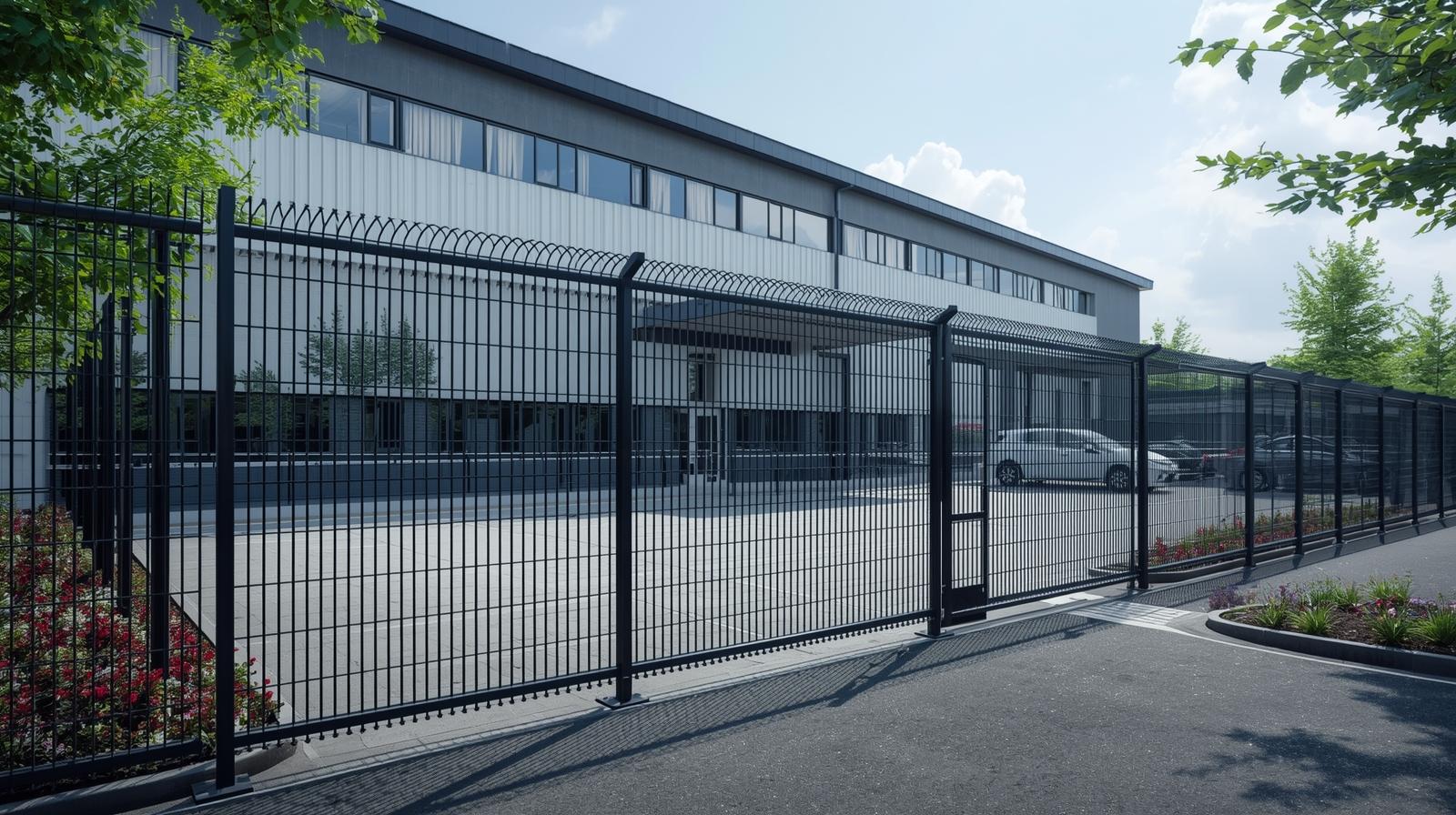
It’s a feeling every business owner dreads: arriving in the morning to find your property vandalized or, worse, broken into. The cost isn't just what was stolen—it's the operational downtime and lost sense of security. While alarms are crucial, your first line of defense for securing a business perimeter begins right at your property line. But is it strong enough?
Many fences simply mark a boundary, acting like a weak password that offers little real protection from a determined intruder. A true security fence, however, is an active tool. It serves as a complex password for your property, designed to make an intruder's job frustratingly difficult, noisy, and slow, actively deterring trespassers by making your site a much harder target. Understanding the specific threats you want to prevent is the first step toward making a smart, cost-effective choice that protects your assets and delivers genuine peace of mind.
How a Fence Becomes Your First Line of Defense: Deter, Delay, Detect
While a simple boundary fence just marks where your property ends, a true security fence plays an active role in your company’s protection. Its effectiveness comes down to a simple but powerful three-part strategy that security professionals rely on to stop a problem before it even starts.
First, a strong fence is a powerful visual deterrent. From a potential thief’s perspective, the goal is the easiest, quickest target. A tall, imposing fence that looks difficult to climb or cut through sends a clear message that your property is not that target. This simple visual cue is often enough to make them move on, which is the best-case scenario for your industrial security.
If they aren’t deterred, the fence's next job is to delay them. A cheap chain-link fence can be snipped in seconds, but a proper security fence is built to resist cutting, climbing, and ramming. This forces an intruder to spend precious time and make a lot of noise, which dramatically increases their risk of being caught.
That forced delay is what makes your other security measures effective. The extra minutes an intruder spends fighting the fence gives your cameras, motion-sensor lights, and alarm systems the critical time they need to detect the threat and trigger a response. The fence and your electronic systems work as a team, with one making the other far more effective. This three-part job—Deter, Delay, Detect—is the foundation of a secure perimeter.
What to Look For: The 3 Features Every True Security Fence Must Have
To effectively deter, delay, and detect, a fence must perform under pressure. As you evaluate upgrades for your business, focus on three non-negotiable features that define a true security fence.
First is height. A standard 6-foot fence might work for a backyard, but for business security, 8 feet is the minimum you should consider. This height creates a serious physical and psychological barrier. It’s tall enough to discourage casual climbing attempts and sends a clear visual signal that your property is well-protected, directly supporting the "deterrent" role of your perimeter.
Next, look for an anti-climb design. A tall fence is useless if it provides an easy ladder for intruders. Effective security fences are intentionally designed to offer no easy hand or footholds. This can be achieved with pointed or curved tops that are difficult to grab, or with tightly woven wire mesh where the openings are too small to get a grip. This design is what creates the critical "delay," forcing an intruder to waste time and energy.
Finally, you must consider material strength. This is where many standard chain-link fences fail. A determined trespasser can snip through cheap, thin wire with bolt cutters in seconds. A real security fence uses thicker, hardened steel that resists these common tools. Whether it's solid steel pales or heavy-gauge welded wire, the material must be strong enough to withstand a brute-force attack, ensuring it can delay an intruder long enough for them to be detected.
Choosing Your Upgrade: Palisade vs. Welded Mesh Fencing
When businesses look to upgrade from basic chain link, two high-security solutions consistently stand out for their ability to deliver on height, strength, and anti-climb design: Steel Palisade and Welded Mesh. Each offers a distinct approach to securing your property.
Think of Steel Palisade fencing as a modern-day fortress wall. Constructed from heavy vertical steel pales, often with menacing pointed tips, it presents an overwhelming physical and psychological barrier. Unlike purely decorative wrought iron, its sole purpose is security. This style is exceptionally difficult to climb, dismantle, or breach with force, making it an ideal choice for industrial sites or any business needing to protect high-value equipment stored outdoors.
On the other hand, Welded Mesh offers a different kind of security advantage. These rigid panels consist of a thick wire grid welded at every intersection, creating a material that’s nearly impossible to snip with standard bolt cutters. The tight weave prevents intruders from getting a handhold to climb, while the see-through design is a major benefit for surveillance. It gives your security cameras an unobstructed view, eliminating the hiding spots that solid fences can accidentally create.
Ultimately, the best choice depends on your primary goal. If you need to project maximum intimidation and create the toughest possible physical barrier, a Steel Palisade is hard to beat. However, if your security strategy relies heavily on surveillance and maintaining open sightlines, Welded Mesh is often the smarter investment.
Securing Your Perimeter on a Budget: Where to Invest First
A full perimeter overhaul might not be in the budget, but that shouldn't stop you from making meaningful business security upgrades. Instead of an all-or-nothing approach, think strategically. Where is your property most vulnerable? Often, it’s the back alley hidden from street view or the side of the building obscured by trees. Securing a business perimeter on a budget means focusing your investment on these high-risk zones first. A strong fence in a weak spot can solve the majority of your problem for a fraction of the total cost.
Before committing to a full replacement, consider if your existing fence can be reinforced. If you have a solid chain-link or wood fence that is in good condition, it may be possible to add anti-climb features like angled top guards or specialized toppings. This approach can dramatically increase your security for a fraction of the price of a brand-new installation.
View the commercial property fence installation cost not as an expense, but as a form of insurance. The financial damage from a single major theft—including stolen equipment, lost inventory, and operational downtime—can easily exceed the price of a fence upgrade. By making a one-time investment in a stronger perimeter, you’re not just buying steel and wire; you’re buying peace of mind and protecting your business from future losses.
Beyond the Fence: Integrating Gates, Lighting, and Access Control
A strong fence loses all its value if an intruder can simply walk through an unlocked or flimsy gate. Your property’s security is only as strong as its weakest point, and that is often the gate itself. For a security fence to be effective, it needs an equally robust gate that can’t be easily forced, lifted off its hinges, or bypassed.
For many commercial properties, the answer is a cantilever gate. Unlike traditional swing gates, these gates slide horizontally without a track on the ground, which prevents issues with debris or snow and makes them far more difficult to tamper with. They present a formidable, seamless continuation of your fence line, ensuring there are no easy entry points for vehicles or trespassers on foot.
But a secure gate is only part of the equation. Strategic security lighting is essential; it eliminates shadows and dark corners where intruders could hide while trying to breach your fence. This not only deters criminals but also ensures that any security cameras you have can capture clear, usable footage, turning your fence into an active part of your perimeter intrusion detection system.
Integrating access control with security gates provides the ultimate layer of control. Instead of physical keys that can be lost or copied, a keypad or card-reader system allows you to grant and revoke access instantly. If an employee leaves the company, their access can be removed with a click, eliminating a common security risk. It provides a digital log of who entered and when, giving you both security and oversight.
Questions to Ask Before You Hire a Commercial Fence Contractor
Understanding that a fence is an active security tool is the key to protecting your business. You are now equipped to move from planning to action. The next step is choosing a reliable commercial fence contractor who can turn these principles into a physical barrier.
Go into that conversation with confidence, using these questions to vet their expertise and compare quotes on an apples-to-apples basis:
Based on my business (e.g., auto shop, storage facility), what fence type do you recommend and why?
What material thickness and coating do you suggest to prevent both cutting and rust?
How will the fence posts be installed to ensure they can't be easily pulled over or lifted?
What are the pros and cons of a sliding vs. a swing gate for my main entrance?
Can you provide examples or addresses of similar commercial projects you've completed?
By focusing the discussion on how the installation will solve your specific security problems, you move beyond price alone. You’re no longer just buying a fence; you're making an informed investment in your peace of mind.
