
Dumpster Enclosure Fence Requirements in Wisconsin
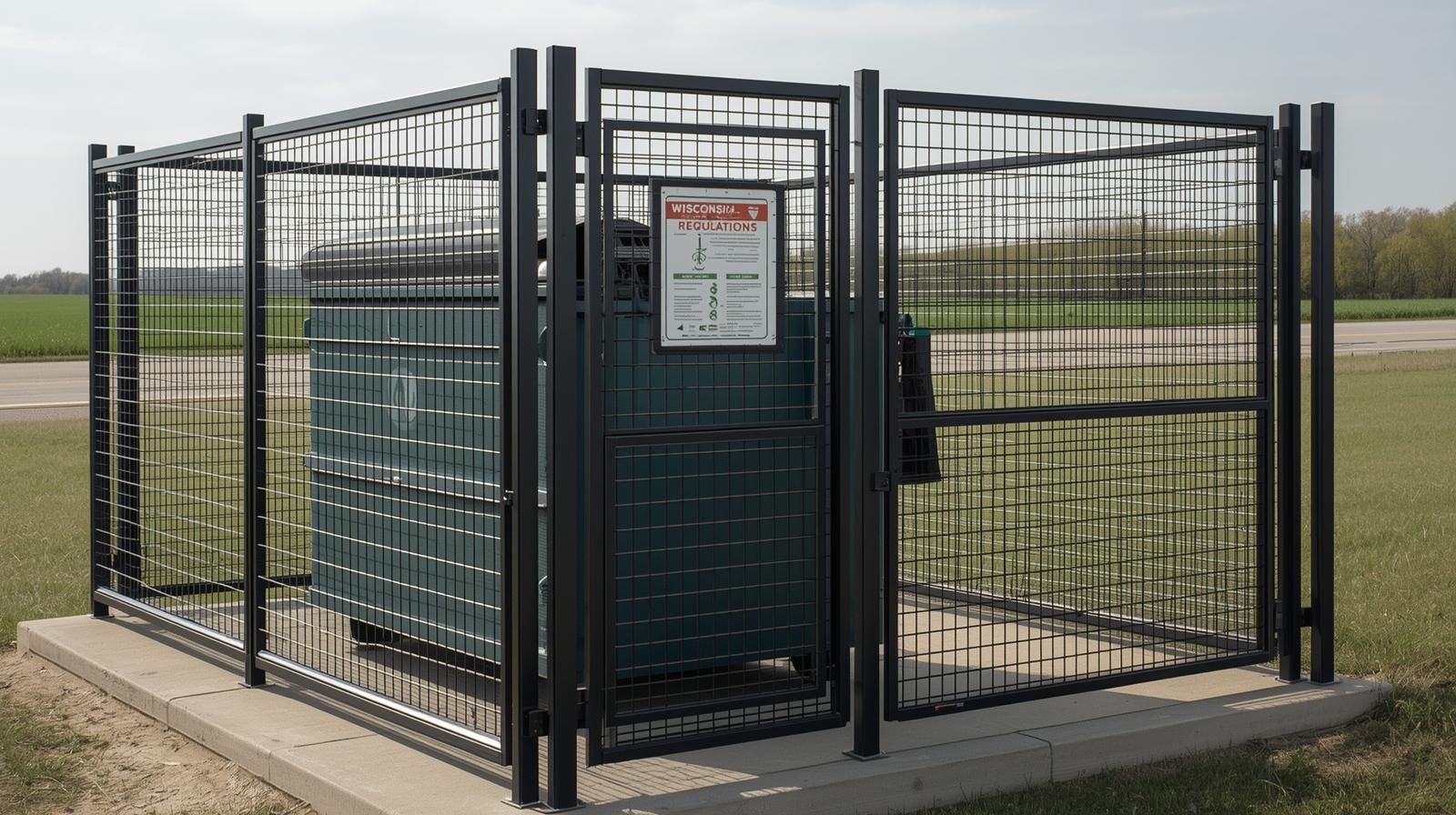
Is that dumpster behind your business an eyesore? In Wisconsin, hiding it isn't just about looking good—it's often the law. Getting the rules for your dumpster privacy fence wrong can lead to daily fines and frustrating project delays, but this guide makes it simple to get it right the first time.
These commercial waste container screening rules exist for more than just curb appeal. Your local city is often concerned with public safety, preventing pest access, and controlling odors. Failing to comply can mean a stop-work order on a construction project or a notice from a code inspector, creating headaches you don't need.
Successfully navigating Wisconsin's fencing laws for enclosures comes down to three key factors: the height and screening of the enclosure, the materials you use, and its exact location on your property.
Height and Screening Requirements
While every Wisconsin municipality has its own rules, a general standard has emerged. Most cities require an enclosure to be at least six feet tall. A more practical guideline is to ensure the fence is at least one foot taller than the dumpster it's hiding.
This height isn’t arbitrary; it’s designed to achieve what planners call “full screening.” The goal is simple: a person of average height walking by on a public sidewalk or street should not be able to see the container. This principle is central to nearly all trash enclosure regulations in WI.
Before you build, measure the height of your specific waste container. Adding one foot to that measurement gives you a reliable target for your fence height. Of course, height is only half the battle. The materials you use are just as crucial for truly hiding commercial trash bins and meeting local codes.
Approved Materials and Opacity
The next critical rule for your enclosure is opacity. This simply means the material must be solid and not see-through, which is why standard chain link is rarely compliant on its own. The goal is to create a complete visual barrier between the dumpster and the public.
Commonly approved materials include:
Wood (such as cedar or treated pine)
Vinyl/PVC
Composite materials (like Trex)
Masonry (brick or concrete block)
Chain link with factory-installed privacy slats
The best material often depends on your specific needs. A restaurant, for example, might prefer smooth, easy-to-clean vinyl to manage spills and hygiene. An office complex, on the other hand, may choose a wood or brick enclosure to better match its existing architecture.
Location, Setbacks, and Property Lines
Your city's rules dictate where permanent structures can be built, and this is governed by a key concept called a setback. A setback is a mandatory "no-build" zone—an invisible buffer area along your property lines, sidewalks, and even the back of your building. This is a crucial detail in the zoning codes for waste management across Wisconsin.
This required buffer is often five or ten feet from a side or rear property line, but the exact distance is set by your local ordinance. Before you pour any concrete, you must confirm your property's specific setback distances with your local planning or zoning department.
These buffer zones exist to guarantee clear access for emergency vehicles, to keep sightlines clear for drivers, and to allow for utility maintenance.
Gates, Pads, and Truck Access
Your enclosure’s gate is just as important as its walls. Commercial waste container screening rules typically demand that gates be fully opaque, just like the fence. For durability and security, a sturdy, lockable gate is your best defense against illegal dumping—a common headache that can lead to overflow and extra fees. Investing in durable dumpster enclosure gates that can withstand daily use is a smart move.
What the enclosure sits on also matters. Many Wisconsin municipalities require you to build the enclosure on a concrete pad. A solid base prevents the heavy dumpster from sinking into the ground and keeps the enclosure stable. For businesses like restaurants, a concrete pad is especially critical because it provides a non-porous, easy-to-clean surface for sanitation.
Most critically, you must plan for the collection truck. A frustrated driver who can't access your dumpster means a missed pickup. Ensure your gate provides a wide enough opening—at least 10 to 12 feet is a safe bet—and that the truck has a clear, straight path to approach it.
Finding Your Local Rules and Permits
The single most important source of truth is your local government. Each Wisconsin city, village, or town has its own rulebook, called a municipal ordinance, and these are the laws you must follow. To get a definitive answer, contact your local Planning, Zoning, or Public Works Department. Their guidance will help you avoid costly mistakes.
A simple phone call is often all it takes. Just state your address and your goal: "Hi, I'm at [your business address] and need to know the requirements for a dumpster enclosure." This direct approach works whether you're navigating the specific Milwaukee dumpster ordinance or rules in a smaller town.
Finally, ask the critical question: "Do I need a permit for a dumpster enclosure?" A permit is official permission to begin construction. Forgetting this step can lead to stop-work orders and fines. Getting a clear "yes" or "no" on the permit question is your final green light.
Your 4-Step Checklist for a Code-Compliant Dumpster Enclosure
Measure and Plan: Determine your required height (dumpster height + 1 foot) and confirm the enclosure's location meets all property line setback rules. Ensure there is a clear, straight path for truck access with a gate opening of at least 10-12 feet.
Select Materials: Choose a fully opaque material like vinyl, wood, composite, or masonry that complies with local ordinances and suits your business's aesthetic and maintenance needs.
Contact Local Officials: Call your city or village's Planning or Zoning Department. State your address and your project to get specific requirements for height, materials, setbacks, and foundation pads.
Secure a Permit: Before starting construction, ask your local department if a permit is required. If so, complete the application process to ensure your project is fully compliant from day one.
