
Essential Steps for Installing Chain Link Fences
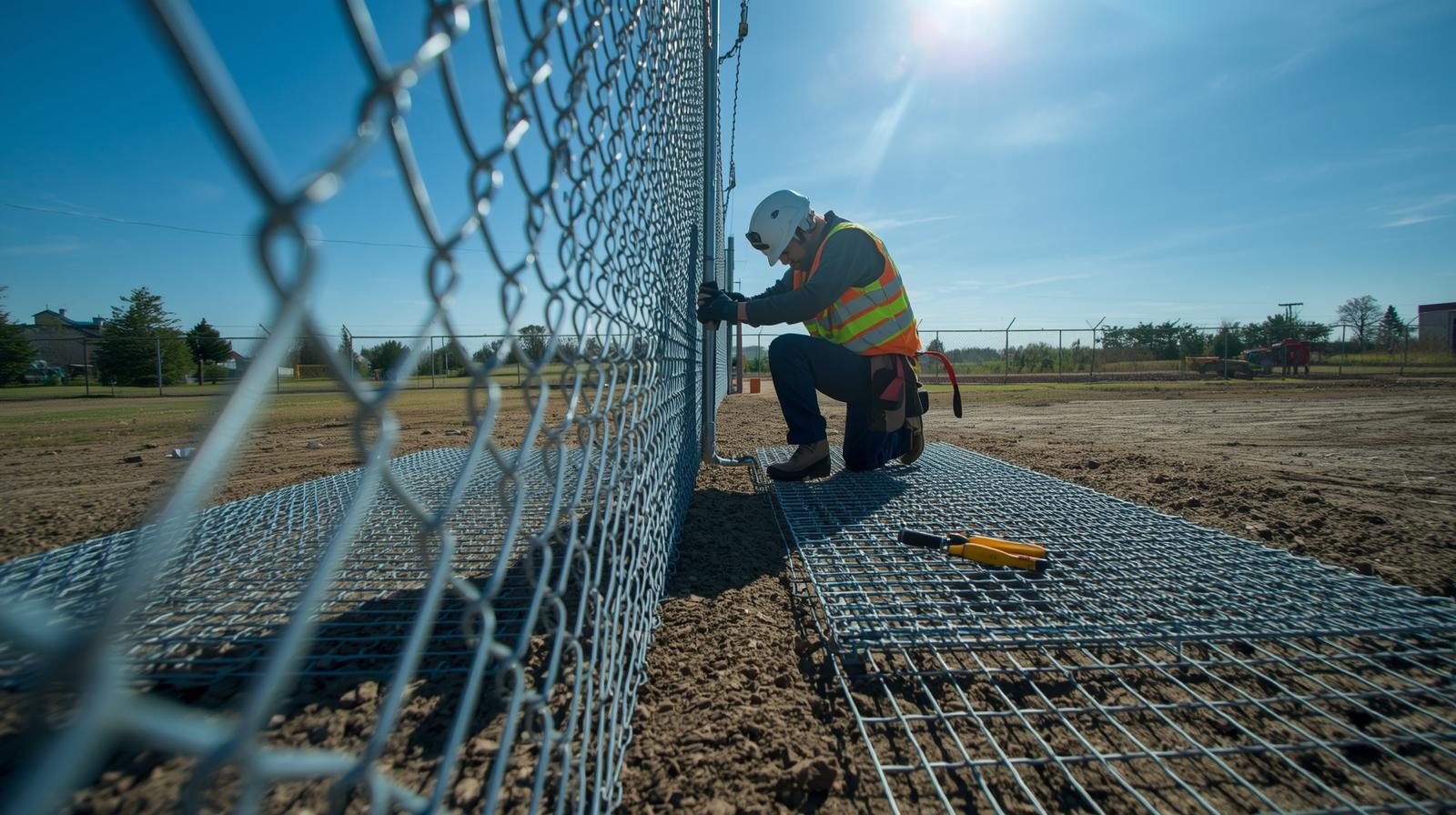
What's the real difference between a standard backyard fence and an industrial chain link fence for a commercial property? It isn't just height. The crucial distinction lies in hidden strengths: the thickness of the wire, the diameter of the posts, and the depth of the concrete footings they are set in.
Unlike a residential marker, professional security fencing is a system engineered for a durable, long-lasting perimeter. The installation technique—from how posts are secured to how the mesh is stretched—is as critical as the material quality. The goal is a barrier that actively resists stress and deters intrusion for years.
This guide explains the professional process in simple terms, covering the key components and installation milestones. It will empower you to ask the right questions, evaluate a contractor’s quote with confidence, and ensure your investment results in a truly secure perimeter.
What Makes a Fence Skeleton Strong? Posts, Rails, and Fittings Explained
A fence's strength begins with its skeleton. You will see two types in a professional installation: heavy-duty terminal posts and standard line posts. Terminal posts are larger, have thicker walls, and are set in more concrete. They are the workhorses at all ends, corners, and gate openings because they must bear the full tension of the stretched fence line. The slimmer line posts simply provide support along straight runs.
Running horizontally across the top is the top rail, a steel pipe that provides crucial rigidity. It's not just for looks; the top rail acts as the spine for the entire fence line, preventing the chain link mesh from sagging. A fence without a solid top rail will quickly lose its shape and professional appearance, compromising its integrity.
Small but vital hardware called fittings connect these pipes into an unyielding structure. As shown in the photo, a brace band is a simple clamp that holds the top rail securely to a terminal post. Likewise, a series of tension bands wrap around the post to hold the mesh tight, locking in the force required to keep the fence fabric taut.
Together, these components—strong terminal posts, supportive line posts, a rigid top rail, and secure fittings—form a durable framework. With this skeleton in place, the next step involves the chain link mesh, where factors like wire gauge and protective coatings determine the fence’s ultimate strength and lifespan.
Why Wire Gauge and Coating Are Your Biggest Cost and Security Decisions
With the skeleton in place, the next decision involves the chain link mesh itself—the "skin" that provides the barrier. The most important factor for strength is the wire gauge, which refers to the wire's thickness. It's counterintuitive, but the lower the gauge number, the thicker, heavier, and stronger the wire.
For any heavy-duty security fence, you’ll choose low-gauge options because thicker wire is harder to cut and withstands greater force. Your main choices will be:
9-Gauge: The industry standard for most commercial and industrial properties. It’s strong, rigid, and provides a formidable barrier.
6-Gauge: A significant upgrade for high-security areas. This extremely thick wire is exceptionally hard to cut and offers a more imposing visual deterrent.
Beyond strength, you must consider how the fence will stand up to weather. To prevent rust, industrial chain link mesh is always protected with a coating. A standard galvanized finish applies a layer of zinc that guards against corrosion. For maximum durability, especially in coastal or chemical-heavy environments, a vinyl-coated fence is superior. This adds a thick layer of PVC over the galvanized wire, sealing it from the elements.
These two choices—gauge and coating—are the biggest drivers of both your fence's security level and its final cost. A heavier gauge or a vinyl coating increases the initial investment but pays for itself in longevity and peace of mind. However, even the best materials fail with a weak foundation, which makes the next step critical.
The Unseen Step That Guarantees a 20-Year Fence: Setting Posts in Concrete
A fence is only as strong as its foundation. For any industrial job, each post must be anchored in a solid concrete footing. Professionals follow a simple rule: at least one-third of the post’s length goes underground. This depth, combined with a wide concrete base, ensures the structure can resist frost heave and extreme weather for decades.
Post spacing is also critical. A proper industrial fence requires a maximum of 10 feet between each line post. Spacing them farther apart is a common cost-cutting shortcut that significantly weakens the entire fence line. This 10-foot standard keeps the top rail from sagging and provides the necessary support to hold the mesh taut against pressure.
After the posts are perfectly set, patience is paramount. Rushing the next step is a costly mistake. The concrete must fully cure for several days to gain its immense strength before bearing any load. This unshakeable framework allows an installer to properly tension the fence, which turns loose mesh into a drum-tight barrier.
From Loose Mesh to a Drum-Tight Barrier: How Professionals Stretch a Fence
Once the concrete footings have cured, the loose chain link mesh is ready to become a formidable barrier. This transformation is achieved through tensioning, or stretching. Like tuning a guitar string, the mesh must be pulled incredibly tight between the terminal posts. Without proper tension, a fence will sag and look unprofessional, creating a weak point in your security perimeter.
Achieving this on heavy-gauge fabric requires specialized equipment. Installers weave a vertical tension bar through the end of the mesh to create a solid edge to pull against. This bar connects to the terminal post using brace bands. Using a professional fence stretcher, they apply hundreds of pounds of force, stretching the mesh until it is perfectly taut.
This process delivers more than just a clean, professional appearance. A properly tensioned fence is a secure one. The taut mesh prevents intruders from easily lifting the bottom edge to crawl underneath, a common vulnerability in poorly installed fences. It’s this step that turns a simple boundary marker into a true security barrier.
Beyond the Basics: Security Upgrades Like Barbed Wire and Better Gates
While a tight fence is a strong deterrent, true security fencing often requires an extra layer of defense against climbing. This is where installing a barbed wire top arm comes in. These angled extensions are added to post tops to support several strands of barbed wire, creating a highly effective and visible anti-climb barrier. It's a standard upgrade where restricting access is a top priority.
Your gate is the most-used part of your fence, so choosing the right type is vital. A swing gate operates like a door, swinging inward or outward. This is a cost-effective and reliable choice for properties with ample room for the gate to open. For tighter spaces or very wide openings, a slide gate is often superior. Instead of swinging, this gate rolls sideways along the fence line on a track, making it ideal for areas with limited clearance or sloped driveways.
Finally, a gate is only as secure as its components. When reviewing gate hardware options, insist on heavy-duty, commercial-grade hinges and latches. These details prevent sagging and forced entry, ensuring your gate remains a strong point—not a weak link—in your security perimeter.
Your Final Check: 3 Critical Questions to Ask Your Fencing Contractor
Now that you understand the components of a secure fence, it’s time to choose the right installation partner. A professional will welcome detailed questions. Before you sign a contract, asking these three questions can help you avoid common mistakes.
Do your materials meet ASTM standards? The American Society for Testing and Materials (ASTM) sets the quality benchmark for steel and fence components. An affirmative answer ensures your materials are genuinely industrial-grade.
Is pulling the local permit included in your quote? Many areas have specific commercial fencing permit requirements. Clarifying who handles the application and fees upfront prevents surprise costs and delays.
What, specifically, does your warranty cover? Ask for separate details on the workmanship (labor) and material warranties. Understanding the length and limitations of each reflects the contractor’s confidence and protects you down the line.
These questions help separate the true professionals from the rest, ensuring your project is compliant, built to last, and a secure asset for your property.
Turning Knowledge into a Secure Investment
You are now equipped to evaluate a chain link fence not just as a barrier, but as a critical security asset. The signs of professional work are clear: deep concrete footings, properly spaced posts, heavy-gauge wire, and the drum-tight tension of the mesh—the undeniable hallmark of a fence built to last.
Use this insight to ask sharp questions, specify your project needs, and hire a team with confidence. This ensures your fence installation is a lasting investment in your property's safety, not just a temporary expense.
