
Fence Gate Maintenance in Rockford, IL: Preparing Hinges and Latches for Winter
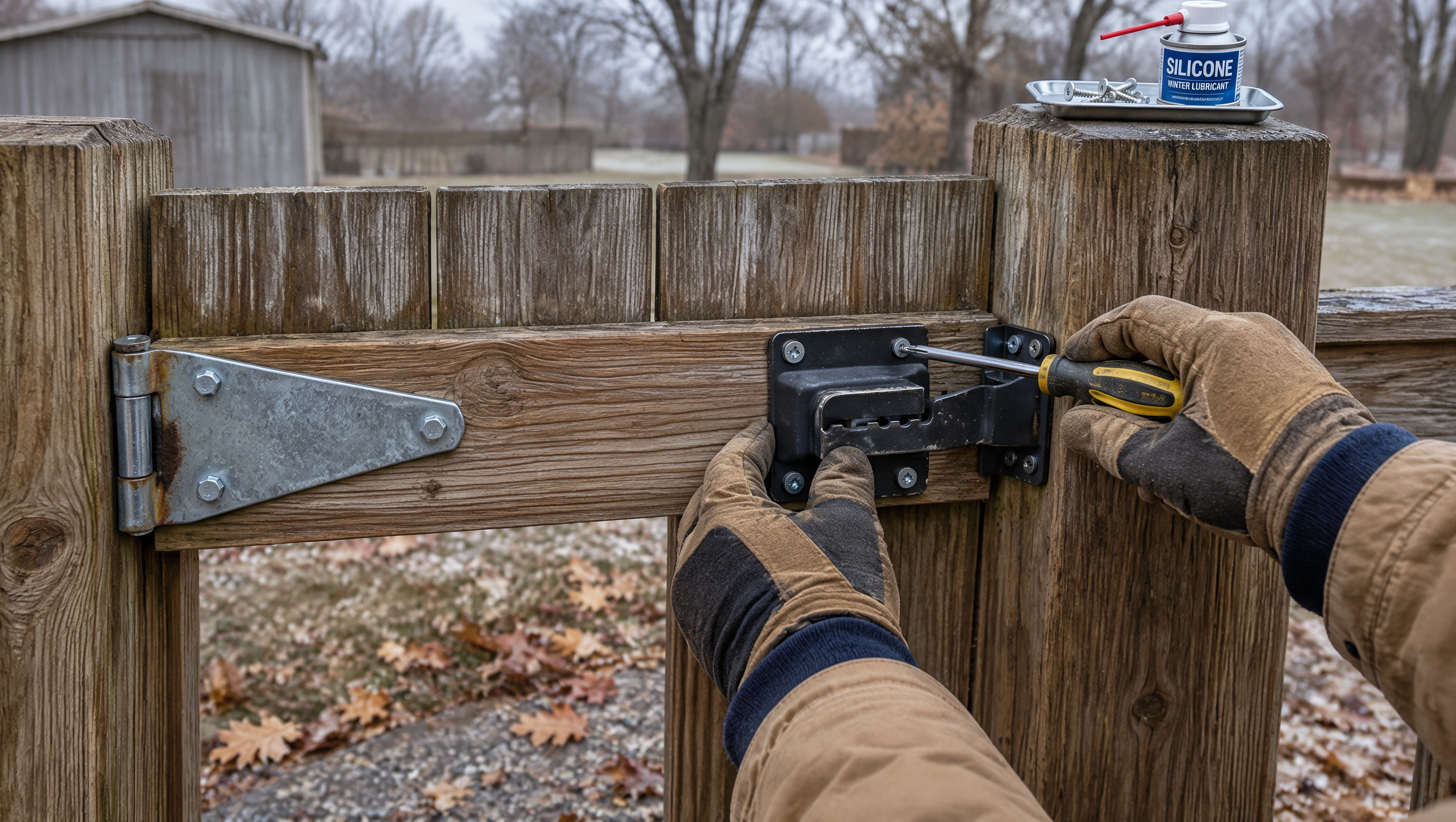
Before winter arrives in Rockford, homeowners should inspect fence gate hinges, latches, fasteners, posts, and ground clearance. Cold weather, snow, moisture, and freeze-thaw cycles can make an already stiff or misaligned gate harder to use. A few fall maintenance checks can help keep the gate working reliably through winter.
Why Gate Hardware Needs Attention Before Winter
Fence gates experience more movement than almost any other part of the fence.
Every time the gate opens or closes, the hinges, latch, fasteners, and posts handle additional stress.
By late fall, small problems may already be developing from:
Regular use
Rain and moisture
Soil movement
Wind
Seasonal temperature changes
Once snow and ice arrive, access becomes more difficult and minor alignment problems may become more noticeable.
Open and Close the Gate Several Times
Start with a basic function test.
Open and close the gate slowly and pay attention to how it moves.
Look for:
Resistance
Squeaking
Sagging
Dragging
Uneven movement
Difficulty reaching the latch
A gate should move smoothly without needing to be lifted, pushed hard, or forced into position.
If its movement has changed since summer, inspect the hardware and posts before winter.
Inspect the Hinges Closely
Hinges carry much of the gate's weight.
Check each hinge for:
Loose screws or bolts
Bent components
Worn connection points
Movement where the hinge attaches
Visible damage
Even a small amount of looseness can allow the gate to drop slightly.
That movement may be enough to affect the latch or reduce clearance at the bottom.
Tighten Loose Fasteners
If the hinge hardware is still in good condition, tightening loose fasteners may help restore stability.
Do not overtighten damaged or deteriorated material.
If screws no longer hold securely in wood, for example, the problem may involve the surrounding gate frame or post rather than the screw itself.
Repeatedly tightening hardware that continues to loosen can indicate a larger support problem.
Listen for Unusual Hinge Noise
A squeaking hinge is not always a structural problem, but it can indicate friction or lack of smooth movement.
Check whether the hinge:
Moves freely
Appears bent
Has debris around the connection
Is pulling away from the gate or post
Use maintenance products appropriate for the specific hinge and fence material if lubrication is needed.
The goal is smooth movement without masking a loose or damaged component.
Check the Hinge Post
Hardware maintenance will not solve the problem if the supporting post is moving.
Stand back and inspect the hinge post for:
Leaning
Movement at the base
Soil gaps
Erosion
Rot on wood posts
A small shift at the post can create a much larger alignment change at the opposite edge of the gate.
If the gate keeps sagging after adjustments, post movement may be the real cause.
Test the Latch Several Times
A latch should engage without requiring the gate to be lifted or pulled into position.
Check whether it:
Lines up naturally
Closes securely
Releases smoothly
Feels loose
Has bent components
If the latch suddenly needs adjustment, first determine whether the gate or posts have moved.
The latch itself may still be functioning correctly.
Inspect the Latch Mounting Points
Loose latch hardware can make a gate feel unreliable.
Look for:
Loose screws
Worn holes
Bent brackets
Movement in the mounting surface
If the latch is mounted to deteriorated wood or an unstable post, simply replacing the hardware may not solve the problem.
The mounting surface needs to remain secure.
Check the Latch Post
The latch-side post can shift independently from the hinge post.
Signs include:
The opening becoming tighter
The opening becoming wider
The latch no longer reaching
Uneven gaps along the gate
Inspect both gate posts whenever alignment changes.
A latch adjustment is most effective after confirming that the posts are stable.
Remove Leaves and Debris Around the Gate
Fall debris can interfere with gate operation.
Clear:
Leaves
Mud
Mulch
Small branches
Gravel
from the gate swing area.
Leaves can hide drainage problems and reduce ground clearance.
Wet debris can also collect around post bases, making it harder to spot soil movement or deterioration.
Check Bottom Clearance
A gate that barely clears the ground in November may struggle once snow and ice accumulate.
Look at the space beneath the gate while it moves through its entire swing.
Check for areas where it:
Scrapes the soil
Hits mulch
Drags over uneven ground
Has very little winter clearance
Do not create an unnecessarily large gap, especially if pets use the yard.
The goal is practical clearance while maintaining secure containment.
Look for Sagging Before Adjusting the Latch
If the latch no longer lines up, step back and check whether the gate is sitting square.
Common signs of sagging include:
Lower latch-side corner
Uneven side gaps
Gate rubbing near the bottom
Gate needing to be lifted
Sagging may come from loose hinges, frame movement, or a shifting post.
Moving the latch without correcting the sag can turn into a temporary fix.
Check the Gate Frame
The gate itself may also need attention.
Inspect the frame for:
Loose joints
Cracks
Warping
Deterioration
Failed fasteners
Wood gates can change shape as they experience moisture and seasonal conditions.
Vinyl and metal gates can also develop alignment problems if their frames or support posts move.
Pay Extra Attention to Wide Gates
Wide equipment gates put more leverage on hinges and support posts.
These gates may be used for:
Riding mowers
Trailers
Landscaping equipment
Inspect them for:
Sagging
Loose hinges
Frame movement
Post movement
Latch misalignment
A small change at the hinge side can create a noticeable drop across a wide opening.
Check Drainage Near Gate Posts
Gate maintenance should include the ground around the opening.
After rain, look for:
Standing water
Soft soil
Erosion
Downspout runoff
Washout
If soil around a gate post repeatedly becomes saturated or erodes, the post can gradually shift.
That movement can make hinges and latches appear to be the problem when the real issue is below ground.
Prepare for Freeze-Thaw Movement
Rockford winters can bring repeated freezing and thawing.
If the soil around a gate post is already loose or saturated, seasonal ground movement may affect alignment.
Before winter, address obvious problems such as:
Loose posts
Erosion
Poor drainage
Existing gate sag
Starting winter with a stable gate can reduce the likelihood of repeated adjustments later.
Plan for Snow Around the Gate
Gate maintenance is not complete without thinking about snow removal.
Consider:
Which direction the gate swings
Where snow is shoveled
Where the snowblower travels
Where snow piles are stored
Avoid piling heavy snow directly against the gate or posts.
Keep the swing area clear enough for regular winter use.
Check Pet Security
For households with dogs, inspect the gate carefully before snow covers the ground.
Look for:
Bottom gaps
Side gaps
Weak latches
Loose hardware
Openings created by erosion
Snow can hide these escape points later.
A secure latch should remain easy for people to use while staying reliable when pets push or lean against the gate.
Know When Maintenance Turns Into Repair
Routine maintenance may be enough when:
Hinges only need tightening
The latch needs minor adjustment
Posts remain stable
The gate frame remains square
Repair may be needed when:
A post moves
Hinges are damaged
The frame is deteriorated
The gate repeatedly sags
Drainage is affecting support
Recurring alignment problems usually deserve more than another hardware adjustment.
Fall Gate Hardware Checklist
Before winter in Rockford, check:
Hinge tightness
Hinge condition
Latch alignment
Latch security
Gate frame condition
Hinge-post stability
Latch-post stability
Bottom clearance
Drainage
Snow access
A short fall inspection can help keep the gate easier to use when winter weather arrives.
Request a Free Fence Gate Estimate
Arrow Fence helps Rockford homeowners maintain and repair fence gates before winter, including hinge, latch, alignment, post, and clearance problems.
Whether your gate needs a simple adjustment, new hardware, post repair, or more extensive work, Arrow Fence can help you review practical options for your property.
Contact Arrow Fence at arrowfencerockford.com to request a free estimate for your fence gate project.
