
Fence Gate Repair in Davis Junction, IL: Fixing Sagging or Dragging Before Winter
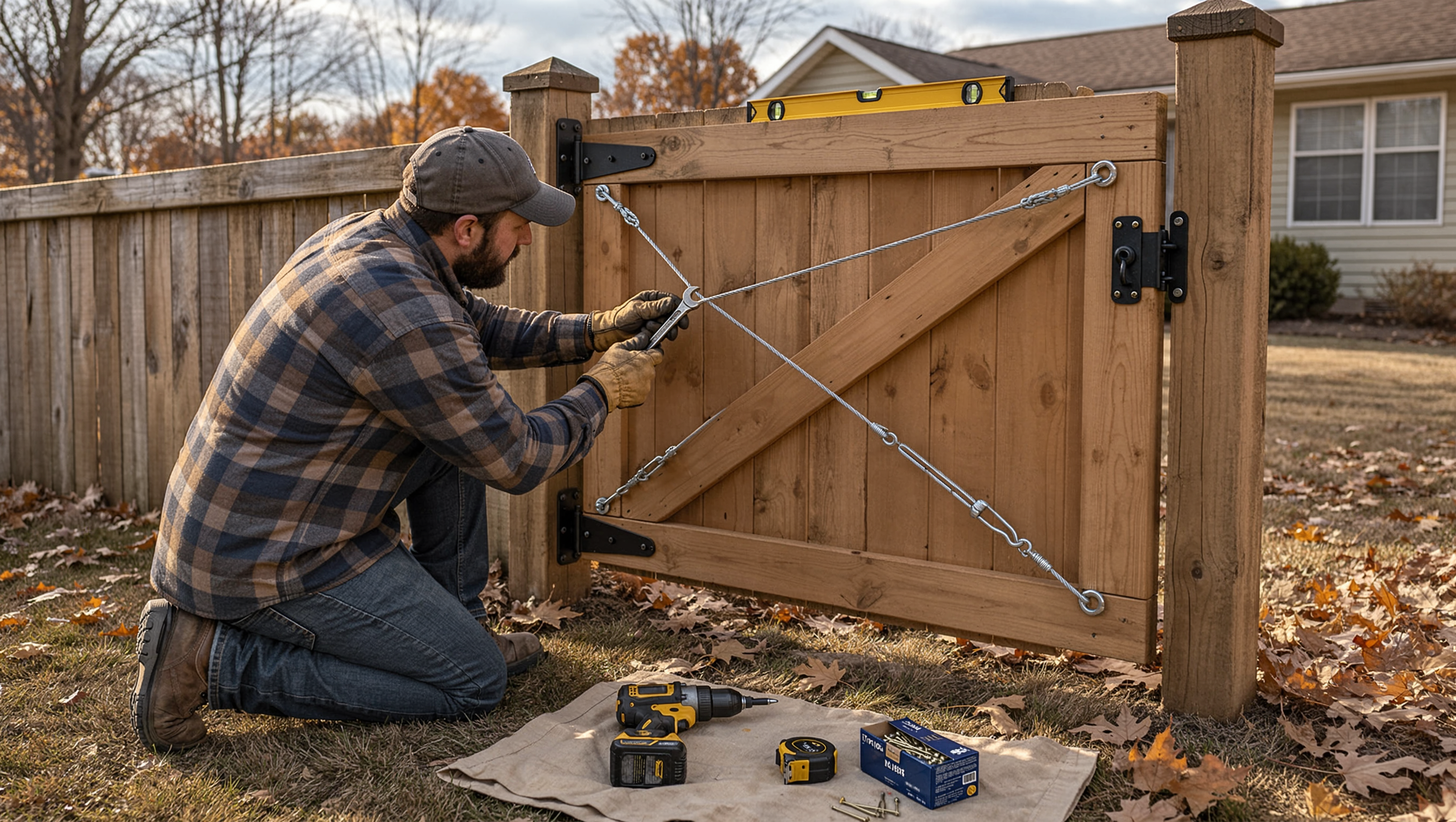
A fence gate that sags, drags, or misses the latch can become more difficult to use once winter weather reaches Davis Junction. Before snow and freezing conditions set in, check the gate posts, hinges, frame, latch, ground clearance, and drainage around the opening. Fixing the actual cause now can help keep the gate secure and easier to operate through winter.
Do Not Ignore a Gate That Suddenly Feels Different
A gate that worked normally all summer should not suddenly need to be lifted, pushed, or forced shut.
Changes in operation can point to problems involving:
Post movement
Loose hinges
Frame sag
Soil changes
Reduced ground clearance
A small adjustment may solve the issue, but it is important to understand why the gate changed before moving hardware.
Look at the Gate From a Distance
Step back and check whether the gate still sits square inside the opening.
Signs of sagging may include:
The latch-side corner sitting lower
Uneven spacing around the gate
A tilted top edge
The gate rubbing one side
The latch no longer lining up
This quick visual check can help narrow down whether the problem comes from the gate itself or the surrounding posts.
Check the Hinge Side First
The hinge side supports much of the gate's weight.
Inspect the hinge post for:
Leaning
Movement at the base
Erosion
Soft soil
Rot on wood posts
Even slight movement can cause the far side of the gate to drop.
If the post is unstable, adjusting the hinges or latch may only provide a temporary improvement.
Inspect the Latch Post
The opposite post matters too.
If the latch post moves, the opening can change enough to cause:
Rubbing
Latch misalignment
Uneven side gaps
Difficulty closing
Check both sides before assuming the hardware is the main issue.
Stable gate operation depends on a stable opening.
Test the Hinges
Open the gate slowly and watch the hinges while it moves.
Look for:
Loose screws
Worn bolts
Bent hardware
Movement at mounting points
Hinges pulling away from the post
Loose hardware may be a straightforward repair when the surrounding material remains sound.
If fasteners repeatedly loosen, inspect the wood or frame beneath them for damage.
Check Whether the Gate Frame Is Still Square
The gate itself can sag even when the posts are stable.
Wood gates may develop:
Loose joints
Warping
Cracks
Rot
Failed fasteners
Metal or vinyl gates can also shift when connections loosen.
If the frame has lost its shape, hardware adjustments alone may not fully correct the problem.
Clear the Ground Before Diagnosing Dragging
A dragging gate is not always a structural problem.
Late-fall buildup can reduce clearance.
Remove:
Leaves
Mud
Mulch
Small branches
Soil buildup
Then open the gate again.
If it moves freely after cleanup, the problem may have been limited to the swing area.
If it still drags, look more closely at alignment and support.
Ground Clearance Becomes More Important in Winter
A gate that barely clears the ground in November may become difficult to open after snow and ice accumulate.
Check clearance across the entire swing path.
The goal is enough room for smooth operation without leaving an excessive gap underneath.
For homes with dogs, too much clearance can create a containment problem.
Treat a Misaligned Latch as a Clue
A latch that suddenly misses its catch often indicates movement somewhere else.
Possible causes include:
Gate sag
Post shift
Loose hinges
Frame distortion
Soil settlement
Before relocating the latch, determine what changed.
Otherwise, the gate may continue moving and create the same problem again.
Check Drainage Around the Gate Opening
Recurring gate problems can begin in the ground.
After rain, inspect the area around both posts for:
Standing water
Soft soil
Washout
Erosion
Downspout runoff
Repeated water exposure can weaken soil support and contribute to post movement.
If the gate needs adjustment every season, drainage may deserve closer attention.
Freeze-Thaw Conditions Can Expose Weak Support
Late fall and winter can bring repeated freezing and thawing.
Moist soil may shift as conditions change.
A stable post may handle this without noticeable movement.
A post that is already loose can become more misaligned.
Addressing weak support before winter can help reduce the chance of worsening gate problems.
Wood Gates Need a Close Moisture Check
Wood can respond to seasonal moisture changes.
Inspect for:
Swelling
Cracking
Rot
Warping
Loose joints
If the frame remains solid, hardware or alignment work may be enough.
If multiple parts are deteriorated, a broader repair may be needed.
Vinyl Gates Still Depend on Stable Posts
Vinyl does not rot like wood, but it still relies on secure posts and hardware.
Check for:
Sagging
Loose connections
Cracked components
Uneven gaps
Post movement
Cold weather can make vinyl less flexible, so existing damage should be handled before hard winter impacts occur.
Check Chain Link Gate Posts and Framework
For chain link gates, inspect the surrounding fence system too.
Look at:
Gate posts
Hinges
Latch hardware
Gate frame
Nearby top rail
Mesh tension
If a terminal or gate post has shifted, the opening may no longer remain square.
Correcting the post may be necessary before the gate can be properly realigned.
Wide Gates Need Stronger Support
Equipment gates and double gates place more stress on hinges and posts.
A small amount of movement can create noticeable sagging across a wider opening.
If a large gate repeatedly loses alignment, inspect:
Hinge posts
Frame support
Hardware
Ground conditions
Repeated latch adjustments may not be enough.
Check Pet Security Before Snow Covers the Ground
Gate gaps deserve extra attention for homes with dogs.
Inspect:
Bottom clearance
Hinge-side openings
Latch-side openings
Latch security
Snow may hide these areas later.
A gate should close securely without leaving a large enough opening for a pet to squeeze through.
Plan Where Snow Will Be Stored
A repaired gate can still become difficult to use if snow is piled directly in front of it.
Before winter, consider where snow is usually:
Shoveled
Blown
Pushed
Keep frequently used gates as clear as possible.
This matters especially for side-yard access and pet routes.
Know When a Small Adjustment Is Enough
A minor repair may be appropriate when:
Hinges are loose
The latch is slightly misaligned
Posts remain stable
The frame is still square
Ground clearance is adequate
These issues may only need hardware or alignment work.
Know When the Problem Is Structural
More extensive repair may be necessary when:
A gate post moves
The frame is warped
Rot is present
Drainage is undermining support
Sagging returns repeatedly
In these cases, correcting the support problem is more important than another quick adjustment.
When Replacement May Make More Sense
Gate replacement may be worth considering when:
The frame is badly deteriorated
Multiple components are failing
The gate no longer fits the opening
Repairs repeatedly fail
The opening is too narrow for current needs
A new gate can also improve access, hardware, and overall support.
Pre-Winter Gate Check for Davis Junction Homes
Before winter, make sure the gate:
Opens without dragging
Closes without force
Latches securely
Has stable posts
Has secure hinges
Maintains practical ground clearance
Is not surrounded by drainage problems
Will remain accessible after snow
These checks can help separate minor maintenance from problems that need structural repair.
Request a Free Fence Gate Repair Estimate
Arrow Fence helps Davis Junction homeowners repair sagging, dragging, misaligned, and difficult-to-close fence gates before winter.
Whether the problem involves hinges, latches, moving posts, damaged framing, drainage, or a gate that may need replacement, Arrow Fence can help you review practical repair options.
Contact Arrow Fence at arrowfencerockford.com to request a free estimate for your fence gate repair project.
