
Fence Gate Repair in DeKalb, IL: Sagging, Dragging and Latch Problems
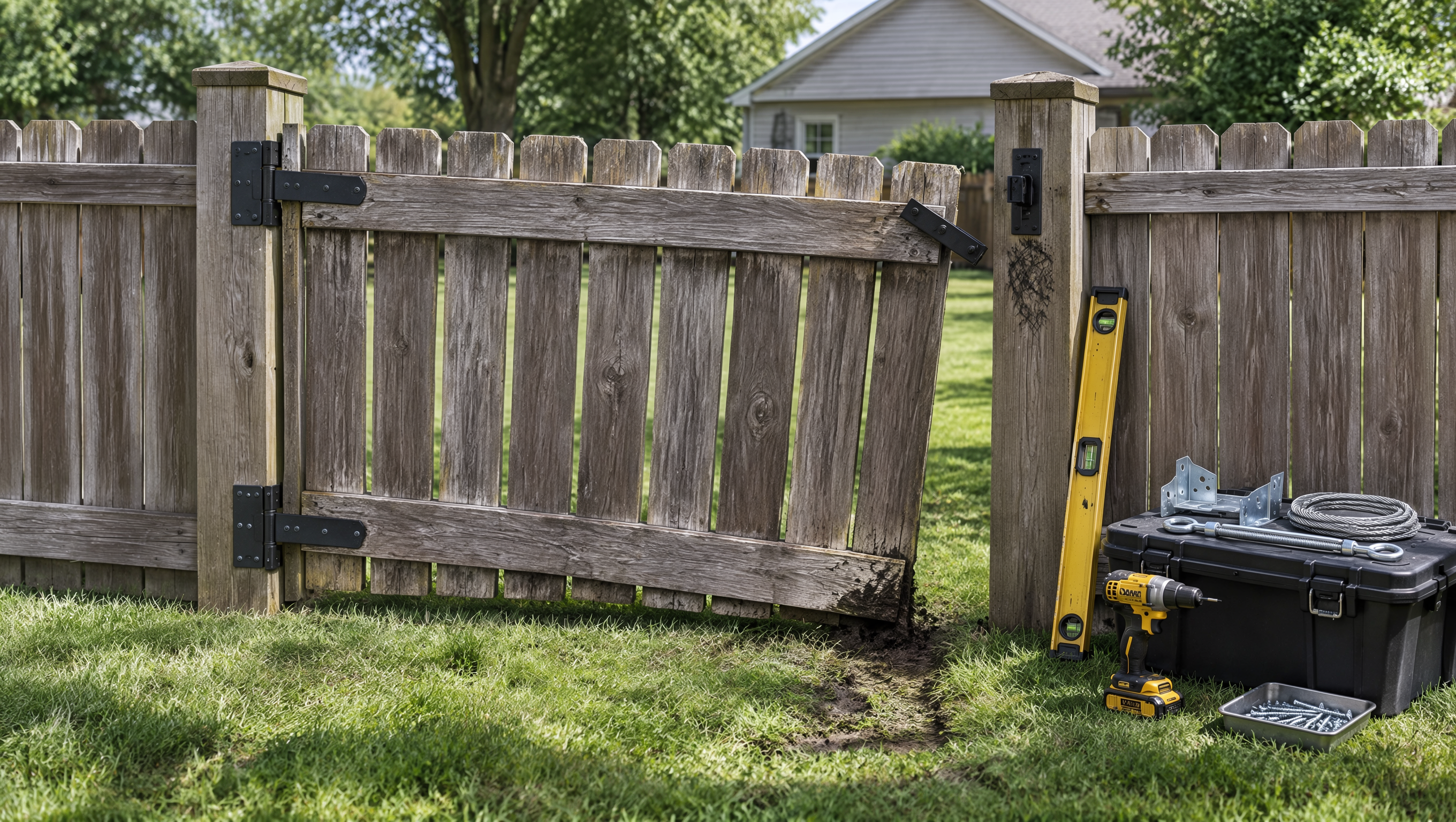
A fence gate that sags, drags, or no longer latches correctly usually has a deeper alignment or support issue. DeKalb homeowners should check hinges, gate posts, framing, ground clearance, drainage, and hardware before making adjustments. Fixing the cause instead of only moving the latch can help prevent the same problem from returning.
Start With How the Gate Moves
Before replacing hardware, open and close the gate several times.
Pay attention to whether it:
Drops as it swings
Scrapes the ground
Rubs against a post
Needs to be lifted to latch
Moves unevenly
The way the gate behaves can help narrow down the source of the problem.
A dragging bottom corner, for example, may point toward sagging, while the entire gate sitting out of position may indicate post movement.
Why Fence Gates Start Sagging
Sagging develops when the gate can no longer hold its original shape or position.
Possible causes include:
Loose hinges
Weak framing
Inadequate bracing
A moving hinge post
Gate weight
Worn fasteners
A small amount of sag can make the latch difficult to use.
As the problem progresses, the gate may begin scraping the ground or pressing against the opposite post.
Check the Hinge Side First
The hinge side carries much of the gate's load.
Inspect:
Hinge screws or bolts
Mounting points
Gate frame
Supporting post
If hardware is loose but the post and frame remain stable, tightening or replacing components may solve the issue.
If the hinge post itself moves, hardware adjustments alone are unlikely to hold for long.
A Leaning Hinge Post Can Cause Repeat Problems
Stand back and compare the gate post with nearby fence posts.
Look for:
Leaning
Movement at the base
Soil gaps
Exposed footing material
Rot on wood posts
Even a small post shift can change the gate opening enough to create sagging or latch problems.
The post should be evaluated before repeatedly adjusting the gate.
Do Not Ignore the Latch Post
The opposite post can also move.
If the latch-side post shifts inward or outward, the opening may change width.
This can cause:
The latch to miss
The gate to bind
Uneven side gaps
Difficulty closing
Both gate posts should be checked whenever alignment changes.
Why a Gate Starts Dragging
Dragging does not always mean the gate itself is damaged.
The problem may come from:
Sagging
Ground buildup
Soil settlement
Erosion
Frost-related ground movement
A shifting post
Look at where the gate contacts the ground.
If only one corner rubs, alignment may be the main issue. If the ground has risen or accumulated debris, clearance may be the problem instead.
Clear Leaves and Debris Under the Gate
Fall debris can make a gate appear lower than it actually is.
Before making repairs, clear:
Leaves
Mulch
Mud
Gravel
Vegetation
Then test the gate again.
This simple step helps separate a maintenance issue from a structural problem.
Watch Ground Clearance Before Winter
A gate that barely clears the ground in fall may become much harder to use after snow or ice arrives.
DeKalb homeowners should consider:
Snow accumulation
Shoveled paths
Ice buildup
Snowblower routes
The gate needs enough clearance to operate without leaving an excessive opening underneath.
This balance is especially important for homes with dogs.
Latch Problems Often Begin Somewhere Else
A latch that stops lining up may seem like a hardware problem.
Sometimes it is.
Other times, the real cause is:
Sagging
Post movement
Loose hinges
Frame distortion
Before relocating the latch, inspect the gate as a whole.
Moving the hardware without correcting the cause can leave the gate misaligned and may require another adjustment later.
Check for Loose or Worn Latch Hardware
Inspect the latch itself for:
Loose screws
Bent components
Wear
Corrosion
Weak mounting points
If the gate is square and both posts are stable, replacing or adjusting the latch may be a straightforward repair.
Hardware should close securely without requiring excessive force.
Wood Gates Can Change Shape Over Time
Wood gates are exposed to moisture, drying, temperature changes, and repeated movement.
Inspect the frame for:
Warping
Split boards
Rot
Loose joints
Failed fasteners
A gate frame that is no longer square can make hinge and latch adjustments temporary.
If deterioration is limited, repairs may still be possible. More extensive damage may justify replacing the gate.
Vinyl Gates Can Develop Alignment Problems Too
Vinyl does not rot like wood, but the gate still depends on strong posts, reinforcement, and secure hardware.
Check for:
Sagging
Loose hinges
Cracked components
Uneven gaps
Post movement
Cold weather can make vinyl less flexible, so existing damage should be addressed before hard impacts or severe winter conditions.
Chain Link Gates Depend on a Stable Frame
Chain link gates can become difficult to close when the frame or terminal posts move.
Look for:
Bent gate frames
Loose hinges
Leaning posts
Latch misalignment
Nearby mesh losing tension
A gate repair may need to include the surrounding framework if movement extends beyond the opening.
Wide Gates Need Extra Attention
Equipment and double gates put more leverage on hinges and posts than standard walk gates.
Watch for:
Repeated sagging
Loose hardware
Frame movement
Hinge-post leaning
If a wide gate keeps dropping out of alignment, simply adjusting the latch is rarely enough.
Support and framing should be checked as part of the repair.
Drainage Can Cause Gate Alignment Problems
Some recurring gate issues begin below ground.
After heavy rain, inspect the area around the gate posts for:
Standing water
Soft soil
Erosion
Downspout runoff
Washout
When soil support changes, the posts can shift.
If drainage is contributing to movement, addressing only the gate hardware may not provide a lasting repair.
Freeze-Thaw Cycles Can Reveal Weak Support
DeKalb winters bring periods of freezing and thawing that can affect already unstable ground.
A gate may begin showing:
New dragging
Changed latch alignment
Wider side gaps
Post movement
If the gate changes significantly with seasonal conditions, inspect the posts and surrounding soil.
Repeated adjustments may be a sign that the support system needs attention.
Pet Owners Should Check Every Gap
A misaligned gate can create openings around the:
Bottom
Latch side
Hinge side
Small dogs may fit through gaps that seem minor.
Dogs that dig may also make a bottom-clearance problem worse.
Gate repair should restore both smooth operation and secure containment.
When a Simple Adjustment May Work
A minor repair may be enough when:
Hinges are slightly loose
The latch needs a small adjustment
Fasteners remain secure
Posts are stable
The frame is square
These are usually localized hardware or alignment issues.
The key is confirming that the supporting structure is still sound.
When the Gate Needs More Extensive Repair
A larger repair may be necessary when:
The hinge post moves
The gate frame is damaged
Wood is deteriorated
Wide gates repeatedly sag
Drainage has undermined the post area
Correcting the root cause is more important than repeatedly resetting hardware.
When Replacement Makes More Sense
Gate replacement may be worth considering if:
The frame is badly warped
Rot is widespread
Several components are failing
The gate is no longer the right size
Repairs repeatedly stop working
Replacement can also provide an opportunity to improve gate width, hardware, or everyday access.
Gate Repair Checklist for DeKalb Homeowners
Before scheduling repairs, check:
Hinge condition
Latch alignment
Hinge-post stability
Latch-post stability
Gate frame
Bottom clearance
Side gaps
Drainage
Pet escape points
Looking at the entire opening can make it easier to identify why the gate is failing.
Request a Free Fence Gate Repair Estimate
Arrow Fence helps DeKalb homeowners address sagging, dragging, misaligned, and difficult-to-close fence gates.
Whether the problem involves hinges, latches, posts, drainage, frame damage, or a gate that may need replacement, Arrow Fence can help you review practical repair options.
Contact Arrow Fence at arrowfencerockford.com to request a free estimate for your fence gate repair project.
