
Fence Gate Repair in Machesney Park, IL: Fixing Sagging or Dragging Before Winter
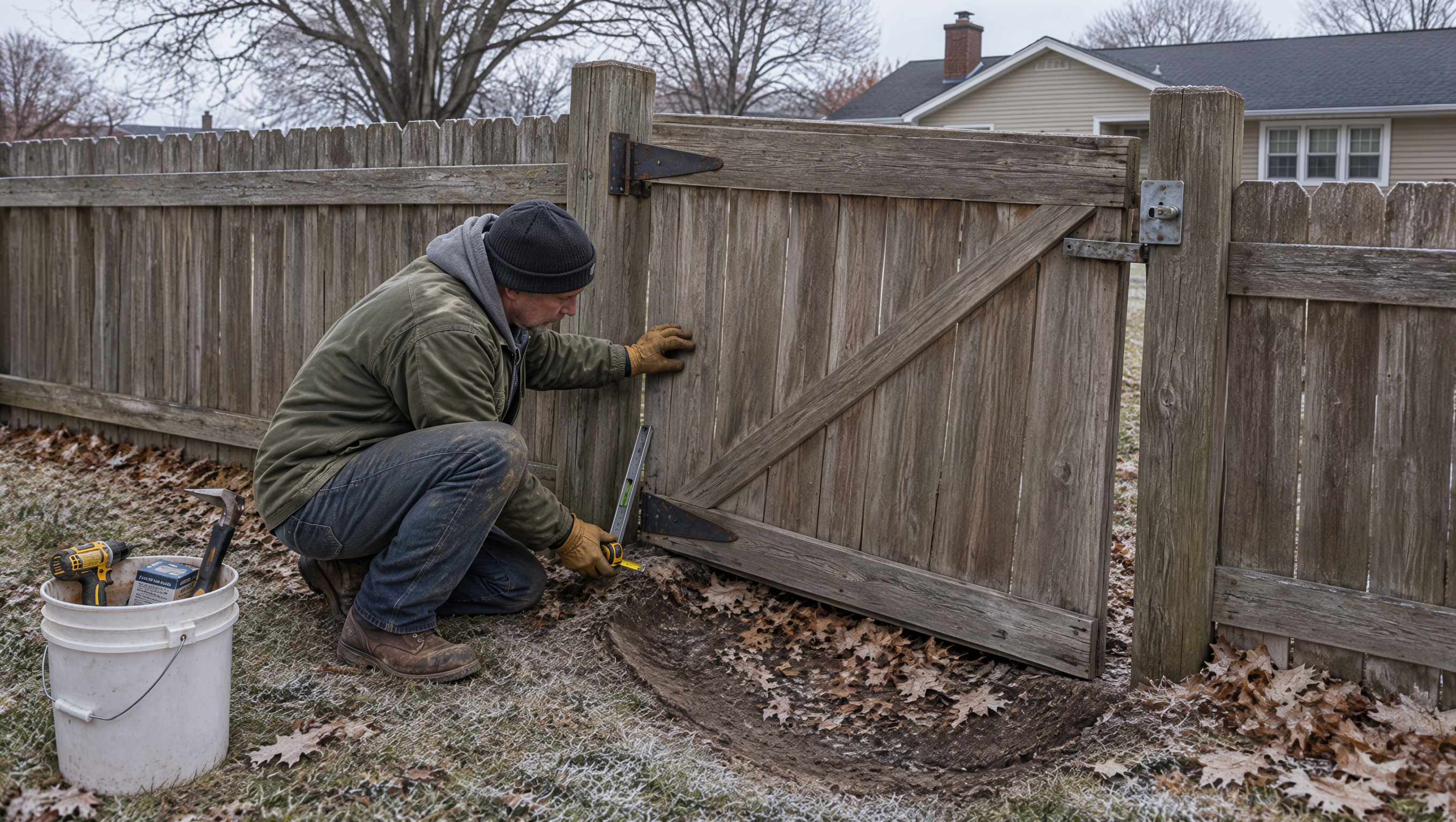
A sagging or dragging fence gate can become much harder to use once snow, ice, and frozen ground arrive. Machesney Park homeowners should check gate posts, hinges, latches, framing, ground clearance, and drainage before winter. Fixing the cause now can help keep the entrance secure and easier to use throughout the colder months.
Why Gate Problems Get More Noticeable Before Winter
A fence gate handles more movement than most other parts of the fence.
Every opening and closing places stress on:
Hinges
Latches
Gate posts
Fasteners
Frames
Fall moisture, changing temperatures, and ground movement can expose weaknesses that were less noticeable earlier in the year.
If a gate already needs to be lifted, pushed, or forced into position, winter conditions can make the problem worse.
Start by Watching How the Gate Moves
Open and close the gate several times before making any adjustments.
Pay attention to where the problem occurs.
A gate may:
Drag at one corner
Rub against the latch post
Drop as it opens
Stop short of the latch
Feel loose at the hinge side
These clues can help identify whether the issue is hardware, framing, posts, or ground clearance.
Sagging Often Starts at the Hinge Side
When a gate sags, the latch-side corner usually drops lower.
Possible causes include:
Loose hinges
Weak fasteners
Gate-frame movement
A leaning hinge post
Insufficient support
Before adjusting the latch, inspect the hinge side closely.
If the hinge post is moving, relocating the latch may only provide a temporary fix.
Check the Hinge Post for Stability
The hinge post carries much of the gate's weight.
Stand back and look for obvious leaning, then check the area around the base.
Watch for:
Loose soil
Erosion
Exposed footing material
Rot on wood posts
Movement when the gate swings
A small shift at the post can create a much larger drop at the opposite side of the gate.
Inspect the Latch Post Too
The latch-side post should remain straight and stable.
If it shifts, the opening can become wider or narrower.
That may cause the gate to:
Miss the latch
Rub against the post
Close unevenly
Develop larger side gaps
Both posts should be checked before deciding the gate itself is the only problem.
Tighten Loose Hinges Carefully
Loose hinge hardware may be an easy repair when the surrounding post and gate frame remain sound.
Check for:
Loose screws
Worn bolts
Bent hinges
Damaged mounting points
If fasteners repeatedly loosen, inspect the material around them.
A screw that no longer holds securely may indicate deteriorated wood or movement in the gate frame.
Look at the Gate Frame
A gate cannot remain square if its frame has weakened.
For wood gates, inspect for:
Warping
Cracked framing
Loose joints
Rot
Failed fasteners
Vinyl and metal gates can also develop frame or connection problems.
If the gate itself has changed shape, adjusting hinges or latches may not completely restore alignment.
Why Gates Start Dragging
Dragging can have several causes.
The gate may be sagging, but the ground may also have changed.
Check for:
Soil buildup
Mulch
Mud
Leaves
Erosion
Uneven grade
Clear debris before assuming the gate needs structural repair.
If the gate still drags afterward, inspect the posts, hinges, and frame.
Ground Clearance Matters More in Winter
A gate that barely clears the ground in fall may become difficult to open once snow and ice accumulate.
Check clearance across the full swing.
The gate should not scrape the ground, but the opening underneath should not be unnecessarily large either.
For homes with dogs, that balance is especially important.
Too little clearance affects winter operation. Too much can create an escape gap.
Do Not Ignore a Latch That Suddenly Misses
A latch problem can be a useful warning sign.
If a latch that worked properly all summer suddenly stops lining up, investigate the gate before simply moving the hardware.
Possible causes include:
Sagging
Post movement
Loose hinges
Soil settlement
Frame distortion
Correcting the source of the movement usually provides a more reliable repair.
Drainage Can Cause Repeat Gate Problems
Recurring gate alignment issues sometimes begin below ground.
After rain, inspect the gate area for:
Standing water
Soft soil
Washout
Downspout runoff
Erosion
If water repeatedly weakens soil around a gate post, adjustments may not hold.
Drainage should be considered as part of the repair plan when ground movement keeps returning.
Freeze-Thaw Cycles Can Affect Already Weak Posts
Machesney Park winters can bring repeated freezing and thawing.
Moisture in the soil can freeze, expand, thaw, and settle.
A stable gate may handle these seasonal changes without a noticeable problem.
A gate supported by already loose posts may become increasingly misaligned.
Fall is a useful time to repair weak support before the ground becomes harder to evaluate.
Wood Gates Need Moisture Checks
Wood gates can change over time as they absorb and release moisture.
Look for:
Swollen boards
Cracks
Rot
Warping
Loose fasteners
If only the hardware is loose, a targeted repair may be enough.
If the gate frame is deteriorated, more extensive work may be necessary.
Vinyl Gates Need Support and Alignment Checks
Vinyl does not rot like wood, but it still depends on stable posts and secure hardware.
Inspect for:
Sagging
Loose connections
Uneven gaps
Cracked components
Post movement
Cold weather can make vinyl less flexible, so avoid hard impacts once temperatures drop significantly.
Existing damage should be addressed before snow-removal equipment is regularly used nearby.
Chain Link Gates Can Shift With the Framework
For chain link gates, check both the gate and nearby fence structure.
Look for:
Bent frames
Loose hinges
Leaning terminal posts
Latch problems
Loss of mesh tension nearby
If a terminal or gate post has shifted, the gate opening may no longer remain square.
Repairing the post may need to come before adjusting the gate.
Wide Gates Need Extra Support
Double gates and equipment gates place more stress on hinges and posts.
They may be used for:
Riding mowers
Trailers
Landscaping equipment
A small amount of movement at the hinge post can create noticeable sagging across a wider opening.
If a large gate repeatedly drops out of alignment, inspect the support structure instead of repeatedly adjusting the latch.
Check Pet Security Before Snow Arrives
Gate gaps are especially important for households with dogs.
Inspect:
Bottom clearance
Hinge-side gaps
Latch-side gaps
Latch security
Snow can hide openings later.
A gate should close reliably without leaving gaps large enough for a pet to squeeze through.
Keep the Swing Area Clear
Before winter, clear the area where the gate opens.
Remove:
Leaves
Mulch buildup
Branches
Stored items
Yard debris
Also plan where snow will be shoveled or blown.
A repaired gate can still become unusable if snow is repeatedly piled in its path.
When a Minor Adjustment May Be Enough
A small repair may work when:
Hinges are slightly loose
The latch needs minor adjustment
Posts remain stable
The frame is still square
Ground clearance is adequate
These are usually straightforward maintenance issues.
When the Gate Needs More Extensive Repair
More work may be necessary when:
The hinge post moves
The latch post has shifted
The frame is warped or damaged
Drainage is undermining support
Sagging repeatedly returns
At that point, fixing the structural cause is more important than another hardware adjustment.
When Replacement May Be the Better Choice
Gate replacement may make sense if:
The frame is badly deteriorated
Several components are failing
The gate no longer fits the opening
Repairs repeatedly fail
The gate is not wide enough for current needs
Replacement can also be an opportunity to improve support, hardware, or access.
Pre-Winter Gate Repair Checklist
Before winter in Machesney Park, check:
Hinge condition
Latch alignment
Hinge-post stability
Latch-post stability
Gate frame
Ground clearance
Drainage
Side gaps
Pet security
Snow access
Fixing these issues before winter can make the gate easier to use and reduce the chance of recurring alignment problems.
Request a Free Fence Gate Repair Estimate
Arrow Fence helps Machesney Park homeowners repair sagging, dragging, misaligned, and difficult-to-close fence gates before winter.
Whether the problem involves hinges, latches, posts, framing, drainage, or a gate that may need replacement, Arrow Fence can help you review practical repair options.
Contact Arrow Fence at arrowfencerockford.com to request a free estimate for your fence gate repair project.
