
Fence Gate Repair in Rockton, IL: Fixing Sagging or Misaligned Gates
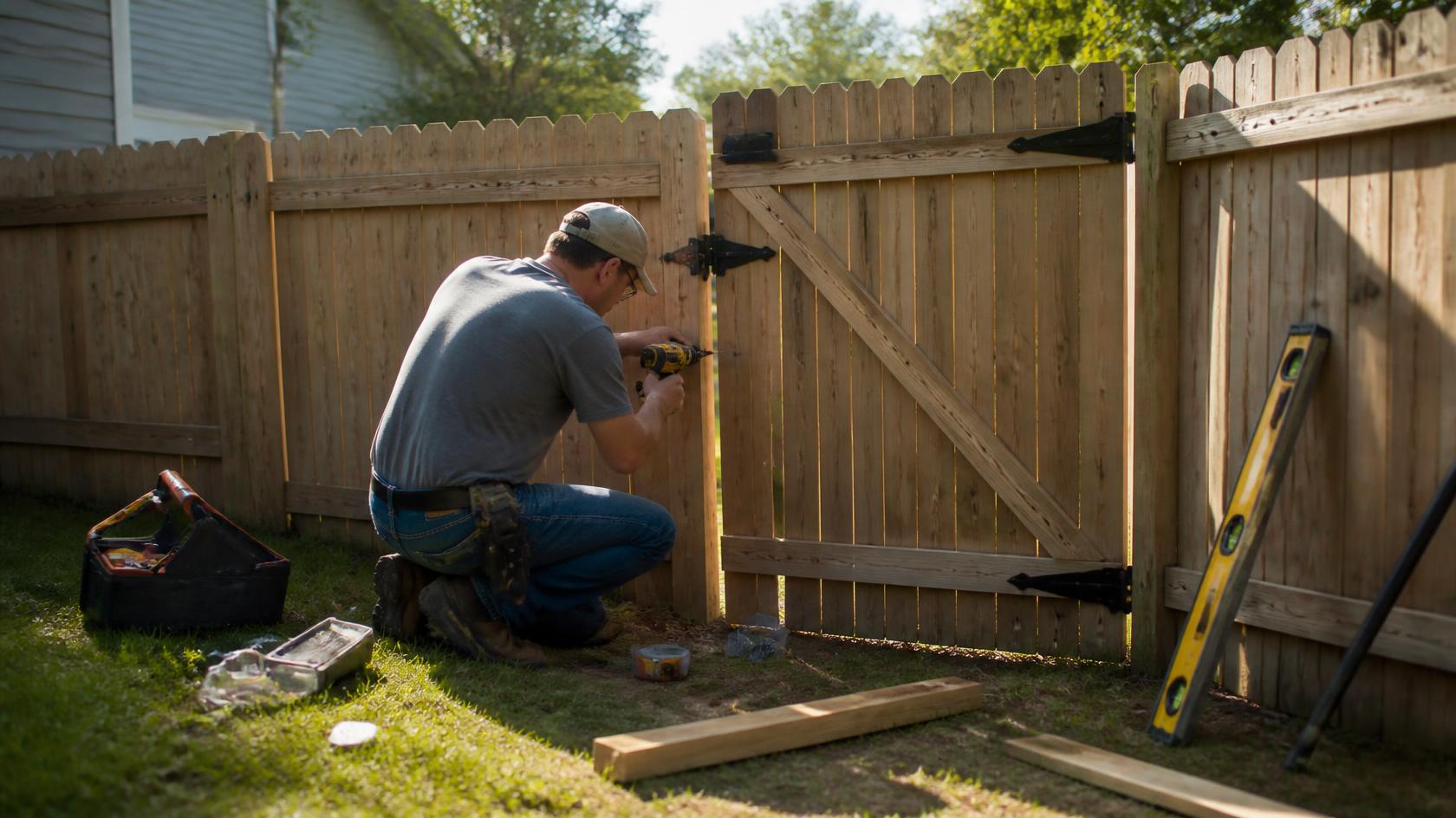
A sagging or misaligned fence gate can become harder to open, fail to latch, drag on the ground, or create gaps that affect pets and security. Rockton homeowners should check hinges, posts, hardware, ground movement, drainage, and gate weight to determine whether the problem can be adjusted or needs more substantial repair.
Why Fence Gates Start to Sag
Fence gates experience more movement than most other parts of a fence.
Every time a gate opens and closes, the hinges and posts carry its weight. Over time, that repeated movement can lead to alignment problems.
Common causes include:
Loose hinges
Weak gate posts
Heavy gate panels
Worn hardware
Soil movement
Poor drainage
Freeze-thaw cycles
Improper bracing
Impact damage
Finding the cause is important because simply adjusting the latch may not solve the underlying problem.
Signs Your Fence Gate Needs Repair
Gate problems usually become noticeable before the gate completely stops working.
Watch for:
Dragging on the ground
Difficulty closing
Latches no longer lining up
A visible downward slope
Larger gaps on one side
Loose hinges
Shaking or movement in the gate post
Scraping against another post
Gate panels twisting out of shape
Small changes may worsen over time, especially if the supporting post is moving.
Check the Gate Hinges First
Loose or worn hinges are one of the simplest problems to identify.
Inspect for:
Loose screws
Missing fasteners
Bent hinges
Rusted hardware
Movement where the hinge connects to the post
Movement where the hinge attaches to the gate
If the gate itself is structurally sound, hardware repair or adjustment may be enough.
However, repeatedly tightening the same hinge may indicate that the post or gate frame has a larger problem.
Inspect the Gate Post
The post supporting the hinges carries much of the gate's weight.
Check whether it is:
Leaning
Loose at the base
Rotting
Cracked
Moving in the soil
Pulling away from the fence
A sagging gate may actually be a post problem rather than a gate problem.
If the post is unstable, adjusting the hinges alone will usually provide only a temporary improvement.
Look at the Latch Post Too
The opposite post is also important.
The gate may stop latching correctly if the latch post:
Leans
Moves
Shifts because of soil conditions
Has loose hardware
Compare both gate posts.
Sometimes one post remains straight while the other gradually changes position.
Why Heavy Gates Need Extra Support
Wide gates place more stress on posts and hardware.
This is especially true for:
Large wood gates
Wide vinyl gates
Double gates
Equipment-access gates
A wide gate may need stronger framing, reinforcement, or heavier hardware than a standard walk gate.
If a gate repeatedly sags despite adjustment, its size and structural support should be evaluated.
Wood Gate Problems
Wood gates can be customized easily, but the material changes with moisture and weather.
Possible problems include:
Warping
Sagging
Loose boards
Cracked framing
Rot
Failed fasteners
A wood gate may need additional bracing if the frame has shifted.
Damaged or deteriorated components may also need replacement.
Vinyl Gate Problems
Vinyl gates can provide a clean, low-maintenance appearance, but alignment still matters.
Common issues may include:
Loose hinges
Post movement
Gate sag
Broken hardware
Cracked components
Wider vinyl gates may require internal reinforcement.
If the gate frame or post has shifted, simply adjusting the latch may not be enough.
Chain Link Gate Problems
Chain link gates can become difficult to use when:
Hinges loosen
Posts lean
Frames bend
Latches shift
Ground clearance changes
Check whether the frame remains square and whether the gate swings freely.
A bent frame or unstable post may need repair before the latch can be properly aligned.
Aluminum Gate Problems
Aluminum gates can also develop alignment issues.
Inspect:
Hinges
Fasteners
Posts
Latches
Frame alignment
Because aluminum systems often use manufactured components, damaged hardware or sections may need compatible replacement parts.
Check for Ground Movement
Sometimes the gate has not changed much, but the ground around it has.
Seasonal soil movement can change the relationship between the gate and the ground.
Look for:
Heaving soil
Erosion
Low spots
Raised areas
Exposed footings
In northern Illinois, freeze-thaw cycles can contribute to ground movement around posts.
This may cause a previously level gate to begin dragging or sitting unevenly.
Drainage Can Affect Gate Alignment
Water problems can gradually weaken the soil supporting gate posts.
Watch for:
Standing water
Mud
Downspouts draining toward posts
Erosion
Water channels
Soft soil
If water consistently collects around a post, repairing the gate without correcting the drainage issue may allow the problem to return.
Check the Bottom Clearance
A gate needs enough clearance to swing freely without leaving an excessive opening underneath.
Problems can occur when:
Soil builds up
Gravel shifts
Grass grows high
Ground heaves
The gate begins sagging
Too little clearance can cause dragging.
Too much clearance can create a problem for small pets.
The goal is a practical balance based on the yard and gate design.
Pet Owners Should Inspect Gate Gaps Carefully
A misaligned gate may create openings along the bottom or sides.
This can be especially important for households with:
Small dogs
Puppies
Dogs that push against gates
Dogs that dig
Check:
Side gaps
Bottom clearance
Latch security
Post stability
Even a gate that still closes may no longer provide the same level of pet containment.
Test the Latch Several Times
Open and close the gate repeatedly.
The latch should engage without requiring excessive lifting, pushing, or pulling.
If homeowners constantly need to:
Lift the gate
Push the post
Force the latch
Slam the gate
the alignment problem should be investigated.
The latch should not be used to pull a sagging gate back into position.
Inspect Gate Bracing
Bracing helps keep the gate frame square.
A poorly supported gate may gradually sag under its own weight.
Check for:
Loose braces
Cracked framing
Twisted corners
Separated connections
The correct bracing approach depends on the gate material and construction.
If the frame has lost its shape, hardware adjustment alone may not solve the problem.
Could the Gate Be Too Wide?
Sometimes recurring sag is related to gate size.
A wider gate creates more leverage against the hinge post.
If the opening is larger than necessary, homeowners may want to consider whether a different design would work better.
Possible options may include:
A smaller walk gate
A separate equipment gate
A double-gate configuration
The right solution depends on how the property is used.
Double Gates Need Careful Alignment
Double gates have additional alignment points because the two sections must meet correctly.
Problems may include:
Uneven gate heights
Center gaps
Latches that no longer align
One side dragging
Shifting posts
Both posts and both gate leaves should be inspected.
Correcting only one side may not fully solve the problem.
Check Gate Areas Before Winter
Fall is a useful time to inspect gates in Rockton.
Before winter, check for:
Sagging
Loose hinges
Weak posts
Drainage problems
Soil movement
Ground clearance
Damaged latches
A gate that already struggles in fall may become more difficult to use when snow, frozen ground, or ice arrives.
Plan for Snow Around the Gate
Snow can create additional access problems.
Think about:
Where snow is shoveled
Where snowblowers operate
Where plowed snow accumulates
Whether the gate is used daily
Avoid piling heavy snow directly against the gate.
Also make sure the gate has enough clearance for normal winter use.
Freeze-Thaw Cycles Can Shift Posts
Rockton winters can bring repeated freezing and thawing.
When moisture in the soil freezes, expands, and later thaws, the ground can move.
This may affect:
Gate posts
Footings
Alignment
Bottom clearance
If gate problems appear or worsen after winter, post movement may be part of the cause.
When a Simple Adjustment May Be Enough
Minor problems may sometimes be corrected with:
Hinge adjustment
Hardware tightening
Latch repositioning
Minor frame correction
These repairs may work when the posts and gate frame are still structurally sound.
If the gate keeps shifting after adjustment, the underlying cause should be investigated.
When More Extensive Repair Is Needed
A larger repair may be necessary when:
The hinge post is leaning
Wood is rotted
Concrete or footing support has failed
The frame is badly warped
Multiple components are damaged
The gate repeatedly loses alignment
In these situations, adjusting hardware alone may not provide a lasting result.
Should the Gate Be Replaced?
Replacement may make more sense when the gate itself has significant structural damage.
Consider replacement when:
Wood framing is badly deteriorated
Vinyl components are extensively cracked
Chain link frames are severely bent
Hardware mounting points are damaged
The gate no longer fits the property's needs
Replacing the gate can also be an opportunity to change its width or improve access.
Check the Surrounding Fence
Gate problems can sometimes indicate movement elsewhere.
Inspect nearby:
Fence posts
Rails
Panels
Boards
Chain link mesh
If several components are leaning or shifting, the issue may extend beyond the gate.
A full fence inspection can help identify whether the gate is an isolated repair.
Fence Gate Repair Checklist
When inspecting a sagging or misaligned gate, check:
Hinge post
Latch post
Hinges
Latch
Fasteners
Gate frame
Bracing
Bottom clearance
Side gaps
Drainage
Soil movement
Nearby fence sections
Looking at the entire gate system makes it easier to identify the actual cause.
Request a Free Fence Gate Repair Estimate
Arrow Fence helps Rockton homeowners address sagging gates, misaligned latches, leaning posts, damaged hardware, and other residential fence problems.
Whether your property has wood, vinyl, chain link, aluminum, or another fence system, Arrow Fence can help determine whether adjustment, repair, post work, or gate replacement is the practical solution.
Contact Arrow Fence at arrowfencerockford.com to request a free estimate for your fence gate repair project.
