
Fence Installation Before the Ground Freezes in Lake Carroll, IL: Homeowner Guide
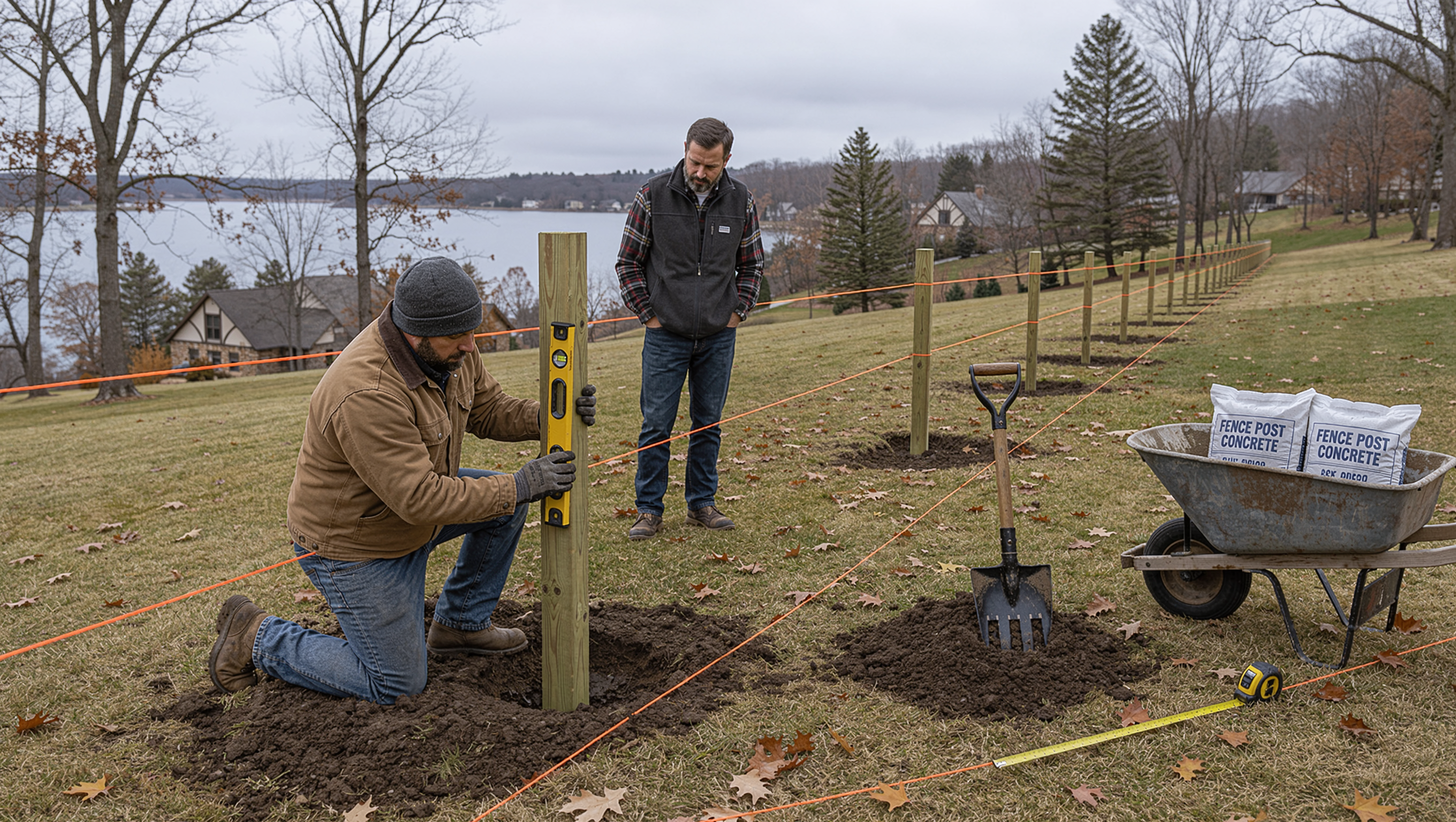
Fence installation in Lake Carroll, IL, can still be possible before winter when the ground remains workable and weather conditions are suitable. Homeowners should finalize property boundaries, fence materials, gate locations, drainage plans, and yard access before freezing temperatures become more consistent. Proper preparation and secure post installation are especially important for a fence that will immediately face northern Illinois winter conditions.
Is It Too Late to Install a Fence in Lake Carroll?
Late fall does not automatically mean fence installation must wait until spring.
The decision depends on actual site conditions rather than the calendar alone. A property with relatively dry, workable soil may still be suitable for installation, while another yard with saturated or frozen ground may require postponement.
Important factors include:
Soil temperature and moisture
Recent rainfall or snowfall
Accessibility of the fence line
Ground stability
Installation requirements for the selected material
A professional property evaluation can help determine whether moving forward before winter is practical.
Understand Why Frozen Ground Matters
Fence posts provide the structural foundation for the entire fence system.
When the ground freezes, excavation can become more difficult. Cold conditions may also affect concrete placement and curing when concrete footings are required.
Proper post depth, footing design, and installation methods should account for local soil conditions and seasonal frost.
Rushing this part of the project can contribute to future alignment and stability problems.
Consider Lake Carroll's Varied Terrain
Properties around Lake Carroll may feature slopes, wooded areas, open lawns, and changing elevations.
These features can influence where a fence can reasonably be installed and how it follows the landscape.
Before installation, identify areas with:
Steep or gradual slopes
Large tree roots
Uneven ground
Retaining walls
Natural drainage routes
Reviewing these conditions before snowfall makes it easier to develop a practical fence layout.
Confirm Property Boundaries and Community Requirements
Before selecting post locations, verify the intended property boundaries.
Existing fences, landscaping, and mowing patterns are not always reliable indicators of legal property lines.
Homeowners should also review applicable local and community association requirements regarding fence placement, height, materials, and appearance.
If approvals or other requirements apply to the property, address them before scheduling installation.
Choose a Fence Material That Suits the Property
Different fencing materials offer different advantages for Lake Carroll homeowners.
Wood Fencing
Wood provides a natural appearance that can complement wooded properties and traditional homes.
Solid wood fencing works well for backyard privacy, while shadowbox and picket designs offer varying levels of openness.
Wood generally requires periodic inspection and surface maintenance.
Vinyl Fencing
Vinyl offers consistent screening without routine staining or sealing.
It can be a practical option for homeowners who want privacy with relatively low surface maintenance.
Chain Link Fencing
Chain link works well for pet enclosures, larger yards, and boundaries where visibility is important.
Its open design allows airflow and creates less wind resistance than solid privacy panels.
Aluminum Fencing
Aluminum provides a decorative boundary while preserving surrounding views.
It may be particularly appealing for homeowners who want to define outdoor spaces without blocking the natural landscape.
Preserve Views Where Privacy Is Not Necessary
One consideration for Lake Carroll properties is how fencing affects surrounding scenery.
Installing solid privacy fencing around the entire yard may block views that homeowners would prefer to retain.
Consider using privacy fencing near patios, neighboring properties, or frequently used seating areas while maintaining open fencing elsewhere.
A combination of fence styles can provide separation without sacrificing the character of the property.
Review Wind Exposure Before Choosing Solid Panels
Open properties can experience considerable wind exposure during late fall and winter.
Solid wood and vinyl fences catch more wind than chain link or aluminum fencing.
Areas requiring particular attention include long fence runs, corners, end posts, and wide gates.
Appropriate structural support should be part of the installation plan, especially when the fence will face winter weather shortly after completion.
Plan for Freeze-Thaw Conditions
Northern Illinois winters can bring periods of freezing followed by temporary warming.
Moisture in the soil may freeze and expand, creating ground movement that can affect inadequately supported fence posts.
Proper installation should account for frost conditions, soil characteristics, and drainage.
Homeowners should avoid treating post installation as an area where shortcuts can be taken simply to finish before winter.
Check Drainage Before Installation
Fall rainfall can reveal water problems that may otherwise go unnoticed.
Inspect the proposed fence line for:
Standing water
Soil erosion
Downspout runoff
Soft or muddy ground
Low-lying sections
Properties with slopes may also experience concentrated runoff moving downhill.
The fence layout should accommodate natural drainage rather than interfere with it. Existing erosion problems may need attention before new posts are installed.
Plan Fence Sections Around Slopes
Uneven terrain can affect both the appearance and function of a fence.
Depending on the material and system, fence sections may be stepped or installed to follow the grade more closely.
Stepped sections can create openings beneath the fence, particularly on steeper slopes.
Homeowners with small dogs should review these potential gaps carefully before approving the design.
Locate Underground Utilities Before Digging
Fence installation involves excavation, making underground utility identification an essential part of preparation.
Arrange for the appropriate utility location process before digging begins.
Homeowners should also identify privately installed features that may not be covered by standard utility markings, such as irrigation lines, private electrical wiring, and landscape lighting connections.
Discuss these details with the contractor before post locations are finalized.
Place Gates Where They Will Remain Useful During Winter
Gate locations should support everyday movement around the property.
Think about access between the house, driveway, garage, patio, and backyard.
Frequently used gates should remain accessible after snowfall. Avoid placing them where snow is regularly pushed or piled.
For pet owners, a convenient gate near the house can make daily outdoor routines easier during colder weather.
Account for Equipment Access
Before selecting gate widths, measure any equipment that needs to enter the fenced area.
This may include riding mowers, utility trailers, garden carts, and landscaping equipment.
Properties with larger lawns may benefit from a separate equipment gate.
Wider gates require suitable posts, framing, and hardware to maintain reliable alignment over time.
Clear the Installation Area
Late-fall leaves and dormant vegetation can conceal obstacles along the proposed fence line.
Before installation, remove unnecessary clutter, garden tools, planters, and fallen branches.
Trim vegetation that directly interferes with the work area, but avoid cutting major tree roots without discussing the layout first.
Providing a clear route for materials and equipment can also help simplify installation.
Address Existing Fence Removal
If the project involves replacing an older fence, determine how removal will be handled.
Removing old posts, panels, gates, and concrete footings may reveal previously hidden soil or drainage issues.
Confirm whether removal, hauling, and disposal are included in the estimate.
Do not assume existing footings can automatically be reused for the new fence.
Allow Flexibility for Cold-Weather Installation
Late-fall weather can change quickly.
Rain, early snow, freezing temperatures, and unsuitable soil conditions may interrupt planned installation.
Concrete footing work, when required, may also need additional cold-weather precautions.
Having a completed design and prepared property helps reduce avoidable delays, but installation should only proceed when appropriate conditions and methods are available.
Prepare for Pets During Construction
A partially installed fence is not a secure enclosure.
Arrange supervised outdoor time, leash walks, or another secure area while construction is underway.
Keep pets away from open post holes, tools, and construction materials.
Once installation is complete, check gate latches and lower fence gaps before returning to normal backyard use.
When Waiting Until Spring Is More Practical
Installing before the ground freezes is not always the best decision.
Postponing the project may make sense when significant drainage work remains, property boundaries are uncertain, the ground becomes unsuitable, or required approvals have not been obtained.
Winter can still be used productively to compare materials, refine the layout, and obtain an estimate.
A properly planned spring installation is preferable to rushing a project through unfavorable conditions.
Schedule Your Lake Carroll Fence Estimate
Planning a fence before winter gives homeowners an opportunity to address terrain, privacy, property access, and seasonal conditions before the installation window becomes more limited.
Arrow Fence helps homeowners in Lake Carroll and surrounding communities explore wood, vinyl, chain link, and aluminum fencing options suited to their properties.
Visit arrowfencerockford.com or call (815) 962-7769 to request a free fence installation estimate.
