
Fence Installation for Pets in Freeport, IL: Safer Yard Planning Before Winter
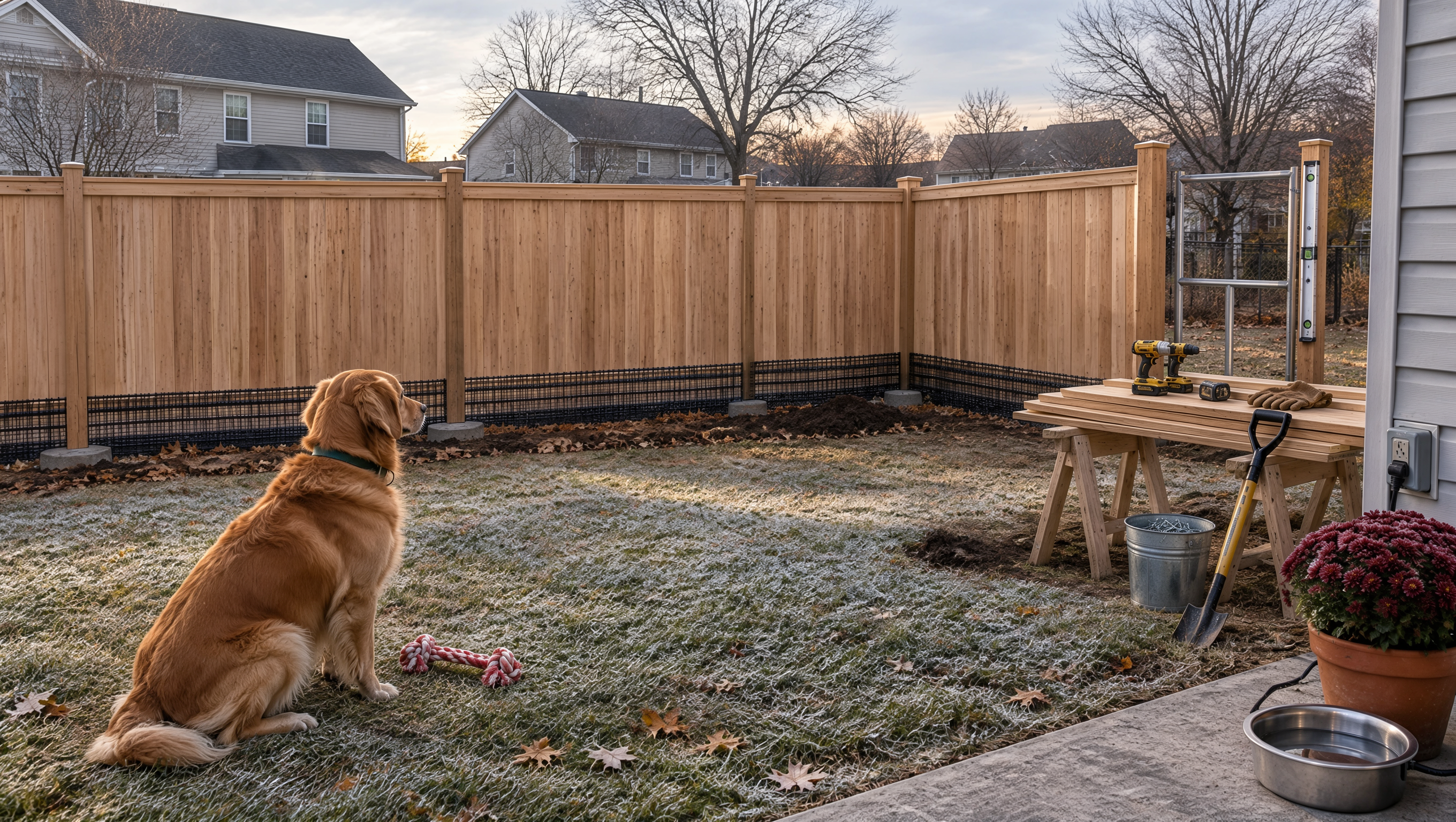
A pet-friendly fence in Freeport should be planned around more than fence height. Dog size, jumping, digging, visibility, gate security, ground gaps, slopes, drainage, and winter access all matter. Planning these details before snow arrives can help create a safer, more practical yard for pets through winter and beyond.
Start With Your Pet’s Behavior
Before choosing a fence material, think about how your pet uses the yard.
Ask whether your dog tends to:
Jump
Dig
Climb
Chase wildlife
Bark at people or other dogs
Rush through open gates
These behaviors can influence fence height, privacy level, gate placement, and the type of material that makes the most sense.
A calm dog may do well with an open fence, while a more reactive dog may benefit from less visibility.
Choose Height Based on the Dog
Fence height should match the pet rather than relying on one standard solution.
Consider:
Dog size
Jumping ability
Energy level
Climbing behavior
Nearby distractions
A smaller athletic dog may need more height than a larger but calmer pet.
Also look for items near the fence that could become climbing aids, such as benches, storage bins, or stacked materials.
Applicable local requirements should be reviewed before the final height is selected.
Decide Whether Privacy Will Help
Some dogs become more reactive when they can see everything beyond the yard.
Solid fencing can reduce visual triggers such as:
Neighboring dogs
Pedestrians
Wildlife
Passing vehicles
Wood and full-privacy vinyl are common choices when visual screening is important.
If your dog is calm around outside activity, a more open fence may work just as well.
Wood Can Provide Strong Privacy
Solid wood fencing can help create a quieter, more enclosed pet area.
It also offers flexible design options for yards with unusual layouts or grade changes.
Homeowners can consider:
Solid vertical wood
Board-on-board
Other privacy-focused wood styles
Wood requires more routine maintenance than some other materials, so posts, rails, boards, and gates should be checked periodically.
Vinyl Can Reduce Routine Surface Maintenance
Full-privacy vinyl can also work well for dogs that benefit from visual separation.
It provides:
Consistent screening
Smooth surfaces
Less routine surface maintenance
No regular staining or sealing
Vinyl still needs periodic inspection of posts, rails, gates, and hardware.
During severe cold, avoid hard impacts because vinyl can become less flexible.
Chain Link Works Well for Open Pet Areas
Chain link can be a practical option when the main goal is containment rather than privacy.
It works especially well for:
Larger yards
Long boundaries
Active dogs
Open visibility
Its open mesh also allows more airflow than solid fencing.
If your pet reacts strongly to outside activity, chain link may not provide enough visual separation on its own.
Aluminum Can Work for Calm Dogs
Aluminum fencing can provide an open, decorative boundary.
Before choosing it for a pet yard, check:
Picket spacing
Ground clearance
Fence height
Dog size
Smaller dogs may need narrower spacing.
Aluminum is not a full-privacy option, so it works best for pets that do well with open views.
Pay Close Attention to Ground Gaps
For pet fencing, the space under the fence can be just as important as the height.
Gaps may develop because of:
Slopes
Erosion
Uneven ground
Soil settlement
Gate clearance
Smaller pets may fit through openings that look minor.
Inspect the lower fence line carefully before winter, when snow can hide these gaps.
Plan for Dogs That Dig
Some dogs try to escape under a fence rather than over it.
If digging is a concern, pay extra attention near:
Corners
Gates
Soft soil
Frequently used fence lines
The lower edge of the fence may need additional planning.
If a gap was caused by erosion rather than the dog, drainage should also be addressed.
Make Gates a Priority
Gates are often the weakest point in a pet enclosure.
A secure gate should have:
Stable posts
Reliable hinges
A secure latch
Minimal side gaps
Appropriate bottom clearance
The gate should close naturally without needing to be lifted or forced.
If a gate repeatedly loses alignment, the supporting posts or soil may need attention.
Think About Latch Placement
Latch location matters for pets that jump or push against gates.
The hardware should be secure while remaining practical for everyday use.
If children also use the yard, the gate should work safely for the entire household.
Inspect latches regularly for looseness or wear.
Consider a Two-Gate Entry
Some dogs are especially likely to rush through an opening.
A small transition area with two barriers can provide another layer of control.
This can be useful near:
Driveways
Front yards
Frequently used entrances
It can make deliveries, visitors, and everyday access easier to manage around pets.
Separate Daily Pet Access From Equipment Access
A gate used several times a day does not always need to be the same gate used for yard equipment.
A second wider opening may be better for:
Riding mowers
Trailers
Landscaping equipment
Keeping the everyday gate smaller can simplify pet management.
Wide gates should also have stronger support because they place more stress on hinges and posts.
Check Slopes Before Installation
Freeport yards with changing elevations need extra planning.
Depending on the fence system, sections may need to be stepped or installed to follow the grade more closely.
Slopes can create larger bottom gaps near:
Gates
Corners
Transitions
Pet owners should inspect these areas carefully before considering the enclosure secure.
Watch Drainage Around the Fence Line
Water movement can affect pet safety over time.
After fall rain, look for:
Standing water
Soft soil
Erosion
Downspout runoff
Low areas
Erosion can create new openings under the fence or weaken post support.
If a drainage problem is already present, it should be considered before installation rather than hidden behind the new fence.
Prepare for Snow Around Gates
Winter access should be part of the fence plan.
Think about where snow is normally:
Shoveled
Blown
Piled
Avoid placing the primary pet gate where snow regularly accumulates.
A gate that works perfectly in fall may become difficult to open if snow blocks its swing.
Snow Can Hide Escape Points
Once the ground is covered, it becomes harder to see small gaps beneath the fence.
Before snow arrives, check:
Gate bottoms
Sloped areas
Eroded spots
Corners
Loose lower sections
Correcting these areas in fall can make winter pet containment more dependable.
Keep Weak Sections Away From Heavy Snow
Avoid piling large amounts of snow against weak fence sections.
Heavy buildup can add pressure to:
Gates
Corners
Leaning posts
Damaged panels
Snow-removal equipment should also have enough clearance to avoid hitting the fence.
Consider Wind Exposure With Privacy Fencing
Solid wood and vinyl privacy fences catch more wind than open styles.
For exposed Freeport properties, extra attention should go to:
Long fence runs
End posts
Corners
Gate posts
If full privacy is only needed in certain areas, combining solid fencing with a more open material elsewhere may help balance screening and airflow.
Plan for Pets During Installation
Do not assume the yard will remain enclosed while the fence is being installed.
Have another plan ready, such as:
Indoor supervision
Leash breaks
Another secure area
Pets should stay away from tools, materials, open post holes, and unfinished sections.
Once the fence is complete, inspect gates and ground gaps before allowing pets to use the yard freely.
Make a Final Pet-Safety Walkthrough
Before considering the project finished, check the fence from your pet’s point of view.
Look for:
Bottom gaps
Loose boards or panels
Sharp or protruding hardware
Gate openings
Weak latches
Areas where the dog could climb
Also make sure gates close and latch without help.
A final walkthrough can catch small details that may matter much more to a pet than to a person.
Pet Fence Planning Checklist
Before winter installation in Freeport, review:
Pet behavior
Fence height
Privacy needs
Material
Ground gaps
Digging areas
Gate security
Latch placement
Slopes
Drainage
Snow access
Equipment gates
A safer pet yard comes from planning the entire enclosure, not just choosing a fence material.
Request a Free Pet Fence Estimate
Arrow Fence helps Freeport homeowners plan fencing for dogs and other pets around privacy, gates, ground gaps, drainage, yard layout, and winter access.
Whether you are considering wood, vinyl, chain link, aluminum, mixed materials, replacement, or a new installation, Arrow Fence can help you compare practical options for your property.
Contact Arrow Fence at arrowfencerockford.com to request a free estimate for your pet fence project.
