
Fence Planning in Machesney Park, IL: Property Lines, Gates and Yard Access Before Winter
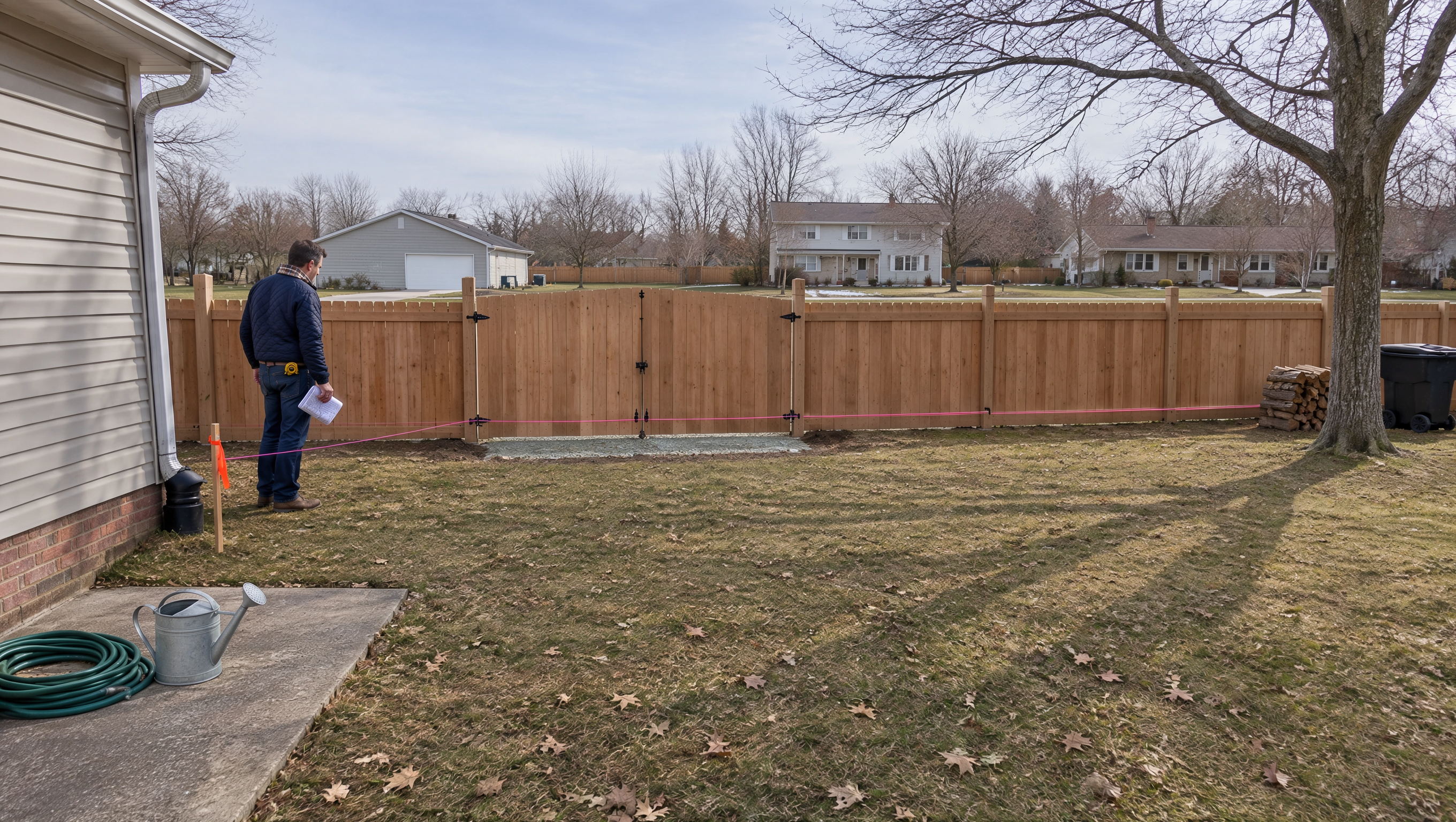
Before winter, Machesney Park homeowners can use the remaining fall season to make key fence-planning decisions while the yard is still easy to inspect. Confirm the intended fence line, review property boundaries, decide where gates belong, measure equipment access, and note drainage or grade changes before snow covers important details.
Start With the Property, Not the Fence Material
It is tempting to begin by choosing wood, vinyl, chain link, or aluminum.
A better first step is understanding where the fence needs to go and how people, pets, and equipment move through the property.
Walk the yard and identify:
Property edges
Driveways
Patios
Sheds
Side-yard paths
Landscaping
Existing gates
Once the layout is clear, choosing the right fence material becomes easier.
Confirm the Intended Fence Line
Do not rely only on where an older fence happens to sit.
Existing fencing may have been installed years ago, and the current location may not be the best guide for a new project.
Before installation, make sure the proposed fence line is clearly understood.
If there is uncertainty about a property boundary, it should be resolved before posts are installed.
Applicable local requirements should also be reviewed as part of final planning.
Use Fall to See the Ground Clearly
Late fall can be one of the last opportunities to inspect the entire fence line before snow changes the landscape.
Look for:
Old post locations
Concrete footings
Low spots
Erosion
Large roots
Changes in elevation
Take photos of areas that may become difficult to see later.
These details can be useful when planning a winter estimate or spring installation.
Avoid Creating Unnecessary Corners
A complicated fence line can make the yard harder to use.
Where practical, avoid adding extra turns simply to follow minor landscaping features.
Too many corners can:
Break up usable yard space
Add more posts
Complicate mowing
Create awkward pet areas
A cleaner layout often makes the backyard feel more organized.
Plan Gates Around Actual Daily Routes
Gate placement should follow how you already move through the property.
Think about routes between:
Driveway and backyard
House and patio
Garage and side yard
Backyard and storage areas
A gate placed in an inconvenient location can become frustrating long after installation is complete.
Before choosing an opening, walk the route you expect to use most often.
Decide Whether You Need More Than One Gate
One gate is not always enough.
Some properties benefit from:
A daily walk gate
A separate equipment gate
Another entrance near a patio or side yard
However, extra gates also mean more hardware, support posts, and maintenance points.
Add an opening because it improves yard function, not simply because there is space for one.
Measure Equipment Instead of Guessing
If larger equipment needs backyard access, measure it before determining gate width.
Consider:
Riding mowers
Utility trailers
Garden carts
Landscaping equipment
A gate that is slightly too narrow can become a long-term problem.
At the same time, making every gate oversized is unnecessary and can require heavier support.
Think About Gate Swing
Gate location is only part of the plan.
Also consider where it will swing.
Avoid conflicts with:
Steps
Patio furniture
Garden beds
Trash containers
Narrow walkways
In tight side yards, swing direction can have a major effect on usable space.
Plan for Snow Around the Main Entrance
A fall fence plan should include winter access.
Ask where snow is usually:
Shoveled
Blown
Stored
A gate placed directly beside a common snow pile can become difficult to use after a storm.
Frequently used entrances should have a realistic winter path.
This is particularly important for dog owners who need reliable backyard access every day.
Keep Snowblower and Shovel Routes in Mind
Fence placement can affect snow removal even when the gate itself is clear.
Think about how a snowblower or shovel moves through the property.
Avoid layouts that create narrow bottlenecks between:
The house
Fence
Driveway
Gate
A little additional space around a main route can make winter maintenance easier.
Watch Narrow Side Yards
Side yards often contain important access routes but limited space.
Before installing fencing, consider whether there will still be room for:
Walking
Trash containers
Mowers
Utility access
A privacy fence can make a narrow passage feel even tighter.
Gate placement and swing should be carefully coordinated in these areas.
Plan Around Utility and Service Access
Some parts of the property may need to remain accessible for maintenance or service.
Before finalizing the fence line, consider whether fencing could interfere with areas that may need future access.
The goal is to gain privacy or containment without creating unnecessary obstacles.
This is another reason layout planning should happen before selecting final gate locations.
Consider How Pets Move Through the Yard
For dog owners, property layout affects containment as much as material.
Look for areas where pets may encounter:
Narrow passages
Gate openings
Slopes
Ground gaps
High outside activity
If a dog tends to rush gates, placing the main opening away from the busiest part of the property may make everyday use easier.
Solid privacy sections may also help reduce visual distractions.
Keep the Lower Fence Line in Mind
The planned fence should work with existing ground conditions.
Uneven areas can create bottom gaps once the fence is installed.
Pay particular attention near:
Slopes
Gates
Drainage paths
Low areas
These gaps may matter for pets and can become harder to evaluate after snow covers the yard.
Check Drainage Before Winter
Fall rain can reveal problems that may influence post placement.
Look for:
Standing water
Soft soil
Erosion
Downspout runoff
Washout
A planned fence line running directly through a drainage problem may require adjustment or additional site preparation.
Stable posts depend on stable soil.
Do Not Let the Fence Block Natural Runoff
Fencing should work with the yard's drainage pattern.
Solid privacy sections can trap leaves and debris along the bottom if maintenance is neglected.
Make sure runoff still has a practical path through or around the fenced area.
Addressing drainage before installation can reduce future post movement and ground gaps.
Slopes Can Influence Gate Locations
A gate placed on changing terrain may have more clearance and alignment challenges than one on relatively level ground.
Where possible, choose gate locations with:
Stable soil
Manageable grade
Enough swing clearance
If the gate must cross a slope, the design should account for bottom clearance without leaving a large opening.
Consider Privacy Without Overbuilding
Property-line fencing does not necessarily need to be solid everywhere.
A mixed layout may use:
Wood or vinyl near a patio
Chain link around a larger dog area
Aluminum near landscaping
This can provide privacy where it matters while maintaining more open views and airflow elsewhere.
It can also prevent the backyard from feeling unnecessarily enclosed.
Think About Wind on Open Boundaries
Long, solid privacy sections can catch significant wind.
Pay extra attention to boundaries that are:
Open
Exposed
Free of windbreaks
Corners, end posts, and gate posts deserve careful planning in these locations.
If full privacy is unnecessary along an exposed side, a more open fence may be worth considering.
Review the Existing Fence Before Removing It
If the project involves replacement, inspect the current fence before winter.
Note:
Which gates work well
Which access points are inconvenient
Where posts have moved
Where water collects
Where the old layout wastes space
This can help prevent repeating the same design problems in the new fence.
Decide What Needs to Happen Before Spring
A useful fall planning list might include:
Resolve Now
Property-line questions
Drainage concerns
Gate locations
Equipment measurements
Decide Over Winter
Material
Style
Height
Privacy level
Prepare for Installation
Vegetation trimming
Old fence removal
Access clearing
Breaking the project into stages can make spring installation planning more organized.
Create a Simple Yard Access Map
You do not need professional plans to begin.
Sketch the yard and mark:
House
Driveway
Patio
Shed
Proposed fence line
Gate locations
Equipment route
Pet area
This simple exercise can reveal whether a planned gate or fence section will interfere with normal movement.
It can also make conversations with a fence contractor more productive.
Before-Winter Fence Planning Checklist
Before snow covers the yard in Machesney Park, review:
Property boundaries
Proposed fence line
Existing post locations
Gate quantity
Gate widths
Gate swing
Equipment access
Side-yard clearance
Pet needs
Slopes
Drainage
Winter snow routes
A clear layout now can reduce last-minute changes when installation begins.
Request a Free Fence Estimate
Arrow Fence helps Machesney Park homeowners plan fencing around property lines, gates, privacy, pets, equipment access, drainage, and everyday yard use.
Whether you are preparing for a new installation, replacing an older fence, or planning ahead for spring, Arrow Fence can help you review practical options for your property.
Contact Arrow Fence at arrowfencerockford.com to request a free estimate for your fence project.
