
Fence Post Maintenance in Roscoe, IL: What to Check Before Winter
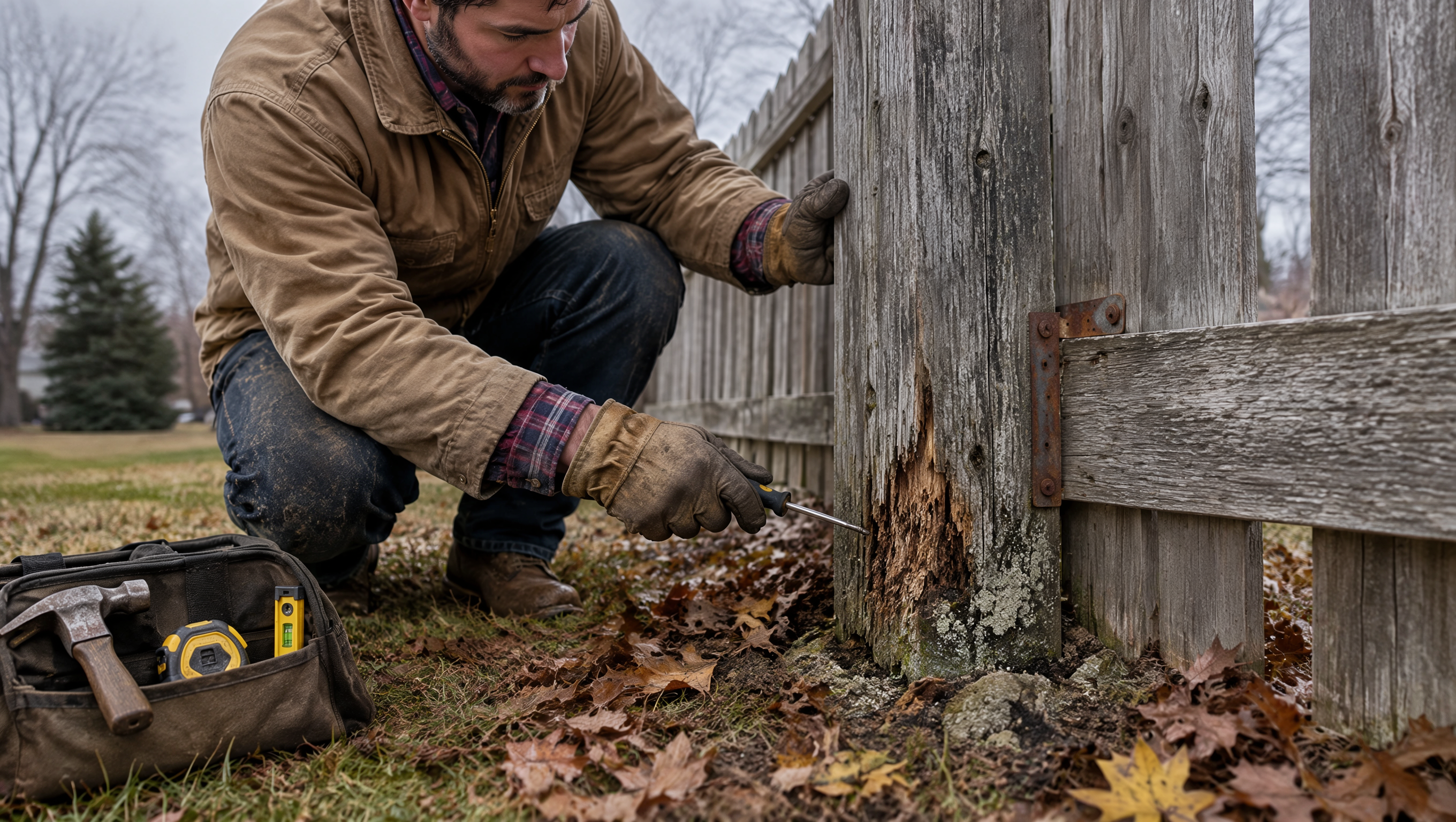
Before winter arrives in Roscoe, homeowners should inspect fence posts for leaning, movement, rot, exposed footings, erosion, and drainage problems. Catching small stability issues in fall can help prevent larger alignment, gate, and ground-gap problems after snow, freezing temperatures, and freeze-thaw cycles arrive.
Start With a Full Fence-Line Walk
Fence post maintenance begins with a simple visual inspection.
Walk the full fence line and look for:
Leaning posts
Uneven fence sections
Gaps around post bases
Exposed concrete
Soft or washed-out soil
Looking down a long fence run from one end can make small alignment changes easier to see.
A post may not look badly damaged up close but can still be noticeably out of line with the rest of the fence.
Check Whether Posts Move
A fence post should feel stable.
Apply light pressure to questionable posts and watch for movement near the base.
Movement may indicate:
Loose soil
Erosion
Footing problems
Rot
Repeated wind stress
If one post moves while nearby posts remain firm, the issue may be localized.
Several moving posts can point to a larger problem affecting the fence run.
Inspect Wood Posts Near the Ground
For wood fencing, the area near the soil line deserves extra attention.
Look for:
Soft wood
Crumbling areas
Deep cracks
Dark discoloration
Wood that no longer holds fasteners securely
The upper portion of a post may still look solid while deterioration develops lower down.
Fall is a good time to catch these problems before snow covers the base.
Clear Leaves From Around Posts
Wet leaves can collect around fence posts and hide warning signs.
Remove buildup around:
Wood post bases
Gate posts
Corners
Low areas
This makes it easier to spot erosion, rot, exposed footings, and standing water.
Keeping wet leaves away from wood posts also reduces prolonged moisture contact.
Check for Drainage Problems
Water can affect the soil supporting any fence material.
After fall rain, inspect for:
Standing water
Mud
Soft ground
Downspout runoff
Washed-out soil
Poor drainage can gradually reduce support around posts and contribute to leaning.
If a post keeps shifting after repairs, runoff or erosion may be part of the reason.
Look for Exposed Footings
Concrete or other footing material may become exposed when surrounding soil erodes.
A small amount of visible footing is not automatically a failure, but it is worth checking for related movement.
Look for:
Soil gaps around the post
Washout on one side
Cracking
Post movement
If erosion continues, the footing may lose surrounding support.
Check Gate Posts Separately
Gate posts experience more stress than ordinary line posts.
They carry:
Gate weight
Hinges
Repeated opening and closing
Warning signs may include:
A gate that suddenly drags
A latch that no longer lines up
Uneven side gaps
A leaning hinge post
If the gate needs frequent adjustment, inspect the supporting posts before assuming the hardware is the only problem.
Wide Gates Put More Stress on Posts
Mower gates, double gates, and other wide openings need dependable support.
Check wide gate posts for:
Leaning
Loose hardware
Movement at the base
Soil erosion
A small amount of post movement can become very noticeable across a larger opening.
If the gate repeatedly sags, the support structure should be evaluated.
Inspect Corner and End Posts
Corner and end posts help support the direction and tension of the fence.
Pay extra attention to areas where:
Fence lines change direction
Long runs end
Gates connect
Different materials meet
Movement in these posts can affect several connected sections.
A leaning corner post may cause rails or panels on two sides to shift.
Check Posts After Strong Wind
Solid privacy fences catch more wind than open fencing.
After strong fall weather, inspect posts supporting:
Wood privacy fencing
Full-privacy vinyl
Long exposed sections
Gates
Look for new leaning or soil movement.
A fence that starts moving noticeably after wind may need more than routine maintenance.
Vinyl Posts Still Need Ground Checks
Vinyl does not rot like wood, but its supporting posts can still move.
Watch for:
Uneven panels
Loose rails
Leaning posts
Gate alignment changes
If the vinyl itself looks fine but the fence line is becoming uneven, check the posts and surrounding soil.
Ground stability matters regardless of the fence material.
Check Chain Link Terminal Posts
For chain link fencing, terminal and gate posts help maintain proper tension.
Warning signs include:
Sagging mesh
Leaning end posts
Loose top rails
Gate problems
If the fabric has lost tension, the post may have moved.
Fixing the post first can help restore the rest of the section correctly.
Aluminum Posts Should Stay Straight
Aluminum fencing often has clean, straight sightlines, which makes post movement easier to notice.
Check for:
Leaning
Loose sections
Uneven picket lines
Gate changes
Even a small post shift can affect the appearance and function of the connected fence.
Watch for Ground Gaps
Post movement can change the height of attached fence sections.
This may create openings near:
Gates
Slopes
Corners
Low areas
For homes with dogs, these gaps deserve extra attention.
Snow can hide them later, making fall inspection especially useful.
Prepare Posts for Freeze-Thaw Conditions
Roscoe winters can bring repeated freezing and thawing.
Moisture in the ground can freeze, expand, thaw, and settle.
Already unstable posts may become more noticeable through these cycles.
Before winter, address posts that:
Lean
Move
Sit in eroded soil
Support misaligned gates
The goal is to start winter with the fence as stable as possible.
Do Not Pile Heavy Snow Against Weak Posts
Once winter begins, try to avoid storing large amounts of snow against weak fence sections.
Heavy snow buildup can add pressure around:
Gate posts
Corners
Already leaning areas
Snowblowers, plows, and shovels should also have enough clearance to avoid striking posts.
Impact damage can turn a small stability problem into a larger repair.
When Maintenance Is Enough
Routine maintenance may be appropriate when:
Posts remain stable
Drainage is under control
Rot is not present
Gates still align correctly
Damage is minor
Keeping the area clear and checking after major weather may be all that is needed.
When a Post Needs Repair
Repair may be necessary when:
A post begins leaning
Soil has washed away
A footing has shifted
A gate post is moving
A post has become loose
The correct repair depends on whether the problem comes from the post, footing, or surrounding ground.
When Replacement May Be Better
Post replacement may make more sense when:
Wood is severely rotten
A post is badly cracked
Metal is significantly bent
The footing has failed
Movement keeps returning
If several posts are failing, the broader fence section should also be evaluated.
Fall Fence Post Checklist
Before winter in Roscoe, check:
Post alignment
Movement at the base
Wood rot
Exposed footings
Drainage
Erosion
Gate posts
Corner posts
Ground gaps
Connected rails or panels
A focused inspection can help catch stability problems while the ground is still visible.
Request a Free Fence Repair Estimate
Arrow Fence helps Roscoe homeowners address loose, leaning, damaged, or deteriorated fence posts before winter.
Whether the issue involves wood, vinyl, chain link, aluminum, gate posts, drainage, or a larger unstable section, Arrow Fence can help you review practical repair or replacement options.
Contact Arrow Fence at arrowfencerockford.com to request a free estimate for your fence project.
