
Fence Post Repair Before Snow in Machesney Park, IL: Why It Matters
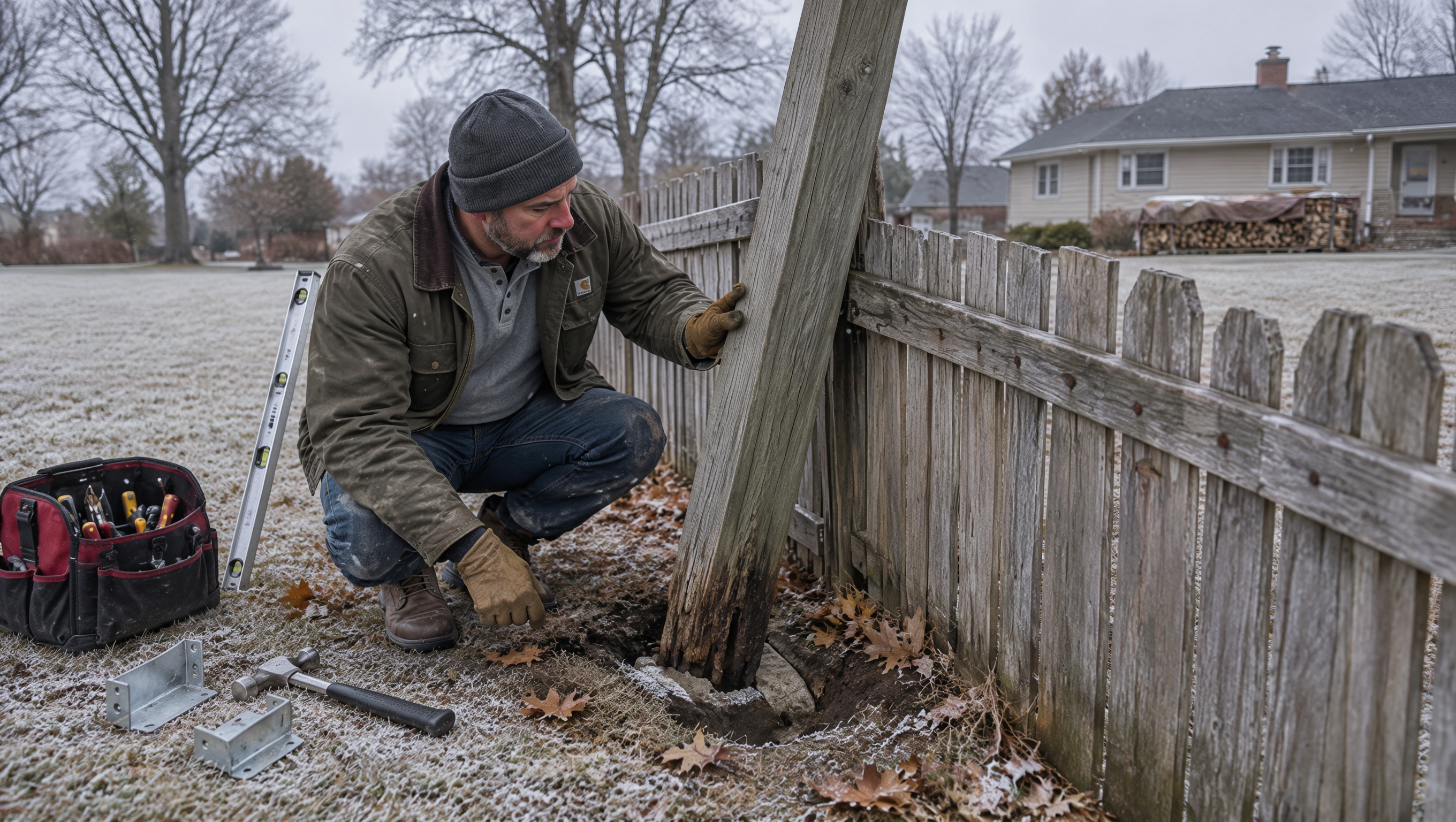
Fence posts support the entire fence, so even a small amount of leaning or movement can affect rails, panels, gates, and overall alignment. Before snow arrives in Machesney Park, homeowners should check posts for rot, loose soil, erosion, exposed footings, and movement. Repairing unstable posts before winter can help prevent larger problems during snow, wind, and freeze-thaw conditions.
Why Fence Posts Deserve Attention Before Winter
A damaged board or loose panel may affect one small area.
A weak fence post can affect several connected components at once.
Posts help support:
Rails
Boards
Panels
Gates
Corners
When a post begins shifting, the rest of the fence may follow.
That makes post stability one of the most important things to inspect before winter weather arrives.
Leaning Posts Can Get Worse
A post that leans slightly in fall may not seem urgent.
However, snow, strong wind, saturated soil, and freeze-thaw cycles can place additional stress on an already unstable section.
Watch for:
Posts leaning away from the fence line
Several connected panels sitting unevenly
Rails pulling away
Gates that suddenly stop lining up
The earlier the movement is identified, the easier it is to determine whether the problem is isolated or part of a larger fence issue.
Test for Movement at the Base
A post can look straight while still being loose.
Apply light pressure and watch the area where the post enters the ground.
Movement may suggest:
Loose soil
A failing footing
Erosion
Rot
Previous wind damage
Compare the questionable post with nearby posts.
If several posts move, there may be a broader soil or drainage problem.
Inspect Wood Posts for Rot
Wood posts need special attention near ground level.
This is where moisture can remain longer and deterioration may develop out of sight.
Look for:
Soft wood
Crumbling areas
Deep splitting
Dark deterioration
Weak fastener points
A wood post may look healthy above ground while the lower portion has already lost strength.
If the post is significantly deteriorated, replacement may be more practical than trying to stabilize it temporarily.
Look at the Soil, Not Just the Post
Fence post problems are not always caused by the post itself.
Walk around the base and check for:
Washed-out soil
Gaps
Soft ground
Mud
Standing water
A stable post depends on stable surrounding soil.
If water repeatedly removes support from one side, the post may continue leaning even after an adjustment.
Erosion Can Reduce Support
Heavy rain and runoff can gradually expose more of a footing or create empty space around a post.
This is especially worth checking near:
Downspouts
Low spots
Slopes
Drainage paths
Do not assume that filling visible gaps will solve the problem.
The source of the erosion should also be considered.
Exposed Footings Need a Closer Look
Seeing some concrete around a post does not automatically mean failure.
However, exposed footing combined with leaning, cracking, or soil loss deserves attention.
Look for:
Movement around the footing
Cracks
Soil washed away on one side
A post no longer sitting straight
These signs can indicate that the post is losing dependable support.
Gate Posts Carry Extra Stress
Gate posts experience more load than ordinary line posts.
The hinge post supports the gate's weight, while the latch post helps maintain a consistent opening.
Signs of trouble include:
A gate that sags
A latch that no longer meets correctly
Uneven side gaps
A gate that drags
Before adjusting gate hardware, check whether the supporting posts have moved.
Wide Gates Need Strong Post Support
Equipment gates and double gates place even more leverage on posts.
These openings may be used for:
Riding mowers
Trailers
Landscaping equipment
If a wide gate repeatedly drops out of alignment, the supporting post may be moving under the load.
Repairing the latch alone will not solve a structural support problem.
Corner Posts Matter More Than They Look
Corner posts help support fence runs that change direction.
Movement at a corner can affect two different sides of the fence.
Inspect corner posts for:
Leaning
Base movement
Soil loss
Loose connections
A weak corner may create alignment issues across a larger area than a single line post.
End Posts Should Stay Firm
End posts are another important support point.
They may carry extra stress where a fence run stops or connects to another feature.
For chain link fencing, terminal posts are especially important because they help maintain mesh tension.
If an end post shifts, nearby fencing can begin to sag or loosen.
Vinyl Fence Posts Can Move Too
Vinyl does not rot like wood, but its posts still depend on stable soil and footings.
Watch for:
Uneven panels
Posts sitting out of line
Loose rails
Gate alignment changes
If the vinyl panels themselves look fine but the fence has become uneven, post movement may be the underlying issue.
Check Chain Link Posts for Leaning
Chain link fences rely on posts and framework to keep the mesh properly supported.
A leaning post may lead to:
Loose fabric
Sagging mesh
Bent top rails
Gate problems
Repairing post stability first can be necessary before restoring proper tension to the surrounding fence.
Aluminum Fencing Can Reveal Small Shifts
Because aluminum fences usually have straight, open lines, even small post movement may be easy to notice.
Check for:
Leaning posts
Uneven sections
Misaligned pickets
Gate changes
The material itself may still be in good condition while the supporting ground has shifted.
Freeze-Thaw Cycles Can Stress Weak Posts
Machesney Park winters can bring repeated freezing and thawing.
Moisture in the soil may freeze, expand, thaw, and settle again.
A post that is already loose may become noticeably less stable as these cycles continue.
That does not mean every fence post will move during winter, but existing weakness is worth addressing beforehand.
Snow Can Hide Warning Signs
Once snow covers the fence line, it becomes harder to see:
Erosion
Rot near the ground
Small soil gaps
Exposed footings
Fall is one of the best times to inspect these areas because the bases of the posts are still visible.
Make repairs while the problem can be evaluated clearly.
Keep Heavy Snow Away From Weak Sections
When winter arrives, avoid pushing large snow piles against posts that are already questionable.
Heavy buildup can add pressure to:
Gates
Corners
Leaning sections
Snowblowers and plows should also have enough clearance to avoid striking the fence.
An impact that would normally cause minor damage may be more serious if the post is already unstable.
Repair the Cause, Not Just the Lean
Straightening a post is only part of the repair if another issue caused it to move.
The contractor may need to evaluate:
The post itself
The footing
Surrounding soil
Drainage
Connected fence components
A repair is more useful when the source of the movement is addressed too.
When One Post Can Be Repaired
An isolated repair may make sense when:
One post is loose
Nearby posts remain stable
Connected sections are still in good condition
Damage is limited
Depending on the problem, the post may need to be stabilized, reset, or replaced.
The exact solution depends on the material and condition.
When More Than One Post Needs Attention
A broader repair may be necessary when:
Several posts lean
Long fence sections move
Multiple gates are misaligned
Soil erosion extends along the fence
Rot affects several wood posts
At that point, the issue may be larger than a single failing support.
Evaluating the complete section can help determine whether repair or replacement makes more sense.
Before-Snow Fence Post Checklist
Before winter in Machesney Park, check:
Post alignment
Movement at the base
Rot
Soil gaps
Erosion
Drainage
Footing exposure
Gate posts
Corner posts
End posts
Prioritize stability problems before cosmetic repairs.
Request a Free Fence Post Repair Estimate
Arrow Fence helps Machesney Park homeowners repair loose, leaning, damaged, or deteriorated fence posts before winter.
Whether the issue involves wood, vinyl, chain link, aluminum, gate posts, drainage, or a larger unstable fence section, Arrow Fence can help you review practical repair or replacement options.
Contact Arrow Fence at arrowfencerockford.com to request a free estimate for your fence repair project.
