
Fence Post Repair Before Winter in Huntley, IL: Homeowner Tips
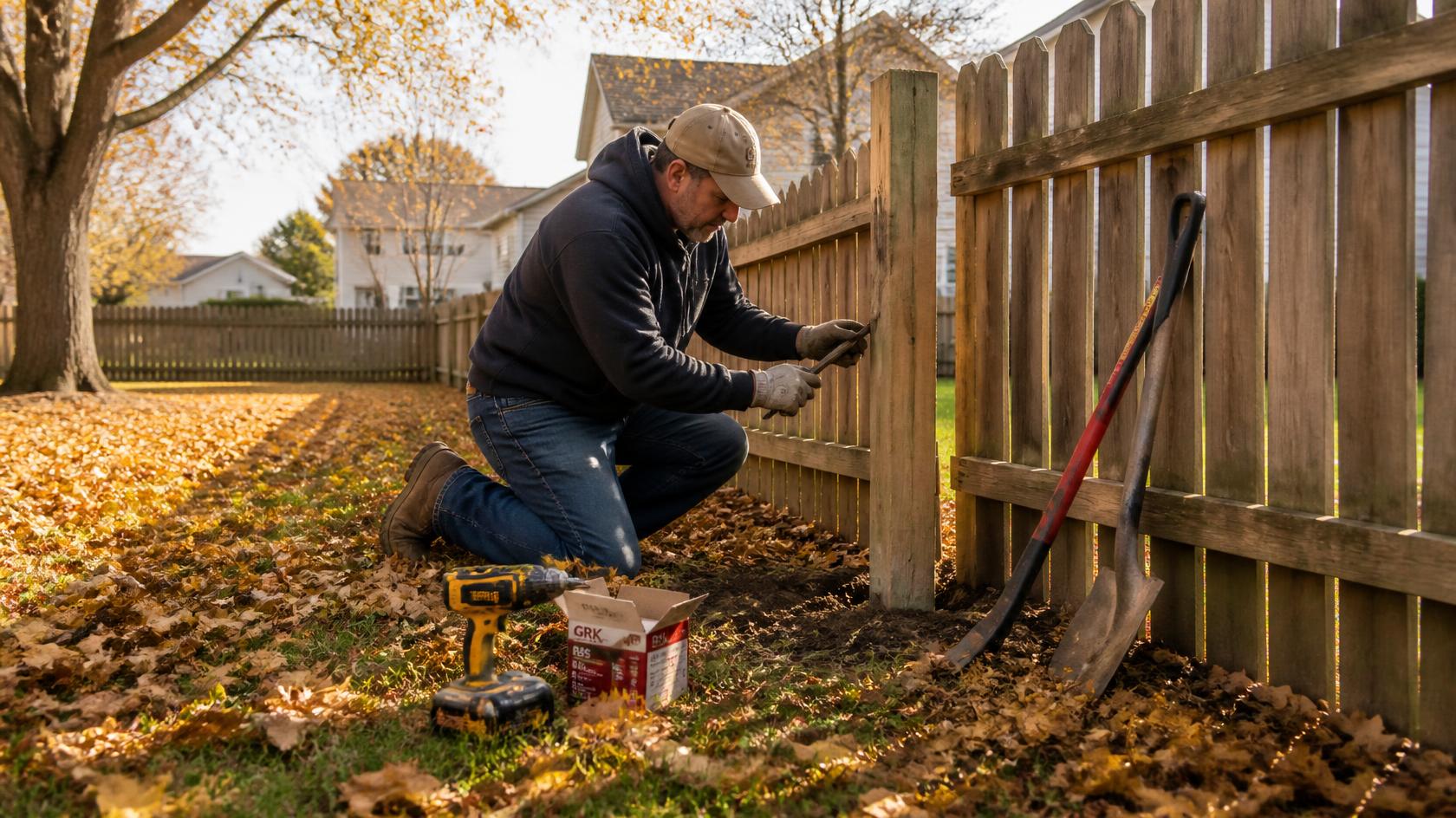
Before winter reaches Huntley, homeowners should check fence posts for leaning, movement, rot, exposed footings, erosion, and gate alignment problems. A single damaged post may be repairable, but several failing posts can indicate a larger structural issue that should be addressed before snow, ice, and freeze-thaw cycles add more stress.
Why Fence Posts Matter Before Winter
Fence posts carry the weight and movement of the entire fence system.
They support:
Rails
Boards
Panels
Gates
Corners
End sections
If a post is already weak in fall, winter conditions can make the problem more noticeable.
Snow, wind, saturated soil, freezing temperatures, and repeated thawing can all affect the ground around a post.
That makes fall a good time to identify problems while the fence line is still easy to inspect.
Check for Leaning Posts
A post that has started leaning should not be ignored.
Possible causes include:
Soil movement
Erosion
Failed footing
Rot
Wind pressure
Impact damage
Look at the fence from a distance to spot sections that no longer follow a straight line.
Then check the individual posts more closely.
A slightly shifted post may still be repairable, while a post that moves freely at the base may need more extensive work.
Test for Movement Carefully
A post may look upright but still be loose.
Apply light pressure and watch for movement.
Also check whether connected sections move with it.
A loose post can eventually cause:
Sagging rails
Panel movement
Gate misalignment
Wider ground gaps
The goal is to identify structural movement before winter adds additional stress.
Look for Rot on Wood Posts
Wood posts are especially vulnerable near ground level.
Inspect for:
Soft wood
Dark discoloration
Crumbling areas
Deep cracking
Material that no longer holds fasteners securely
The visible upper portion of the post may still look acceptable even when the lower section has deteriorated.
If rot is severe, replacing the post may be more practical than attempting to straighten it.
Check the Soil Around Each Post
The problem may come from the ground rather than the post itself.
Look for:
Soft soil
Mud
Washed-out areas
Gaps around footings
Exposed concrete
Heavy rain can remove supporting soil over time.
If erosion caused the movement, simply resetting the post without addressing runoff may allow the problem to return.
Watch for Drainage Problems
Drainage deserves special attention before winter.
Check whether water regularly collects near posts because of:
Downspouts
Low spots
Yard slopes
Runoff paths
Poor grading
Standing water and erosion can weaken the soil surrounding fence footings.
Spring snowmelt may follow many of the same drainage paths, so fall is a useful time to address the issue.
Inspect Gate Posts Separately
Gate posts handle more stress than ordinary line posts.
They support:
Gate weight
Hinges
Repeated opening and closing
If a gate starts dragging or stops latching, inspect the posts before adjusting the hardware.
A leaning hinge post may cause the entire gate to sag.
A shifting latch post can also make a properly hung gate difficult to close.
Check Corner and End Posts
Corner posts and end posts can carry extra structural load.
Inspect areas where:
Fence lines change direction
A long run ends
Gates connect
Different fence types meet
Movement in these posts can affect several connected sections at once.
They deserve extra attention before winter storms arrive.
Wind Can Reveal Weak Posts
Solid privacy fencing catches more wind than open fencing.
Wood privacy panels and full-privacy vinyl can place additional pressure on posts during strong fall and winter wind.
After windy weather, check for:
New leaning
Soil movement
Loose connections
Gate changes
If a section visibly moves during moderate wind, the posts should be inspected more closely.
Freeze-Thaw Cycles Can Change Alignment
Moisture in the soil can freeze, expand, thaw, and settle.
Over time, this can contribute to:
Heaving
Settling
Leaning
Gate alignment changes
Homeowners may notice these problems after winter even when the fence looked acceptable in fall.
Repairing already unstable posts before freezing conditions arrive can help reduce further movement.
Chain Link Posts Can Shift Too
Chain link fencing depends on stable posts to maintain tension.
Watch for:
Leaning terminal posts
Sagging mesh
Loose top rails
Gate misalignment
If the mesh is still in good condition, repairing or replacing one post may restore the section without replacing the entire fence.
Vinyl Fence Posts Need Stable Ground
Vinyl itself does not rot, but its posts can still shift because of:
Soil movement
Erosion
Failed footing
Wind
Impact
Signs of a post problem may include:
Uneven panels
Loose rails
Gate issues
Sections that no longer line up
The post should be corrected before repeatedly adjusting surrounding panels.
Aluminum Posts Should Stay Straight and Firm
Aluminum fencing allows more airflow than solid privacy fencing, but post movement can still affect the system.
Check for:
Leaning
Loose sections
Gate alignment problems
Impact damage
A small shift can be especially noticeable in a decorative fence with straight sightlines.
Should a Fence Post Be Reset or Replaced?
The answer depends on the condition of the post and footing.
Resetting or stabilizing may make sense when:
The post remains structurally sound
Damage is isolated
Soil or drainage problems can be corrected
The footing can be repaired
Replacement may be more appropriate when:
Wood is badly rotten
The post is cracked
Metal is severely bent
The footing has failed
Movement keeps returning
The repair should address the actual cause rather than only making the fence look straight.
Check the Fence After a Post Repair
Once a post has been corrected, inspect everything attached to it.
Look at:
Rails
Panels
Boards
Hardware
Ground clearance
Gates
A shifting post may have created secondary problems that also need attention.
Pet owners should check carefully for new openings underneath the fence.
Clear Leaves and Debris Around Posts
Fall leaves can hide important warning signs.
Remove debris around:
Post bases
Gates
Corners
Drainage paths
This makes it easier to see erosion, exposed footings, rot, and ground gaps.
Keeping the area clear also prevents wet leaves from holding moisture against wood posts.
Prepare for Snow Removal
Think about how snow will be handled around the fence.
Avoid repeatedly piling heavy snow against:
Leaning posts
Weak corners
Gate posts
Snow-removal equipment should also have enough clearance to avoid striking posts.
A post that is already weakened may not tolerate an additional impact well.
When Multiple Bad Posts Mean a Bigger Problem
One damaged post may be a localized repair.
Several failing posts may indicate:
Widespread rot
Poor drainage
Aging footings
Repeated wind stress
General fence deterioration
At that point, homeowners should compare targeted repairs with replacing the affected fence run.
Repeatedly repairing one post at a time may not be the most practical long-term approach.
Fall Fence Post Checklist
Before winter, Huntley homeowners should check:
Leaning posts
Post movement
Rot
Footings
Soil erosion
Drainage
Gate posts
Corner posts
Ground gaps
Connected rails and panels
Taking photos of questionable areas can help track whether movement continues over winter.
Request a Free Fence Post Repair Estimate
Arrow Fence helps Huntley homeowners address leaning, loose, damaged, or deteriorated fence posts before winter.
Whether the issue involves wood, vinyl, chain link, aluminum, gate posts, drainage, or a larger fence section, Arrow Fence can help you review repair and replacement options for your property.
Contact Arrow Fence at arrowfencerockford.com to request a free estimate for your fence repair project.
