
Fence Post Repair in Genoa, IL: Fixing Stability Problems Before Freeze-Thaw
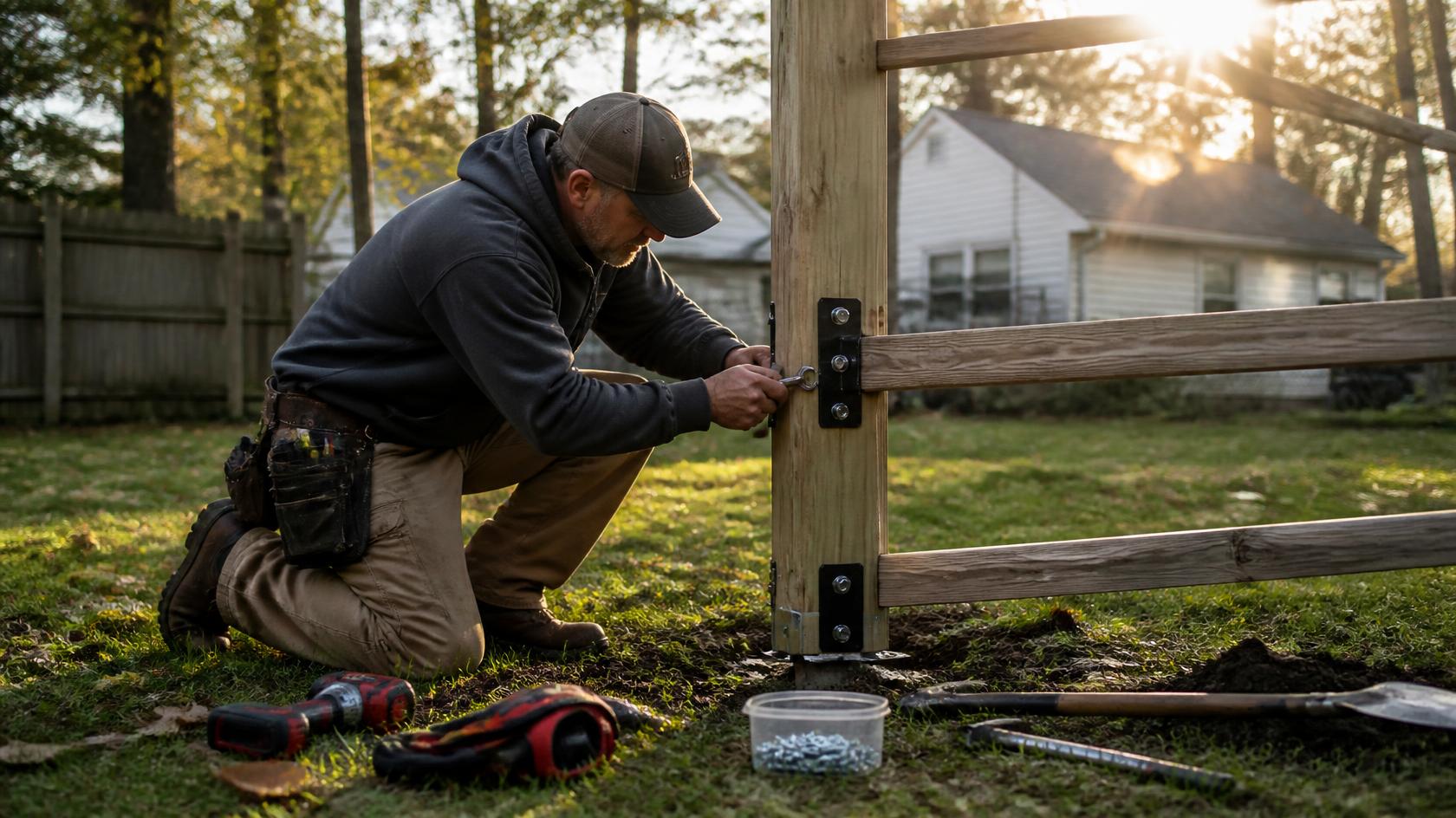
Fence posts that lean, wobble, sit in washed-out soil, or show rot should be checked before repeated freezing and thawing begin in Genoa. Fall is a good time to identify whether the problem comes from the post, footing, drainage, soil movement, or gate stress so the repair addresses the actual cause.
Why Post Stability Matters Before Winter
Fence posts support everything connected to them, including:
Rails
Boards
Panels
Gates
Corners
End sections
When a post starts moving, the problem can spread into the surrounding fence.
A small lean in fall may eventually contribute to sagging panels, gate misalignment, loose rails, or larger ground gaps.
Cold weather does not automatically cause a stable post to fail, but an already weak post can become more noticeable as soil freezes, thaws, settles, and becomes wet again.
Look for Early Signs of Movement
Some post problems are obvious. Others develop gradually.
Walk along the fence and look for:
Posts leaning away from the fence line
Sections that no longer look straight
Gaps around the base
Exposed footing material
Soft or eroded soil
Movement when light pressure is applied
Viewing a long fence line from one end can make small changes easier to see.
A post may look upright from close range while still sitting out of alignment with the rest of the fence.
Check the Base, Not Just the Top
The condition near ground level often tells more than the visible upper portion.
Inspect where the post meets the soil.
For wood posts, watch for:
Soft wood
Darkened areas
Crumbling material
Deep cracking
Rot
For metal, vinyl, or aluminum systems, look for:
Movement in the footing
Bent posts
Cracks or damage around the base
Soil pulling away from the post
The repair approach depends on whether the post itself is damaged or simply losing support from the ground around it.
Understand Freeze-Thaw Movement
Fall moisture can remain in the soil around a fence post.
As temperatures drop, that moisture can freeze. When temperatures rise again, it thaws.
Repeated cycles can contribute to:
Soil movement
Settling
Heaving
Post misalignment
The effect can be more noticeable where the ground is already soft, disturbed, or poorly drained.
That is why a loose post should be evaluated before winter rather than simply watched until spring.
Drainage May Be the Real Problem
A leaning post is sometimes a drainage problem in disguise.
After fall rain, inspect the area for:
Standing water
Downspout discharge
Mud
Erosion
Washout around the footing
If water repeatedly removes soil around the post, resetting it without correcting the runoff may only provide temporary improvement.
Look at where the water is coming from and where it travels after a storm.
Check for Soil Pulling Away From the Footing
A visible gap around the base can indicate movement.
Possible causes include:
Erosion
Settlement
Repeated fence movement
Disturbed soil
The post may still feel relatively firm in dry weather but become unstable after heavy rain.
Take note of whether the gap appears only on one side, which may help show the direction the post is moving.
Wood Post Rot Requires a Different Repair
A sound wood post that has shifted may sometimes be reset.
A badly deteriorated one may need replacement.
Signs that replacement may be more appropriate include:
Extensive rot near the soil line
Deep splitting
Wood that no longer holds hardware
A weakened section below the rails
Trying to straighten a structurally damaged post does not restore the strength it has already lost.
Gate Posts Deserve Extra Attention
Gate posts experience more stress than ordinary line posts.
They support:
Gate weight
Hinges
Repeated movement
Warning signs can include:
A gate that suddenly drags
A latch that no longer lines up
A widening side gap
A post leaning toward the gate opening
If the gate keeps going out of alignment, the post may be moving even if the hinges still look fine.
Wide Gates Put More Load on Posts
Mower gates, double gates, and equipment openings can place additional pressure on their supports.
If a wide gate begins sagging, check:
Hinge post stability
Gate framing
Bracing
Hardware
Repeatedly adjusting the latch will not solve a post that is shifting under the gate's weight.
Corner Posts Can Affect Two Fence Runs
Corner posts connect sections moving in different directions.
If one starts leaning, both fence lines can be affected.
Check for:
Loose rails
Panel movement
Soil gaps
Changes in alignment on both sides
Corners should remain stable because movement there can spread farther than a problem with one ordinary line post.
Check Wind-Exposed Sections
Solid privacy fences place more wind pressure on posts than open designs.
After windy weather, inspect:
Long privacy runs
Corners
Gate posts
End posts
Wood and full-privacy vinyl deserve extra attention in exposed areas.
A section that visibly moves during moderate wind may already have post or footing problems.
Different Fence Materials Show Post Problems Differently
Wood
Watch for rot, leaning, loose rails, and movement near the soil line.
Vinyl
Check for uneven panels, loose rails, and shifting posts. Vinyl itself does not rot, but the supporting ground can still move.
Chain Link
Look for leaning terminal posts, sagging fabric, loose top rails, or gates that no longer close correctly.
Aluminum
Post movement may show up as uneven picket lines, loose sections, or gate misalignment.
The visible symptom may be different, but stable posts are essential for every material.
Ground Gaps Can Develop Around Unstable Posts
When a post shifts, the attached fence section can lift or change angle.
This may create new openings beneath the fence.
Pet owners should inspect:
Sloped areas
Corners
Gate openings
Low spots
Small gaps can become harder to see once snow covers the ground.
Resetting vs Replacing a Fence Post
The right repair depends on the condition of the post and footing.
Resetting or stabilizing may make sense when:
The post remains structurally sound
Damage is isolated
The footing can be corrected
Drainage can be improved
Replacement may be more practical when:
Wood is severely rotten
A metal post is badly bent
The post is cracked
The footing has failed
The problem keeps returning
A repair should solve the reason for movement, not just make the post look straight again.
Repair the Connected Fence Too
Once a post is repaired, check everything attached to it.
Inspect:
Rails
Panels
Boards
Fasteners
Hardware
Gate alignment
A shifting post may have placed extra stress on surrounding parts of the fence.
Correcting those secondary problems helps restore the section as a whole.
Clear Leaves Around Post Bases
Fallen leaves can hide early warning signs.
Clear debris around posts so you can see:
Soil movement
Rot
Footings
Drainage paths
Wet leaves can also hold moisture against wood near ground level.
Keeping the area clear makes fall inspections easier.
Recheck After Heavy Rain
A post may feel stable on a dry day but move once the ground becomes saturated.
After significant rain, revisit problem areas.
Check whether:
Soil has washed away
The post leans more
The gate has changed alignment
New gaps have appeared
This can help reveal whether drainage is contributing to the instability.
When Several Posts Are Failing
One bad post may be a straightforward repair.
Several unstable posts along the same fence run may point to:
Aging footings
Widespread rot
Poor drainage
Repeated wind stress
General fence deterioration
At that point, compare targeted repair with partial or full replacement.
Repairing one post at a time may not be practical if the entire section is losing stability.
Fall Fence Post Checklist
Before freeze-thaw conditions become more frequent in Genoa, check:
Post alignment
Movement at the base
Wood rot
Footing condition
Soil gaps
Drainage
Erosion
Gate posts
Corner posts
Ground gaps
Connected rails and panels
A focused fall inspection can help identify problems while the fence line and surrounding soil are still easy to see.
Request a Free Fence Post Repair Estimate
Arrow Fence helps Genoa homeowners address loose, leaning, damaged, or deteriorated fence posts before winter.
Whether the problem involves wood, vinyl, chain link, aluminum, gate posts, drainage, or a larger unstable fence section, Arrow Fence can help you compare practical repair and replacement options.
Contact Arrow Fence at arrowfencerockford.com to request a free estimate for your fence repair project.
