
Fence Post Repair in Machesney Park, IL: Why Leaning Posts Should Be Fixed Before Winter
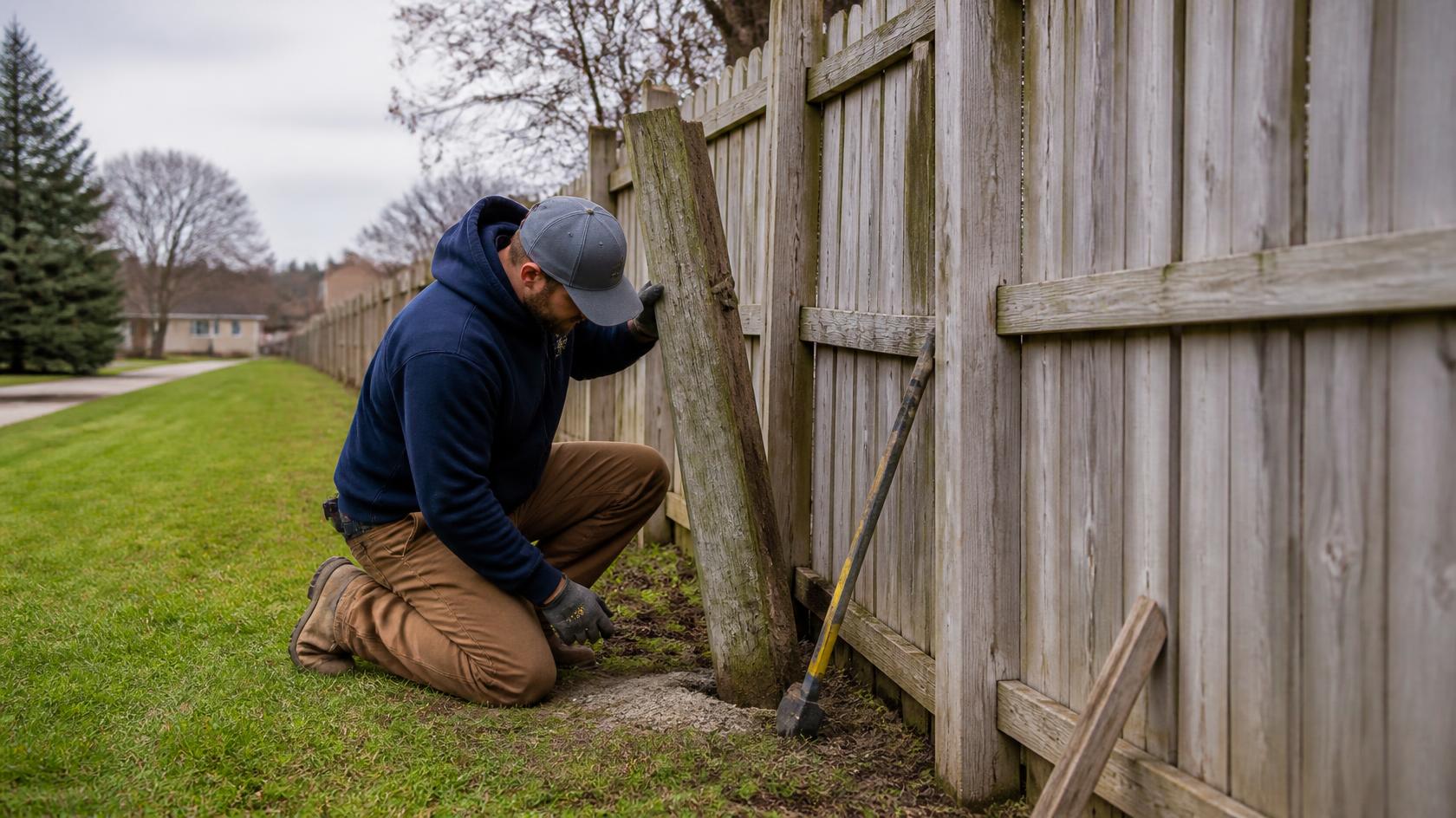
A leaning fence post can affect more than one section of the fence. Before winter arrives in Machesney Park, homeowners should check posts for movement, rot, soil erosion, loose concrete, drainage problems, and gate stress so small structural issues do not worsen under snow, wind, frozen ground, and freeze-thaw cycles.
Why Leaning Fence Posts Need Attention
Fence posts support the entire structure.
When one begins to lean, nearby rails, panels, boards, or gates may also start shifting.
Common warning signs include:
A visible lean
Loose movement at the base
Sagging fence sections
Gates no longer lining up
Cracked or exposed footings
Soil washing away around posts
Rot near the bottom of wood posts
Ignoring a weak post can place additional stress on neighboring sections.
Fall is a good time to identify these problems before winter makes the yard harder to inspect and repair.
What Causes Fence Posts to Lean?
A leaning post does not always have one obvious cause.
Several conditions can contribute.
Soil Movement
Soil around the post can shift gradually because of moisture, drying, and seasonal temperature changes.
If the ground no longer holds the post firmly, the fence may start leaning.
Drainage and Erosion
Heavy rain can wash soil away from the base of a post.
Downspouts, low areas, and concentrated runoff can make the problem worse.
Freeze-Thaw Cycles
Northern Illinois winters bring repeated freezing and thawing.
As moisture in the soil freezes and expands, then thaws again, the ground around a fence post can move.
Over time, this may affect post stability.
Rot or Deterioration
Wood posts can weaken when moisture remains around the base.
Rot may develop gradually and may not be obvious until the post begins moving.
Wind Pressure
Solid privacy fencing catches more wind than open fencing.
Strong wind places additional pressure on posts supporting:
Wood privacy fencing
Vinyl privacy panels
Chain link with screening
A post that is already weak may lean further during storms.
Why Winter Can Make the Problem Worse
A slightly leaning post in fall may become a bigger problem after several months of winter weather.
Potential stresses include:
Snow accumulation
Ice
Strong wind
Frozen soil
Thawing ground
Heavy wet snow
Branch impacts
Winter can also make repairs more difficult once the ground is frozen or covered.
That is why fall is a useful time to evaluate structural problems.
Start With a Visual Inspection
Walk the entire fence line and compare one post with the next.
Look for posts that:
Lean noticeably
Sit lower than surrounding posts
Move separately from the fence
Have exposed concrete
Have washed-out soil around the base
Sometimes the fence section itself can make a post appear crooked, so inspect both the post and connected rails or panels.
Gently Check for Movement
Where safe and accessible, gently test a suspicious post.
Unexpected movement may suggest:
Loose soil
Deteriorated wood
A damaged footing
A weakened connection
Do not force or pull heavily on a weak section.
The goal is simply to identify whether the post feels less stable than neighboring posts.
Inspect Wood Posts for Rot
Wood posts should be checked carefully near ground level.
Look for:
Soft wood
Darkened areas
Splitting
Crumbling material
Deep cracks
Persistent moisture
Damage at the bottom of the post is particularly important because this is where much of the structural load is transferred into the ground.
A post that is structurally deteriorated may require replacement rather than simple adjustment.
Check Concrete Footings
Some leaning posts are still structurally sound but have problems around the footing.
Inspect for:
Cracked concrete
Exposed footing edges
Loose footing movement
Soil gaps around concrete
Erosion can expose portions of a footing that were previously supported by surrounding soil.
A professional can determine whether the existing footing can be stabilized or should be replaced.
Look for Drainage Problems
Drainage is one of the most important things to check around a leaning post.
Watch for:
Standing water
Mud
Downspouts draining nearby
Erosion channels
Low spots
Soil washing away
Repairing the post without addressing the water problem may allow the issue to return.
The fence line should work with the natural drainage of the yard.
Pay Extra Attention to Gate Posts
Gate posts experience more stress than standard fence posts.
They support:
Gate weight
Hinges
Repeated opening and closing
Latch pressure
A leaning gate post may cause the gate to:
Drag
Sag
Rub against another post
Stop latching
Leave larger gaps
If the gate is already difficult to use in fall, winter soil movement may make the problem more noticeable.
Check Corner Posts
Corner posts also deserve extra attention.
They help support fence lines running in different directions.
Look for:
Leaning
Loose connections
Pulling from rails
Soil movement
Stress around hardware
A weak corner post can affect more than one section of the fence.
Solid Privacy Fences Need Strong Posts
Solid fences experience greater wind pressure because air cannot easily pass through them.
This includes:
Solid wood
Board-on-board fencing
Full-privacy vinyl
Homeowners should pay extra attention to posts along exposed areas of the property.
A post that moves noticeably in calm weather may experience additional stress during winter storms.
Chain Link Posts Can Lean Too
Chain link fences may be more open, but their posts can still shift.
Check for:
Leaning terminal posts
Loose line posts
Sagging mesh
Loose top rails
Gate alignment problems
If privacy screening has been added to chain link, the fence may catch more wind than it originally did.
That additional load can affect weakened posts.
Watch for Ground Gaps Near Leaning Posts
As posts shift, the fence may rise or move enough to create gaps along the bottom.
This matters especially for homeowners with dogs.
Inspect near:
Gates
Corners
Slopes
Drainage areas
A ground gap that seems minor may become larger as the post continues moving.
Fall is a good time to address these openings before snow hides them.
Can a Leaning Fence Post Be Repaired?
Sometimes.
The right solution depends on why the post is leaning.
Possible repairs may include:
Stabilizing the post
Correcting soil support
Repairing connections
Replacing damaged concrete
Replacing the post entirely
A post with sound material but poor support may need a different repair than one that has rotted at the base.
The cause should be identified before deciding on the fix.
When Post Replacement May Be Better
Replacement may make more sense when the post has:
Significant rot
Severe cracking
Structural deterioration
Extensive footing damage
Repeated movement after previous repair
Replacing one failed post can sometimes restore stability to an otherwise serviceable fence.
If several posts are leaning, however, the entire fence should be evaluated.
Check the Rails and Panels Too
A leaning post may place stress on nearby components.
Inspect connected:
Rails
Boards
Vinyl panels
Chain link fabric
Hardware
Look for pulled fasteners, cracked rails, twisted sections, or separation.
Fixing only the post while ignoring connected damage may leave part of the problem unresolved.
Trim Nearby Branches Before Winter
Branches above the fence can add extra risk.
Snow or ice may cause weak limbs to fall onto already compromised posts.
Trim dead, damaged, or low branches that could strike the fence.
This is particularly important near sections that already show movement.
Avoid Piling Snow Against Weak Sections
Think ahead to winter snow removal.
Avoid repeatedly pushing heavy snow against a leaning fence or weak post.
Pay special attention near:
Driveways
Walkways
Gates
Parking areas
Snow-removal equipment should also have enough clearance to avoid hitting the fence.
Fall Fence Post Checklist
Before winter, homeowners should check:
Post alignment
Movement at the base
Wood rot
Concrete footings
Soil erosion
Drainage
Gate posts
Corner posts
Connected rails
Panels or boards
Ground gaps
Nearby branches
Snow-removal clearance
A full inspection helps determine whether the issue is isolated or part of a larger fence problem.
Repair or Replace the Fence?
One or two leaning posts may be repairable without replacing the whole fence.
A larger replacement may be worth considering when:
Several posts are failing
Large sections are leaning
Wood deterioration is widespread
Gates repeatedly lose alignment
Rails and panels are also damaged
The fence no longer provides reliable privacy or security
The condition of the entire fence should guide the decision.
Request a Free Fence Repair Estimate
Arrow Fence helps Machesney Park homeowners address leaning posts, gate problems, damaged fence sections, and other repairs before winter.
Whether you have wood, vinyl, chain link, or another residential fence, Arrow Fence can help evaluate whether targeted post repair, replacement, or a larger fence project makes sense.
Contact Arrow Fence at arrowfencerockford.com to request a free estimate for your fence repair project.
