
Fence Repair After Heavy Rain in Galena, IL: Posts, Panels and Drainage Issues
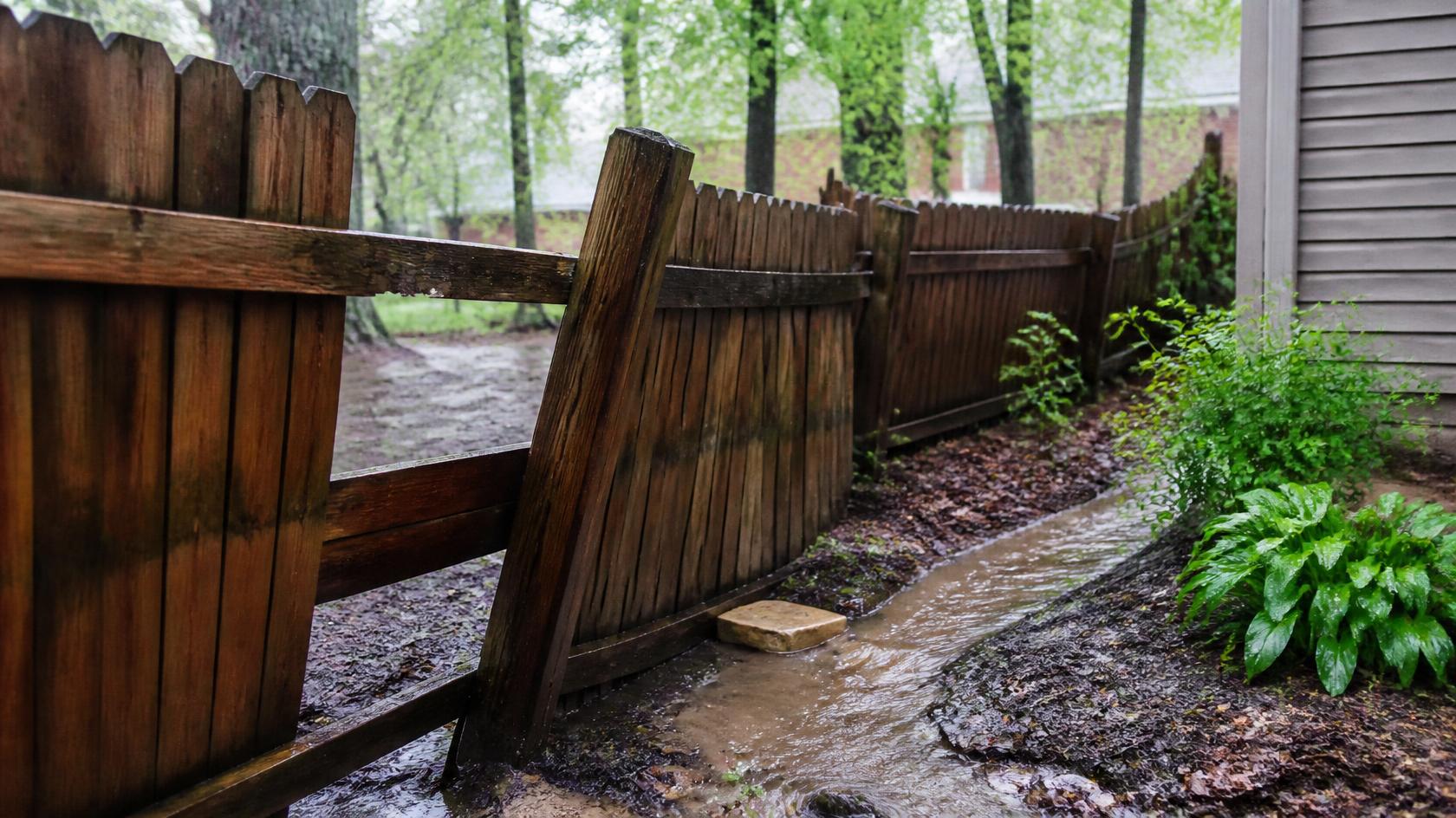
Heavy rain can expose fence problems that are easy to miss during dry weather. Galena homeowners should check for leaning posts, loose panels, gate misalignment, erosion, standing water, and soil washed away from footings. Repairing the visible damage is important, but drainage problems should also be addressed so the same issues do not keep returning.
Why Heavy Rain Can Affect a Fence
Rain does more than get fence materials wet.
Repeated or heavy rainfall can change the soil supporting the fence, especially in low areas or along runoff paths.
Problems may include:
Soft soil around posts
Erosion
Exposed footings
Leaning fence sections
New ground gaps
Gate movement
Loose panels
The fence may not fail immediately. Small changes after a storm can be the first sign that the structure needs attention.
Start With the Fence Posts
Posts are one of the most important things to inspect after heavy rain.
Walk the fence line and look for posts that:
Lean
Move when lightly pushed
Sit in unusually soft soil
Have exposed concrete
Appear lower or higher than nearby posts
If one post shifts, the rails and panels connected to it can also move.
A post problem should be repaired before simply adjusting the visible fence section around it.
Watch for Soil Washed Away From Footings
Runoff can gradually remove soil from around fence posts.
Look for:
Channels beside posts
Exposed concrete
Deepened ground gaps
Washed-out soil
New low areas
Adding soil around the post without understanding where the water is coming from may only provide a temporary fix.
The runoff pattern should be addressed as part of the repair plan.
Check Wood Posts for Moisture Damage
Wood posts deserve extra attention after prolonged wet conditions.
Look near ground level for:
Soft wood
Dark discoloration
Splitting
Crumbling areas
Existing rot
One wet week does not automatically ruin a sound wood post, but repeated moisture around already aging wood can make existing deterioration more noticeable.
If the post is structurally weak, replacement may be more appropriate than straightening it.
Inspect Fence Panels for Movement
Heavy rain can cause panels to shift when the supporting posts or ground move.
Check for:
Loose panels
Uneven sections
Separation from posts
Gaps between components
Panels that move in light wind
Do not assume the panel itself is the problem.
A loose panel may be the result of a shifted post, damaged rail, or weakened connection.
Wood Boards and Rails Need a Closer Look
For wood fencing, inspect both the visible boards and the rails behind them.
Watch for:
Loose boards
Cracked rails
Warping
Missing fasteners
Moisture-damaged wood
Wet boards may swell temporarily, while older wood may reveal rot or weak fastener points after repeated exposure.
Repairing damaged boards without checking the supporting rails can leave the section unstable.
Check Vinyl Fence Sections
Vinyl does not absorb water like wood, but the structure around it can still be affected by rain.
Check for:
Leaning posts
Loose rails
Panels out of alignment
New ground gaps
Gate movement
If a vinyl section shifts after a storm, inspect the soil and post support rather than focusing only on the panel.
Inspect Chain Link for Lost Tension
Rain-related soil movement can affect chain link posts and framework.
Look for:
Sagging mesh
Leaning terminal posts
Loose top rails
Gate misalignment
Areas where the mesh no longer feels properly tensioned
If the posts remain stable, some chain link problems may be repairable without replacing the entire section.
Gate Problems May Show Up After Rain
Gates often reveal post movement quickly.
After heavy rain, test every gate.
Watch for:
Dragging
Sagging
Latches that no longer line up
Uneven side gaps
Posts that move
If a gate worked properly before the storm and suddenly does not, soil movement around one of the supporting posts may be the cause.
Look at the Ground Beneath the Gate
Rain can change ground clearance too.
Soil may:
Wash away
Build up
Become muddy
Settle unevenly
This can create a larger gap beneath the gate or cause the gate to drag.
Pet owners should pay particular attention to newly formed openings.
Identify Where Water Is Coming From
Fence repair should include a drainage check.
Look for water coming from:
Downspouts
Sloped lawns
Driveways
Neighboring higher ground
Low yard areas
Watch where runoff travels during or shortly after rainfall.
That information can help explain why certain fence posts keep shifting.
Standing Water Is a Warning Sign
Water that remains around the fence after rain deserves attention.
Standing water can contribute to:
Soft soil
Erosion
Wood deterioration
Post movement
Gate alignment problems
The fence should not create a barrier that traps water where it previously flowed.
Drainage and fencing need to work together.
Erosion Can Create Pet Escape Gaps
Rainwater can carve small channels beneath fencing.
These openings may become serious problems for:
Small dogs
Puppies
Digging pets
Inspect areas near:
Slopes
Downspouts
Corners
Gates
If erosion caused the gap, filling it without correcting the runoff may allow the opening to return after the next storm.
Check Sloped Fence Sections Carefully
Sloped yards can concentrate runoff.
Water may travel along or underneath a fence line and remove soil in certain spots.
After heavy rain, inspect grade changes for:
Exposed footings
Uneven ground clearance
Post movement
Panel misalignment
These areas may need both fence repair and drainage improvement.
Clear Debris From Drainage Paths
Stormwater can carry:
Leaves
Branches
Mulch
Yard debris
against the fence.
This buildup can block water movement and keep moisture against wood.
Clear debris from:
Fence corners
Gates
Post bases
Low areas
Keeping drainage paths open can reduce future problems.
Check Nearby Trees and Branches
Heavy rain often comes with wind.
Inspect nearby trees for branches that may have:
Fallen onto the fence
Cracked
Shifted
Begun resting on panels
Even light branch pressure can loosen fence components over time.
Remove obvious hazards before the next storm.
Repair or Reset a Leaning Post?
A leaning post may be repairable if:
Damage is isolated
The post remains structurally sound
The footing can be stabilized
Drainage can be corrected
Replacement may be more practical when:
The post is rotten
The footing has failed badly
The post is cracked or bent
Movement keeps returning
The repair method should match the actual cause.
When Panel Repair Is Enough
A targeted repair may work when:
One panel is loose
A few boards have shifted
Fasteners have failed
One rail is damaged
If several panels are leaning because multiple posts moved, repairing each panel individually may not solve the larger problem.
When Replacement Should Be Considered
A larger replacement may make sense when heavy rain exposes widespread deterioration.
Warning signs include:
Several leaning posts
Extensive wood rot
Multiple loose panels
Repeated gate problems
Widespread erosion damage
In these situations, compare the value of repeated repairs with replacing the affected fence run.
Check the Fence Again After the Yard Dries
Some problems are easier to evaluate after excess water has drained away.
Recheck:
Posts
Gates
Panels
Ground gaps
Soil around footings
If a post remains loose once the ground dries, the problem may require structural repair rather than being caused only by temporarily soft soil.
After-Rain Fence Inspection Checklist
After a heavy rain event in Galena, check:
Posts
Panels
Rails
Boards
Gates
Hinges and latches
Ground gaps
Exposed footings
Standing water
Erosion
Runoff paths
Fallen branches
Taking photos can help track whether movement continues after future storms.
Request a Free Fence Repair Estimate
Arrow Fence helps Galena homeowners address fence problems caused or exposed by heavy rain, including leaning posts, loose panels, gate issues, erosion, and drainage-related movement.
Whether the fence needs targeted repairs, post work, panel replacement, or a larger upgrade, Arrow Fence can help you evaluate practical options for the property.
Contact Arrow Fence at arrowfencerockford.com to request a free estimate for your fence repair project.
