
Fence Repair After Strong Winds in Sycamore, IL: What to Check
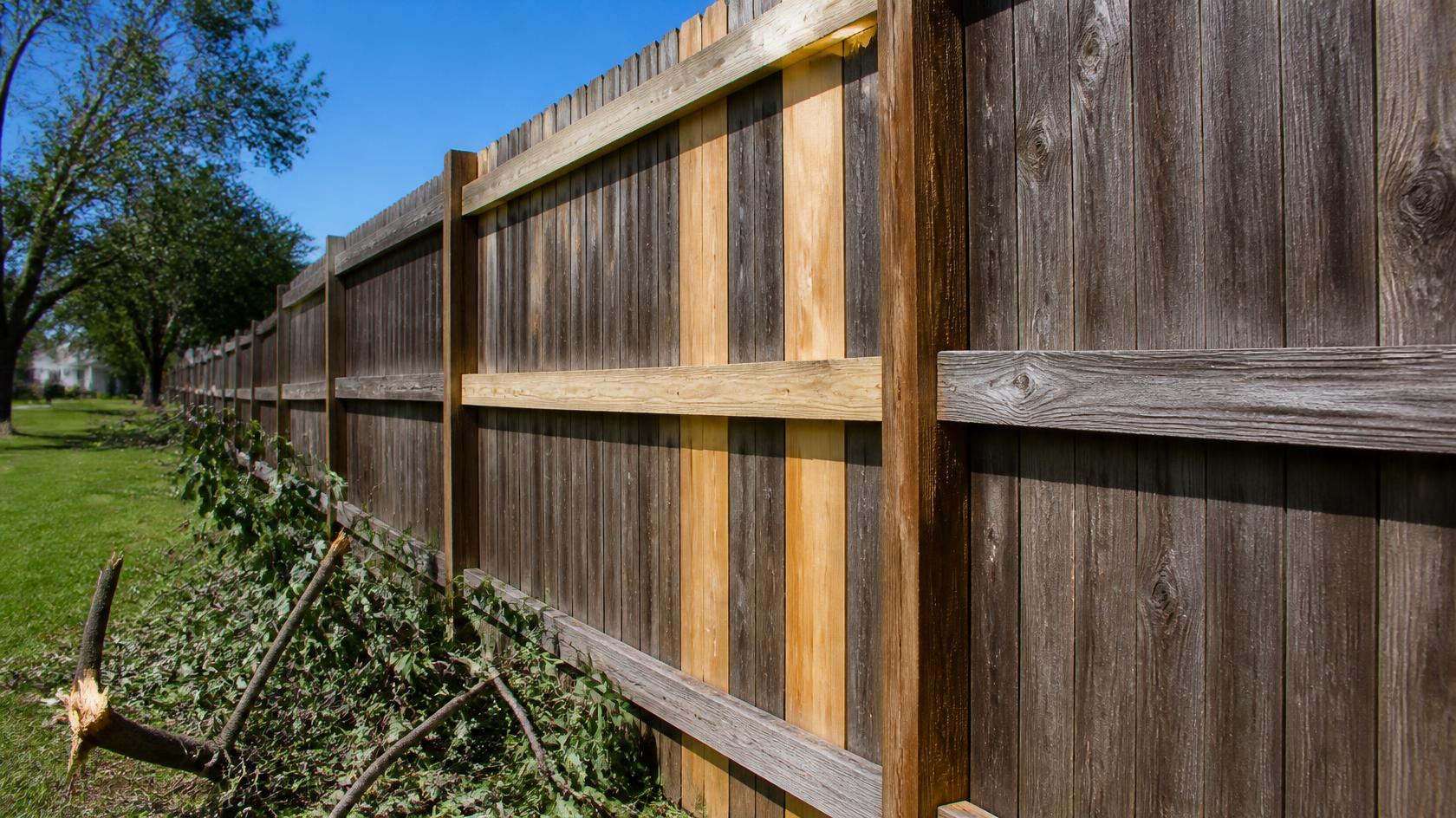
After strong winds in Sycamore, inspect more than just visibly broken boards or panels. Check posts, rails, gates, corners, hardware, ground conditions, and nearby branches for signs of movement or structural stress. Small repairs may be enough for isolated damage, but widespread leaning or repeated movement can indicate a larger fence problem.
Start With a Full Walk Around the Fence
Wind damage is not always obvious from one side of the yard.
Walk the entire fence line and look for:
Leaning sections
Loose boards
Shifted panels
Bent rails
Sagging gates
Damaged posts
Fallen branches
Then look along the fence from a distance.
Long sightlines can make small changes in alignment easier to spot.
A fence may still be standing while several posts or connections have shifted.
Check Posts Before Repairing Panels
Posts support the entire fence system, so they should be one of the first things inspected after strong wind.
Look for posts that:
Lean
Move at the base
Sit in disturbed soil
Have exposed concrete
Show cracking or rot
Apply light pressure to questionable posts and watch for movement.
If the post is unstable, repairing only the boards or panels attached to it may not solve the problem.
Look for Soil Movement Around Posts
Strong wind can push against the fence while wet or soft soil allows posts to move.
Check around the base for:
Gaps in the soil
Mud
Erosion
Raised soil on one side
Exposed footing
Fall rain can make this problem more noticeable.
If the soil has shifted, the repair may need to address both the post and the surrounding ground.
Inspect Solid Privacy Fencing Carefully
Solid wood and vinyl privacy fences catch more wind than open fence styles.
Pay extra attention to:
Long straight runs
Corners
End posts
Gate posts
A section may have absorbed enough wind pressure to loosen connections without fully falling.
Look for panels that feel different from nearby sections or move noticeably when lightly checked.
Check Wood Boards for Cracks and Loose Fasteners
Wind can loosen individual boards even when the rails and posts remain stable.
Inspect wood fencing for:
Cracked boards
Missing boards
Loose nails or screws
Boards pulling away from rails
Splintering
One or two damaged boards may be a straightforward repair.
If several boards are loose along the same section, inspect the supporting rail before replacing them.
Inspect the Rails Behind the Boards
Rails connect posts and support multiple boards.
A cracked or detached rail can make an entire section unstable.
Signs of rail problems include:
Sagging boards
Several loose boards together
Visible cracking
Separation from a post
Movement across the whole panel
Repairing the support structure first is more effective than repeatedly securing individual boards.
Look for Vinyl Panel Movement
Vinyl fencing can shift during strong wind if posts, rails, or panel connections move.
Check for:
Panels no longer sitting evenly
Loose rails
Cracks
Sections pulling away from posts
Leaning posts
Do not assume that a crooked panel is only a cosmetic problem.
The post or connection may have moved.
Inspect Chain Link Tension and Framework
Chain link allows more airflow than a solid privacy fence, but strong winds or falling debris can still cause damage.
Look for:
Bent top rails
Leaning terminal posts
Loose tension
Sagging fabric
Damaged ties
Misaligned gates
If the posts and rails are still stable, localized mesh repair may be enough.
Bent framework or shifting terminal posts may require more extensive service.
Check Aluminum for Bent or Shifted Sections
Aluminum fencing usually allows wind to pass through, but it can still be damaged by branches, debris, or impact.
Inspect for:
Bent sections
Loose connections
Leaning posts
Gate alignment changes
Because aluminum often has straight decorative lines, even minor movement can become noticeable.
Test Every Gate
Gates often show fence movement before other areas do.
Open and close each gate and check whether it:
Drags
Sags
Misses the latch
Rubs against a post
Has wider gaps than before
Strong wind can move the gate itself or shift one of the supporting posts.
If the gate suddenly stopped lining up after a storm, inspect both posts before adjusting the latch.
Pay Extra Attention to Corners
Corners can experience significant stress because they connect fence runs moving in different directions.
Look for:
Leaning corner posts
Separated rails
Loose panels
Soil movement
Damage around a corner may affect more than one side of the fence.
Repairing only the most visible section can leave the adjoining run unstable.
Look for Damage From Trees and Branches
Wind damage may come from debris rather than wind pressure alone.
Inspect areas near:
Mature trees
Overhanging branches
Large shrubs
A branch can crack a board, bend a rail, damage a panel, or shift a post without destroying the entire fence.
Remove debris carefully and inspect underneath it before assuming the damage is minor.
Check the Bottom of the Fence
Wind and rain together can change the ground under the fence.
Look for new:
Pet gaps
Washed-out soil
Low spots
Openings near gates
These problems may be caused by erosion rather than the fence itself.
For homes with dogs, even a small new opening should be addressed promptly.
Do Not Ignore Hardware
Inspect:
Hinges
Latches
Screws
Bolts
Brackets
Ties
Loose hardware can allow additional movement during the next storm.
If hardware repeatedly comes loose, check whether the material it attaches to has been damaged or weakened.
Decide Whether the Damage Is Isolated
Small repairs may be appropriate when:
One board is broken
A few fasteners are loose
One rail needs repair
A gate needs minor adjustment
One section was struck by debris
These problems do not always justify replacing a large portion of the fence.
The rest of the structure should still be checked before the repair is considered complete.
Watch for Signs of a Larger Problem
More extensive work may be needed when:
Several posts lean
Long sections move
Multiple rails fail
Gates repeatedly lose alignment
Rot is widespread
Wind damage keeps returning
Repeated repairs can sometimes indicate that the fence has reached the point where partial or full replacement should be considered.
Take Photos Before Making Repairs
Photos can help homeowners compare changes over time.
Document:
Leaning posts
Cracked boards
Damaged panels
Gate gaps
Erosion
If another wind event occurs, you can see whether the same area continues to move.
This is especially useful for damage that is noticeable but not yet severe.
Recheck the Fence After the Next Rain or Wind
A fence can appear stable immediately after a storm and shift later as wet soil settles.
After repairs or initial inspection, recheck:
Posts
Gates
Corners
Drainage areas
Continued movement may mean the underlying problem was not fully corrected.
Request a Free Fence Repair Estimate
Arrow Fence helps Sycamore homeowners repair fences after strong winds, including leaning posts, loose boards, damaged rails, gate problems, shifted panels, and storm-related damage.
Whether your fence needs a small repair, post work, gate service, section replacement, or a larger upgrade, Arrow Fence can help you review practical options for your property.
Contact Arrow Fence at arrowfencerockford.com to request a free estimate for your fence repair project.
