
Fence Repair Before the First Freeze in Marengo, IL: What to Prioritize
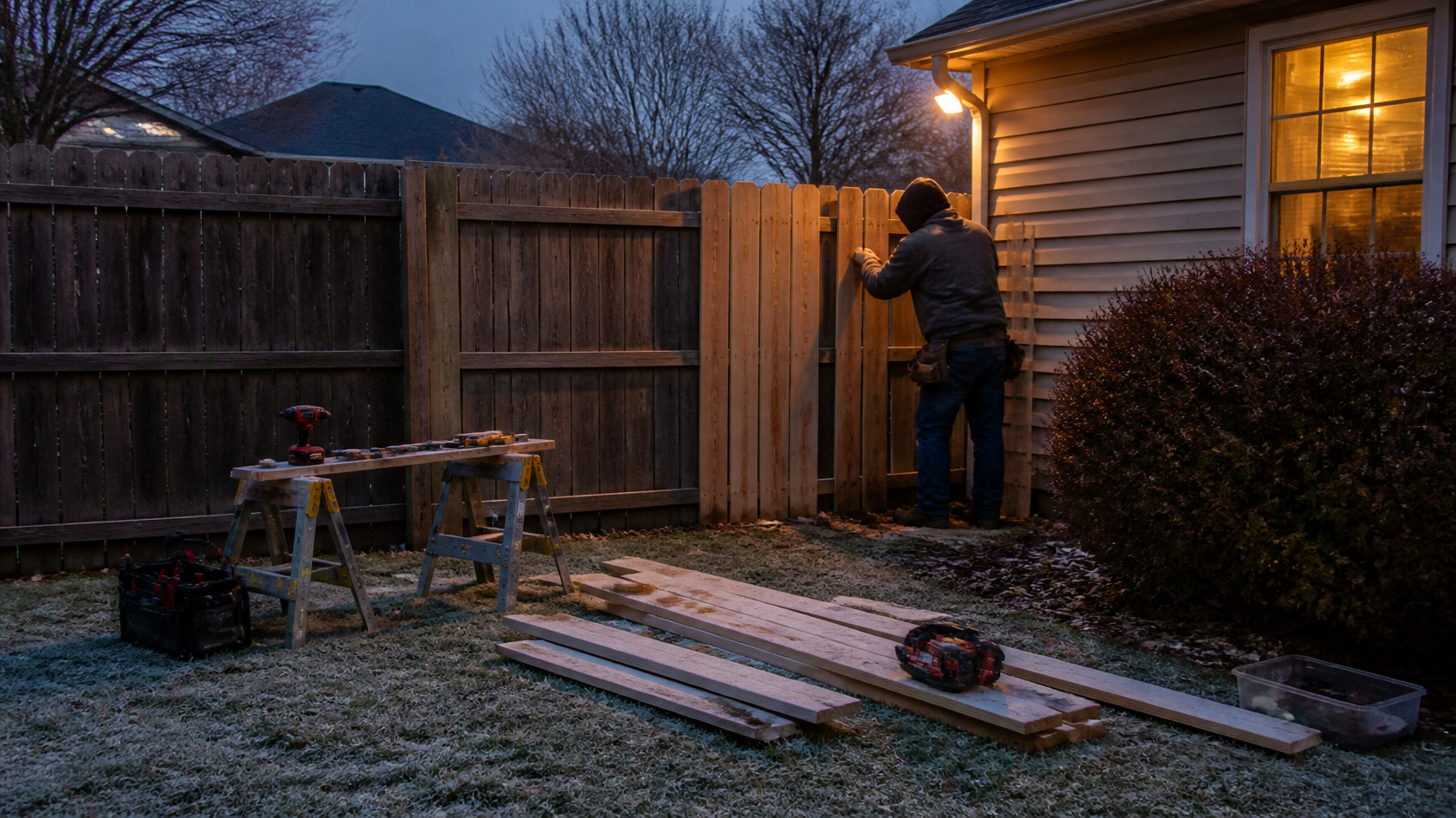
Before the first hard freeze in Marengo, homeowners should focus on fence problems that affect stability, safety, and everyday use. Leaning posts, loose rails, sagging gates, damaged boards or panels, ground gaps, and drainage problems should take priority because freezing soil, snow, ice, and winter wind can make existing damage harder to manage.
Start With Structural Problems First
Not every fence issue needs the same level of urgency.
Before winter, prioritize problems that affect the fence’s ability to stay upright and function properly.
These include:
Leaning posts
Loose rails
Sagging sections
Unstable gates
Cracked or broken panels
Large ground gaps
Cosmetic issues can usually wait longer than structural ones.
If a fence section moves noticeably when lightly pushed, that area should be inspected before freezing temperatures arrive.
Check Posts for Movement
Posts are one of the most important parts of the fence.
Walk along the fence line and look for posts that:
Lean
Shift at the base
Sit in soft soil
Have exposed footings
Show rot or cracking
A damaged post can affect everything connected to it.
Even if the boards or panels still look straight, a loose post may allow the section to move during strong winter wind.
Look Closely at the Soil Around Posts
Sometimes the post is not the main problem.
Check for:
Washed-out soil
Standing water
Mud
Gaps around the footing
Erosion
Fall rain can reveal whether the ground around the post is stable.
If runoff keeps removing soil, resetting the post without addressing drainage may only provide a temporary repair.
Prioritize Gate Problems
Gates deserve attention before winter because they are used regularly and often show movement before the rest of the fence.
Check whether the gate:
Drags
Sags
Misses the latch
Rubs against a post
Needs to be lifted to close
These problems may come from loose hinges, a weak frame, or shifting posts.
A gate that already struggles in fall can become even harder to use when snow changes ground clearance.
Inspect Hinges and Latches
Minor hardware problems can become larger if they are ignored.
Look for:
Loose screws
Bent hinges
Worn latches
Missing fasteners
Weak attachment points
If hardware repeatedly loosens, inspect the gate frame and supporting post.
The problem may be structural rather than limited to the hinge or latch.
Repair Loose Wood Boards
Wood fencing should be checked for boards that are:
Cracked
Loose
Rotten
Warped
Pulling away from rails
One loose board may only need a targeted repair.
Several loose boards in the same area may point to a damaged rail or post.
Fix the support problem first instead of repeatedly securing individual boards.
Check Rails Behind the Boards
Fence rails connect the posts and support multiple boards.
Signs of rail damage include:
Sagging sections
Cracks
Rot
Loose connections
Several boards moving together
A damaged rail can weaken a much larger section than one broken board.
For that reason, rail problems should be repaired before winter wind and snow add more stress.
Inspect Vinyl for Cracks and Loose Sections
Vinyl requires less routine surface maintenance than wood, but damaged sections still need attention.
Check for:
Cracked panels
Loose rails
Uneven sections
Leaning posts
Gate misalignment
Cold weather can make vinyl less flexible.
Existing cracks or loose components are worth repairing before hard impacts from winter equipment become a concern.
Check Chain Link Tension
For chain link fences, look for:
Sagging mesh
Loose ties
Bent top rails
Leaning posts
Gate problems
If the framework remains stable, small areas of damaged mesh may be repairable.
If a terminal post or gate post is shifting, repair that structural issue first.
Watch for New Ground Gaps
Ground gaps can become a safety issue, especially for homes with dogs.
Check near:
Gates
Slopes
Low spots
Corners
Drainage paths
Erosion and soil settlement can create openings under the fence.
Snow may hide these gaps later, so fall is the best time to find them.
Fix Drainage Problems Before the Ground Freezes
Water can cause recurring fence problems.
Look at where rainwater travels across the yard.
Problem areas may include:
Downspouts
Low ground
Sloped sections
Areas with standing water
Spots where soil washes away
Drainage problems can contribute to post movement, gate misalignment, and ground gaps.
Repairing the fence without considering water movement may allow the same issue to return.
Remove Leaves Around the Fence
Wet leaves can hide problems and hold moisture against wood.
Clear buildup around:
Post bases
Gates
Corners
Lower boards
Drainage areas
This makes it easier to see rot, erosion, loose hardware, and ground gaps.
It also keeps the fence line easier to inspect before snow arrives.
Trim Branches That Could Fall
Overhanging branches can become a winter hazard.
Snow and ice may add weight to weak limbs.
Trim damaged or dead branches that could fall onto:
Panels
Rails
Gates
Posts
Storm debris can turn a small existing fence problem into a much larger repair.
Pay Attention to Wind-Exposed Sections
Solid privacy fencing catches more wind than open fencing.
Inspect long runs of wood or vinyl privacy fence for:
Post movement
Loose panels
Weak corners
Gate post problems
If a section already moves during moderate wind, do not wait for winter storms to test it further.
That movement may indicate a structural weakness that should be repaired.
Separate Urgent Repairs From Cosmetic Work
Before the first freeze, focus first on:
Stability
Gate operation
Loose components
Pet security
Drainage
Structural damage
Minor staining, appearance changes, or cosmetic imperfections may be less urgent.
This helps homeowners direct time and budget toward the problems that could worsen during winter.
Know When Repair Is Enough
A localized repair may make sense when:
One board is damaged
One rail is loose
A single post has shifted
A gate needs adjustment
Hardware needs replacement
If the rest of the fence remains stable, larger replacement may not be necessary.
Know When Replacement May Be Smarter
More extensive replacement should be considered when:
Multiple posts are failing
Large sections lean
Rot is widespread
Gates repeatedly lose alignment
Panels keep coming loose
Repairs are becoming frequent
At that point, replacing part or all of the fence may make more sense than continuing to repair one problem at a time.
First-Freeze Fence Repair Checklist
Before colder weather settles into Marengo, check:
Post stability
Rails
Boards or panels
Gate alignment
Hinges and latches
Ground gaps
Drainage
Erosion
Leaves and debris
Overhanging branches
Wind-exposed sections
Address the most structural problems first.
Request a Free Fence Repair Estimate
Arrow Fence helps Marengo homeowners repair fencing before winter, including leaning posts, loose rails, damaged boards, sagging gates, shifted panels, and drainage-related problems.
Whether your fence needs a small repair, gate work, post replacement, section repair, or a larger upgrade, Arrow Fence can help you review practical options for your property.
Contact Arrow Fence at arrowfencerockford.com to request a free estimate for your fence repair project.
