
Fence Repair Before Winter in Lake Carroll, IL: Posts, Panels and Gates to Check
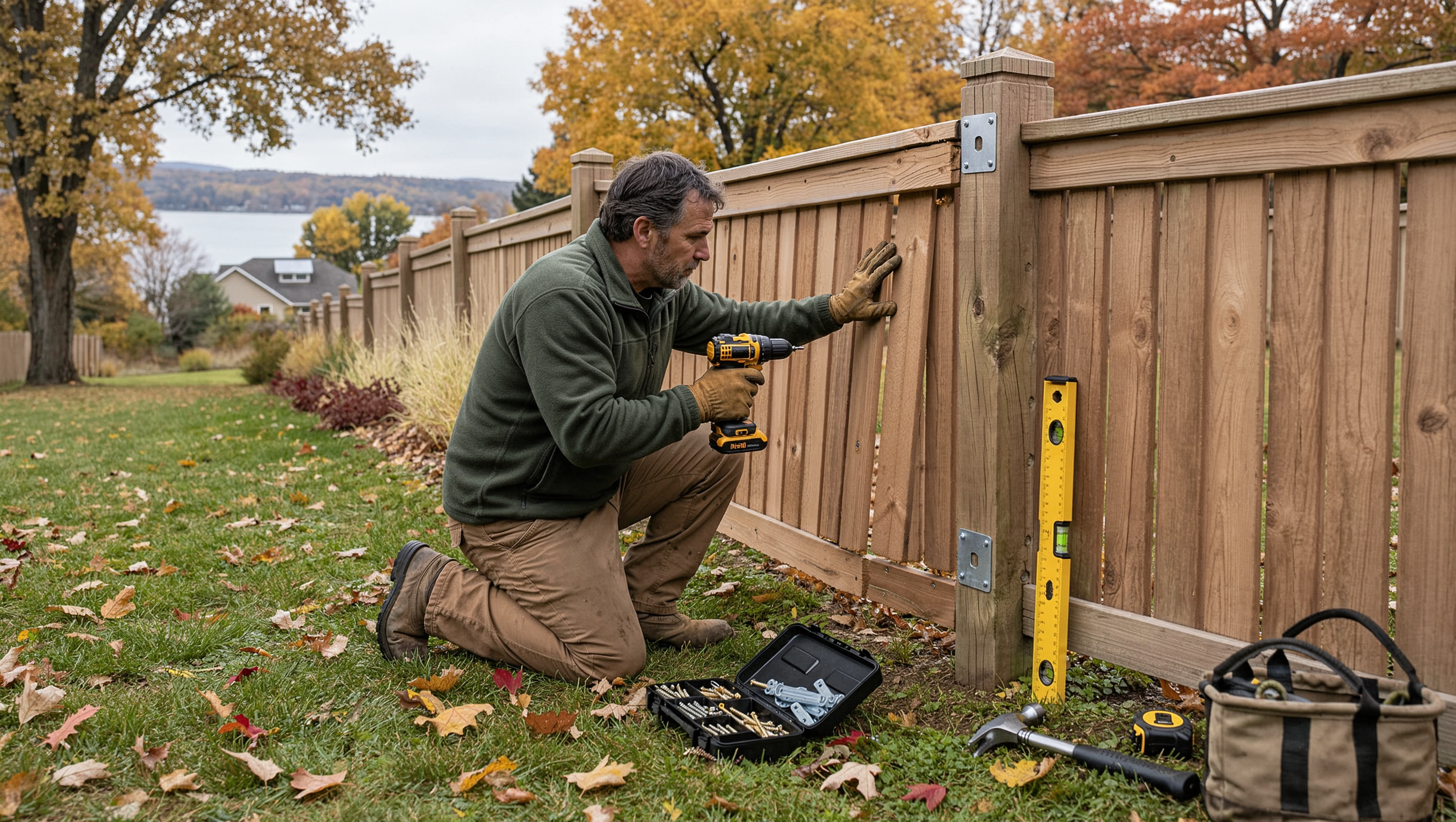
Before winter arrives in Lake Carroll, IL, homeowners should inspect fence posts, panels, rails, gates, and hardware for signs of structural weakness. Sloped terrain, moisture, exposed property lines, and freeze-thaw conditions can contribute to fence movement and alignment problems. Addressing damaged components and unstable sections before snowfall can help maintain security, privacy, and reliable backyard access throughout winter.
Why Fence Repairs Matter Before Winter
Northern Illinois winters can expose weaknesses in fencing that may have developed gradually throughout summer and fall.
A slightly leaning post, loose panel, or dragging gate may seem manageable now, but additional moisture, freezing soil, strong winds, and accumulated snow can make the problem more noticeable.
Late fall provides an opportunity to inspect the entire fence while its lower components remain visible and accessible.
The priority should be structural stability rather than cosmetic appearance.
Identify Changes Along the Fence Line
Begin by walking the entire perimeter of your property.
Stand at different points and look along the fence to identify sections that appear uneven or out of alignment.
Common warning signs include:
Posts leaning in different directions
Panels separating from their supports
Sagging rails or uneven fence heights
Gates that no longer close properly
New openings beneath the fence
Taking photographs of questionable areas can help document movement and provide useful information during a professional repair assessment.
Inspect Fence Posts for Structural Weakness
Posts support the weight of the fence and help resist wind pressure.
When a post begins to fail, nearby panels, rails, and gates can also become unstable.
Look for visible leaning, movement at the base, cracked footing material, and deterioration around ground level.
Wood posts deserve particular attention because prolonged moisture exposure can contribute to decay.
If several neighboring posts are leaning, the problem may involve broader soil conditions rather than isolated component damage.
Avoid applying pressure to severely leaning or unstable sections.
Check Posts on Sloped Properties
Changing elevations around Lake Carroll properties can create additional challenges for fence stability.
Runoff moving downhill may gradually remove soil around posts, exposing portions of the footing or reducing surrounding support.
Inspect fence sections located near slopes, retaining walls, and drainage channels.
If erosion is contributing to movement, replacing or resetting a post without addressing the underlying ground condition may result in recurring problems.
Watch for Freeze-Thaw Damage
Winter temperature fluctuations can affect the soil surrounding fence posts.
When moisture in the ground freezes, it can expand and contribute to frost heave. Subsequent thawing may cause additional movement or settlement.
Fence posts that are already inadequately supported may be particularly vulnerable.
Before winter, have unstable posts evaluated to determine whether they require resetting, replacement, or additional work related to drainage and footing conditions.
Examine Wood Fence Boards and Rails
Wood fencing can develop structural and surface problems over time.
Inspect individual boards for splitting, warping, decay, and loose fasteners.
Then examine the horizontal rails supporting those boards.
If several boards are loose within the same section, a deteriorated rail may be responsible.
Replacing individual boards without repairing the supporting rail may leave the underlying weakness unresolved.
Pay particular attention to lower wooden components where wet leaves and soil can contribute to prolonged moisture exposure.
Check Vinyl Panels for Cracks and Separation
Vinyl fencing generally requires less routine surface maintenance than wood, but its structural components can still experience damage.
Look for:
Cracked panels or rails
Sections separating from posts
Uneven panel alignment
Loose connections
Damaged gate components
Very cold temperatures can make vinyl less flexible and more susceptible to impact damage.
Address existing cracks or loose components before winter snow removal increases the likelihood of accidental contact.
Inspect Chain Link Fence Tension
Chain link fencing depends on stable framework and properly secured mesh.
Check whether the fabric appears loose, uneven, or detached from supporting components.
Inspect terminal posts, top rails, ties, and tension connections for visible damage.
A leaning corner or end post can affect tension across a much longer fence section.
Restoring the supporting framework may be necessary before the mesh can be properly secured.
Review Aluminum Fence Connections
Aluminum fencing can be particularly useful on properties where homeowners want to preserve surrounding views.
However, shifting soil or impact damage can affect its alignment.
Inspect posts, pickets, rails, and panel connections for movement or damage.
Uneven spacing or tilted sections may indicate that the supporting posts have shifted rather than a problem with the aluminum itself.
Correcting the source of movement can help preserve the fence's appearance and stability.
Test Every Gate Before Snow Arrives
Gates experience frequent movement and may reveal structural problems earlier than stationary fence sections.
Open and close each gate several times while observing how it moves.
Check whether the gate:
Drags against the ground
Sags toward the latch side
Rubs against a post
Requires force to close
Fails to latch securely
These issues can become more inconvenient once snow and ice accumulate around the entrance.
Determine Whether the Gate Posts Have Shifted
A misaligned gate does not always mean the hinges or latch are defective.
The hinge post carries much of the gate's weight, while the opposite post helps maintain a consistent opening.
Movement in either post can cause alignment problems.
Inspect both posts for leaning, erosion, deterioration, and loose mounting points before adjusting the hardware.
Repeatedly repositioning a latch may provide temporary relief without correcting an unstable gate opening.
Inspect Hinges, Latches, and Gate Frames
Check gate hardware for worn components, loose fasteners, corrosion, and damaged mounting points.
Wood gate frames should also be inspected for warping, loose joints, and rot.
A gate with a sound frame and stable posts may only require hardware replacement or alignment adjustments.
More extensive repairs may be necessary when the supporting frame has lost its shape or the mounting material is deteriorated.
Prepare Gate Clearance for Winter Access
Remove leaves, mulch, and other debris from the gate's swing area.
Consider where snow is normally shoveled, blown, or pushed during winter.
Frequently used gates should remain accessible without requiring homeowners to repeatedly remove large snow piles.
For pet enclosures, maintain enough clearance for proper gate operation without creating an excessive opening underneath.
Check Drainage Around the Fence
Fall rain can help reveal drainage problems before winter begins.
Look for standing water, muddy soil, erosion, and concentrated runoff near fence posts and gates.
Properties with changing elevations may experience more noticeable runoff in certain areas.
Drainage problems should be considered alongside fence repairs because continued soil erosion can undermine newly repaired components.
Clear Vegetation and Overhanging Branches
Remove wet leaves and accumulated debris from the fence base, particularly around wooden components.
Trim vegetation that prevents inspection or holds moisture against the fence.
Nearby trees should also be evaluated for damaged or weakened branches that could fall during winter storms.
Snow and ice can increase the weight on branches, creating potential hazards for panels, rails, and gates.
Have hazardous limbs handled by a qualified tree professional when necessary.
Protect Exposed Fence Sections From Winter Stress
Solid privacy fencing catches more wind than open aluminum or chain link designs.
Lake Carroll properties with open lawns or limited natural windbreaks may experience greater exposure along certain boundaries.
Inspect long privacy fence runs, corners, end posts, and wide gate openings for existing movement.
Avoid pushing heavy snow directly against fencing, especially sections that are already damaged or leaning.
Check for Openings That Could Affect Pet Security
Homeowners with dogs should inspect the lower fence line before snow covers the ground.
Erosion, shifting posts, damaged panels, and uneven terrain can create openings that compromise containment.
Pay particular attention near gates, corners, and sloped sections.
Do not rely on snow to temporarily block an escape gap. Repair the underlying opening and supervise pets until the enclosure is secure.
Decide Between Targeted Repair and Replacement
Not every damaged fence requires complete replacement.
Targeted repairs may be appropriate when deterioration is limited to a single post, damaged panel, loose rail, or worn gate hardware.
More extensive repair or replacement deserves consideration when multiple posts are unstable, rot is widespread, or long sections repeatedly lose alignment.
If replacement involves changes to fence height, materials, or placement, review applicable local and community association requirements before proceeding.
Schedule Fence Repairs Before Winter With Arrow Fence
Addressing fence problems before winter can help protect backyard privacy, pet containment, property boundaries, and everyday gate access.
Arrow Fence helps homeowners in Lake Carroll and surrounding communities evaluate damaged wood, vinyl, chain link, and aluminum fencing.
Whether your fence needs post repairs, panel replacement, gate adjustments, or a more extensive structural assessment, our team can help you explore practical solutions.
Visit arrowfencerockford.com or call (815) 962-7769 to request a free fence repair estimate.
