
Fence Repair Before Winter in Rockford, IL: Posts, Panels and Gates to Check
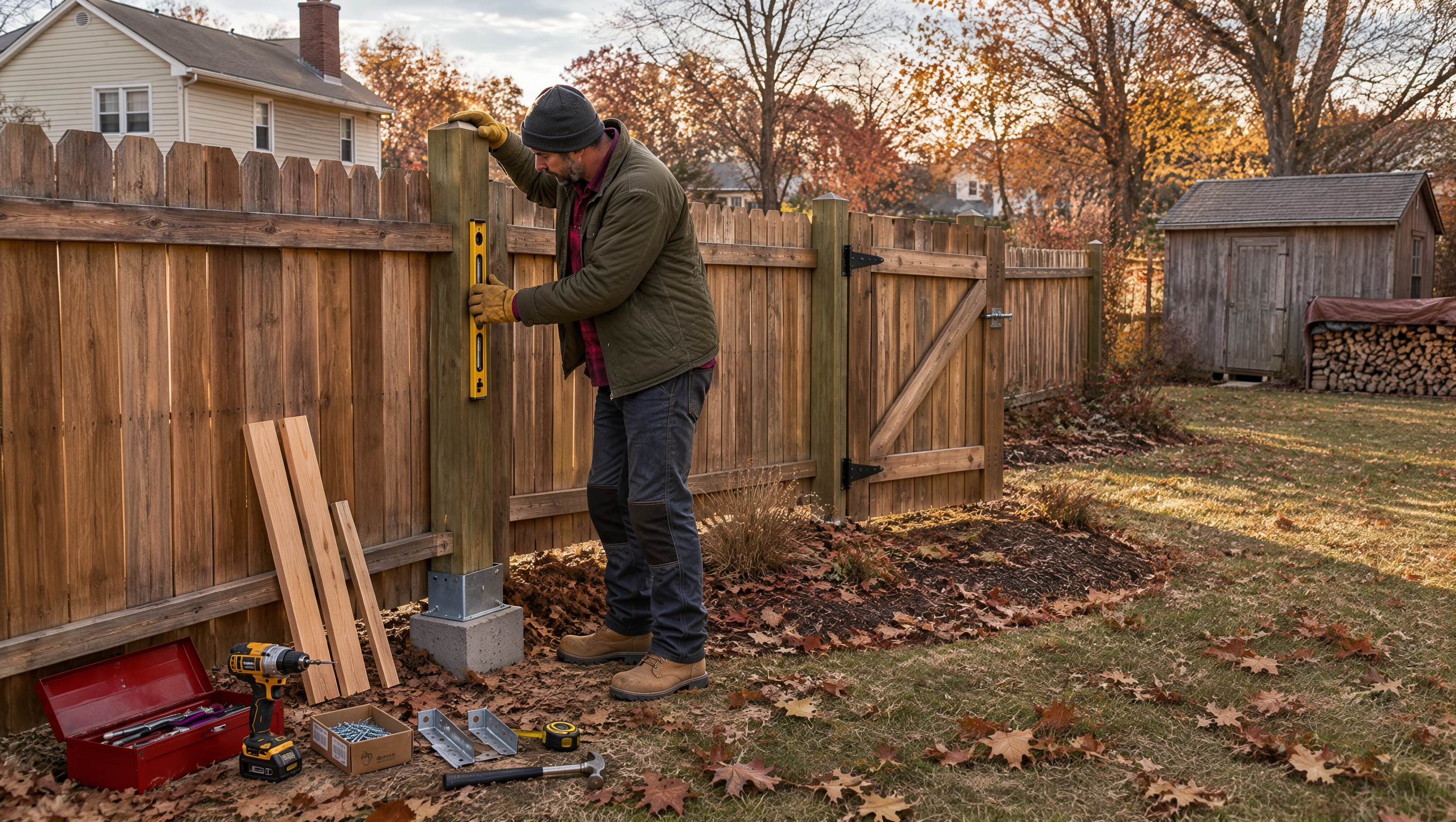
Before winter settles into Rockford, homeowners should inspect the structural parts of their fence first. Posts, panels, rails, gates, hinges, latches, drainage, and ground gaps can all develop problems that become harder to address after snow and freezing temperatures arrive. Catching movement, damage, or loose components now can help keep the fence safer and easier to use through winter.
Start With the Fence Posts
Fence posts support the rest of the system, so they should be one of the first things you inspect.
Look for posts that:
Lean
Move at the base
Sit in soft soil
Have exposed footing material
Show rot or deterioration
A single weak post can affect nearby rails, panels, and gates.
If several posts are moving, the issue may involve more than one isolated repair.
Check Soil Around the Posts
Sometimes the fence post is not the original problem.
Inspect the ground for:
Erosion
Standing water
Mud
Soil gaps
Downspout runoff
Repeated moisture and soil movement can weaken support around fence posts.
If a post keeps leaning after repairs, drainage may need to be part of the solution.
Look for Wood Rot Near Ground Level
Wood posts and lower fence components deserve extra attention before winter.
Check for:
Soft wood
Crumbling areas
Deep splitting
Dark deterioration
Fasteners pulling loose
The upper portion of a post can appear solid while the lower area has already weakened.
Fall inspection is useful because snow can soon hide these areas.
Inspect Panels for Movement
Walk the fence line and watch for sections that no longer appear even.
Signs of trouble include:
Panels sitting at different heights
Sections leaning
Visible gaps at connections
Panels moving in the wind
Panel movement may come from loose hardware, shifting posts, damaged rails, or impact.
The repair should address the support problem rather than simply pushing the panel back into place.
Check Wood Boards and Rails
For wood fencing, inspect both the boards and the framework behind them.
Look for:
Loose boards
Cracks
Splits
Rot
Missing fasteners
Then check the rails.
A damaged rail can cause several boards to move at once.
If multiple boards appear loose together, repairing the rail may be more important than replacing individual boards.
Inspect Vinyl Fence Sections
Vinyl requires less routine surface maintenance than wood, but it can still develop structural problems.
Check for:
Cracked panels
Loose rails
Uneven sections
Shifting posts
Gate misalignment
Cold weather can make vinyl less flexible, so existing cracks should be addressed before winter impacts become more likely.
Avoid hard contact from snow shovels, snowblowers, or other equipment during very cold weather.
Look Over Chain Link Framework
For chain link fencing, focus on more than the mesh.
Check:
Terminal posts
Top rails
Mesh tension
Ties
Gates
A leaning terminal post can cause the surrounding fabric to sag.
Fixing the support system may be necessary before retensioning the mesh.
Check Aluminum Fence Alignment
Aluminum fencing often makes small alignment changes easy to see.
Look for:
Leaning posts
Uneven pickets
Loose connections
Gate movement
The aluminum itself may still be in good condition while the soil or supporting posts have shifted.
Test Every Gate
Open and close each gate several times.
Watch for:
Sagging
Dragging
Latch misalignment
Loose hinges
Uneven side gaps
A gate that is already difficult to use in fall may become more frustrating after snow and ice reduce clearance.
Gate repairs that affect everyday access are worth prioritizing before winter.
Check the Hinge Post
The hinge post carries most of the gate's weight.
Inspect it for:
Leaning
Base movement
Rot
Soil erosion
Loose hardware
If the hinge post shifts, the gate may sag even when the hinges themselves are still usable.
Repeated latch adjustments will not solve a moving support post.
Inspect the Latch Post
The opposite post can also create alignment problems.
A moving latch post may cause:
The opening to become tighter
The opening to become wider
The latch to miss
Uneven gate gaps
Check both posts before replacing hardware.
The gate opening needs to be stable before the latch can stay aligned.
Tighten Loose Gate Hardware
Look over:
Hinges
Latches
Screws
Bolts
Brackets
Loose hardware may be a simple repair if the gate frame and posts remain sound.
If the same fastener repeatedly loosens, inspect the wood, frame, or mounting point around it.
A weak connection may need more than tightening.
Check Ground Clearance
Leaves, soil buildup, mulch, and shifting ground can reduce space underneath a gate.
Clear the swing area and check whether the gate moves freely.
For homes with dogs, do not create excessive clearance while correcting the problem.
The goal is enough space for operation without creating a pet escape gap.
Look for Ground Gaps Under the Fence
Gaps can develop from:
Erosion
Soil settlement
Slopes
Post movement
Digging
Check especially near:
Gates
Corners
Grade changes
Low areas
Snow can hide these openings later.
Fall is a better time to find and correct them.
Clear Leaves From the Fence Line
Wet leaves can hide several problems.
Remove buildup around:
Posts
Lower panels
Gates
Corners
This makes it easier to spot rot, erosion, soil gaps, and damaged hardware.
Keeping wet debris away from wood also reduces prolonged moisture exposure.
Check Drainage After Fall Rain
Water problems can affect both fences and gates.
Walk the property after rain and look for:
Puddles near posts
Downspout discharge
Soft soil
Washout
Low spots
If water continually moves through the same fence area, repairs may not hold unless drainage is considered too.
Look for Branches That Could Fall
Inspect nearby trees before snow and ice arrive.
Branches hanging over the fence can damage:
Panels
Rails
Posts
Gates
Weak sections are especially vulnerable to impact.
Removing obvious hazards can help protect an otherwise repairable fence.
Pay Attention to Wind-Exposed Sections
Solid privacy fencing catches more wind than open designs.
Inspect:
Long wood privacy runs
Full-privacy vinyl
Corners
End posts
Gate areas
If a section moves noticeably during moderate wind, check the posts and connections before stronger winter weather arrives.
Prioritize Structural Problems
Not every fence issue requires immediate attention.
Before winter, focus first on problems that affect:
Stability
Gate operation
Pet containment
Loose or falling components
Cosmetic issues can usually wait if the fence remains stable.
Structural weakness should come first.
When a Targeted Repair May Be Enough
A smaller repair may make sense when:
One post is loose
A few boards are damaged
One panel has shifted
A gate needs adjustment
Hardware needs replacement
If the surrounding fence remains stable, broader replacement may not be necessary.
When Larger Repairs May Make More Sense
A wider repair or replacement may be worth considering when:
Several posts lean
Multiple panels move
Rot is widespread
Gates repeatedly lose alignment
Long sections are unstable
Repeated repair needs may signal that the fence is reaching the point where starting fresh is more practical.
Pre-Winter Fence Repair Checklist
Before winter in Rockford, inspect:
Posts
Footings
Panels
Rails
Boards
Gates
Hinges
Latches
Ground gaps
Drainage
Leaf buildup
Wind-exposed areas
Repair the issues that affect structure, access, and security first.
Request a Free Fence Repair Estimate
Arrow Fence helps Rockford homeowners address fence problems before winter, including leaning posts, loose panels, damaged rails, sagging gates, drainage issues, and unstable sections.
Whether your fence needs a targeted repair, gate service, post work, partial replacement, or a broader evaluation, Arrow Fence can help you review practical options.
Contact Arrow Fence at arrowfencerockford.com to request a free estimate for your fence repair project.
