
Fence Repair in Huntley, IL: When Delaying Can Make Winter Damage Worse
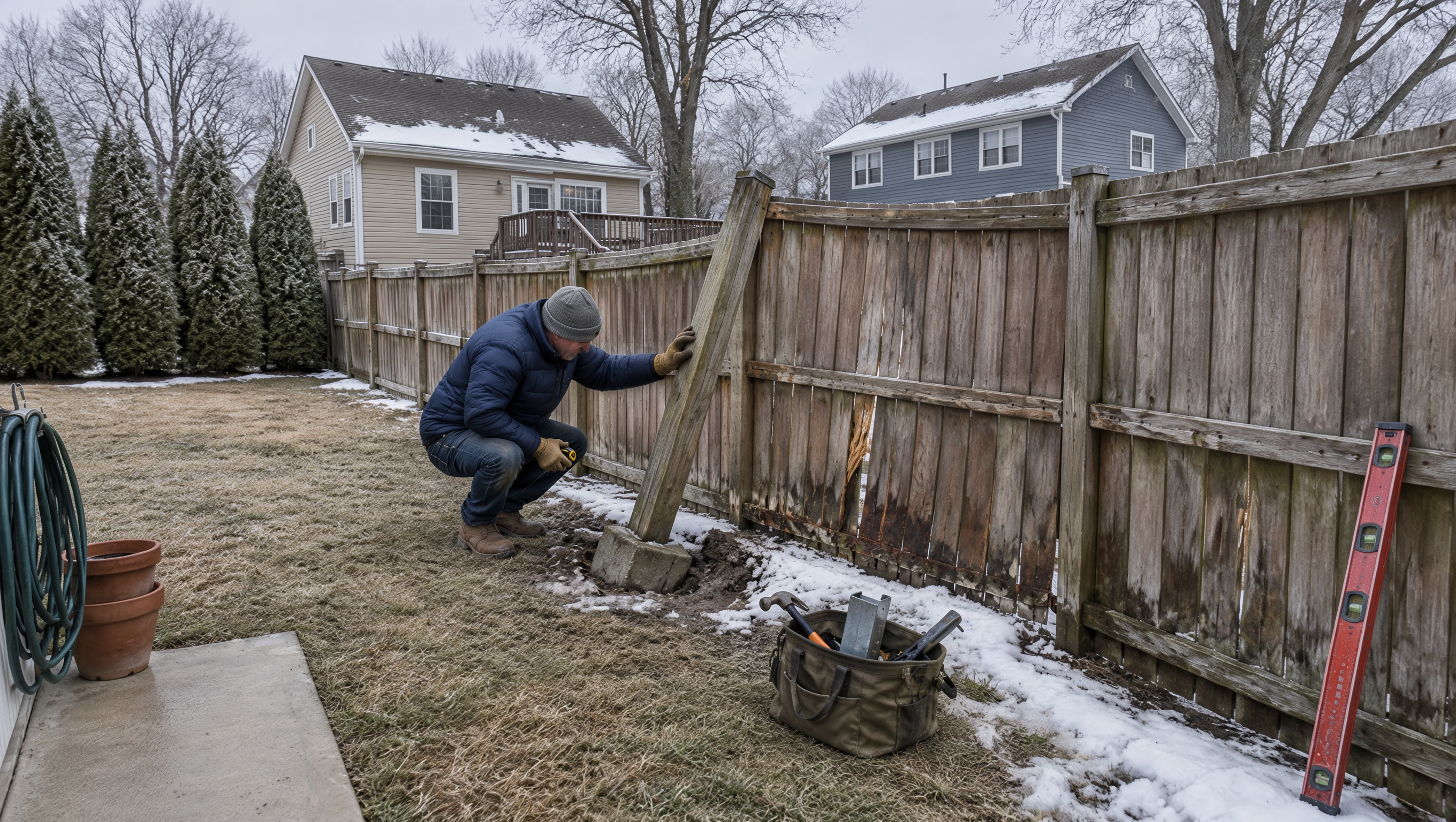
Small fence problems in Huntley can become more difficult to manage once winter brings snow, ice, strong wind, and freeze-thaw cycles. Leaning posts, loose boards, damaged rails, sagging gates, drainage issues, and ground gaps are worth addressing in fall before additional seasonal stress affects the fence.
Why Small Fence Problems Should Not Be Ignored
Not every minor defect means a fence needs major repair.
However, certain problems can spread when they affect the structural parts of the fence.
A loose board may place more stress on nearby connections. A shifting post can affect several panels. A gate that barely closes today may become difficult to use after winter ground movement.
The goal of fall maintenance is to catch these issues while repairs are still focused and manageable.
Leaning Posts Can Affect Entire Sections
Posts provide the main support for the fence.
Watch for posts that:
Lean
Move at the base
Sit in eroded soil
Have exposed footings
Show rot or cracking
A slightly unstable post may continue shifting when wet soil freezes, thaws, and settles.
As the post moves, attached rails, boards, panels, and gates may also lose alignment.
Freeze-Thaw Cycles Can Increase Movement
Moisture in the soil can freeze and expand during cold weather, then thaw and settle again.
An already stable fence may handle these seasonal changes without major trouble.
A post that is loose before winter, however, can become more noticeable as the surrounding ground changes.
Possible results include:
Increased leaning
Uneven fence sections
Gate alignment problems
Larger gaps beneath the fence
That is why fall is a useful time to evaluate questionable posts.
Loose Wood Boards Can Become Storm Damage
A loose board may seem like a minor cosmetic issue.
Winter wind can turn it into a larger problem.
Inspect wood fencing for boards that are:
Pulling away from rails
Cracked
Warped
Rotten
Missing fasteners
A structurally sound board may simply need to be secured again.
If the board is badly deteriorated, replacement may make more sense before winter weather puts additional pressure on it.
Damaged Rails Can Affect Several Boards at Once
Rails support multiple boards.
When a rail begins cracking, sagging, or separating from a post, the entire fence section can become less stable.
Signs of a rail problem include:
Several boards moving together
A sagging section
Loose connections
Visible cracks
Rot
Repairing individual boards without fixing the damaged rail may only treat the symptom.
Sagging Gates Can Become Harder to Use in Snow
Gate problems deserve attention before winter because they affect everyday access.
Check whether the gate:
Drags
Sags
Misses the latch
Rubs against a post
Requires lifting to close
Once snow or ice reduces ground clearance, a gate that already drags may become difficult to open.
Freeze-thaw movement can also shift the gate posts and make alignment problems worse.
Gate Hardware Can Loosen Further
Hinges and latches experience repeated use throughout the year.
Look for:
Loose screws
Bent hinges
Worn latches
Missing hardware
Weak attachment points
Minor hardware problems can often be repaired quickly when the gate frame and posts remain stable.
If the same hardware keeps loosening, inspect the supporting structure instead of repeatedly tightening it.
Drainage Problems Can Lead to Repeat Repairs
Some fence damage begins with water.
After fall rain, inspect the fence line for:
Standing water
Soft soil
Erosion
Downspout runoff
Washed-out areas
Water can gradually remove support around post footings.
If a leaning post is repaired without addressing the drainage problem, the movement may return.
Winter snowmelt can follow the same runoff paths later.
Ground Gaps Can Get Larger
Small openings beneath the fence may develop from:
Erosion
Soil settlement
Post movement
Slopes
Pet digging
These gaps matter especially for households with dogs.
Snow can hide openings during winter, making them harder to notice.
Addressing them in fall can improve pet containment before the lower fence line disappears under snow.
Vinyl Damage Is Worth Fixing Before Severe Cold
Vinyl requires less routine surface maintenance than wood, but cracked or loose sections should not be ignored.
Check for:
Cracked panels
Loose rails
Uneven sections
Shifting posts
Gate problems
Vinyl can become less flexible during severe cold.
An existing crack may be more vulnerable to impact from snow-removal equipment or other winter activity.
Chain Link Problems Can Spread Along the Framework
For chain link fencing, inspect:
Sagging mesh
Loose ties
Bent top rails
Leaning terminal posts
Gate alignment
If the posts remain stable, localized repairs may be enough.
If terminal posts or framework have shifted, the surrounding mesh may continue losing tension.
Strong Wind Can Expose Existing Weakness
Solid privacy fencing catches more wind than open fencing.
Before winter, pay particular attention to:
Long wood privacy runs
Full-privacy vinyl
Corners
End posts
Gate posts
If a section already moves noticeably during moderate wind, winter storms may put even more pressure on it.
Movement should be investigated before it becomes a larger failure.
Wet Leaves Can Hide Problems
Fall leaves can collect around lower fence sections and post bases.
They can hide:
Rot
Erosion
Ground gaps
Loose hardware
Wet leaves can also hold moisture against wood.
Clearing them away makes it easier to inspect the fence before snow arrives.
Overhanging Branches Can Add Another Risk
Weak or dead branches can become heavier under snow or ice.
Inspect trees near the fence for limbs that could fall onto:
Panels
Rails
Gates
Posts
A healthy fence can still be damaged by falling debris, while an already weakened fence may suffer much more extensive damage.
When a Small Repair Is Usually Enough
Targeted repair may make sense when:
One or two boards are loose
A single rail is damaged
One post has shifted
Gate hardware needs service
Damage is limited to one section
If the rest of the fence remains stable, a larger replacement may not be necessary.
When Delaying Can Become More Expensive
Waiting becomes more risky when problems involve structural components.
Examples include:
Several leaning posts
Repeated gate misalignment
Multiple damaged rails
Widespread rot
Long sections moving in wind
Ongoing erosion around footings
As more components become affected, the repair may grow from one isolated area into a larger section.
Know When Replacement Is Worth Considering
Repair is not always the best long-term choice.
Partial or full replacement may make more sense when:
Multiple posts are failing
Rot affects several sections
Gates repeatedly lose alignment
Repairs keep returning
Large portions of the fence lean
The condition of the whole fence should guide the decision.
Fall Fence Repair Checklist
Before winter in Huntley, inspect:
Post stability
Boards and panels
Rails
Gate alignment
Hinges and latches
Drainage
Ground gaps
Erosion
Wet leaf buildup
Wind-exposed sections
Overhanging branches
Address structural and access problems before cosmetic concerns.
Request a Free Fence Repair Estimate
Arrow Fence helps Huntley homeowners repair fencing before winter, including leaning posts, loose boards, damaged rails, sagging gates, shifted panels, and drainage-related problems.
Whether your fence needs a targeted repair, post work, gate service, section replacement, or a larger upgrade, Arrow Fence can help you review practical options for your property.
Contact Arrow Fence at arrowfencerockford.com to request a free estimate for your fence repair project.
