
Fence Repair Near Me in Belvidere, IL: What to Fix Before Winter
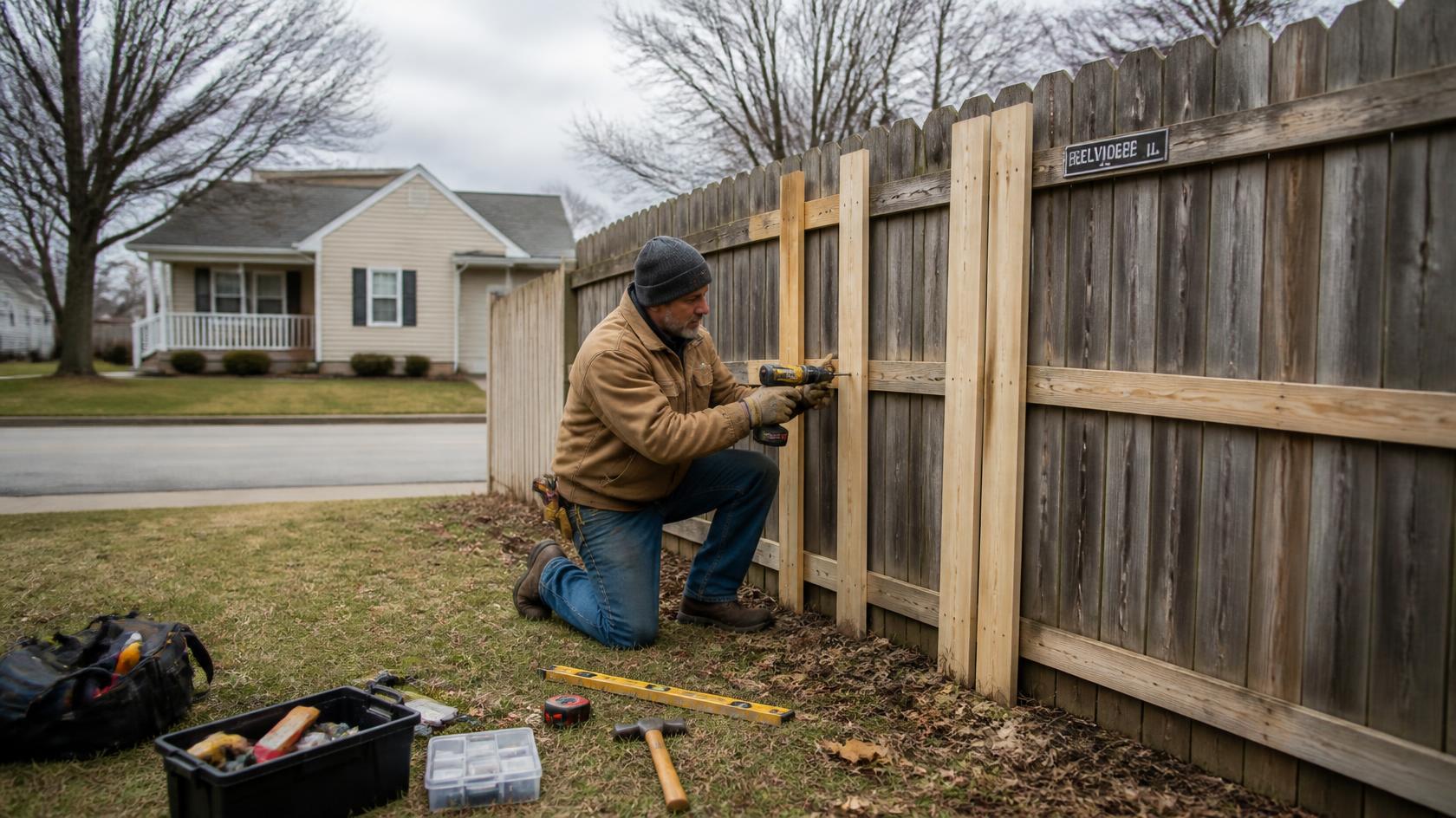
Before winter reaches Belvidere, homeowners should repair loose boards, leaning posts, damaged rails, sagging gates, bent panels, weak hardware, and drainage-related problems. Fall is a useful time to fix these issues because snow, ice, wind, and freeze-thaw cycles can make existing damage harder to manage once colder weather arrives.
Start With the Problems That Affect Stability
Not every cosmetic issue needs immediate attention before winter.
Focus first on problems that affect the structure or function of the fence, such as:
Leaning posts
Loose panels
Broken rails
Sagging gates
Missing boards
Damaged hardware
These problems can spread into surrounding sections if they are left through winter.
A loose board may become a larger opening after wind. A weak post can pull an entire section out of alignment.
Check Fence Posts for Movement
Posts are one of the most important parts of any fence.
Look for posts that:
Lean
Move at the base
Sit in soft soil
Have exposed footings
Show rot or cracking
Fall rain can soften soil and reveal posts that are already losing support.
If one post is damaged, a localized repair may be enough.
Several failing posts may indicate that a larger fence section needs attention.
Repair Loose or Damaged Wood Boards
Wood fences should be checked board by board in areas that look weathered or uneven.
Watch for:
Deep cracks
Loose fasteners
Warping
Splintering
Rot
Boards pulling away from rails
A solid board may simply need to be secured again.
A board that is rotten, badly split, or no longer holds hardware may need replacement.
Do Not Ignore Damaged Rails
Fence rails support several boards at once.
A rail problem can therefore affect a much larger area than one loose board.
Inspect for:
Cracks
Sagging
Rot
Loose connections
Separation from posts
If a section moves together when pushed lightly, the rail or post may be the real problem.
Repairing only the visible boards may not solve it.
Inspect Vinyl Fence Panels
Vinyl fencing requires less routine surface maintenance than wood, but damaged components still need attention.
Before winter, look for:
Cracked panels
Loose rails
Shifted sections
Leaning posts
Gate alignment problems
Vinyl can become less flexible in severe cold.
Fixing structural problems before freezing temperatures arrive can help reduce the chance of existing damage getting worse.
Check Chain Link for Loose Mesh and Bent Framework
Chain link fences should be checked for:
Sagging mesh
Loose ties
Bent top rails
Leaning posts
Damaged gates
A loose section may only need targeted repair if the framework is still stable.
If terminal or gate posts have shifted, they should be addressed before adjusting the mesh.
Test Every Gate Before Winter
Gates often reveal fence movement early.
Open and close each gate several times.
Look for:
Dragging
Sagging
Latch misalignment
Loose hinges
Uneven gaps
Movement in the gate posts
A gate that already needs lifting or pushing to close may become more difficult to use once snow and frozen ground affect clearance.
Fix Gate Hardware Now
Hinges and latches are small components, but they have a big effect on daily use.
Check for:
Loose screws
Bent hinges
Worn latches
Missing hardware
Rust or damage where applicable
If hardware repeatedly loosens, inspect the gate frame and supporting posts.
The problem may be structural rather than limited to the hinge or latch.
Look for Ground Gaps
Ground gaps can appear because of:
Erosion
Soil settlement
Slopes
Post movement
Pet digging
These openings are especially important for homeowners with small dogs.
Snow can hide them completely, so fall is a good time to identify and correct them.
Check Drainage Around the Fence
Some fence problems begin with water.
After rain, look for:
Standing water
Mud
Soil washed away from posts
Downspout runoff
Low areas
Poor drainage can affect post stability and create new gaps beneath the fence.
Repairing a leaning post without addressing ongoing erosion may allow the problem to return.
Clear Leaves Away From the Fence
Fallen leaves can collect along fences and around posts.
Wet leaf buildup may:
Hold moisture against wood
Hide rot
Cover ground gaps
Block drainage
Clear leaves from gates, corners, post bases, and low areas before winter.
This makes the fence easier to inspect and helps keep drainage paths visible.
Trim Branches and Overgrown Vegetation
Branches, shrubs, and vines can create additional winter problems.
Trim vegetation that:
Presses against the fence
Covers posts
Interferes with gates
Hangs over panels
Dead or weak branches should receive extra attention because snow or ice can cause them to fall onto the fence.
Pay Attention to Wind-Exposed Areas
Solid privacy fencing catches more wind than open fencing.
Inspect long runs of wood or vinyl privacy fencing for:
Post movement
Loose boards
Panel movement
Weak corners
If a section visibly shifts during normal wind, it should be checked before winter storms put more pressure on it.
Prepare Fence Gates for Snow
Think about where snow will be shoveled or piled.
Avoid blocking:
Walk gates
Pet access
Equipment gates
Also make sure snowblowers, shovels, and vehicles have enough clearance to avoid striking the fence.
A weakened post or panel can be damaged further by accidental winter impact.
Repair Pet Escape Points
Pet owners should inspect the fence from inside the yard.
Check for:
Loose boards
Bent mesh
Weak latches
Ground gaps
Damaged corners
Digging areas
Small openings can become harder to see once snow covers the lower fence line.
Fixing them in fall makes winter pet containment easier to manage.
Know When a Small Repair Is Enough
Targeted repairs may make sense when:
One or two boards are damaged
A single rail is loose
One gate needs adjustment
One post has shifted
Hardware needs replacement
If the rest of the fence remains stable, there may be no need for larger replacement work.
Know When Replacement May Be Better
More extensive replacement may be worth considering when:
Several posts are failing
Rot affects multiple sections
Large portions lean
Panels repeatedly loosen
Gates keep losing alignment
Repairs are becoming frequent
The overall condition of the fence should guide the decision.
What to Check Before Calling for Fence Repair
Before scheduling service, walk the property and note:
Where the damage is located
Whether posts move
Which gates have problems
Where drainage issues appear
Whether pets can escape
Whether damage is isolated or widespread
Photos can also help track whether a problem is getting worse.
Request a Free Fence Repair Estimate
Arrow Fence helps Belvidere homeowners repair fences before winter, including loose boards, leaning posts, damaged rails, sagging gates, broken panels, and drainage-related issues.
Whether your fence needs a small repair, post work, gate service, section replacement, or a larger upgrade, Arrow Fence can help you review practical options for your property.
Contact Arrow Fence at arrowfencerockford.com to request a free estimate for your fence repair project.
