
Fence Repair Near Me in Rockton, IL: Questions to Ask Before Hiring
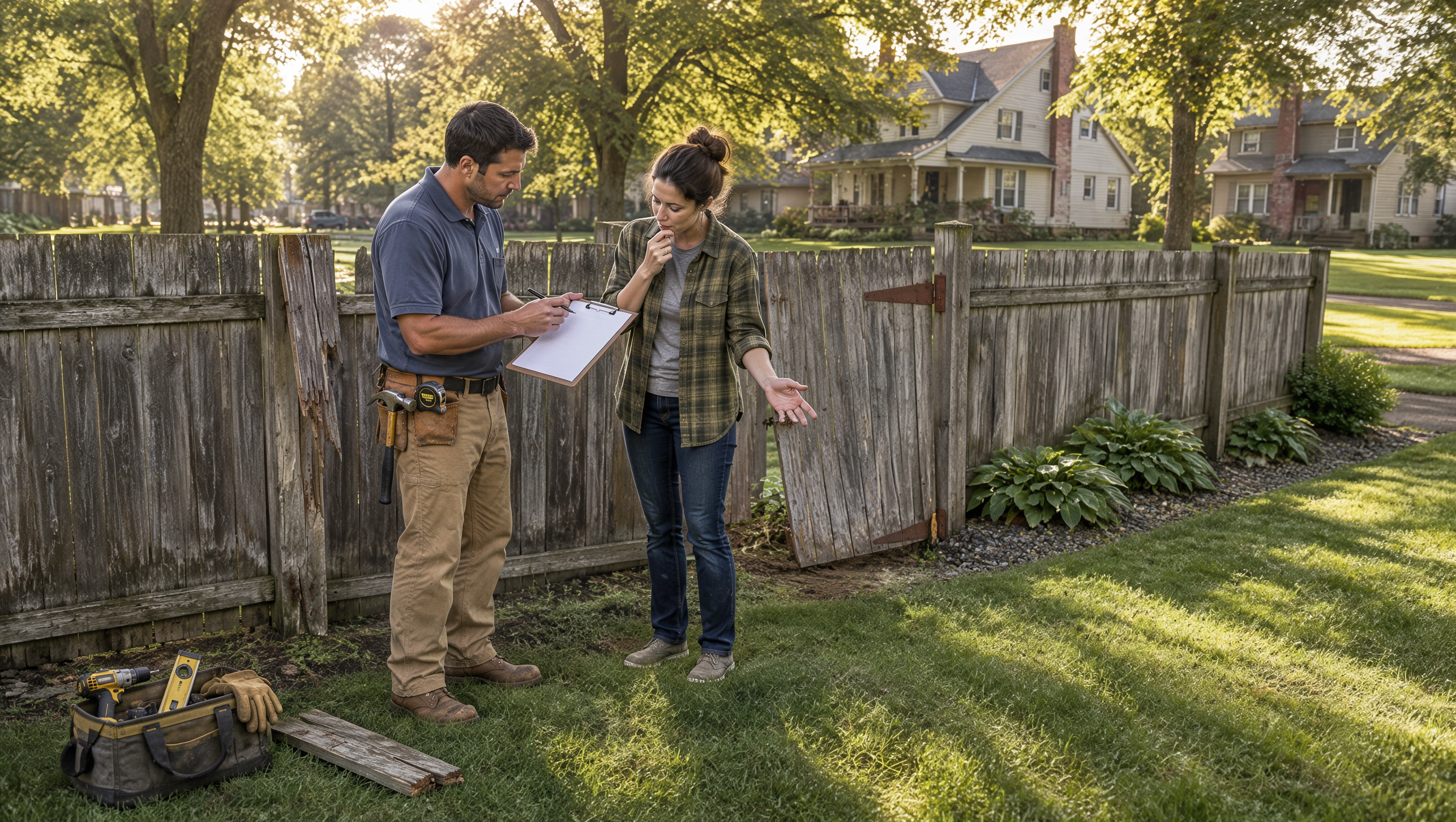
Before hiring a fence repair contractor in Rockton, ask what is causing the damage, which parts actually need repair, whether posts or drainage are involved, and whether replacement would make more sense for older sections. A clear estimate should explain the repair scope, materials, gates, cleanup, and any conditions that could change the work once the fence is opened up.
Can You Identify the Cause of the Damage?
A good fence repair should address more than what is visible.
For example, a leaning section may be caused by:
A failed post
Erosion
Soft soil
Rot
Wind damage
A dragging gate may come from a loose hinge, but it could also indicate that a supporting post has shifted.
Ask the contractor what they believe caused the problem and whether that cause needs to be corrected as part of the repair.
Is the Damage Isolated or Part of a Larger Problem?
One loose board is very different from several failing posts.
Ask whether the problem is limited to one area or connected to deterioration elsewhere.
Signs that the issue may be broader include:
Several leaning posts
Multiple loose rails
Repeated gate problems
Large sections moving in wind
Widespread wood rot
Understanding the condition of the surrounding fence can help prevent a small repair from being repeated a few months later.
Which Parts Actually Need to Be Replaced?
Ask for a clear explanation of the components included in the repair.
Depending on the fence, that may involve:
Posts
Rails
Boards
Panels
Gates
Hinges
Latches
Fasteners
If only one component is failing, the rest of the section may not need replacement.
A focused repair can make sense when the surrounding structure is still stable.
Are the Fence Posts Still Sound?
Posts are one of the most important parts of any fence repair.
A post problem can affect:
Alignment
Rails
Panels
Gate operation
Ground gaps
Ask the contractor to check whether posts are leaning, loose, rotten, bent, or sitting in eroded soil.
If the post is the real problem, repairing the visible fence section without stabilizing the support may not last.
Could Drainage Be Contributing to the Damage?
Water problems are easy to overlook.
After rain, check the fence line for:
Standing water
Soft ground
Downspout runoff
Erosion
Washed-out soil
If a post keeps moving in the same location, drainage may be part of the cause.
Ask whether the repair should include any changes to how water moves around the fence area.
Can This Section Be Repaired Without Replacing the Whole Fence?
Many fence problems can be handled with targeted repairs.
Repair may make sense when:
Damage is limited to one section
Most posts remain stable
Only a few boards are damaged
One gate needs service
One rail has failed
Ask the contractor whether the surrounding fence still has enough structural life to make a partial repair worthwhile.
When Would Replacement Make More Sense?
There are times when continuing to repair an older fence becomes less practical.
Ask whether replacement should be considered if:
Several posts are failing
Rot is widespread
Multiple sections lean
Gates repeatedly lose alignment
Repairs keep returning
A contractor should be able to explain why repair or replacement is the better fit for the current condition.
What Will You Do About a Leaning Fence?
A leaning fence can have several causes.
Ask whether the proposed repair addresses:
The post
The footing
The soil
Connected rails
Nearby panels
Simply pushing a section upright does not correct the underlying problem.
The repair should focus on why the fence moved.
How Will You Repair Loose or Damaged Wood Boards?
For wood fencing, ask whether boards can be secured or need replacement.
A repair may involve:
Refastening sound boards
Replacing split boards
Repairing damaged rails
Replacing rotten sections
If several boards move together, the support rail may be the real issue.
Ask the contractor to inspect the structure behind the boards before replacing individual pieces.
What Happens If the Gate Is Sagging or Dragging?
Gate problems often involve more than the latch.
Ask the contractor to inspect:
Hinges
Gate frame
Hinge post
Latch post
Ground clearance
A gate that needs to be lifted to close may have sagged, or one of its posts may have moved.
The repair should address the source rather than only repositioning the latch.
Will the Repair Match My Existing Fence?
When replacing visible boards, panels, or hardware, ask how closely the repair can match the existing fence.
Differences may occur because of:
Aging
Weathering
Material availability
Previous repairs
A new wood board, for example, may look noticeably different from older weathered boards at first.
Ask what appearance you should realistically expect.
How Will You Handle Vinyl Damage?
Vinyl repairs may involve different components than wood.
Ask whether damaged:
Panels
Rails
Posts
Gate parts
can be replaced individually.
Also ask the contractor to check whether the visible damage came from impact or from movement in the supporting posts.
Cold-weather impacts can make existing vinyl damage more noticeable.
What Should Be Checked on Chain Link Fencing?
For chain link repairs, ask the contractor to inspect the whole framework around the damaged area.
Possible problems include:
Sagging mesh
Loose tension
Bent top rails
Leaning terminal posts
Gate alignment
If a terminal post has moved, simply tightening the mesh may not solve the issue.
Can You Repair Aluminum Fence Sections?
Aluminum fencing can develop problems from impact or post movement.
Ask whether the repair involves:
Pickets
Rails
Posts
Gates
Connections
Because aluminum fences usually have straight, open lines, even small alignment issues can be noticeable.
Will You Check the Fence After Recent Weather?
Rockton weather can expose weaknesses that were less noticeable earlier.
Strong wind, rain, and changing temperatures can affect:
Posts
Soil
Gates
Loose panels
Rails
If the damage appeared after a storm or temperature swing, ask whether the contractor will inspect nearby sections too.
The visible problem may not be the only area that moved.
What Is Included in the Repair Estimate?
Ask for a clear scope before approving the work.
The estimate should explain, where applicable:
Materials
Labor
Post work
Gate work
Removal
Disposal
Cleanup
If the repair involves several components, each should be understandable from the quote.
This makes it easier to compare contractors based on the same work.
Could the Repair Scope Change Once Work Begins?
Some damage is not fully visible until boards, panels, or posts are removed.
Ask what conditions could change the repair.
Examples may include:
Hidden rot
Failed footings
Additional damaged rails
Root interference
More extensive post movement
Knowing this in advance can help prevent surprises.
Who Handles Cleanup?
Fence repair can create debris even when the job is relatively small.
Ask whether the contractor removes:
Broken boards
Old hardware
Damaged panels
Concrete debris
Other materials
Cleanup should be clearly included or excluded from the estimate.
How Will the Repair Affect Pets and Yard Access?
If dogs use the yard, ask whether the fence will remain secure during the repair.
You may need to plan for:
Indoor supervision
Leash breaks
Temporary barriers
Gate or post repairs can temporarily leave part of the yard open.
Do not assume the fence will remain fully enclosed throughout the work.
What Maintenance Should I Do After the Repair?
Ask what homeowners should monitor after the work is complete.
Depending on the material, this may include:
Checking gate alignment
Watching for post movement
Clearing leaves
Monitoring drainage
Inspecting repaired boards or rails
A quick seasonal check can help identify whether the problem is returning.
Questions to Bring to a Fence Repair Estimate
Before hiring a fence repair contractor in Rockton, ask:
What caused the damage?
Is the problem isolated?
Are the posts stable?
Is drainage involved?
What exactly will be repaired?
Can part of the fence be saved?
Would replacement make more sense?
Is cleanup included?
Could hidden damage change the scope?
Clear answers can help homeowners understand whether the proposed repair is fixing the real problem or only the visible symptom.
Request a Free Fence Repair Estimate
Arrow Fence helps Rockton homeowners repair leaning posts, loose boards, damaged rails, sagging gates, shifted panels, chain link framework, and other fence problems.
Whether your fence needs a small targeted repair, gate service, post replacement, or a broader section evaluated, Arrow Fence can help you review practical options for your property.
Contact Arrow Fence at arrowfencerockford.com to request a free estimate for your fence repair project.
