
Fence Repair After Temperature Swings in Sycamore, IL: What to Watch
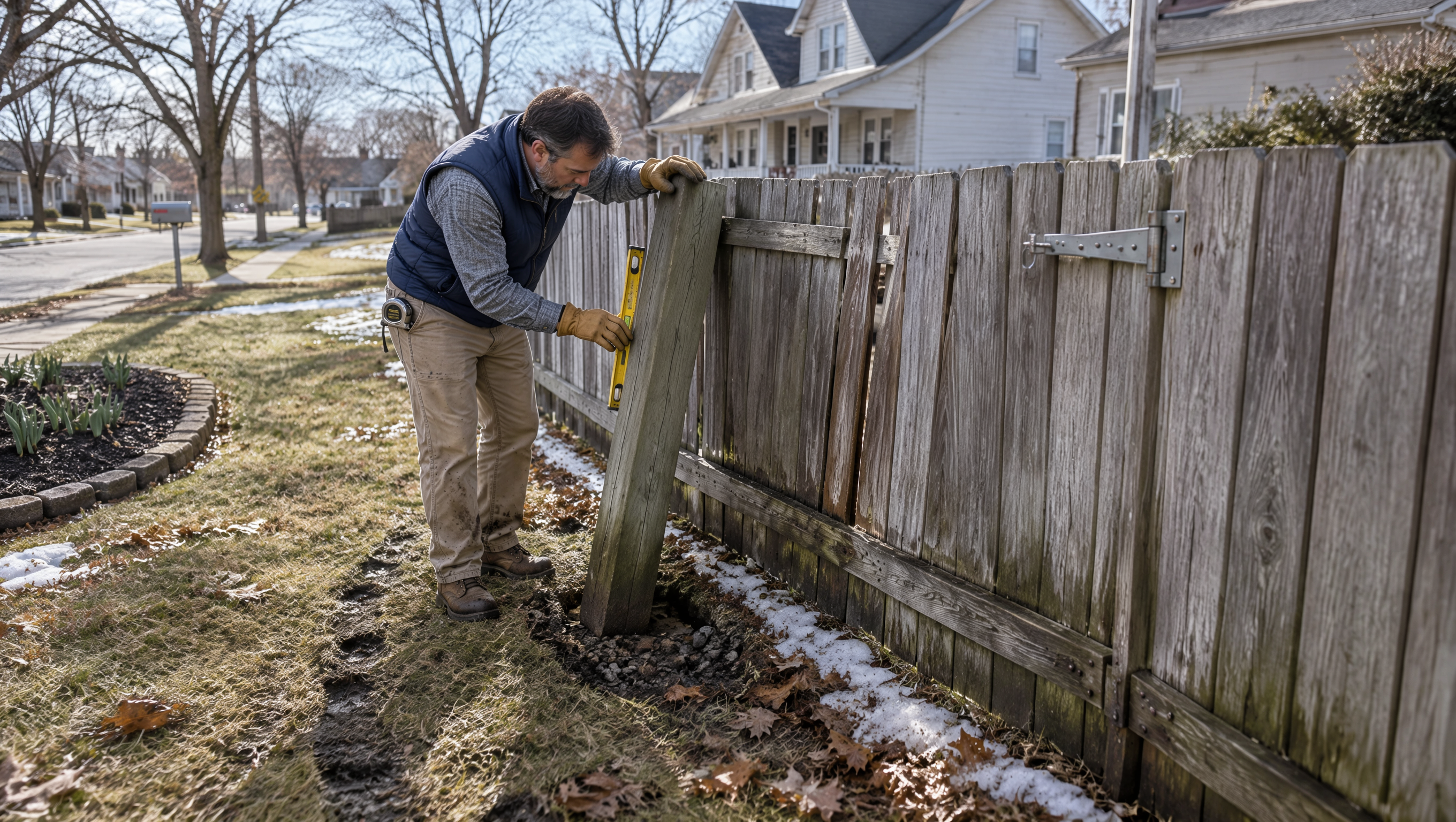
Rapid temperature changes in Sycamore can reveal fence problems that were less noticeable during milder weather. Homeowners should watch for leaning posts, loose boards, shifted panels, gate misalignment, cracked vinyl, soil movement, and new ground gaps. Checking these issues early can help prevent small problems from becoming larger repairs during winter.
Why Temperature Swings Matter
Fall and early winter in northern Illinois can bring warm afternoons followed by freezing nights.
These changes affect both the fence and the ground supporting it.
Moisture in the soil can freeze, expand, thaw, and settle again. At the same time, wood, vinyl, metal, fasteners, and gate hardware respond differently to changing temperatures.
A fence that looked straight and stable a few weeks earlier may begin showing signs of movement.
Start With the Fence Posts
Posts are one of the first places to inspect after repeated temperature swings.
Look for:
Leaning
Movement at the base
Soil gaps
Exposed footing material
Sections that no longer line up
A post that has shifted slightly can affect several connected boards, rails, or panels.
If more than one post is moving, the issue may involve ground conditions rather than a single damaged component.
Check the Soil Around the Base
The ground can tell you a lot about why a fence is moving.
Look for:
Cracked soil
Soft areas
Erosion
Standing water
Washed-out sections
If water collects around a post and then freezes, repeated movement can gradually reduce support.
Drainage should be considered along with the fence repair.
Watch for New Gate Alignment Problems
Gates often show movement before the rest of the fence becomes obviously uneven.
After a major temperature change, check whether the gate:
Drags
Sags
Misses the latch
Rubs against a post
Needs extra force to close
A sudden gate problem may indicate that one or both supporting posts have shifted.
Do not assume the latch itself is the only issue.
Inspect the Hinge and Latch Posts
Gate posts experience more stress than regular line posts.
Check both sides of the opening for:
Leaning
Loose hardware
Soil movement
Rot on wood posts
Changes in side gaps
If the hinge post moves, the gate may begin sagging.
If the latch post shifts, the opening width can change enough to prevent proper closure.
Wood Fences Can Show Cracks and Movement
Wood naturally responds to changing moisture and temperature.
After repeated warm-cold cycles, inspect for:
Cracked boards
Loose fasteners
Warping
Open joints
Rail movement
Minor seasonal movement is not always a serious problem, but loose or damaged components should not be ignored.
Strong winter wind can place additional stress on already weakened sections.
Check Wood Near the Ground
The lower part of a wood fence deserves extra attention.
Look for:
Soft areas
Dark deterioration
Splitting
Rot
Fasteners pulling loose
Moisture near the ground can remain trapped longer than on upper boards.
If freezing and thawing are combined with poor drainage, deterioration near the base may become more noticeable.
Look for Loose Rails
Rails support multiple boards and help keep the section aligned.
A damaged or loosened rail may cause several boards to move together.
Inspect for:
Cracks
Separation from posts
Sagging
Rot
Loose connections
If multiple boards appear unstable, the rail may be the real source of the problem.
Vinyl Can Become Less Flexible in Cold Weather
Vinyl does not rot, but cold temperatures can make it less flexible.
Inspect vinyl fencing for:
Cracks
Loose rails
Shifted panels
Uneven posts
Gate alignment changes
Existing damage may be more vulnerable to impacts from snow-removal equipment once winter begins.
Avoid striking cold vinyl with shovels, snowblowers, or yard equipment.
Check for Panel Movement
Vinyl panels can look uneven if posts have shifted.
Stand back and look along the fence line.
Watch for:
Panels sitting at different heights
Sections no longer lining up
Rails that appear loose
Gaps between components
If the panel itself is intact, post movement or ground conditions may be the bigger concern.
Chain Link Can Lose Tension
Temperature changes and shifting posts can affect chain link framework.
Check for:
Sagging mesh
Loose tension
Leaning terminal posts
Bent top rails
Gate problems
If a terminal post moves, the mesh may begin losing tension across a larger section.
Repairing the post may be necessary before retensioning the fence.
Aluminum Fences Can Show Alignment Changes
Aluminum fencing often has straight, clean lines that make movement easier to notice.
Check for:
Leaning posts
Uneven pickets
Loose sections
Gate changes
Ground gaps
The aluminum itself may still be in good condition while the supporting posts or soil have shifted.
Ground Gaps Can Appear Suddenly
Temperature changes can contribute to soil movement beneath the fence.
New openings may appear near:
Gates
Slopes
Corners
Low areas
These gaps matter especially for homeowners with dogs.
A small opening can become an escape point even when the fence height is appropriate.
Sloped Yards Need Extra Attention
A sloped fence line already has more changes in elevation.
After freeze-thaw conditions, inspect transitions where the fence:
Steps
Follows the grade
Meets a gate
Changes direction
Movement in these areas can create uneven clearance or put extra stress on rails and posts.
Drainage Problems Can Make Movement Worse
Temperature swings are more likely to create problems where water already collects.
After rain or snowmelt, look for:
Puddles around posts
Runoff from downspouts
Soft soil
Erosion
Low areas
A post repeatedly exposed to saturated soil may continue shifting as temperatures change.
If the same area keeps causing problems, drainage should be part of the repair plan.
Pay Attention After Strong Wind
Temperature changes are often followed by windy weather.
Solid privacy fencing can experience more wind pressure than open styles.
Inspect:
Long wood privacy runs
Full-privacy vinyl
Corners
End posts
Gate posts
A fence section that is already loose may move more during the next strong wind.
Keep Leaves Away From Weak Areas
Fallen leaves can hide changes around post bases and the lower fence line.
Clear leaves from:
Posts
Gates
Corners
Low spots
This makes it easier to see soil movement, rot, erosion, and ground gaps.
Wet leaves can also hold moisture against wood.
Know What Can Wait and What Should Not
Not every seasonal change requires immediate repair.
Cosmetic changes may be less urgent than structural problems.
Prioritize:
Moving posts
Gate failure
Loose rails
Cracked structural components
Large ground gaps
Drainage-related movement
Minor surface wear can often be handled later.
When a Small Repair May Be Enough
A targeted repair may work when:
One board is loose
One rail connection needs repair
A latch needs adjustment
A single post has limited movement
Damage is isolated
The rest of the fence should still be stable.
When a Larger Repair May Be Needed
More extensive work may be necessary when:
Several posts move
Multiple sections lean
Gates repeatedly lose alignment
Drainage keeps causing movement
Rails or panels are failing in several areas
Repeated problems can indicate that the issue is no longer limited to one component.
Post-Temperature-Swing Fence Checklist
After noticeable warm-cold changes in Sycamore, inspect:
Fence posts
Soil around footings
Gates
Hinges and latches
Wood boards and rails
Vinyl panels
Chain link tension
Aluminum alignment
Ground gaps
Drainage
Wind-exposed sections
A quick inspection can help identify changes before winter conditions become more severe.
Request a Free Fence Repair Estimate
Arrow Fence helps Sycamore homeowners address fence movement and damage caused by changing seasonal conditions.
Whether the problem involves posts, boards, panels, gates, drainage, soil movement, or a larger unstable section, Arrow Fence can help you review practical repair or replacement options.
Contact Arrow Fence at arrowfencerockford.com to request a free estimate for your fence repair project.
