
Fence Replacement Before Winter in Dixon, IL: Repair or Start Fresh?
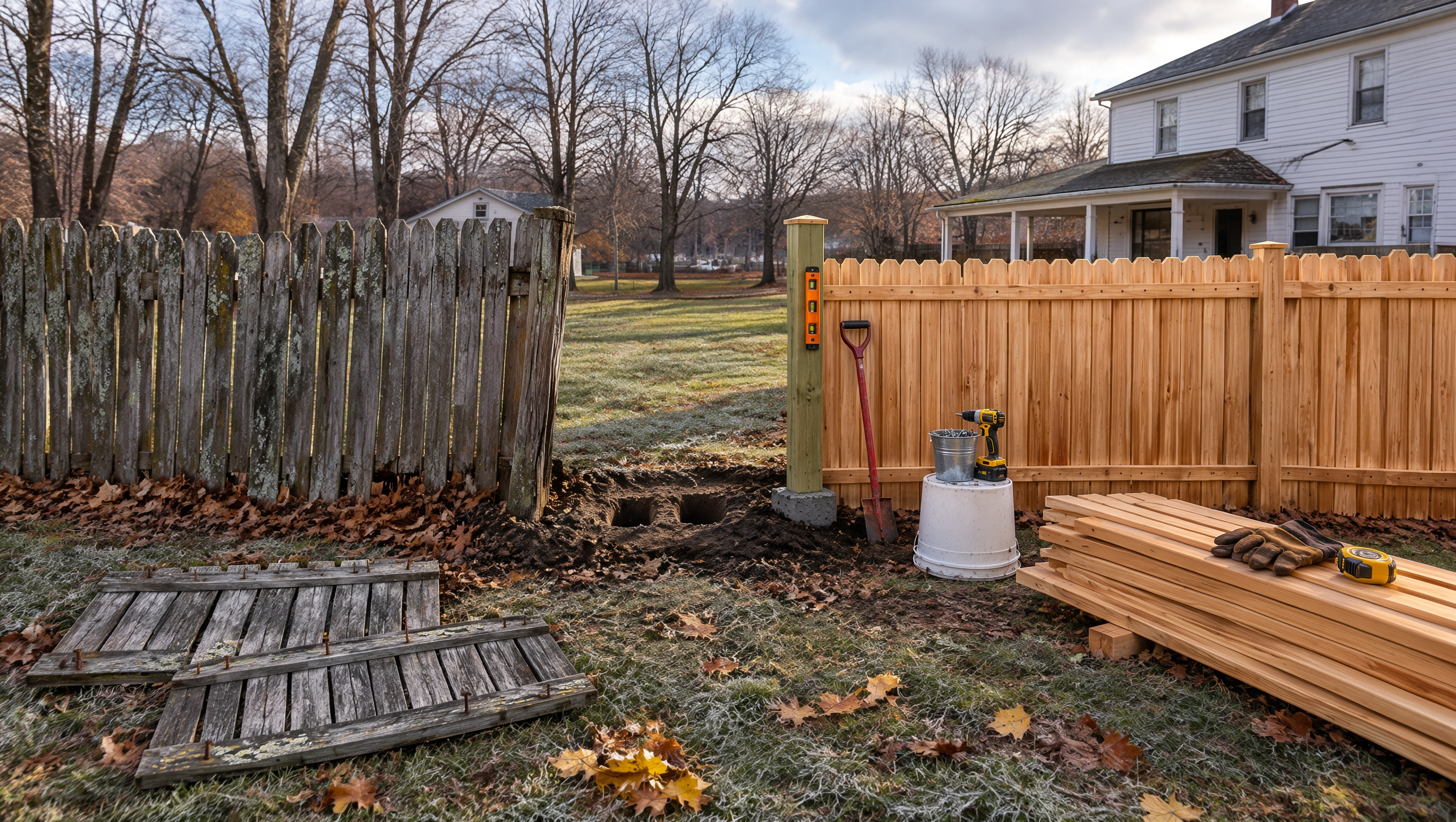
An older fence does not always need full replacement before winter. In Dixon, isolated damage such as a loose board, one failing post, or minor gate issue may be repairable, while widespread rot, repeated post movement, multiple leaning sections, or recurring gate problems can make replacement more practical. The best decision comes from looking at the condition of the entire fence rather than one damaged area.
Start With the Overall Condition
Before deciding between repair and replacement, step back and look at the full fence line.
Ask whether the problem is limited to one section or showing up throughout the property.
Look for:
Multiple leaning posts
Sagging sections
Widespread rot
Loose rails
Repeated gate problems
Storm damage
Ground gaps
A fence with one damaged component may still have plenty of usable structure.
A fence showing problems in several areas may need a broader solution.
When a Small Repair May Make Sense
Repair can be practical when damage is isolated.
Examples include:
One loose board
A damaged rail
One shifting post
A worn latch
A localized section affected by impact
If nearby posts, rails, and panels remain stable, replacing the entire fence may be unnecessary.
The important part is confirming that the visible problem is not being caused by a larger structural issue.
Check Fence Posts First
Posts are one of the strongest indicators of overall fence condition.
A fence may still look acceptable even when the supports are beginning to fail.
Check for posts that:
Lean
Move at the base
Sit in eroded soil
Show rot
Have exposed or shifting footings
If only one post is affected, targeted repair may be possible.
If several posts are unstable, rebuilding the section or replacing more of the fence may be worth considering.
Repeated Post Repairs Can Be a Warning
A post that has already been reset or repaired several times deserves a closer look.
Recurring movement can point to:
Drainage problems
Weak soil
Deteriorated posts
Failing footings
Wind exposure
Continuing to repair one support at a time may become less practical if surrounding posts are beginning to fail too.
Look for Widespread Wood Rot
Wood fencing can often be repaired board by board.
However, replacement becomes more reasonable when deterioration affects many components.
Check:
Posts
Lower boards
Rails
Gate frames
If rot is limited to a few boards, localized replacement may be enough.
If posts and rails are also deteriorating, the structure may no longer be a good candidate for repeated repairs.
Loose Rails Can Signal a Larger Problem
Rails connect the fence and support multiple boards.
If several rails are:
Cracked
Rotten
Sagging
Pulling away from posts
the problem may extend beyond surface damage.
Replacing individual boards while the supporting rails continue to fail may only delay a larger project.
Gate Problems Can Help Reveal Structural Wear
Gates often show fence movement early.
Watch for a gate that:
Sags
Drags
Misses the latch
Requires lifting to close
Keeps losing alignment
A simple hinge or latch adjustment may solve an isolated hardware problem.
Repeated gate issues can indicate movement in the hinge post, latch post, or surrounding fence.
Ask Why the Gate Keeps Moving
Before replacing a gate, check what is causing the problem.
Possible causes include:
Loose hinges
Weak framing
Shifting posts
Erosion
Poor drainage
If the gate is repaired without correcting the underlying support problem, the same alignment issue may return.
Storm Damage May Be Repairable
Strong wind can damage individual panels, rails, or boards.
Repair may be enough when:
Most posts remain stable
Damage is limited to one area
The remaining fence is structurally sound
Replacement may make more sense when wind exposes weakness throughout a long section.
A fence that moves significantly during moderate wind should be evaluated carefully before winter storms arrive.
Drainage Can Influence the Decision
Poor drainage can cause repeated fence problems.
Look for:
Standing water
Soft soil
Erosion
Downspout runoff
Soil washed away around posts
If several posts have moved because of the same drainage issue, repairing them individually without addressing the ground conditions may not provide a lasting solution.
Drainage should be considered before either major repair or replacement.
Ground Gaps Matter for Pets
Post movement and erosion can create openings under an older fence.
These gaps may become especially important for households with dogs.
Check near:
Gates
Slopes
Corners
Low areas
A small number of gaps may be repairable.
Widespread changes in the lower fence line may point to larger movement throughout the system.
Check Whether the Layout Still Works
Fence replacement is not only about condition.
An older fence may also have a layout that no longer fits the property.
Ask whether you need:
Better privacy
Wider equipment access
A safer pet area
A different gate location
More usable backyard space
If major layout changes are already needed, investing heavily in repairs to the old arrangement may not make sense.
Consider Partial Replacement
The choice is not always between one small repair and replacing everything.
Partial replacement may work when one side or section is substantially worse than the rest.
For example, homeowners may replace:
One property-line section
A damaged gate area
A severely deteriorated privacy run
while keeping stable sections elsewhere.
The connection between old and new fencing should still be evaluated carefully.
Material Changes Can Be Part of Starting Fresh
If replacement makes sense, homeowners do not need to recreate the old fence exactly.
Possible options include:
Wood
A good fit for natural appearance, privacy, and flexible design.
Vinyl
Provides consistent screening with less routine surface maintenance.
Chain Link
Works well for pets, larger areas, and open visibility.
Aluminum
Offers a more decorative, open boundary with straightforward upkeep.
A mixed-material layout can also work if different parts of the yard serve different purposes.
Winter Can Expose Weak Areas
Dixon winters can add stress through:
Snow
Ice
Wind
Freeze-thaw cycles
A fence that is already unstable may show more movement as the ground changes.
Before winter, prioritize repairs involving structural support, gates, and pet security over cosmetic issues.
Do Not Let Snow Hide the Problem
Once snow accumulates, it becomes harder to inspect:
Post bases
Erosion
Ground gaps
Lower rot
Fall is a useful time to make the repair-or-replace decision because the entire fence line is still visible.
Document questionable areas before winter if installation or replacement will happen later.
Compare the Cost of Repeated Repairs
One repair may be clearly worthwhile.
Several repairs across the same aging fence can change the calculation.
Consider whether you have already dealt with:
Multiple post repairs
Repeated gate adjustments
Frequent board replacement
Rail failures
If maintenance is becoming constant, replacement may provide a cleaner long-term plan.
When Repair Is Usually the Better Choice
Repair may make sense when:
Damage is isolated
Most posts are stable
Rot is limited
Gates can be corrected
The layout still works
The surrounding fence should be in good enough condition to justify keeping it.
When Starting Fresh May Be Better
Replacement may be more practical when:
Several posts are failing
Rot is widespread
Multiple sections lean
Gates repeatedly lose alignment
Storm damage affects large areas
The current layout no longer works
The decision should be based on the fence as a whole, not only the worst-looking section.
Before-Winter Decision Checklist
Before choosing repair or replacement, review:
Post stability
Rail condition
Board or panel damage
Gate operation
Drainage
Ground gaps
Pet security
Number of previous repairs
Current layout
This helps separate a manageable repair from a fence that may be reaching the point where replacement makes more sense.
Request a Free Fence Evaluation
Arrow Fence helps Dixon homeowners evaluate aging fences before winter and decide whether repair, partial replacement, or a fresh installation is the better fit.
Whether you are dealing with leaning posts, damaged rails, gate problems, rot, storm damage, or an outdated layout, Arrow Fence can help you review practical options for your property.
Contact Arrow Fence at arrowfencerockford.com to request a free estimate for your fence project.
