
Fence Replacement Cost in DeKalb, IL: What Can Affect the Final Price?
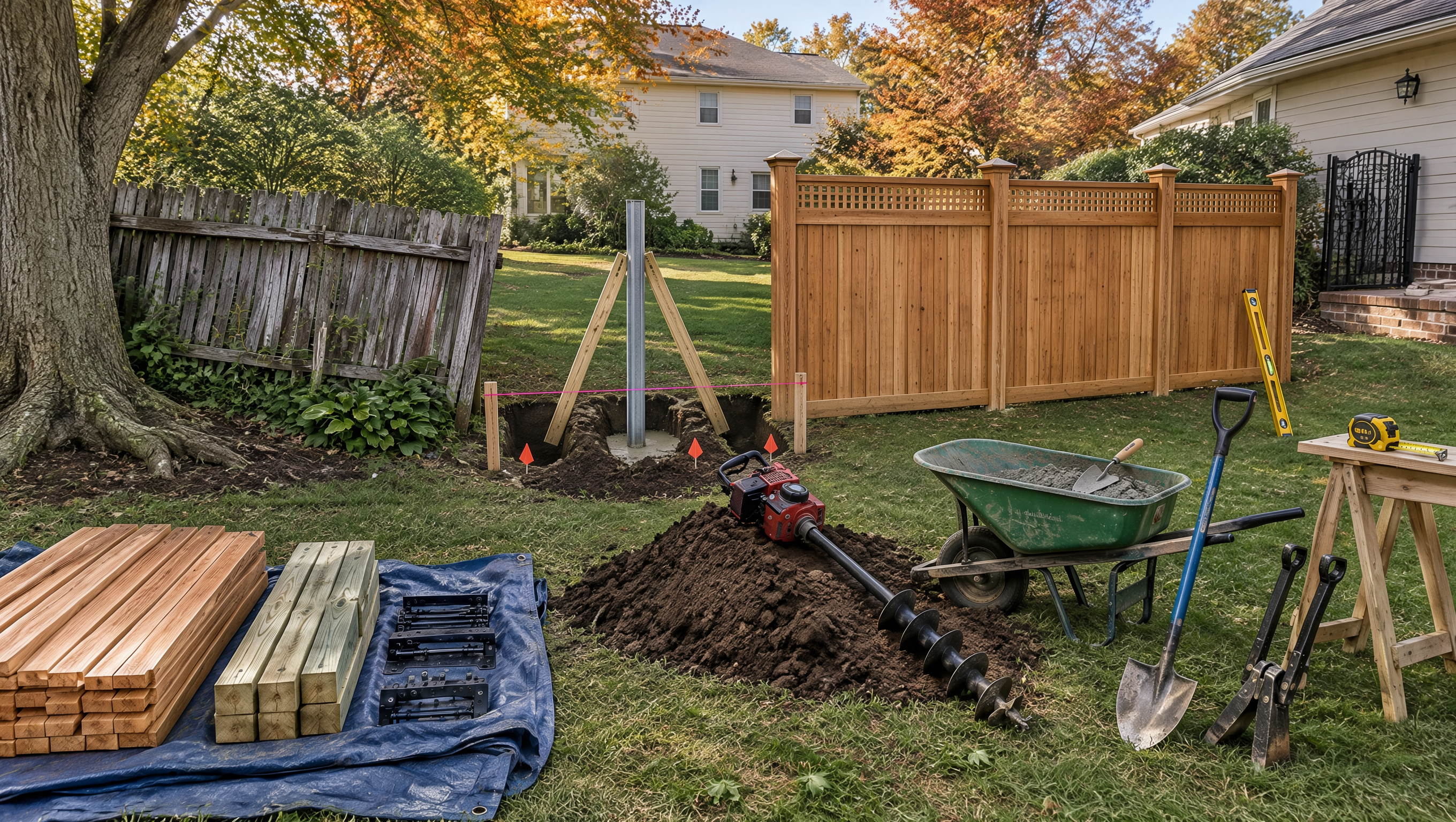
Fence replacement cost in DeKalb depends on more than the new material. Removing the existing fence, dealing with old posts or concrete, changing the layout, adding gates, working around slopes or landscaping, and correcting drainage problems can all affect the final project scope. The best way to compare estimates is to make sure each contractor is pricing the same replacement work from removal through cleanup.
Why Fence Replacement Can Cost More Than a New Installation
Replacing a fence usually involves two projects at once.
The old fence must first be removed or worked around before the new system can be installed.
That may involve:
Removing panels or boards
Pulling old posts
Handling concrete footings
Taking down gates
Hauling away debris
The condition and construction of the existing fence can therefore have a direct effect on the final estimate.
Old Fence Removal Is a Major Cost Factor
Some fences are easier to remove than others.
A deteriorated wood fence may come apart relatively quickly, while posts set deeply in concrete can require more labor.
Removal may become more involved when the old fence includes:
Large concrete footings
Multiple gates
Heavy panels
Dense vegetation
Damaged sections that are difficult to handle
Ask whether removal and disposal are included rather than assuming they are part of the replacement price.
Existing Posts May Need to Come Out
Homeowners sometimes wonder whether old posts can simply be reused.
That depends on their condition, placement, material, and whether they fit the new fence design.
Posts that are:
Rotten
Leaning
Loose
Bent
Poorly positioned
may not provide reliable support for the replacement fence.
Removing failed posts and old footings can add labor, but building around unstable supports can create problems later.
Material Choice Changes the Replacement Budget
The new fence material has a major influence on cost.
Wood
Wood offers a natural appearance and many privacy styles, including solid vertical, board-on-board, and shadowbox.
The amount of lumber, style complexity, height, and future maintenance should all be considered.
Vinyl
Vinyl provides clean, consistent screening with less routine surface maintenance.
Full-privacy panels, semi-private designs, height, and gate requirements can change the project scope.
Chain Link
Chain link can be practical for larger yards, pets, and long boundaries.
Height, coating, gates, and optional privacy features can affect the estimate.
Aluminum
Aluminum provides an open, decorative appearance and works well where maintaining visibility is important.
Design details and gate quantities can influence the total.
Changing Materials Can Require a Different Layout
Replacement does not always mean recreating the old fence exactly.
Switching from chain link to privacy fencing, for example, may change:
Post spacing
Wind exposure
Gate support
Height
Sightlines
A new material may require a different structural approach.
That should be reflected in the estimate rather than treating the job as a simple one-for-one replacement.
Total Fence Length Still Matters
More footage generally means more materials and labor.
Before replacing every section, decide whether the existing layout still makes sense.
You may discover that:
One side no longer needs fencing
A patio needs additional privacy
A pet area should be expanded
A side-yard fence could be relocated
Changing the footprint can increase or reduce the amount of new fencing required.
Fence Height Can Change Material Needs
If the replacement fence will be taller than the old one, more material may be required.
Height can also affect:
Privacy
Wind resistance
Post requirements
Gate design
Choose height based on actual needs rather than automatically increasing it.
Applicable local requirements should be reviewed before finalizing the design.
Gates Can Add Significant Work
Replacement projects are a good time to reconsider gate placement and size.
A gate requires more than the fence material itself.
It may include:
Reinforced posts
Hinges
Latches
Framing
Additional installation work
If the current gate is too narrow for equipment or poorly positioned, changing it during replacement may be worthwhile.
Wider Gates Need More Support
Equipment gates create additional stress on posts and hardware.
Before choosing the opening, measure:
Riding mowers
Trailers
Garden equipment
Utility vehicles
An oversized gate may add unnecessary cost, while one that is too narrow can become a permanent inconvenience.
Yard Conditions Can Affect Replacement Work
Older fences often hide ground conditions that become visible only after removal.
The contractor may discover:
Erosion
Soft soil
Uneven grades
Old concrete
Roots
Drainage problems
These conditions can affect where new posts are installed and how much site preparation is required.
Sloped Properties Need More Planning
A replacement fence across uneven terrain may need to be stepped or installed to follow the grade more closely, depending on the system.
Slopes can affect:
Panel placement
Ground gaps
Gate locations
Pet containment
If the old fence left large gaps, replacement may be an opportunity to improve the layout.
Drainage Problems Should Be Addressed
If the previous fence leaned because soil repeatedly washed away, simply installing new posts in the same conditions may not solve the problem.
Check for:
Standing water
Downspout runoff
Erosion
Soft ground
Low areas
Correcting or planning around drainage can add to the project scope, but it may help protect the stability of the new fence.
Trees and Landscaping Can Complicate Removal
Landscaping may have grown around an older fence over many years.
Replacement work may need to account for:
Tree roots
Shrubs
Vines
Garden beds
Decorative edging
Sometimes a slight adjustment to the fence line is more practical than disturbing major roots or established landscaping.
Discuss what will need trimming or removal before work begins.
Limited Access Can Affect Labor
A backyard with easy equipment access is different from one reached through a narrow side yard.
Restricted access may require more manual handling of:
Old fence debris
New panels
Posts
Tools
Patios, sheds, tight gates, and landscaping can all affect how easily materials move in and out of the work area.
Partial Replacement May Be an Option
Not every aging fence needs to be completely replaced.
Partial replacement may make sense when:
One section is badly deteriorated
Most posts remain stable
Damage is limited to one side
A gate area needs rebuilding
However, joining new fencing to older sections should be evaluated carefully.
If nearby posts or rails are already weak, a small replacement may only delay a larger project.
Repeated Repairs Can Change the Decision
Repair may initially appear less expensive than replacement.
But if homeowners repeatedly pay to correct:
Leaning posts
Rotten boards
Broken rails
Sagging gates
Large unstable sections
replacement may eventually provide a more practical long-term solution.
Consider both the current repair cost and the overall condition of the fence.
Cleanup and Disposal Should Be Clear
Fence replacement creates debris.
Ask whether the estimate includes:
Old fence hauling
Concrete removal
Hardware disposal
Final cleanup
These items should be clearly documented.
Comparing estimates without checking disposal can make one quote appear less expensive even though it includes less work.
Compare the Full Scope, Not Just the Total
When reviewing fence replacement estimates in DeKalb, compare the details side by side.
Make sure each includes the same:
New fence material
Height
Total footage
Gates and gate widths
Old fence removal
Post and footing removal
Site preparation
Cleanup
Disposal
A meaningful comparison requires similar project scopes.
Plan for What the New Fence Needs to Fix
Replacement is an opportunity to improve more than appearance.
Before rebuilding, ask whether the new fence should correct problems with:
Privacy
Pet security
Gate access
Yard layout
Drainage
Equipment access
Spending money to reproduce an inconvenient old layout may not be the best use of the replacement budget.
Request a Free Fence Replacement Estimate
Arrow Fence helps DeKalb homeowners evaluate aging fences and plan practical replacement projects around materials, gates, yard conditions, removal work, and long-term use.
Whether you are replacing wood, vinyl, chain link, aluminum, or only part of an existing fence, Arrow Fence can help you review the project scope and available options.
Contact Arrow Fence at arrowfencerockford.com to request a free estimate for your fence replacement project.
