
Fence Replacement in Freeport, IL: Signs an Older Fence May Not Handle Another Winter
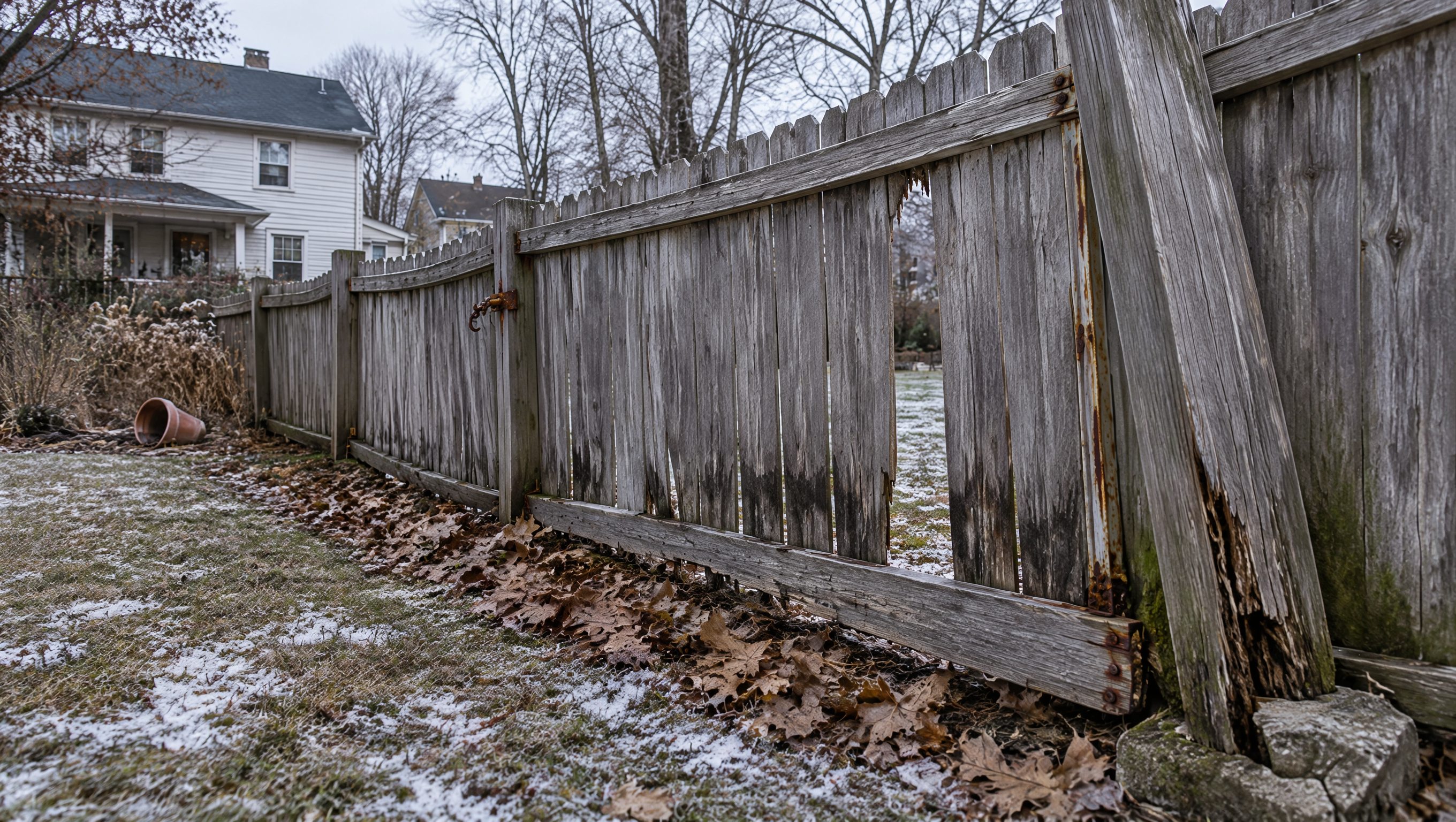
An older fence does not automatically need replacement before winter, but several warning signs can show that repairs may no longer be enough. Freeport homeowners should pay attention to leaning posts, widespread rot, loose rails, repeated gate problems, damaged panels, erosion, and sections that move in strong wind before snow and freeze-thaw cycles add more stress.
Look at the Fence as a Whole
One damaged board usually does not mean the entire fence needs replacement.
The bigger question is whether problems are isolated or appearing throughout the system.
Walk the full fence line and look for patterns such as:
Several leaning posts
Multiple loose sections
Repeated repairs
Widespread deterioration
Gates that keep losing alignment
Long runs that no longer look straight
When problems appear in several areas at once, replacing part or all of the fence may be more practical than continuing with individual repairs.
Several Leaning Posts Are a Major Warning Sign
Fence posts support everything attached to them.
One leaning post may be repairable, but several unstable posts can indicate a larger issue involving:
Aging footings
Soil movement
Rot
Drainage
Repeated wind stress
Look along the fence from one end to see whether the posts still follow a consistent line.
If several sections are leaning in different directions, the fence may be losing overall stability.
Widespread Wood Rot Can Make Repairs Less Practical
Older wood fencing should be checked closely near the ground.
Inspect:
Post bases
Lower boards
Rails
Gate frames
Signs of deterioration include:
Soft wood
Crumbling sections
Deep cracking
Fasteners that no longer hold
Large areas of discoloration
Replacing one rotten board can make sense.
Replacing boards, rails, and posts repeatedly across the same fence may be a sign that the system is nearing the end of its useful condition.
Loose Rails Can Affect Entire Sections
Rails support multiple boards at once.
When rails begin to fail, homeowners may notice:
Sagging boards
Large sections moving together
Boards separating from the fence
Uneven alignment
If only one rail is damaged, a targeted repair may be enough.
When several rails have deteriorated, replacing the affected fence run may be more efficient.
Repeated Gate Problems Can Reveal Structural Movement
A gate that will not stay aligned may be telling you something about the surrounding fence.
Watch for gates that repeatedly:
Sag
Drag
Miss the latch
Rub against posts
Develop larger side gaps
If hinge and latch adjustments keep failing, inspect the supporting posts and nearby sections.
A gate may continue moving because the structure around it is no longer stable.
Check Whether Wind Makes the Fence Move
Older privacy fences can become more vulnerable to strong wind as posts, rails, and connections weaken.
During or after windy weather, inspect:
Long fence runs
Corners
End posts
Gate areas
Movement does not always mean immediate replacement is necessary.
However, a fence that visibly sways or shifts because several supports are loose should be evaluated before winter storms arrive.
Storm Damage Can Push an Aging Fence Past the Repair Stage
Falling branches and strong winds can damage a fence that was already deteriorating.
After a storm, look for:
Broken boards
Cracked vinyl
Bent chain link
Damaged rails
Shifted posts
A newer fence with one damaged section may only need repair.
An older fence with pre-existing weaknesses may require a broader replacement after storm damage exposes multiple failing areas.
Drainage Problems Can Keep Causing Damage
Water problems can shorten the life of fence posts and create recurring alignment issues.
After fall rain, check for:
Standing water
Washed-out soil
Soft ground
Exposed footings
Downspout runoff
If an old fence has repeatedly shifted because of erosion, the drainage issue should be considered before installing its replacement.
Otherwise, the new fence may eventually develop similar problems.
Ground Gaps May Show That Sections Have Shifted
Changes in ground clearance can indicate movement in the fence or surrounding soil.
Pay attention to gaps near:
Gates
Slopes
Corners
Low areas
This is especially important for homeowners with dogs.
Snow can hide these openings during winter, making them harder to notice.
Damaged Vinyl Panels Need More Than a Surface Check
Older vinyl fences do not rot like wood, but they can still develop structural issues.
Look for:
Cracked panels
Loose rails
Leaning posts
Misaligned sections
Repeated gate problems
A few damaged components may be replaceable.
If posts and multiple panels are failing throughout the fence, larger replacement may be more practical.
Aging Chain Link Can Lose Tension and Alignment
For chain link fencing, inspect:
Terminal posts
Top rails
Mesh tension
Gates
Connections
Sagging fabric alone may be repairable.
If several posts lean, rails are bent, and gates no longer align, replacing a larger section may make more sense.
Ask Whether the Existing Layout Still Works
Replacement is not only about fixing damage.
An older fence may no longer fit the way the property is used.
Consider whether you now need:
More privacy
Better pet containment
A wider mower gate
Improved side-yard access
Fewer unnecessary sections
Instead of copying the existing layout, replacement can be an opportunity to improve the yard.
Compare New Material Options
If replacement is necessary, you do not have to use the same material again.
Wood
Provides strong privacy, natural appearance, and flexible design options.
It requires more routine inspection and maintenance.
Vinyl
Offers consistent privacy with less routine surface maintenance.
Chain Link
Works well for pets, larger yards, and open boundaries.
Aluminum
Provides an open, decorative boundary while keeping landscaping visible.
Choose based on privacy, pets, maintenance preferences, yard layout, and appearance.
Fall Is a Useful Time to Inspect Before Snow
Once snow covers the lower fence line, several problems become harder to see.
Fall gives homeowners a chance to inspect:
Post bases
Rot
Ground gaps
Drainage
Footings
Gate clearance
It also allows time to compare repair and replacement options before winter conditions become more restrictive.
Plan Removal Before Installing the New Fence
Replacement usually involves more than removing visible panels.
The old fence may include:
Posts
Concrete footings
Gates
Rails
Hardware
Ask whether hauling, disposal, and cleanup are included in the estimate.
Old footing locations may also influence the new fence layout.
Plan New Gates Around Winter Access
If you are replacing the fence before winter, think about how gates will work once snow arrives.
Consider:
Gate swing
Shoveled paths
Snowblower routes
Snow pile locations
Pet access
Avoid putting the main entrance in an area that regularly becomes blocked by snow.
When Repair Still Makes Sense
Repair may still be the better choice when:
Damage is limited to one section
Most posts remain stable
Rot is isolated
One gate needs service
The rest of the fence is structurally sound
Replacement should not be recommended simply because a fence is older.
Condition matters more than age alone.
When Replacement Becomes More Practical
Replacement may deserve serious consideration when:
Several posts are unstable
Rot affects multiple areas
Long sections lean
Rails are failing throughout the fence
Gates repeatedly lose alignment
Repairs have become frequent
At that point, continued spot repairs may not address the larger structural problem.
Request a Free Fence Replacement Estimate
Arrow Fence helps Freeport homeowners evaluate aging, damaged, or unstable fencing before winter.
Whether you are considering partial replacement, a complete new fence, different materials, or updated gate access, Arrow Fence can help you review practical options for your property.
Contact Arrow Fence at arrowfencerockford.com to request a free estimate for your fence replacement project.
