
Fence Replacement in Janesville, WI: How to Know When Repairs Are Not Enough
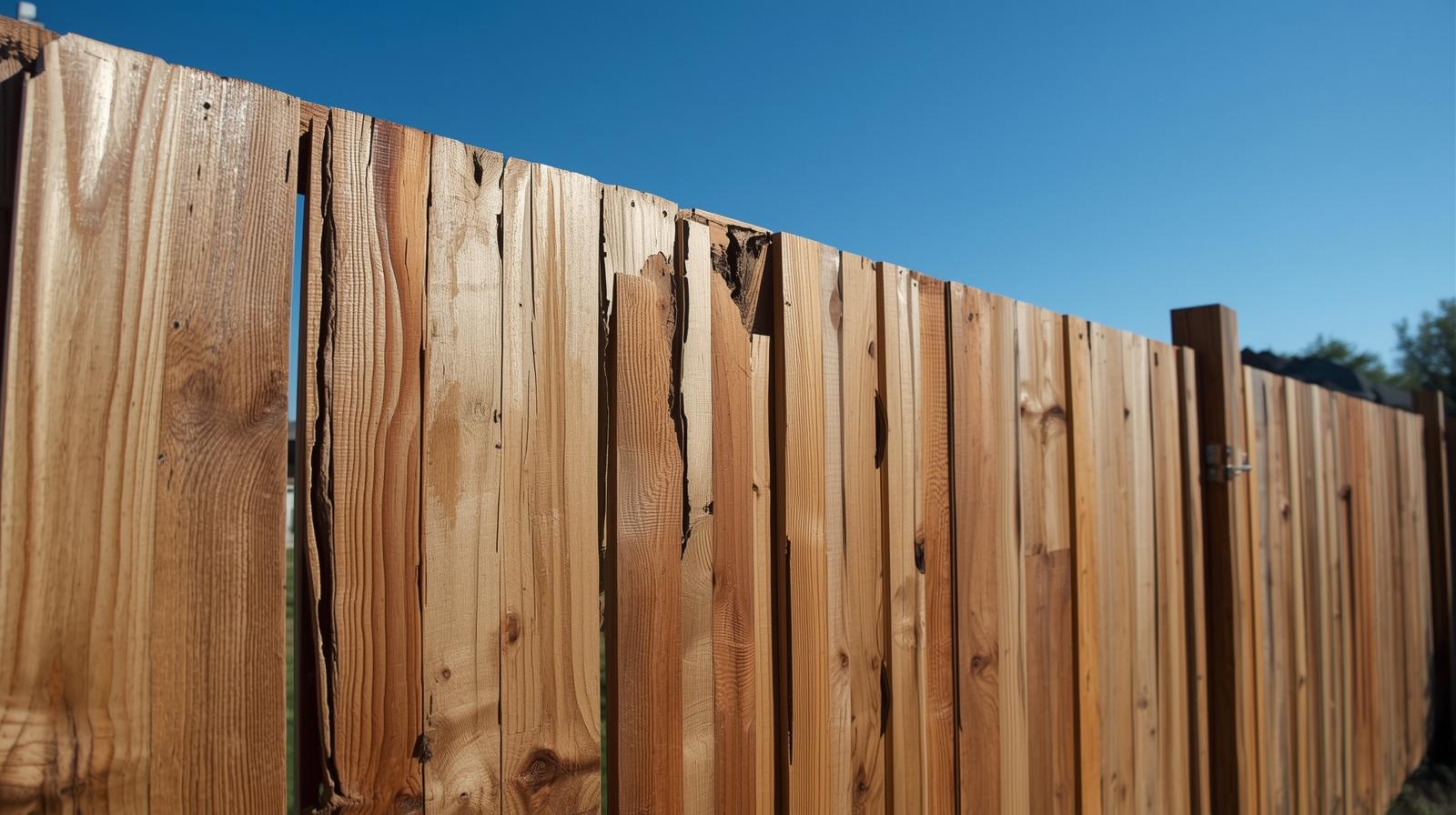
Patching a fence that's past its prime costs more in the long run than replacing it — but knowing exactly when you've crossed that line isn't always obvious. This guide helps Janesville homeowners recognize the signs that repairs have stopped making sense and understand what a quality fence replacement actually involves.
The Repair vs. Replace Decision Is Rarely Simple
Most fence problems don't announce themselves all at once. A board warps here, a post leans there, a section sags after a hard winter. Each individual issue seems manageable — a quick fix, a replaced board, a tightened hinge. But over time those small problems compound, and what felt like routine maintenance starts to feel like an endless cycle of patching something that isn't getting better.
Janesville homeowners deal with a climate that accelerates this process. Southern Wisconsin's freeze-thaw cycles, heavy snowfall, spring storms, and humid summers put real stress on outdoor structures year after year. A fence that was installed without proper materials or post depth, or one that has simply reached the end of its lifespan, reaches a tipping point — where the next repair just reveals the next problem underneath it.
The goal of this guide is to help you identify that tipping point clearly, so you can stop spending money on repairs that aren't solving anything and make a confident decision about moving forward.
Sign #1: Multiple Posts Are Leaning or Shifting
Posts are the structural backbone of your entire fence. Everything else — rails, panels, gates — depends on them staying plumb and stable. When posts start to lean, the whole fence goes with them.
A single leaning post after an especially hard winter might be repairable. But when you walk your fence line and find two, three, or more posts out of plumb — or posts that have shifted in different directions — you're looking at a systemic problem, not an isolated one.
In Janesville, the most common cause is frost heave. The ground freezes and thaws repeatedly through winter, and posts that weren't set deep enough gradually push upward or tilt out of position. Wisconsin's frost line requires posts to be set at least 42 to 48 inches deep. Fences installed with shallow posts — a shortcut common with lower-quality installations — show this problem within a few seasons and progressively worsen over time.
Resetting individual posts is possible. Resetting several across a fence that's otherwise in poor condition rarely makes financial sense. At that point, a full replacement with properly set posts is the more practical and cost-effective path.
Sign #2: Rot at or Below Ground Level
The base of a wood fence post — where it meets the soil — is the most vulnerable point on any fence. Moisture accumulates there constantly. In Wisconsin's climate, that means the post base is repeatedly wet, frozen, thawed, and wet again across every season.
Even pressure-treated and cedar posts eventually succumb to this cycle. The first signs are darkening, softening, or a spongy feel when you apply pressure. A more advanced sign is visible cracking or crumbling of the wood at ground level. The most definitive test: give the post a firm side-to-side push. A healthy post barely moves. A rotting one flexes, wobbles, or feels like it could go over.
A single rotted post can often be replaced. But rot at ground level tends not to be isolated — if one post has reached that stage, others nearby are typically not far behind. And a fence with compromised post bases is structurally unreliable regardless of how the panels above look. In wind conditions common to Rock County's open terrain, a fence with rotted posts is a fence waiting to fall.
Sign #3: Widespread Panel or Board Damage
Individual board replacement is a normal part of wood fence ownership. A split board here, a warped panel there — these are expected over time and well within the scope of routine repair.
The calculus changes when the damage is widespread. When you're replacing multiple boards across multiple sections in the same season, or when warp and splitting are showing up consistently across most of the fence, you're no longer doing maintenance — you're fighting a losing battle against a fence that has run its course.
Widespread board damage also often signals deeper structural issues. Boards that consistently warp or pull away from rails usually indicate that the rails themselves are compromised, waterlogged, or pulling loose from failing posts. Fixing the boards without addressing the rails and posts beneath them is temporary at best.
Sign #4: Sagging Sections and Broken Rails
The horizontal rails that connect your fence posts and support your panels carry significant load — and they're under constant stress from weather, moisture, and the natural movement of the fence over time.
When rails crack, snap, or pull away from posts, panels begin to sag. A sagging fence section looks bad and functions poorly — it creates gaps, reduces privacy, and in a pet-containment fence, opens escape routes that weren't there before.
One broken rail in an otherwise solid fence is a repair. Sagging across multiple sections, or rails that are consistently pulling loose from post connections throughout the fence, points to a fence that's structurally compromised throughout. The rails are failing because the posts they're attached to have shifted or rotted, or because the wood itself has absorbed so much moisture over the years that it's lost structural integrity.
Sign #5: Significant Storm or Wind Damage
Janesville and the broader Rock County area see genuine storm activity — spring severe weather, summer thunderstorms with high winds, and winter ice storms that add substantial weight to fence panels before snapping them loose.
When storm damage hits a fence that was already in good condition, targeted repair or section replacement makes sense. When it hits a fence that was already showing its age, the storm often just accelerates what was already inevitable.
After any significant storm event, walk your entire fence perimeter and look for:
Posts snapped at or near ground level
Panels blown completely off their rails
Sections leaning against trees, structures, or neighboring fences
Gates that no longer hang straight or latch properly
Any place where the fence has shifted into a neighbor's property
If the storm damage is isolated to one section of a fence that's otherwise structurally sound, repair is reasonable. If the damage is spread across the fence or if the undamaged sections show the same underlying problems, a full replacement will save you money and frustration over the next few years.
Sign #6: Rust and Corrosion on Metal Fencing
For chain link and ornamental fencing, rust is the equivalent of rot — a progressive structural weakening that starts at the surface and works inward. Surface rust on chain link that's otherwise structurally intact can sometimes be treated and stabilized. But deep rust that has eaten through the wire, corroded post fittings, or compromised the structural members of an ornamental fence is a sign that the fence is at or past the end of its functional life.
Pay particular attention to post bases and the connection points between rails and posts on ornamental fencing — these are the highest-stress areas and the first places where deep rust causes structural failure. A post that looks intact at surface level but has significant internal corrosion will fail under load without warning.
Sign #7: The Age and History of the Fence
Sometimes there's no single dramatic sign. The fence is simply old, and the accumulated years of Wisconsin winters have taken their toll in ways that add up to a structure that's no longer worth maintaining.
A few questions worth asking:
How old is the fence? Wood fencing typically has a lifespan of 15 to 20 years with proper maintenance. Vinyl runs 25 to 30 years or more. Chain link and aluminum can last 30 or more years. If you're approaching or past those benchmarks, ongoing repairs are borrowing time rather than solving problems.
Do you know how it was installed? Fences installed without proper post depth, without concrete footings, or with inadequate materials for this climate will fail earlier than their material lifespan would suggest. If you inherited a fence with an unknown installation history and it's showing stress, that history matters.
How much have you spent on repairs in the last two to three years? If your repair costs are climbing year over year, that trend doesn't reverse on its own. The fence is telling you something.
Sign #8: Your Needs Have Changed
Not every replacement is about a fence that's broken. Sometimes life changes, and the fence you have no longer fits the way you live.
Common reasons Janesville homeowners replace a structurally adequate fence:
A new dog who needs a taller or more secure enclosure
Children who need a safely contained play area
A new deck, patio, or landscaping layout that calls for different fence placement or a new gate location
Preparing the home for sale and wanting a fence that adds to the property's appeal rather than detracting from it
Upgrading from a high-maintenance wood fence to low-maintenance vinyl to reduce ongoing upkeep
Replacement in these cases is a proactive choice, not a reactive one — and it's often the right call even when the existing fence has some remaining life in it.
What a Quality Fence Replacement Looks Like
Understanding the replacement process helps you recognize good work and set appropriate expectations for the project.
Removal of the existing fence. A professional crew removes all existing fence materials — posts, panels, rails, gates, and hardware — and disposes of them cleanly. Your yard should be clear and ready for new installation before new materials go in.
Post hole drilling and new post setting. New posts are set at proper depth — a minimum of 42 to 48 inches in Wisconsin — in concrete footings. This is the step that most directly determines how long the new fence performs. There's no shortcut here that doesn't show up within a few seasons.
Cure time. Concrete footings need adequate time to cure before panels are installed. Rushing this step undermines the stability of the entire fence.
Panel, rail, and board installation. Materials are installed level, plumb, and secure. Quality installation means consistent spacing, properly seated hardware, and panels that don't flex or shift when pushed.
Gate installation and testing. Gates are hung, adjusted, and tested before the crew leaves — opening and closing smoothly, latching securely, and functioning the way they should from day one.
Site cleanup. All debris, old materials, and installation waste are cleared. You're left with a clean yard and a fence ready to use.
Choosing the Right Replacement Material
Fence replacement is an opportunity to upgrade — to choose a material that performs better or requires less maintenance than what you had before.
Wood remains a strong choice for homeowners who value a natural look and are committed to maintenance. Cedar performs best in Wisconsin's climate. Expect 15 to 20 years with proper care.
Vinyl is the top low-maintenance upgrade for homeowners who are done with the maintenance cycle. No painting, staining, or rotted boards — just an occasional rinse and an annual inspection. Expect 25 to 30 years or more.
Chain link is the most durable and cost-effective option for larger perimeters, pet enclosures, and utility applications. Handles Wisconsin weather with minimal maintenance for 20 to 30 years.
Aluminum ornamental is ideal for front yard borders, decorative perimeters, and any application where long-lasting aesthetics matter. No rust, no painting, decades of reliable performance.
If your previous fence required more maintenance than you were willing to give it, this is exactly the right moment to make a different choice.
Arrow Fence Serves Janesville and the Surrounding Area
Arrow Fence works with homeowners throughout Janesville, Beloit, South Beloit, Roscoe, Rockton, Rockford, and across southern Wisconsin and northern Illinois. We handle residential fence replacement, installation, and repair — wood, vinyl, chain link, aluminum, ornamental, privacy, and custom gates — and we build every fence with Wisconsin winters in mind from the post footings up.
If you're not sure whether your fence needs repair or replacement, we'll give you an honest assessment during your free estimate. We're not in the business of selling replacements to people who just need a repair — or selling repairs to people whose fence has run its course.
Visit arrowfencerockford.com or give us a call today to schedule your free, no-obligation estimate. Let's figure out the right path forward for your fence and your property.
