
Gate Repair Before Snow in Loves Park, IL: Common Problems to Fix
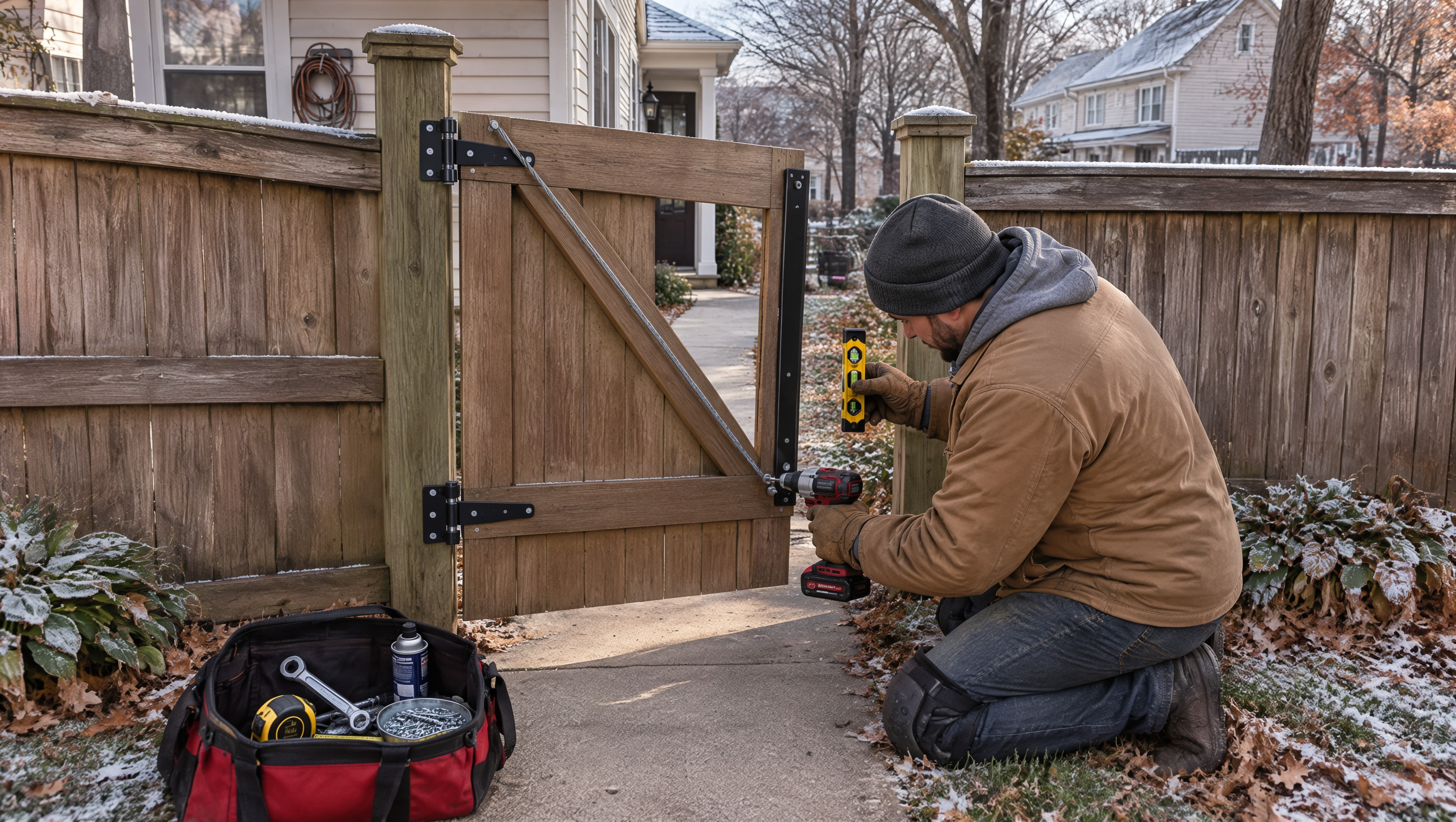
Before snow arrives in Loves Park, homeowners should check fence gates for sagging, dragging, loose hinges, worn latches, shifting posts, frame damage, and poor ground clearance. Fixing these problems in fall can make the gate easier to use through winter and help prevent snow, ice, and freeze-thaw conditions from turning a small alignment issue into a larger repair.
Why Gate Repairs Matter Before Snow
Fence gates experience more movement than most other parts of a fence.
Every opening and closing puts stress on:
Hinges
Latches
Gate posts
Frames
Fasteners
A gate that already needs extra force to close in fall may become much more frustrating once snow begins accumulating around the opening.
Fall is a useful time to identify the real cause while the ground and hardware are still easy to inspect.
Fix a Gate That Has Started Sagging
Sagging is one of the most common gate problems.
Homeowners may notice that the latch side sits lower than the hinge side or that the gate needs to be lifted before it can close.
Possible causes include:
Loose hinges
Weak framing
Insufficient bracing
A moving hinge post
Excessive gate weight
Do not assume the latch simply needs to be moved.
If the gate continues sagging, the alignment problem will return.
Check Whether the Gate Drags
A gate that rubs against the ground should be inspected before snow arrives.
Dragging can happen because:
The gate has sagged
The ground has built up
Soil has shifted
A post has moved
The frame has changed shape
Determine whether the problem is the gate or the ground before making adjustments.
Once snow accumulates, reduced clearance can make an already dragging gate difficult or impossible to open.
Inspect Loose Hinges
Hinges carry the gate through thousands of opening and closing cycles.
Look for:
Loose screws
Worn bolts
Bent hardware
Movement at attachment points
Damaged surrounding material
Minor hardware tightening may be enough when the frame and supporting post remain stable.
If the same hinge keeps loosening, there may be a deeper problem with the post or frame.
Check the Hinge Post
The hinge post supports most of the gate's weight.
Inspect it for:
Leaning
Movement at the base
Soft soil
Rot on wood posts
Exposed footing
Cracking
A gate cannot stay properly aligned if the hinge post keeps moving.
Repairing only the hinges or latch may provide temporary improvement without solving the underlying issue.
Inspect the Latch Post Too
The latch-side post can also move.
If it shifts, the gate opening may become wider or narrower.
Signs include:
The latch no longer reaches
The gate rubs against the post
Side gaps become uneven
The gate closes at an angle
Always inspect both posts before deciding which component needs repair.
Repair a Latch That No Longer Lines Up
A misaligned latch is often a symptom rather than the main problem.
Possible causes include:
Gate sagging
Shifting posts
Loose hinges
Frame distortion
Soil movement
The latch itself may still be usable.
Before replacing or repositioning it, make sure the gate structure is stable.
Replace Damaged or Worn Hardware
Gate hardware should operate smoothly before winter.
Check for:
Bent latches
Loose fasteners
Damaged hinges
Missing screws or bolts
Worn attachment points
Small hardware problems are easier to address before snow and ice make the gate area harder to work around.
Secure hardware also helps reduce unnecessary movement during strong winter winds.
Check Wood Gate Frames for Damage
Wood gates can develop structural problems as they age.
Look for:
Cracked framing
Rot
Warping
Loose boards
Failed fasteners
If the outer frame is no longer square, adjusting the latch alone may not keep the gate aligned.
Severely deteriorated framing may require more extensive repair or gate replacement.
Inspect Vinyl Gates for Cracks and Movement
Vinyl does not rot like wood, but vinyl gates can still develop problems.
Check for:
Sagging
Loose hardware
Cracked components
Shifting posts
Uneven gaps
Cold weather can make vinyl less flexible, so existing damage should be addressed before hard winter impacts become more likely.
Check Chain Link Gates for Frame Problems
Chain link gates depend heavily on stable posts and a square frame.
Look for:
Bent frames
Loose hinges
Latch problems
Leaning terminal posts
Nearby mesh losing tension
If the supporting post has moved, the gate and surrounding chain link may both need attention.
Wide Gates Need Extra Support
Wider gates used for equipment access create more stress than standard walk gates.
They may be used for:
Riding mowers
Trailers
Landscaping equipment
Utility access
A small amount of movement at the hinge post can become much more noticeable across a wide opening.
Check wide gates carefully for sagging, frame movement, and weak hardware before winter.
Look at Ground Clearance
Bottom clearance can change throughout the year.
Soil may:
Build up
Settle
Erode
Become muddy
A gate that clears the ground in summer may begin dragging during wet fall weather.
Snow and ice can reduce that clearance even further.
The goal is to maintain usable clearance without creating an unnecessarily large gap underneath.
Pet Owners Should Check for Escape Gaps
Gate alignment problems can create openings around the sides or bottom.
Inspect carefully if dogs use the yard.
Look for:
Larger bottom gaps
Widening side gaps
Weak latches
Gates that do not close completely
Snow can hide these openings, making them difficult to notice in winter.
Fixing them before accumulation begins can make pet containment more reliable.
Drainage Around the Gate Matters
Repeated gate problems may actually begin with water.
After rain, check the gate area for:
Standing water
Soft soil
Mud
Erosion
Downspout discharge
If water is washing soil away around a gate post, alignment problems may keep returning.
The drainage issue should be considered along with the fence repair.
Clear Leaves Before Inspecting the Gate
Wet leaves can hide both hardware and ground problems.
Remove debris around:
Hinge posts
Latch posts
Bottom clearance
Drainage paths
Clearing the area makes it easier to see rot, erosion, soil buildup, and loose components.
It also prepares the gate swing area for approaching snow.
Plan Where Snow Will Go
Gate repair before winter should include snow planning.
Think about:
Gate swing direction
Shoveled walkways
Snowblower routes
Snow pile locations
Avoid piling heavy snow against the gate or its supporting posts.
A properly repaired gate can still become unusable if snow blocks the opening.
Check for Problems After Strong Wind
Strong fall wind can shift a gate or expose already weak posts.
After windy weather, look for:
New sagging
Post movement
Loose hinges
Changed latch alignment
Solid wood and vinyl gates can experience more wind pressure than open designs.
A sudden alignment problem after a storm deserves a closer inspection.
When a Minor Repair Is Enough
A targeted repair may be appropriate when:
Hinges are loose
A latch is worn
Fasteners need tightening
The frame remains stable
Both posts are firm
These problems may be resolved without replacing the entire gate.
When the Problem Needs More Than an Adjustment
More extensive work may be necessary when:
A post is leaning
The gate frame is damaged
Wood is badly rotten
Drainage is undermining the post
The gate repeatedly sags
Hardware will not stay secure
Repeated adjustments usually mean the underlying cause has not been fixed.
When Gate Replacement Makes Sense
Replacement may be worth considering when:
The frame is badly deteriorated
Multiple components are failing
The gate is no longer the right size
Repairs repeatedly fail
Nearby fence sections are also deteriorating
A new gate can also be an opportunity to improve width, support, or access.
Before-Snow Gate Checklist
Before winter in Loves Park, check:
Gate alignment
Hinges
Latch operation
Hinge post stability
Latch post stability
Frame condition
Bottom clearance
Side gaps
Drainage
Pet escape points
Snow access
Handling these issues before snow arrives can make everyday winter access much easier.
Request a Free Gate Repair Estimate
Arrow Fence helps Loves Park homeowners repair dragging, sagging, misaligned, or difficult-to-close fence gates before winter.
Whether the problem involves hinges, latches, posts, drainage, frame damage, or a gate that needs replacement, Arrow Fence can help you review practical repair options.
Contact Arrow Fence at arrowfencerockford.com to request a free estimate for your gate repair project.
