
Pet Containment Fence Solutions in Roscoe
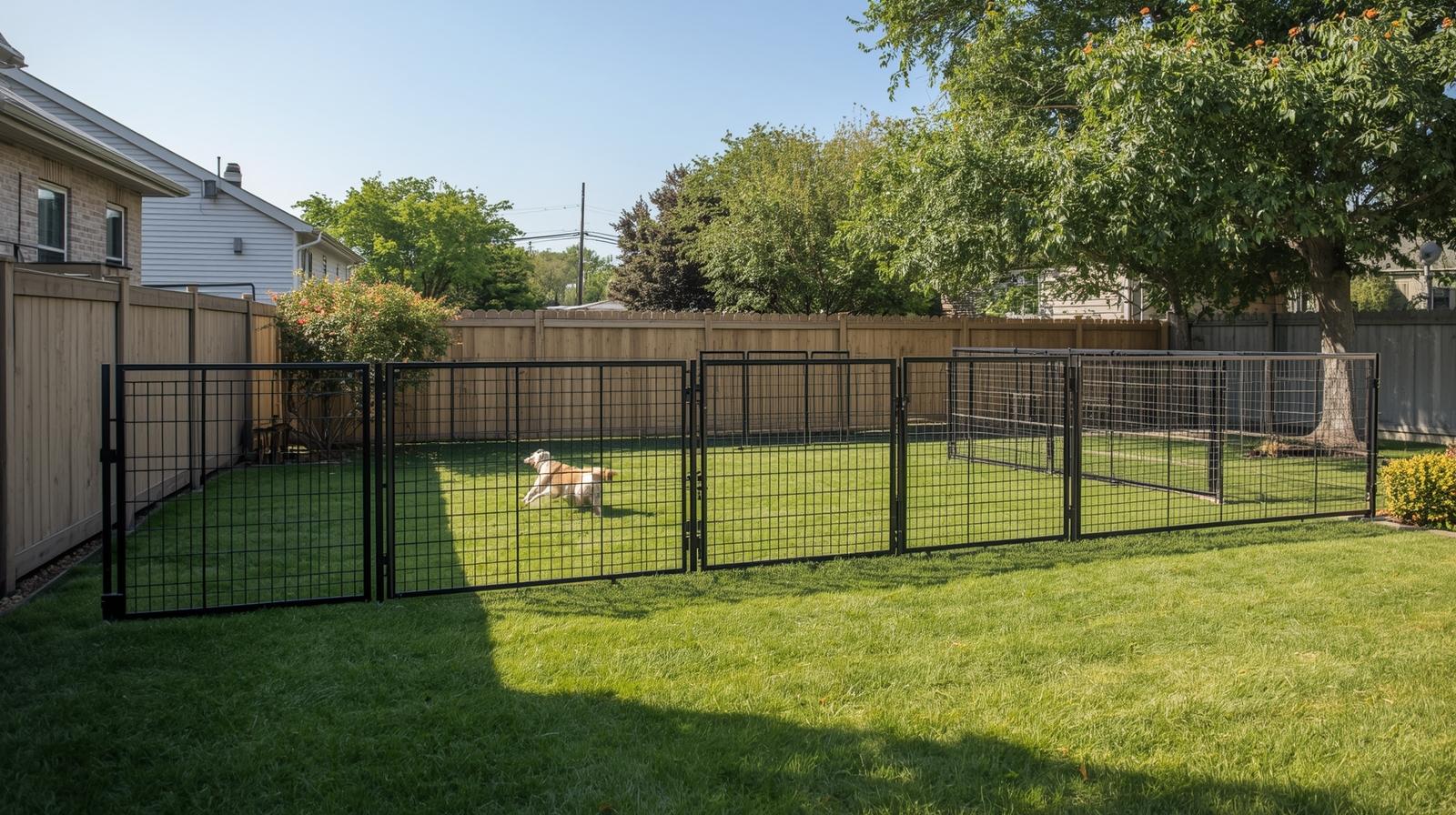
Does your heart leap into your throat every time the back door is left open for a second too long? For many pet owners in Roscoe, keeping a curious dog safe is a constant worry. Finding the right solution comes down to two basic approaches to creating a boundary.
The first is a physical barrier. Traditional options like wood or vinyl provide a visible, solid wall that physically contains your pet and clearly marks your property line. This is a straightforward choice when you need both security and privacy.
In contrast, electronic systems offer alternatives to a traditional dog fence by creating an invisible, psychological boundary. This approach combines a special receiver collar with consistent training to teach your pet their limits without obstructing views. The choice between an invisible fence and a physical fence ultimately depends on your pet’s personality, your budget, and your yard’s unique layout.
Exploring Traditional Fence Options for Roscoe Yards
When thinking of safe fencing for pets, a traditional physical barrier is often the first thing that comes to mind. For many Roscoe homeowners, a solid, visible fence provides immediate peace of mind. The most common choices—wood, vinyl, and chain-link—each offer distinct advantages.
A classic wood fence offers excellent privacy and a timeless look, perfect for creating a cozy backyard retreat. However, Roscoe's harsh winters and humid summers mean wood requires regular staining or sealing to prevent rot and ensure it remains a secure boundary.
For a low-maintenance option, many people choose vinyl fencing. It withstands the elements without needing paint but comes at a higher initial cost. On the other end of the budget, durable chain-link is a cost-effective choice for creating escape-proof solutions, especially across large areas, though it provides little privacy.
No matter the material, professional installation is crucial for ensuring there are no gaps or weak points. But if a traditional fence isn't right for your property or budget, the answer may lie in a solution you can't even see.
How Does an Invisible Dog Fence Actually Work?
An invisible fence is a clever system that works in three parts. It starts with a transmitter, usually placed in your garage, which sends a harmless signal through a thin buried boundary wire installed just under the edge of your lawn. The final piece is a special receiver collar worn by your dog, which listens for that signal and effectively creates a digital leash for your entire property.
As your dog wanders near the hidden boundary, the receiver collar emits an audible warning tone—a beep that your dog quickly learns means "turn back." With proper training, this sound becomes the primary reminder, and most dogs learn to respect the boundary without ever going further. It works just like a rumble strip on a highway, giving a clear heads-up before they drift.
If a dog continues past the warning beep, the collar delivers a surprising but safe static correction. It's not a painful shock; think of the harmless zap you get from shuffling across a carpet. This brief pulse is designed to startle them and reinforce the training, reminding them to stay within their safe zone.
Are Electronic Pet Fences a Humane Choice?
The static pulse from an electronic fence is designed to be surprising, not painful—like the harmless zap from a doorknob. The sensation gets your dog’s attention instantly. For peace of mind, these levels are adjustable, ensuring it’s a safe pet containment solution even for small or timid dogs.
The pulse is not a punishment but a clear, consistent training cue. The true goal of the training process is to teach your dog that the warning beep is the real boundary. With patience and positive reinforcement, they learn to stop and turn back as soon as they hear that sound, avoiding the static correction altogether.
Ultimately, the humanity of an electronic fence depends entirely on the quality of the training. When your dog understands the rules, the system becomes a tool that grants them safe, off-leash liberty in their own yard—and you, complete peace of mind.
Beyond the Buried Wire: Understanding GPS and Wireless Fences
While buried wires are standard, some alternatives avoid digging. A DIY wireless dog fence, for instance, uses a transmitter to create a circular "bubble" boundary. The main trade-off is that you can’t customize the shape of the safe zone, which is a drawback for protecting gardens or fitting a unique yard layout.
For properties over a few acres, a GPS dog fence system is another option. Instead of a wire, you draw the boundary on a map using your phone. While impressive, many GPS dog fence system reviews note a crucial flaw for suburban life: the boundary can drift by several feet. This lack of pinpoint precision is a risky choice for typical Roscoe lots near streets.
Both wireless and GPS options trade reliability for convenience. For most homes in Roscoe, where a dependable line that follows your exact property is needed, the buried-wire system remains the gold standard for precision and security.
The Secret to Success: Why Fence Training is Non-Negotiable
The success of an electronic fence depends entirely on training that builds your dog’s confidence and understanding. A gentle process teaches your pet to recognize and respect the new boundary, turning a potentially confusing experience into a positive one. This humane approach is the key to creating lasting safety and freedom.
The most effective method is flag training. Here’s how to train a dog on an invisible fence using this simple, proven process:
Mark the boundary with small flags so your dog has a visual cue.
Introduce the 'beep' by walking your leashed dog near the flags with the collar in a "sound only" mode, rewarding them for turning back.
Add the correction only after they understand the warning beep, creating a clear and fair learning curve.
With just 15 minutes a day, most dogs learn their boundaries within two weeks. For Roscoe homeowners who want to ensure it’s done right, professional dog fence installers always include this critical training service.
Choosing Your Best Fit: A Final Checklist for Roscoe Pet Owners
Deciding on the right pet containment solution in Roscoe simplifies to this: choose a physical fence if you need visual privacy and a solid barrier. For an unobstructed view or to contain a pet in a large yard, an electronic fence is often the perfect fit.
The next step is to walk your property and assess your specific needs. Then, you can decide whether to tackle the project yourself or call on a professional for expert installation.
This is no longer just about picking a fence. It’s about creating peace of mind for your family and giving your pet the freedom to safely enjoy their yard—transforming a space of constant worry into a world of happy, boundless play.
