
Pet-Friendly Fence Ideas in Davis Junction, IL: Safe & Practical Options for Your Yard
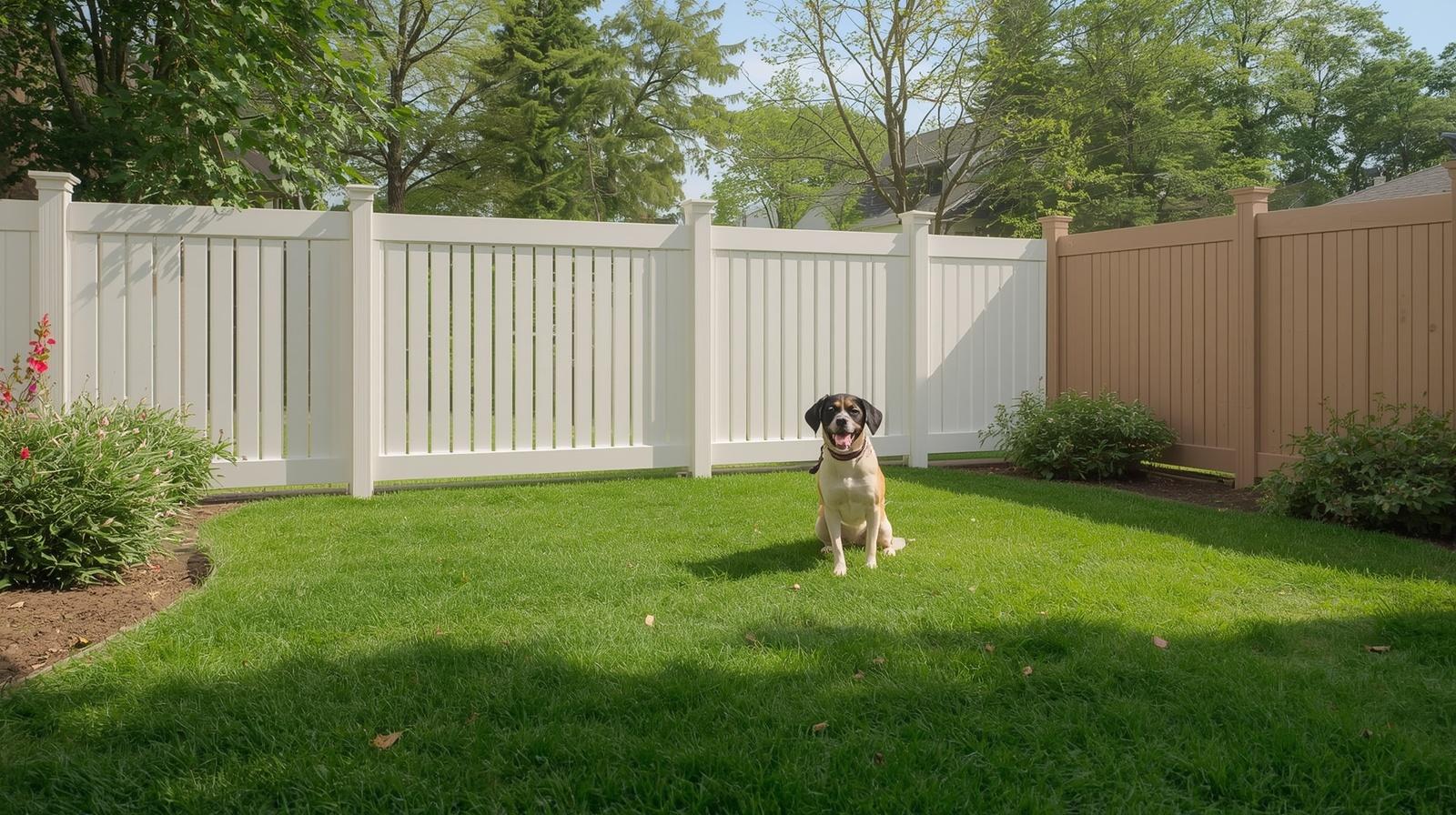
A fence that keeps your dog safely in the yard is one of the best investments a pet owner can make — but the details matter. Height, bottom gaps, gate hardware, and material all determine how well it actually works. This guide helps Davis Junction homeowners choose a pet-friendly fence that's built for real-world use and Illinois weather.
What Makes a Fence Truly Pet-Friendly
Not every fence that encloses a yard is a fence that safely contains a dog. A 4-foot fence that works fine for a beagle is an easy jump for a lab. A gap at the base that's barely noticeable to you is a clear invitation for a terrier. A gate that swings open with a firm nose-nudge defeats the entire purpose.
Pet-friendly fencing isn't a style — it's a set of design decisions that work together. Height, gap management, material durability, and gate hardware all have to be right. In Davis Junction and across northern Illinois, you also need materials and installation that hold up through the freeze-thaw cycles, heavy snow, and spring storms that regularly test outdoor structures in this part of the state.
Here's what actually matters.
Height: Getting It Right for Your Dog
Height is the first and most obvious consideration, and it varies more than most people think.
Small breeds — under 20 pounds — can generally be contained with a 3 to 4-foot fence, though a 4-foot minimum gives you more reliable results. The bigger concern for small dogs is gap spacing at the bottom and between panels, not height.
Medium breeds need at least a 4-foot fence, and 5 feet is safer for athletic or curious dogs in this category. For determined escapers, go higher.
Large and athletic breeds — labs, huskies, German shepherds, border collies, standard poodles — need a minimum of 5 to 6 feet. Known jumpers should have a 6-foot fence as a starting point, with additional deterrents considered if they're persistent.
If you're not sure what your dog is capable of, err taller. A fence that's slightly more than you need is a much better outcome than one that isn't quite enough.
Bottom Gap Management: The Detail Most Homeowners Miss
This is the most commonly overlooked element of pet fencing — and one of the most important. A gap at the base of the fence that seems minor to you is a meaningful opportunity for a small dog to squeeze through or for any dog to dig out from.
On flat terrain, panels should sit as close to grade as possible. Most professional installations leave a small consistent gap, but anything more than an inch or two becomes a problem for smaller breeds.
On sloped ground — which is common on Davis Junction properties — stepped fence installations create natural low points where the panel rises away from the grade. These spots need to be addressed specifically, either with additional boards cut to fit the gap, gravel fill along the interior fence line, or a buried apron of hardware cloth that prevents digging without being visible from above.
If your dog is a known digger, discuss this upfront with your installer. Addressing it during installation is straightforward. Retrofitting after the fact is more work and more cost.
Gate Hardware: Don't Overlook the Weakest Link
A gate that a dog can nudge open, push through, or squeeze past is a gap in the fence — just one that moves. Gate hardware for pet owners needs to be specific and deliberate.
Self-latching hardware is the baseline. It automatically closes and latches the gate every time it swings shut, eliminating the risk of a family member or guest leaving it unlatched. Spring-loaded hinges that pull the gate closed on their own add an extra layer of reliability.
For households with determined dogs or young children who may not close gates properly, a locking latch is worth adding. It takes one extra second to operate and eliminates a real vulnerability.
Gate posts should always be set deeper and with more concrete than standard fence posts — they bear more load from daily use and need to stay plumb over time. A gate post that shifts causes the gate to sag, bind, or swing open on its own — all problems that compound quickly with daily use.
Material Options for Pet Fencing
Vinyl
Vinyl is the top material choice for most pet owners in northern Illinois. It creates a smooth, solid enclosure with no splinters or rough edges as it ages. Panels stay consistently tight without the individual board loosening that happens with wood over time — a loose board creates a gap, and gaps in a pet fence are problems.
Vinyl also holds up through Illinois winters without absorbing moisture, warping, or rotting at the base. With proper post installation, it maintains structural integrity season after season with very little attention required from the homeowner.
For pet fencing specifically, full-panel privacy vinyl is the most effective style — no gaps between panels, consistent height throughout, and a smooth surface that offers no footholds for climbers.
Wood
Wood is a perfectly functional pet fencing material when it's properly installed and consistently maintained. Board-on-board or tongue-and-groove construction minimizes gaps between panels. Cedar holds up better than pressure-treated pine in Illinois's moisture-heavy climate and resists rot longer at the post base.
The ongoing commitment with wood is real for pet owners specifically. A board that warps, splits, or loosens from a rail creates a gap. A post base that softens from rot compromises the stability of that fence section. Annual inspection of the full fence line is important — and prompt repair of any damage keeps the enclosure secure.
For pet owners who prefer the look of wood and are willing to stay on top of maintenance, it works well. For those who want to set it and largely forget it, vinyl is the more reliable long-term choice.
Chain Link
Chain link is one of the most effective pet containment materials available, particularly for larger dogs and bigger yards. It's nearly impossible for most dogs to damage, handles Illinois weather with no maintenance, and covers large areas cost-effectively.
The considerations for pet use: height matters just as much with chain link as with any other material. Tension wire along the bottom closes the gap between the fence and the ground. For determined diggers, a buried apron along the interior base of the fence is the most reliable deterrent.
Chain link is the least decorative option, but for homeowners with large properties or dogs who are hard on fences, it's often the most practical and durable choice.
What to Avoid for Pet Fencing
Aluminum ornamental and split-rail fencing are generally not good fits for pet containment. Ornamental aluminum has vertical pickets with gaps between them — a climbing foothold for athletic dogs and an opening for small breeds. Split-rail is an open design by nature and provides no meaningful containment without a wire insert.
If you love the look of ornamental fencing for your front yard or decorative areas, it works beautifully there. Just use a different material for the areas where your dog actually needs to be contained.
Considering Your Dog's Specific Habits
Every dog is different, and a fence designed around your specific pet's habits will outperform a generic solution. A few scenarios worth thinking through:
Jumpers: 6-foot fence minimum. Consider coyote rollers or an angled top extension for persistent high jumpers.
Diggers: Address the base of the fence directly — buried apron, gravel border, or a concrete footing along the interior fence line in the most problematic areas.
Climbers: Avoid chain link if possible — the diamond weave provides easy footholds. Smooth-panel vinyl or wood with no horizontal rails on the outward-facing side is a better choice.
Fence fighters (dogs who charge or test the fence aggressively): Post strength and spacing matter. Closer post spacing and deeper footings reduce panel flex under impact.
Multiple dogs: Think about how they interact with the fence and with each other. Gate placement and hardware need to account for two animals potentially rushing the gate at once.
Planning the Layout for a Pet-Friendly Yard
The layout of your fenced area affects how usable and safe it is for your dog day to day.
Give serious thought to gate placement before installation. A single gate at the back of the yard forces you to walk the perimeter every time you need access. A side-yard gate near the house is usually more convenient for daily use — letting the dog out quickly in the morning, moving lawn equipment, taking out garbage.
If you have a large yard, consider whether a fully fenced perimeter serves you better than a fenced backyard section. Full perimeter fencing is more expensive but gives your dog maximum space. A dedicated fenced section can be positioned closer to the house for convenience and kept smaller for easier maintenance.
Think about shade and shelter within the fenced area as well. A dog who spends time in the yard needs access to shade in summer, particularly in the open terrain common to properties in Davis Junction and surrounding Ogle County.
Arrow Fence Builds Pet-Friendly Fences Throughout Northern Illinois
Arrow Fence works with pet owners throughout Davis Junction, Oregon, Byron, Rockford, Roscoe, Rockton, Machesney Park, Loves Park, South Beloit, Beloit, Janesville, and across northern Illinois and southern Wisconsin. We install vinyl, wood, chain link, and aluminum fencing with the specific details that make a fence actually work for dogs — proper height, bottom gap management, self-latching gate hardware, and posts set deep enough to stay solid through Illinois winters.
Visit arrowfencerockford.com or call us today to schedule your free, no-obligation estimate. Let's build a fence your dog can't get through — and that you won't have to think about.
