
Pet-Friendly Fence Installation in Poplar Grove, IL: Safe Options for Dogs & Pets
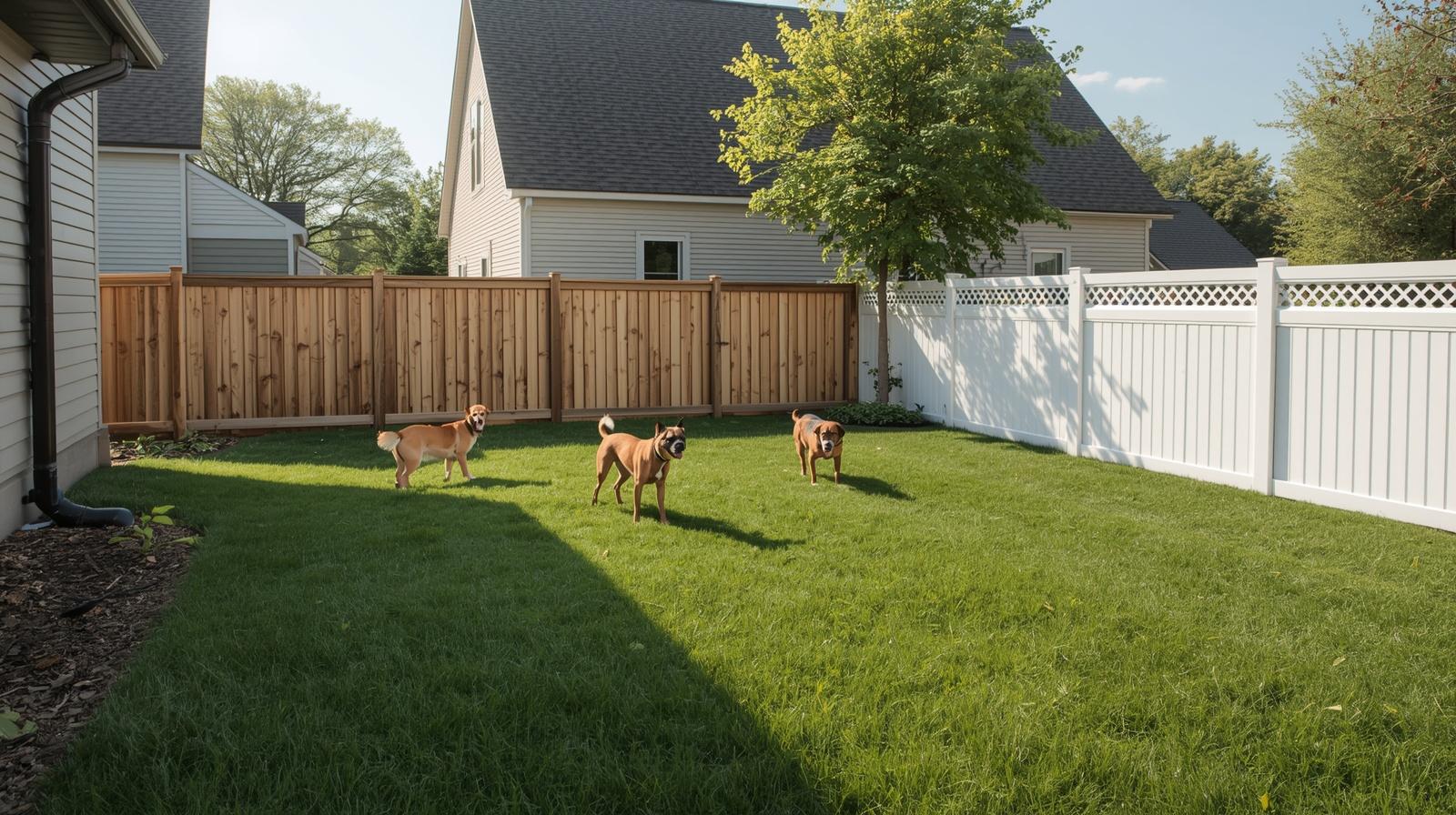
Pet-friendly fence installation in Poplar Grove, IL helps homeowners create a safer and more comfortable yard for dogs and other pets. The best fence depends on your pet’s size, behavior, visibility needs, gate security, yard layout, and the material that fits your maintenance preferences and budget.
Why Pet-Friendly Fencing Matters
For many homeowners in Poplar Grove, pets are part of the family. A well-built fence can make daily life easier by giving dogs and other pets a safer outdoor space to play, relax, and enjoy fresh air.
Pet-friendly fencing is not only about putting up a barrier around the yard. It should be planned around your pet’s habits, your property layout, and how your household uses the space. A fence that works well for a small dog may not be the right choice for a large, active dog. A calm pet may do fine with an open-style fence, while a reactive dog may need more privacy.
The right fence can help with:
Safer outdoor time
Better backyard access
More peace of mind for pet owners
Reduced escape risks
Improved privacy
Better control near streets or neighboring yards
A more useful outdoor space for the whole family
Start With Your Pet’s Behavior
Before choosing a fence material or style, think about how your pet behaves outside. Some dogs are calm and stay near the house. Others jump, dig, run along the fence line, or react to people, cars, wildlife, or other dogs.
A pet-friendly fence should be designed around real habits, not just appearance.
Ask yourself:
Does your dog jump?
Does your pet dig near the fence line?
Is your dog easily distracted by people or animals?
Do you need to block visibility?
Is your pet small enough to squeeze through gaps?
Do you need a taller fence?
Does your yard slope or have uneven ground?
Where should gates be placed for convenience?
Answering these questions early can help you choose a safer and more practical fence.
Fence Height Is Important for Dogs
Fence height is one of the most important details for pet owners. A fence that is too short may not safely contain larger or more active dogs.
Small dogs may not need the same height as large breeds, but they may need smaller gaps and less clearance near the ground. Larger dogs may need a taller fence with strong posts and secure gates.
For active dogs, height should be planned carefully. Some pets can jump higher than homeowners expect, especially when excited or distracted.
A local fence company can help you compare height options based on your yard, pet, and fencing material.
Watch for Gaps and Bottom Clearance
For pet-friendly fencing, gaps matter. Small openings between boards, pickets, panels, or the ground can become escape points.
This is especially important for:
Small dogs
Puppies
Curious pets
Dogs that dig
Yards with slopes
Uneven ground
Fence corners
Gate areas
Bottom clearance should be reviewed during installation. If the yard has uneven areas, the fence layout may need adjustments to reduce openings.
Gates should also be checked carefully because gaps near gate bottoms and hinge sides are common weak points.
Gate Security Should Be a Priority
A fence is only as secure as its gate. For pet owners, gate planning is just as important as the fence itself.
A pet-friendly gate should open and close smoothly, latch securely, and be placed where it supports your daily routine. Poorly aligned gates or weak latches can create safety risks.
Important gate details include:
Secure latches
Proper alignment
Strong hinges
Minimal gaps
Convenient placement
Enough width for lawn equipment
Safe access to side yards or driveways
For homes with children, guests, or service access, it may be helpful to choose gate hardware that reduces the chance of a gate being left open accidentally.
Privacy Fencing for Reactive Dogs
Some dogs become excited or stressed when they can see people, cars, animals, or activity outside the yard. For these pets, a privacy fence may be a helpful option.
Wood and vinyl privacy fencing can reduce visibility and help create a calmer backyard environment. This may be useful for dogs that bark at neighbors, chase along the fence line, or react to passing vehicles.
Privacy fencing can also make the yard feel more comfortable for homeowners. It helps block views from neighboring homes, sidewalks, and streets while creating a more enclosed outdoor space.
Wood Fencing for Pets
Wood fencing is a popular choice for pet owners who want privacy and a natural look. It can be customized in different heights, styles, and layouts.
A wood privacy fence can help block visibility and create a secure backyard for dogs. It also works well for homeowners who want a classic residential appearance.
Benefits of Wood Pet Fencing
Wood fencing may be a good fit if you want:
Strong privacy
Custom height options
A natural appearance
Reduced visibility for reactive dogs
Flexible designs for different yard layouts
A traditional backyard look
Maintenance Considerations
Wood requires more maintenance than some other materials. In Poplar Grove, rain, snow, ice, humidity, and freeze-thaw cycles can affect wood over time.
Homeowners should inspect wood fences for loose boards, rot, damage, and gaps. If a pet pushes against the fence often, regular inspections are especially important.
Vinyl Fencing for Pets
Vinyl fencing is another strong option for pet-friendly yards. It provides privacy, has a clean appearance, and requires less maintenance than wood.
Vinyl does not need staining or painting, which makes it helpful for busy homeowners. It can usually be cleaned with mild soap and water.
Benefits of Vinyl Pet Fencing
Vinyl fencing may be a good fit if you want:
Low maintenance
Strong privacy
A clean, finished look
Fewer gaps than open-style fencing
Easy cleaning
A smooth surface
A practical option for families and pets
Vinyl privacy fencing can be a good choice for dogs that need a more enclosed yard. Proper installation is important, especially for taller privacy styles exposed to wind.
Chain Link Fencing for Pets
Chain link fencing is one of the most practical options for pet containment. It is commonly used for backyards, dog runs, side yards, and larger properties.
Chain link is open, so pets can see through it. This can be a benefit for some dogs and a challenge for others. If your dog reacts strongly to people or animals outside the yard, chain link may not be the best choice unless privacy slats or screening are added.
Benefits of Chain Link Pet Fencing
Chain link may be a good fit if you want:
A practical boundary
A cost-conscious option
Visibility through the fence
A fence for larger yard areas
A durable pet enclosure
A simple backyard or side-yard solution
For many Poplar Grove homeowners, chain link is a functional and budget-friendly option for dogs.
Aluminum and Ornamental Fencing for Pets
Aluminum and ornamental fencing can work for some pets, but spacing is important. These fences have an open picket design, so small pets may be able to slip through if the spacing is too wide.
Aluminum fencing is often chosen for curb appeal, front yards, pools, gardens, and decorative boundaries. It can be a good choice for pets that are calm, larger, or less likely to squeeze through gaps.
Things to Consider
Before choosing aluminum or ornamental fencing for pets, consider:
Picket spacing
Fence height
Bottom clearance
Gate gaps
Pet size
Jumping behavior
Visibility through the fence
If your top priority is privacy or reducing distractions, wood or vinyl may be a better fit.
Midwest Weather and Pet-Friendly Fence Installation
Fence installation in Poplar Grove, IL should account for Midwest weather. A pet fence needs to stay secure through wind, rain, snow, ice, storms, and freeze-thaw cycles.
Wind
Tall privacy fences can catch more wind than open fences. Proper post setting is important for long-term strength.
Rain and Moisture
Moisture can affect wood fencing and areas around fence posts. Good drainage helps reduce long-term issues.
Snow and Ice
Snow and ice can create pressure near the bottom of a fence. Pet owners should check for gaps or damage after heavy winter weather.
Freeze-Thaw Cycles
Freeze-thaw cycles can shift soil around posts. Over time, this can affect fence alignment and gate operation. Proper installation helps reduce movement.
Storm Damage
Storms can loosen panels, bend chain link, damage gates, or knock branches into the fence. After strong weather, it is smart to walk the fence line and check for issues before letting pets out unsupervised.
Yard Layout Matters for Pets
A pet-friendly fence should support how your yard is used every day. The layout should make outdoor routines easier, not harder.
Think about:
Where your pet enters and exits
Whether the fence should enclose the full backyard
Where gates should be placed
How close the fence is to the driveway or street
Whether there are slopes or low spots
Where landscaping or sheds may affect access
Whether your pet needs a smaller enclosed area
Some homeowners may want the full backyard fenced. Others may prefer a dog run or smaller fenced section. The best option depends on the property and pet.
Repair or Replace an Existing Pet Fence?
If you already have a fence, it may be tempting to repair it instead of replacing it. Repairs can work when damage is small and isolated. However, replacement may be safer when the fence has larger issues.
Fence repair may be enough for:
One loose board
A small chain link repair
A simple gate latch adjustment
Minor storm damage
One small gap
Fence replacement may be better if you notice:
Multiple weak sections
Large gaps
Leaning posts
Broken gates
Widespread rot
Rusted chain link
Repeated pet escape attempts
Storm damage in several areas
If you no longer trust the fence to contain your pet safely, it may be time to consider replacement.
Pet-Friendly Fencing and Curb Appeal
A pet fence should be secure, but it should also look good with your home. The right fence can improve both function and curb appeal.
Wood provides a warm, natural look. Vinyl offers a clean and low-maintenance appearance. Chain link is practical and functional. Aluminum and ornamental fencing can add decorative value while keeping the yard open.
For Poplar Grove homeowners, the best fence is one that fits the pet, the yard, and the look of the property.
Work With a Local Fence Company
Pet-friendly fence installation in Poplar Grove, IL should be planned around your pet’s needs, your property layout, and local weather conditions. Fence height, gate placement, material choice, and bottom clearance all matter.
Arrow Fence helps homeowners compare fence materials and choose practical options for dogs and pets. Whether you need wood fencing, vinyl fencing, chain link fencing, aluminum or ornamental fencing, privacy fencing, backyard fencing, fence repair, fence replacement, or gates, local guidance can help you make a safer and more confident choice.
Contact Arrow Fence for a Free Estimate
If you are planning pet-friendly fence installation in Poplar Grove, IL, Arrow Fence can help you choose a fence that fits your pets, yard, privacy needs, and maintenance preferences.
Contact Arrow Fence today for a free estimate and helpful guidance on creating a safer, more comfortable outdoor space for your dogs and pets.
