
Pet-Friendly Fence Options for Midwest Homes
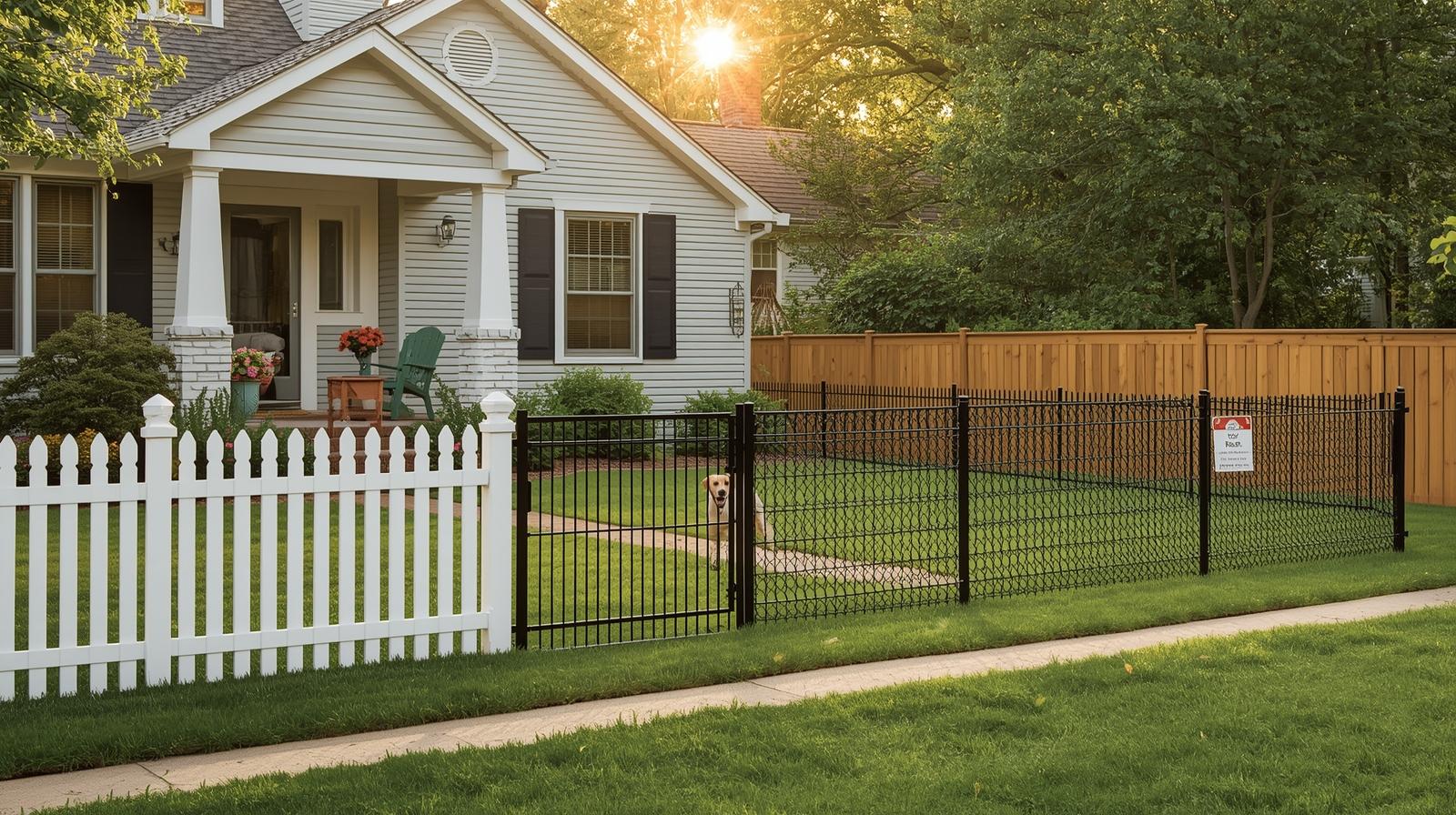
Tired of supervised potty breaks and worrying every time the back door opens? A backyard fence offers freedom for you and your pet, but in the Midwest, not just any fence will do. The wrong choice could lead to a constant escape artist or a structure that warps and rots after just a few harsh seasons.
A great fence here has two critical jobs: it must provide security against your dog’s unique talents—whether they're a jumper, a digger, or a pusher—and have the durability to stand strong against humid summers and heavy winter snow. Finding the right fit comes down to balancing three core factors: Security, Durability, and Maintenance.
The Classic Choice: Are Wood Fences Right for Your Pet and Midwest Climate?
Nothing disrupts a peaceful afternoon like a dog barking at every squirrel, jogger, and passing car. A classic wood privacy fence is often the perfect solution. By creating a solid visual barrier, it removes the triggers that make a dog reactive and transforms your yard into a serene space. This makes it one of the best options for large or territorial dogs who need a calm environment.
A wood fence in the Midwest must be tough enough to handle our demanding weather. Cedar is a fantastic, albeit more expensive, option because its natural oils make it resistant to rot and insects. A more budget-friendly choice is pressure-treated pine, which demands consistent upkeep—staining or sealing every few years—to prevent warping from the cycle of snow, rain, and humidity.
Regular maintenance is key to a long life, and it's essential to use a non-toxic, pet-safe stain or sealant. Curious dogs often chew or lick accessible surfaces, and ensuring your fence finish won’t harm them provides vital peace of mind. While wood requires more work than other materials, its timeless look and bark-reducing privacy make it a top contender.
Low-Maintenance Hero: Why Vinyl is a Top Pick for Busy Pet Owners
If the idea of staining a wood fence every few years sounds exhausting, vinyl fencing might be your perfect match. As a form of durable plastic (PVC), vinyl is the champion of low-maintenance fencing. Its upkeep involves a simple spray from the garden hose. While the initial investment for vinyl is typically higher than for wood, you get that time and money back by avoiding years of costly, labor-intensive maintenance.
From a security standpoint, not all vinyl fences are created equal. For small or determined pets, the most critical feature to look for is a solid bottom rail. Without this reinforcement, a dog can often push its nose under a flexible vinyl panel and wiggle out. A solid rail makes the bottom edge rigid and secure, closing off that common escape route and making a well-constructed vinyl fence one of the safest for dogs.
This durability is vinyl's secret weapon against harsh Midwest weather. Unlike wood, vinyl doesn’t absorb moisture, so it won’t rot, warp, or peel after being buried in snow. Its smooth, non-porous surface also makes it an unappealing target for most chewing dogs. For a 'set it and forget it' boundary that stands up to both your pet and the climate, vinyl is an incredibly strong contender.
Maximum Security: When to Choose Chain-Link or Aluminum for Your Pet
For the true escape artists and power chewers, sometimes only metal will do. A chain-link fence is often the most durable and cost-effective solution for containing a dog that can destroy other materials. When shopping, the most important detail is the fence gauge. The lower the number, the stronger the steel. A light-duty 12-gauge fence might contain a calm dog, but for a powerful breed, a 9-gauge fence is the best defense against bending and chewing.
If you want the durability of metal without the industrial look of chain-link, aluminum fencing is an excellent alternative. While not as chew-proof as heavy-gauge steel, aluminum offers a stylish appearance and has one huge advantage in the Midwest: it doesn’t rust. This makes it a fantastic, maintenance-free option that won't degrade from humidity or wet winters, especially when containment, not chewing, is the primary concern.
Regardless of the material, fence height is critical for safety. For jumpers and large, athletic dogs, a taller fence is non-negotiable.
4-Foot Fence: Suitable for most small to medium-sized, low-energy dogs (Bichons, Corgis).
5-Foot Fence: A safer bet for energetic jumpers or medium breeds (Beagles, Spaniels).
6-Foot Fence: A must for large, athletic breeds known for climbing or jumping, such as German Shepherds, Huskies, and Malinois.
How to Pet-Proof Any Fence: Solving Digging, Jumping, and Climbing
Even a sturdy fence can have a weak spot. If your dog loves to tunnel, you can solve the problem with a dig guard, also called an L-footer. This L-shaped barrier of strong wire mesh attaches to the bottom of the fence, with one edge extending underground to stop a digging dog in its tracks.
For smaller pets, the gaps in an aluminum or iron fence can look like an open door. The solution is a puppy panel, a shorter section of tightly-spaced mesh installed along the bottom 18-24 inches of the fence. It closes those tempting escape routes for small breeds without requiring you to replace the entire fence.
If you have a true climber or are concerned about predators like coyotes, a coyote roller is an ingenious fix. This spinning aluminum tube mounts to the top of your fence. When an animal tries to get a foothold to pull itself over, the roller spins, denying them any grip. It’s a highly effective, humane way to keep your dog in and unwanted visitors out.
The Final Checklist: Key Rules to Check Before You Build in the Midwest
Before you break ground, a few calls will ensure your project goes smoothly and legally. Make these three calls before you buy a single post:
Your City/County Zoning Office: Ask about permits, height limits, and 'setbacks' (how far your fence must be from property lines).
Your HOA: Check for rules on approved materials, colors, and styles.
A Property Surveyor: To officially mark your exact property lines and avoid neighbor disputes.
Midwest winters introduce the unique challenge of frost heave. When moist soil freezes, it expands upwards and can push fence posts right out of the ground. Preventing this is non-negotiable. Any professional installer will insist on setting the posts below the local frost line—the depth the ground freezes—to guarantee a long-lasting, secure fence. Taking these steps ensures your investment keeps your pet safe and stands strong for decades.
Choosing with Confidence for the Perfect Pet Fence
Now you have the tools to balance your pet's safety against your budget and Midwest weather. The path forward is to assess your dog’s escape tactics, match their behavior to the right material and height, and confirm your choice with local rules. This decision isn’t just about building a barrier; it's about creating freedom. The right fence transforms your yard into a secure space for your dog, giving both of you peace of mind and more room to play.
