
Privacy Fence Ideas in Byron, IL: Planning a Better Backyard Before Winter
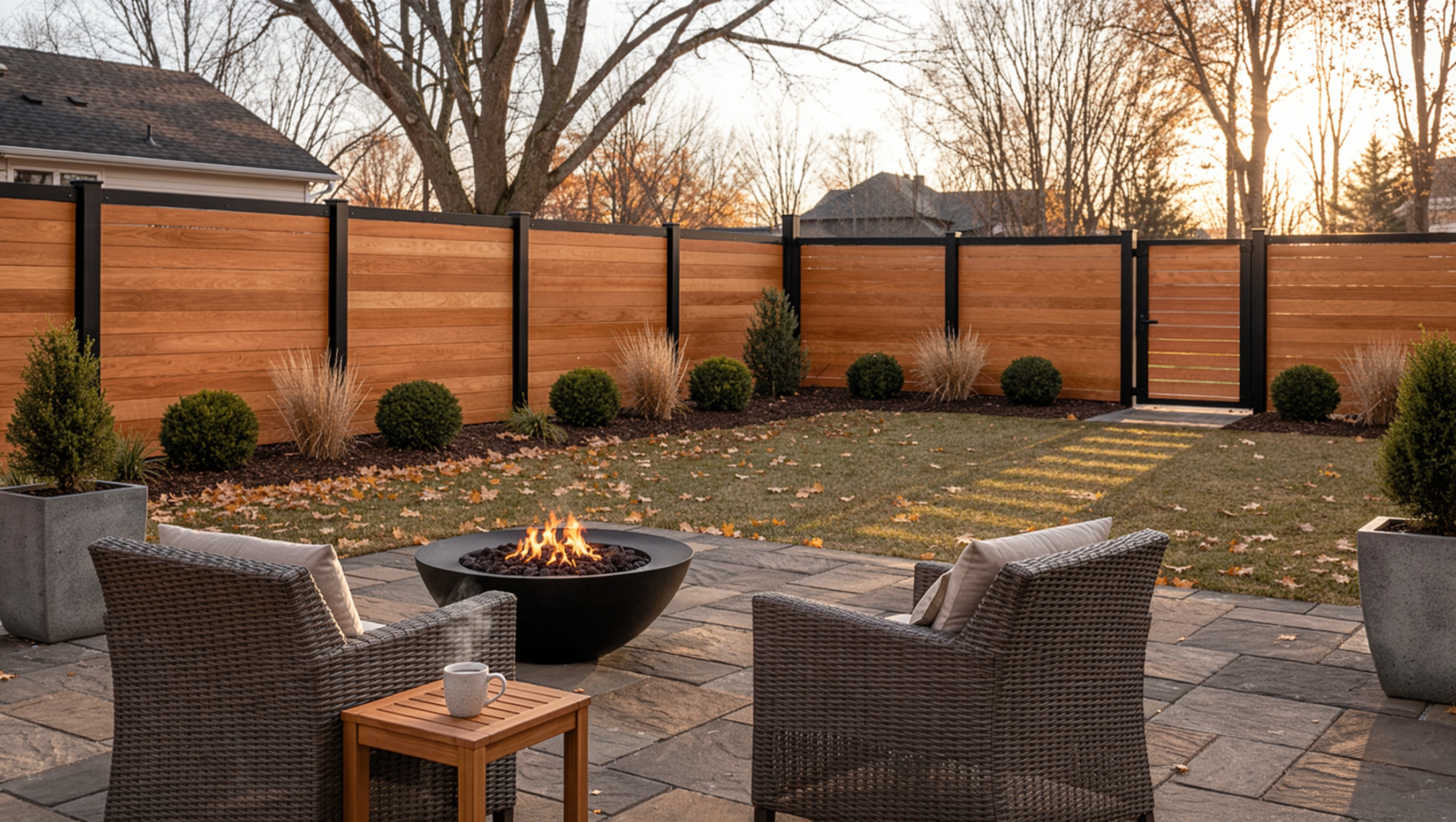
Late fall is a smart time to study how much privacy your Byron backyard actually needs. With leaves down and landscaping thinner, homeowners can see sightlines, exposed areas, drainage problems, and access issues more clearly. Planning now can help you choose the right mix of fence style, height, gates, and materials before winter or next season.
Look at the Yard With Less Landscaping in the Way
Summer landscaping can hide a lot.
Trees, shrubs, and tall plants may provide natural screening during warmer months, but once leaves fall, the yard can feel much more exposed.
Walk around and notice views toward:
Neighboring patios
Driveways
Nearby windows
Side yards
Roads or sidewalks
These fall sightlines can show where privacy fencing would provide the most benefit.
Focus on the Areas That Need Privacy Most
You may not need a solid fence around the entire property.
Targeted privacy can work well around:
Patios
Outdoor dining areas
Hot tubs
Pet zones
Side-yard seating
Using privacy fencing only where it adds value can keep the backyard from feeling too enclosed.
Wood Is a Flexible Privacy Option
Wood works well for homeowners who want a natural appearance and more design flexibility.
Common privacy styles include:
Solid Vertical Wood
Closely spaced boards create straightforward screening.
This style can work well along shared property lines or around patios.
Board-on-Board
Overlapping boards help reduce direct sightlines.
It can be a good choice when stronger visual screening is important.
Horizontal Wood
Horizontal layouts can create a cleaner, more modern appearance.
They work especially well around smaller outdoor living areas or contemporary homes.
Wood offers flexibility, but it generally requires more routine maintenance than vinyl.
Shadowbox Fencing Can Feel More Open
Not every privacy fence needs to be completely solid.
Shadowbox fencing provides partial privacy while allowing more airflow and light through the fence line.
It can be useful when homeowners want:
Separation
A softer visual barrier
Better airflow
Less of a closed-in feeling
Because views may still be possible from certain angles, it is better for moderate privacy than complete screening.
Vinyl Can Provide Consistent Screening
Full-privacy vinyl is another strong option for Byron homeowners.
It provides:
Consistent coverage
A clean appearance
Smooth surfaces
No routine staining or sealing
Vinyl can work well around patios, neighboring properties, and dog areas.
It still needs occasional inspection of posts, rails, gates, and hardware.
Semi-Private Vinyl Can Balance Privacy and Airflow
If you want separation without blocking everything, semi-private vinyl may be worth considering.
It can provide:
Moderate screening
More light
Better airflow
A more open feel
This can be especially useful in smaller yards or along boundaries where full privacy is unnecessary.
Mix Materials Instead of Using One Style Everywhere
A backyard does not have to use the same fence material on every side.
A mixed layout might use:
Wood privacy near a patio
Vinyl along a shared boundary
Chain link around a dog area
Aluminum near landscaping
This can balance privacy, maintenance, appearance, and airflow.
It can also reduce unnecessary solid fencing.
Let Sightlines Help Determine Height
Fence height should be based on what you are trying to block.
Think about:
Neighboring windows
Deck height
Yard elevation
Patio location
Nearby activity
A moderate-height fence may be enough in one area while another section needs additional screening.
Applicable local requirements should be reviewed before final height and placement decisions are made.
Think About Privacy From Inside the House Too
Privacy planning should not stop at the patio.
Stand near the windows and doors you use most often.
Ask:
What can you see from inside?
Which neighboring areas are most noticeable?
Would a short privacy section solve the issue?
This can help you avoid installing more fence than necessary.
Gate Placement Can Affect Privacy
A gate can create a direct opening into an otherwise private backyard.
Before choosing the location, think about what becomes visible when it opens.
A gate near the driveway may be convenient, but it could expose:
Patio seating
Pet areas
Outdoor dining space
Gate placement should support daily movement without weakening the privacy plan.
Keep Equipment Access in Mind
If a mower, trailer, or other equipment needs backyard access, plan for it before installation.
Measure items such as:
Riding mowers
Garden carts
Utility trailers
Landscaping equipment
A wider equipment gate may be useful, but it needs stronger support and enough room to open.
Plan Around Dogs
Dogs can influence both material and layout.
Solid wood or vinyl may help reduce visual distractions from:
Other dogs
Pedestrians
Wildlife
Passing vehicles
Pet owners should also think about:
Fence height
Bottom gaps
Gate latches
Digging behavior
Privacy and containment should be planned together.
Check the Ground Before Snow Covers It
Late fall is a good time to inspect the proposed fence line.
Look for:
Erosion
Soft soil
Standing water
Low spots
Downspout runoff
Uneven grade
These conditions can affect post stability and bottom clearance.
Take photos of problem areas before snow makes them harder to evaluate.
Drainage Should Be Part of the Privacy Plan
Solid fencing can change how leaves and debris collect along the property line.
Watch how water already moves through the yard.
If runoff regularly crosses the proposed fence line, that should be considered before installation.
Poor drainage can contribute to:
Post movement
Soil erosion
Gate alignment problems
Gaps under the fence
A good privacy design should work with the yard, not against it.
Slopes Can Change the Final Look
Uneven ground can affect both appearance and privacy.
Depending on the fence system, sections may need to be stepped or installed to follow the grade more closely.
Slopes can also create:
Bottom gaps
Difficult gate locations
Uneven sightlines
These details matter even more when pets use the yard.
Think About Wind Exposure
Solid privacy fences catch more wind than open styles.
Pay attention to:
Long exposed property lines
Corners
End posts
Wide gates
If one side of the yard is especially open, full privacy may not be necessary along the entire run.
A combination of solid and semi-private fencing may provide a better balance.
Use Landscaping to Soften Solid Fence Runs
Landscaping can work with the fence instead of competing with it.
Leave enough space for:
Shrubs
Ornamental grasses
Garden beds
Small trees
Plants can soften the look of long privacy sections and add another layer of screening.
Just leave enough room for future fence inspection and maintenance.
Evaluate the Existing Fence Before Replacing It
If there is already a fence on the property, use it as a reference.
Ask:
Which sections provide enough privacy?
Where are the weak sightlines?
Are the gates in useful locations?
Are there drainage problems?
Does the layout waste usable yard space?
A replacement project is a chance to improve the design rather than copy it exactly.
Use Winter to Refine the Final Plan
Even if installation happens later, fall and winter can be useful planning time.
Make notes about:
Privacy zones
Preferred materials
Fence height
Gate locations
Pet needs
Drainage concerns
Landscaping
This can make future estimates more focused and help prevent rushed decisions.
Request a Free Privacy Fence Estimate
Arrow Fence helps Byron homeowners plan privacy fencing around patios, pets, gates, landscaping, drainage, slopes, and everyday backyard use.
Whether you are considering wood, vinyl, semi-private fencing, mixed materials, replacement, or a new installation, Arrow Fence can help you review practical options for your property.
Contact Arrow Fence at arrowfencerockford.com to request a free estimate for your privacy fence project.
