
Privacy Fence Ideas in Lake Carroll, IL: Planning a Better Backyard Before Winter
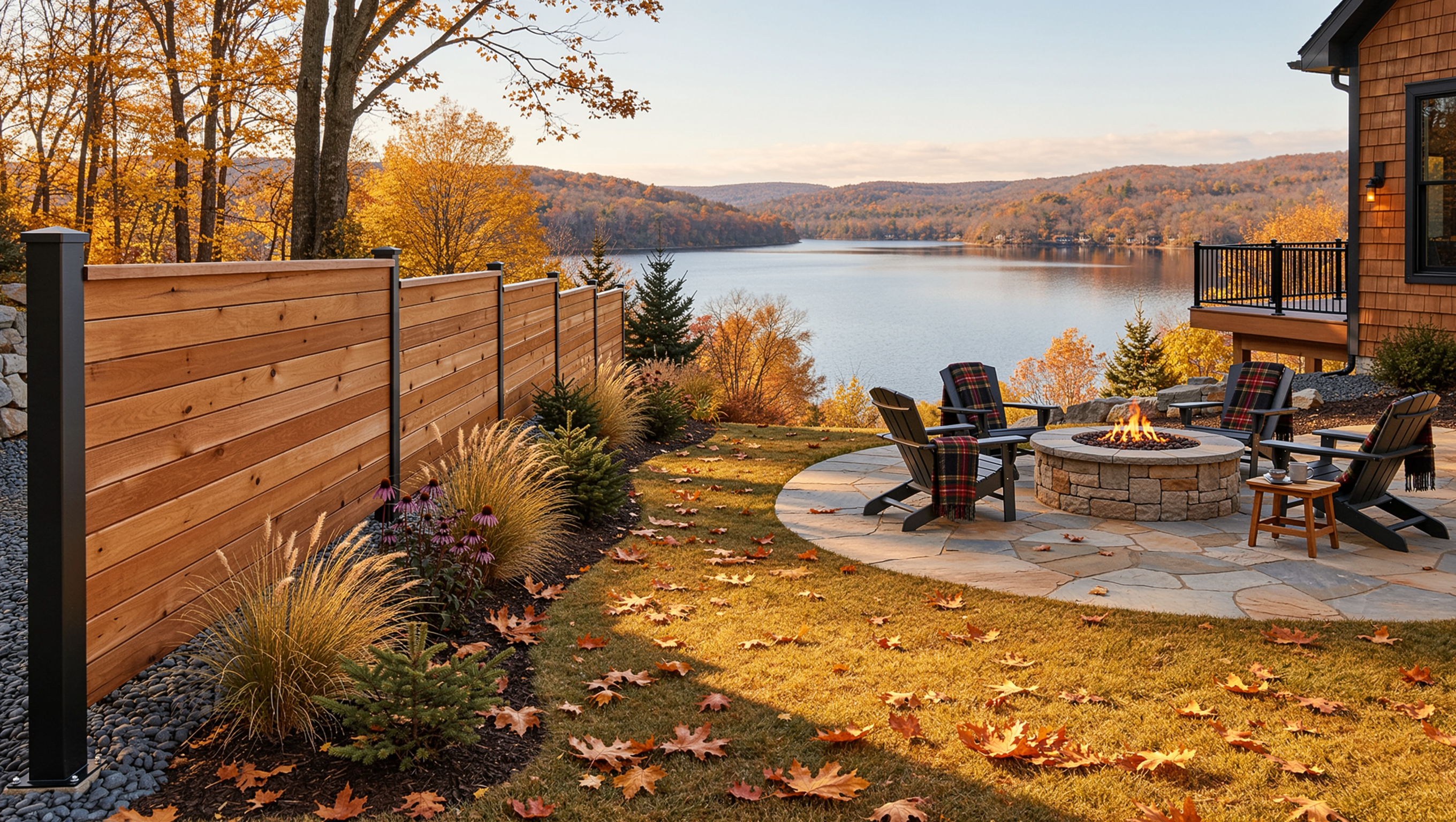
Planning a privacy fence before winter gives Lake Carroll homeowners an opportunity to evaluate seasonal sightlines, sloped terrain, wind exposure, and outdoor living spaces. Wood, vinyl, and semi-private fencing can provide effective screening while preserving desirable landscape views. The best layout balances privacy, property access, maintenance, and the natural features of the yard.
Take Advantage of Late-Fall Sightlines
During summer, trees and shrubs can provide substantial natural privacy. Once leaves fall, neighboring homes, driveways, and outdoor spaces may become more visible.
Walk around your backyard and observe the areas where privacy changes throughout the year.
Pay attention to views from patios, decks, windows, and outdoor seating areas.
These seasonal changes can help identify where permanent privacy fencing would make the biggest difference.
Balance Backyard Privacy With Scenic Views
Lake Carroll homeowners may want additional privacy without losing views of the surrounding landscape.
Instead of enclosing the entire backyard with solid fencing, consider screening specific areas where privacy is most important.
These may include:
Outdoor dining spaces
Neighbor-facing patios
Hot tubs
Side-yard seating areas
Pet enclosures
Keeping other boundaries more open can preserve scenic views while making frequently used outdoor spaces feel more comfortable.
Wood Privacy Fencing for a Natural Appearance
Wood fencing can complement wooded properties, traditional homes, and natural landscaping.
Several styles offer different levels of privacy and visual character.
Solid Vertical Wood
Closely spaced vertical boards provide substantial screening and a traditional appearance.
This style works well along shared property boundaries or around outdoor living areas.
Board-on-Board Wood
Overlapping boards help reduce direct sightlines, even as the wood expands and contracts with changing moisture conditions.
It can be particularly useful where consistent privacy is important.
Horizontal Wood
Horizontal boards offer a contemporary appearance that can complement modern patios and backyard designs.
Wood provides considerable design flexibility but generally requires periodic staining, sealing, and structural inspections.
Vinyl Privacy Fencing for Easier Maintenance
Vinyl is worth considering when homeowners want consistent screening without the routine surface maintenance associated with wood.
Full-privacy vinyl panels can provide a clean, uniform appearance around patios, side yards, and neighboring boundaries.
Benefits include:
Consistent visual screening
No routine staining or sealing
Relatively simple cleaning
Multiple style and color options
Although vinyl requires less routine surface care, homeowners should still inspect posts, rails, gates, and hardware periodically.
Shadowbox Fencing for Partial Privacy
Shadowbox fencing uses alternating wood boards on opposite sides of the supporting rails.
This arrangement creates separation while allowing some airflow through the fence.
It can be an attractive option for homeowners who want a softer boundary rather than a completely solid wall.
However, shadowbox fencing does not block every viewing angle. Consider it for areas where moderate privacy is sufficient.
Semi-Private Vinyl for a More Open Backyard
Semi-private vinyl fencing offers another way to balance screening with openness.
Depending on the design, it can allow additional light and airflow while maintaining separation between outdoor spaces.
This may work particularly well around landscaped areas or property boundaries where complete visual screening is unnecessary.
Combining full-privacy and semi-private sections can also prevent a backyard from feeling overly enclosed.
Combine Privacy Fencing With Open Materials
Using different fencing styles throughout the property can create a more functional layout.
For example, a Lake Carroll backyard could feature solid wood or vinyl around the patio and ornamental aluminum along a boundary with desirable views.
Chain link may also be appropriate for a dedicated pet enclosure where visual screening is less important.
The objective is to choose each fence section according to its purpose instead of expecting one material to meet every need.
Plan Around Changing Yard Elevations
Sloped properties require careful privacy planning because elevation changes can affect both sightlines and fence alignment.
A fence that provides sufficient screening on level ground may offer less privacy when neighboring properties sit at a higher elevation.
Depending on the selected fence system, sections may need to be stepped or installed to follow the grade more closely.
Review potential openings beneath the fence, particularly around gates and areas intended for pets.
Choose Fence Height Based on Actual Sightlines
A taller fence is not automatically the best privacy solution.
Consider the height of nearby decks, windows, neighboring yards, and outdoor seating areas.
Sometimes a shorter fence positioned closer to a patio provides more useful screening than a taller fence installed farther away.
Homeowners should confirm applicable local and community association requirements before finalizing fence height, materials, and placement.
Preserve Access Without Compromising Privacy
Gate placement can influence how private and convenient the backyard feels.
A gate positioned directly across from a seating area may create an unwanted sightline whenever it opens.
Consider locating entrances where they provide convenient access without exposing the most private parts of the yard.
Also account for equipment access, gate swing, and frequently used walking routes.
If lawn equipment or utility trailers need access, measure them before choosing the gate width.
Consider Winter Wind Exposure
Solid privacy fences experience greater wind resistance than open fencing.
Properties with exposed lawns or limited natural windbreaks may require additional attention to structural support.
Important areas include:
Long, uninterrupted privacy sections
Corners and end posts
Wide gate openings
Where complete screening is unnecessary, semi-private or open fencing may help reduce wind resistance.
Proper post installation remains essential regardless of the selected material.
Use Existing Landscaping to Complement the Fence
Fencing and landscaping can work together to create a more natural privacy design.
Evergreen shrubs may provide additional year-round screening, while ornamental grasses and garden beds can soften the appearance of solid fence sections.
Leave enough room between vegetation and the fence for cleaning, inspection, and repairs.
Avoid placing posts where installation could unnecessarily disturb major tree roots.
A thoughtful layout can preserve established landscaping while improving backyard privacy.
Evaluate Drainage Before the Ground Freezes
Late-fall rain can reveal drainage conditions that may affect future fence stability.
Inspect the proposed fence line for standing water, erosion, soft soil, and concentrated runoff from higher areas.
Poor drainage can weaken soil support and contribute to post movement or gate misalignment.
Solid fencing should also be positioned and maintained so accumulated leaves and debris do not interfere with natural water flow.
Address significant drainage concerns before installing new posts.
Create a Private and Secure Space for Dogs
Solid privacy fencing may help reduce visual distractions for dogs that react to wildlife, neighboring pets, or passing pedestrians.
However, effective pet containment also requires appropriate fence height, secure gates, and manageable bottom clearance.
Pay particular attention to sloped sections and areas where erosion could create escape gaps.
During winter, avoid piling snow directly against the fence where an athletic dog could use it as a jumping platform.
Review Your Existing Fence Before Replacing It
If an older fence already surrounds the property, determine which parts of its layout are worth keeping.
Consider whether the existing fence provides enough privacy, whether gates are conveniently located, and whether recurring repairs are affecting certain sections.
Widespread rot, unstable posts, damaged panels, and persistent alignment problems may indicate that replacement deserves consideration.
A new privacy fence offers an opportunity to improve the backyard rather than simply duplicate an outdated layout.
Decide Whether to Install Before Winter or Plan for Spring
Late-fall installation may still be possible when weather, soil conditions, and property access remain suitable.
However, homeowners should avoid rushing installation when the ground becomes frozen or heavily saturated.
Even if installation needs to wait, planning can continue throughout winter.
Finalize the preferred materials, screening areas, gate locations, property boundaries, and applicable approvals so the project is better organized when favorable conditions return.
Build a Better Backyard With Arrow Fence
A well-planned privacy fence should improve outdoor comfort without sacrificing convenient access, desirable views, or the natural character of your property.
Arrow Fence helps homeowners in Lake Carroll and surrounding communities explore wood, vinyl, chain link, and aluminum fencing options that suit their privacy needs and backyard layouts.
Whether you are preparing for a late-fall installation or planning a project for next spring, visit arrowfencerockford.com or call (815) 962-7769 to request a free privacy fence estimate.
