
Privacy Fence Ideas in Rockford, IL: Planning a Better Backyard for Next Season
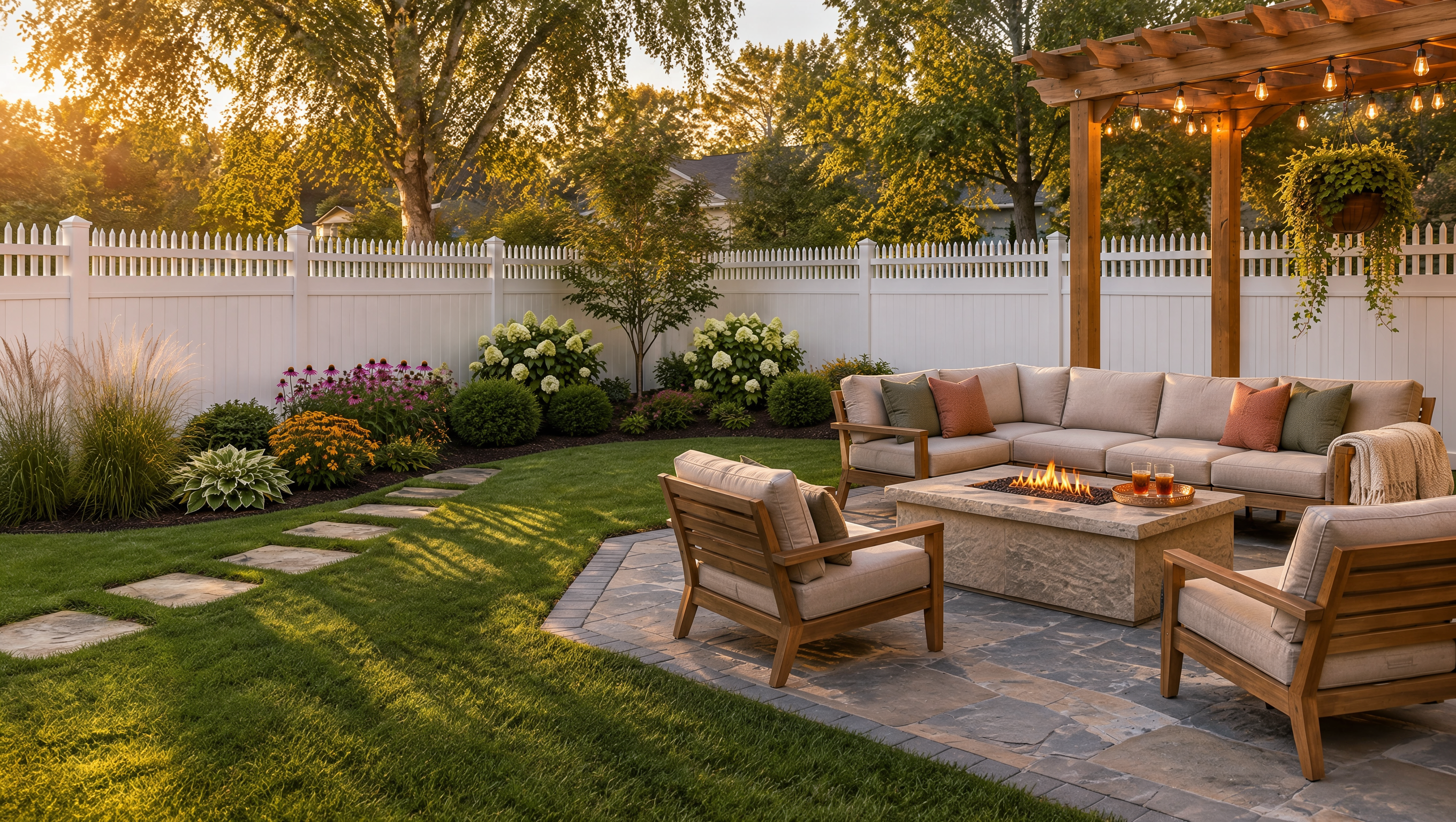
Planning a privacy fence now can help Rockford homeowners make smarter choices before next season. Instead of focusing only on fence height, think about where privacy is actually needed, how the yard is used, which material fits your maintenance preferences, and where gates, pets, landscaping, slopes, and drainage affect the layout.
Start With the Parts of the Yard You Use Most
A better backyard does not always require solid privacy fencing around every boundary.
Start by identifying the areas where screening would improve everyday use.
That may include:
A patio or deck
Outdoor dining space
A neighbor-facing side
A pet area
A side-yard walkway
Planning around these activity zones can create useful privacy without making the entire yard feel closed in.
Use Sightlines to Guide the Layout
Before choosing fence height, look at what you are actually trying to block.
Check views from:
Patio seating
Backyard doors
Decks
Grilling areas
Frequently used windows
A fence that works from one part of the yard may not provide the same privacy somewhere else.
For next-season planning, take time now to identify the most noticeable sightlines while the yard is still easy to evaluate.
Full-Privacy Wood for a Natural Look
Wood remains a flexible option for homeowners who want strong screening with a more natural appearance.
Several styles can work well.
Solid Vertical
Closely spaced vertical boards create straightforward privacy and work with many home styles.
Board-on-Board
Overlapping boards help reduce sightlines as wood naturally expands and contracts.
Horizontal Wood
Horizontal fencing can create a cleaner, more contemporary look, especially around patios and outdoor living areas.
Wood can also be adapted more easily around unusual layouts or targeted privacy zones.
Shadowbox Wood for a More Open Feel
Not every privacy fence needs to be completely solid.
Shadowbox fencing alternates boards on opposite sides of the rails, creating partial screening while allowing more airflow.
This can be useful when homeowners want:
Separation
More visual depth
Better airflow
Less of a solid-wall feeling
It does not provide complete privacy from every angle, so it works best where partial screening is enough.
Vinyl for Consistent Privacy
Vinyl can be a strong choice for homeowners who want clean, uniform screening with less routine surface maintenance than wood.
Full-privacy vinyl works well around:
Patios
Backyards
Side yards
Pet areas
It does not require regular staining or sealing.
For homeowners planning a backyard upgrade next season, vinyl can be worth considering when reducing maintenance is a priority.
Semi-Private Vinyl for More Light and Airflow
Semi-private vinyl can provide separation while keeping the yard from feeling overly enclosed.
It may work well along boundaries where homeowners want:
Some privacy
More airflow
More light
A lighter overall appearance
This can be especially useful in smaller yards or areas where full screening is unnecessary.
Consider Privacy Only Where It Adds Value
One of the easiest ways to improve backyard design is to stop treating every side of the property the same.
For example:
Use solid fencing near the patio
Keep the rear boundary more open
Add privacy beside a neighboring driveway
Use decorative or open fencing near landscaping
This creates a more intentional layout and may reduce the amount of solid fencing needed.
Mixed Materials Can Create a Better Balance
A backyard can use more than one fence material.
A Rockford property might combine:
Wood privacy near an outdoor living area
Vinyl along a shared boundary
Chain link around a larger dog area
Aluminum near a garden
Mixed layouts can balance privacy, appearance, airflow, maintenance, and pet needs.
They can also prevent the yard from feeling too enclosed.
Think About Fence Height From Different Angles
Fence height should be chosen based on the property, not automatically set as high as possible.
Consider:
Neighboring windows
Elevation changes
Deck height
Patio location
Pet behavior
A lower fence may provide enough privacy in one area while a taller section may make more sense elsewhere.
Applicable local requirements should be reviewed before finalizing height and placement.
Plan Gates Around Daily Movement
A privacy fence should improve the yard without making access inconvenient.
Think about normal routes between:
Driveway and backyard
House and patio
Side yard and storage area
Backyard and garden
Gate locations should be decided early because they affect both privacy and function.
A poorly placed gate can create an unwanted direct view into a private area or make everyday movement less convenient.
Add a Wider Gate Only Where Needed
If equipment needs backyard access, measure it before choosing the opening.
Consider:
Riding mowers
Trailers
Garden carts
Landscaping equipment
A separate wider gate may make sense for occasional use.
Wide gates need stronger support, so their placement should be part of the original plan.
Plan Privacy Around Dogs
Some dogs benefit from visual screening.
Solid wood or vinyl can reduce views of:
Other dogs
Pedestrians
Wildlife
Passing vehicles
If your dog is calm around outside activity, an open fence may still work well.
Regardless of material, also plan for:
Fence height
Ground gaps
Gate security
Digging behavior
Privacy alone does not make a fence secure.
Do Not Ignore Slopes
A sloped yard can affect both privacy and pet containment.
Depending on the fence system, sections may need to be stepped or installed to follow the grade more closely.
Pay particular attention near:
Gates
Corners
Grade changes
Uneven ground can create openings underneath the fence that may not be obvious from a distance.
Watch How Water Moves Through the Yard
Drainage should be part of next-season fence planning.
After rain or snowmelt, look for:
Standing water
Erosion
Soft soil
Downspout runoff
Low areas
Poor drainage can contribute to post movement and future gate problems.
The fence layout should work with existing water flow instead of trapping runoff.
Use Landscaping as Part of the Privacy Plan
Privacy does not have to come from fencing alone.
Existing or future landscaping can help soften long fence runs and add another layer of screening.
Consider leaving room for:
Shrubs
Ornamental grasses
Garden beds
Small trees
Avoid placing plants so close that future fence maintenance becomes difficult.
Combining fencing and landscaping can create a more natural backyard boundary.
Think About Wind Exposure
Solid privacy fencing catches more wind than open styles.
This is especially important along:
Long exposed property lines
Corners
End posts
Wide gates
If full privacy is only needed in one area, using a more open design elsewhere can reduce wind resistance and make the backyard feel less closed in.
Consider Maintenance Before Choosing
A privacy fence should fit your lifestyle as well as your yard.
Wood
Offers natural character and more customization, but generally needs more routine inspection and surface maintenance.
Vinyl
Provides consistent screening with less routine surface upkeep.
Mixed Layouts
Can reduce the amount of high-maintenance material while still providing privacy where it matters most.
Planning for maintenance now can help avoid choosing a fence that becomes more work than expected later.
Use Winter to Refine the Plan
If installation is planned for next season, winter can be used to finalize:
Material
Height
Gate locations
Privacy zones
Pet requirements
Existing fence removal
Take photos now of areas that may be harder to evaluate once snow covers the yard.
This can make spring conversations with a contractor much more focused.
Build the Backyard Around How You Actually Live
A good privacy fence should do more than block views.
It should support how the yard is used.
Think about:
Outdoor meals
Pets
Gardening
Entertaining
Equipment access
Quiet seating areas
When the fence is planned around these activities, the backyard can feel more comfortable and functional instead of simply enclosed.
Request a Free Privacy Fence Estimate
Arrow Fence helps Rockford homeowners plan privacy fencing for patios, pets, side yards, landscaping, and backyard living spaces.
Whether you are considering wood, vinyl, semi-private fencing, mixed materials, replacement, or a new installation next season, Arrow Fence can help you review practical options for your property.
Contact Arrow Fence at arrowfencerockford.com to request a free estimate for your privacy fence project.
