
Privacy Fence Ideas in Turtle, WI for Open Properties
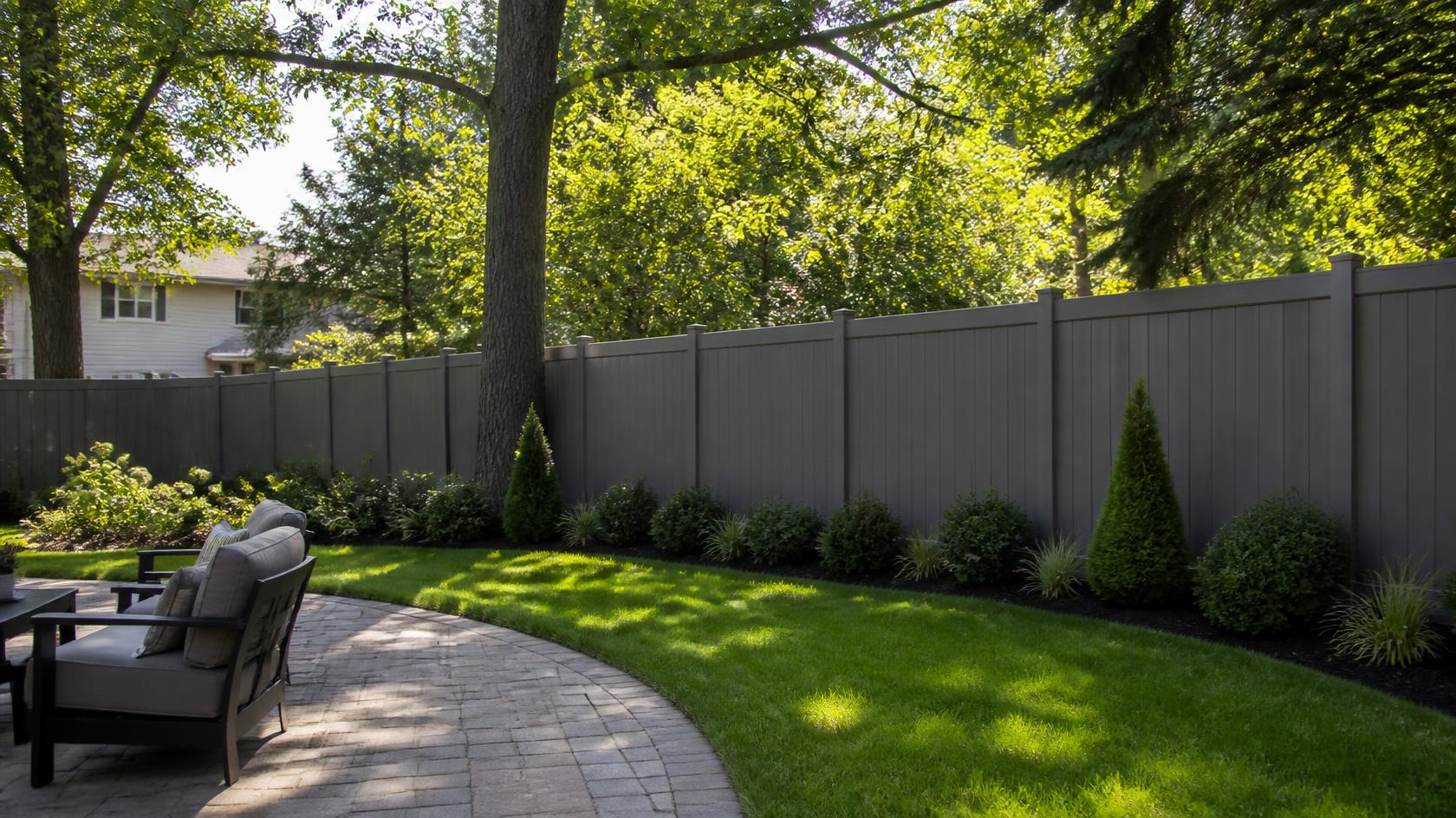
Open properties in Turtle can benefit from privacy fencing that protects the areas closest to the home without unnecessarily blocking wide views or enclosing the entire lot. Wood and vinyl work well for stronger screening, while semi-private designs and mixed-material layouts can provide a better balance of privacy, airflow, pet security, and access across larger yards.
Privacy Looks Different on an Open Property
Privacy fencing on a larger or more open property requires a different approach than fencing around a compact backyard.
Homeowners may have more distance between neighboring houses, but they may still want screening around patios, decks, outdoor gathering areas, or portions of the property that face a road.
Instead of automatically fencing every boundary with tall solid panels, it can be more practical to focus privacy where it will make the biggest difference.
Consider:
Views from nearby roads
Neighboring homes or buildings
Patio and deck locations
Outdoor dining or seating areas
Pets
Gardens
Driveways
Equipment access
Wind exposure
Natural views worth preserving
A thoughtful layout can provide privacy without making an open property feel unnecessarily closed in.
Use Targeted Privacy Near the House
For many open properties, the most useful privacy fencing is located close to the home.
Solid panels may be placed around:
Patios
Decks
Hot tubs
Fire pits
Outdoor kitchens
Backyard seating areas
This creates a more sheltered outdoor living zone while leaving distant portions of the property open.
Targeted privacy can also reduce the amount of material and maintenance compared with installing solid fencing around a long perimeter.
Solid Wood Fencing for Natural Screening
Wood is a strong choice for open properties because it provides privacy while blending naturally with lawns, trees, gardens, sheds, and rural-style landscaping.
Traditional vertical-board fencing can screen:
Road-facing areas
Neighboring properties
Backyard gathering spaces
Pet areas
Utility spaces
Homeowners can customize wood through different stains, heights, board patterns, and decorative details.
Natural and semi-transparent stains can preserve visible wood grain, while darker finishes can create stronger contrast around patios or landscaping.
The main consideration is maintenance. Wood should be inspected periodically and stained or sealed when its protective finish begins to wear.
Board-on-Board Fencing for Stronger Privacy
Board-on-board fencing uses overlapping vertical boards rather than placing every board along the same plane.
This can provide more consistent screening because wood naturally expands and contracts as moisture and temperatures change.
The overlapping design helps reduce direct sightlines that may develop between standard boards.
Board-on-board fencing can work especially well near:
Outdoor living areas
Shared property boundaries
Road-facing sections
Neighboring homes
Pet enclosures
Because it uses more material than a basic vertical fence, homeowners may choose it only in areas where strong privacy is most important.
Shadowbox Fencing for Open, Breezy Yards
Open Turtle properties may receive more wind exposure than tightly developed residential lots.
Shadowbox fencing can be useful when homeowners want visual separation without creating a completely solid barrier.
Boards alternate on opposite sides of the rails, allowing more air to pass through.
This design provides:
Partial privacy
More airflow
A finished look from both sides
A less enclosed appearance
Shadowbox fencing is not fully private when viewed from certain angles, but it can work well where moderate screening is enough.
Horizontal Wood Privacy Screens
Horizontal wood fencing can give outdoor living spaces a cleaner, more contemporary appearance.
Rather than using it along an entire property boundary, homeowners can install horizontal screens beside:
Patios
Decks
Hot tubs
Fire pits
Outdoor dining spaces
This style can help define an outdoor room without hiding the broader landscape.
Long horizontal boards need strong framing and sufficient support to reduce bowing or sagging over time.
Vinyl Privacy Fencing for Easier Maintenance
Vinyl is a practical option for homeowners who want reliable privacy with less routine upkeep than wood.
It does not require regular painting, staining, or sealing.
Full-privacy vinyl can work well near:
Patios
Pools
Pet areas
Outdoor seating
Road-facing sections
Neighboring properties
Routine care usually involves occasional washing and inspections of posts, rails, gates, and hardware.
Because open properties can experience strong winds, proper post installation is particularly important with solid vinyl panels.
Semi-Private Vinyl for More Airflow
Semi-private vinyl can provide useful screening while maintaining more airflow and light.
Small openings between sections can help the fence feel more appropriate for a spacious property.
Semi-private fencing may work well:
Along side yards
Around garden areas
Near patios
Along longer boundaries
In wind-exposed sections
This style can also be useful where homeowners want separation without completely blocking a view.
Pet owners should review opening sizes if smaller animals will use the fenced area.
Preserve Important Views With Mixed Fencing
One advantage of a larger property is the ability to use different fence materials for different purposes.
For example:
Install wood privacy fencing near the house.
Use vinyl around a patio or pool.
Add chain link around a dog area.
Use aluminum near landscaping.
Keep distant scenic areas open.
This prevents homeowners from paying for or maintaining solid privacy fencing where it is not necessary.
A mixed layout can also make the property feel more natural and less confined.
Chain Link for Distant Boundaries
Chain link may be practical on portions of an open property where containment matters more than privacy.
It can be useful for:
Dog areas
Larger side yards
Garden protection
Utility spaces
Long property boundaries
Black vinyl-coated chain link can visually recede into grass and landscaping.
If some screening is needed, privacy slats or screens can be added to selected sections.
Homeowners should remember that added screening increases wind resistance and places more pressure on posts and framework.
Keep Scenic Areas Open With Aluminum
Aluminum fencing can define an area while maintaining wide views.
It may work well near:
Landscaped spaces
Gardens
Pools
Walkways
Property entrances
Scenic sections of the yard
Aluminum resists rust and generally requires limited routine maintenance.
Its open picket design allows wind to pass through and prevents larger properties from feeling unnecessarily enclosed.
For pets, picket spacing and ground clearance should be checked carefully.
Privacy Fencing for Dogs on Open Properties
Large open yards can be appealing for dogs, but fencing the entire property may not always be necessary.
A smaller secure area near the home can provide practical pet containment.
Solid wood or vinyl can be useful for dogs that react to:
Wildlife
Vehicles
Neighboring animals
Pedestrians
Road activity
A pet-friendly fence should also include:
Appropriate height
Secure gate latches
Minimal ground gaps
Stable posts
Dig-resistant features when needed
For large properties, a dedicated enclosure can also be easier to inspect and maintain than a very long perimeter fence.
Plan for Wildlife and Outside Activity
Open properties may have more wildlife movement than suburban yards.
Dogs may react to deer, rabbits, birds, or other animals visible beyond the fence.
Solid privacy sections can reduce visual stimulation near the house while still allowing open views elsewhere.
Homeowners should also avoid placing outdoor furniture, storage bins, or other objects where pets could use them as climbing aids near the fence.
Wide Gates Are Important on Larger Properties
Open properties often need more access than compact residential yards.
In addition to a standard walk gate, homeowners may need wider openings for:
Riding mowers
Trailers
Utility vehicles
Landscaping equipment
Construction materials
Future sheds or outdoor projects
Measure the widest equipment that regularly enters the yard before choosing a gate size.
Wide gates place additional stress on posts and hardware, so strong support is important.
Keep Driveway Sightlines Clear
Tall solid fencing should be positioned carefully near driveways.
Privacy panels installed too close to an entrance can reduce visibility of approaching vehicles, bicycles, or pedestrians.
Open fencing may be more appropriate near driveway sections where visibility matters.
Before installation, homeowners should also verify:
Property boundaries
Easements
Underground utilities
Applicable local fence requirements
Driveway clearance
Planning these details early can help avoid placement problems later.
Account for Slopes and Uneven Ground
Open properties may include more noticeable changes in elevation.
Depending on the fence style, sections may be stepped or designed to follow the grade more closely.
Uneven terrain can create:
Large gaps beneath panels
Difficult gate locations
Pet escape points
Irregular fence lines
Walking the proposed fence route before installation can help identify these concerns early.
Protect Drainage Across the Property
Larger yards often have natural drainage routes that should remain functional.
Heavy rain or snowmelt can:
Wash soil away from posts
Create gaps beneath fencing
Expose footings
Affect gate alignment
Concentrate water in low areas
Fence placement should avoid unnecessarily restricting runoff.
Pet owners should inspect low sections periodically because erosion may create openings beneath the fence.
Consider Maintenance Before Choosing Long Fence Runs
Maintenance requirements become more noticeable when a property has hundreds of feet of fencing.
Wood offers a natural look, but a long wood perimeter also means more surface area to inspect and refinish.
Vinyl, chain link, and aluminum generally require less routine maintenance.
For that reason, some homeowners may choose:
Wood near the house
Vinyl for key privacy areas
Chain link along longer boundaries
Aluminum in decorative open areas
Matching the material to the location can make long-term maintenance easier.
Prepare Privacy Fencing for Turtle Weather
Fences in Turtle need to handle southern Wisconsin wind, rain, snow, ice, storms, and repeated freeze-thaw cycles.
Open properties can expose fencing to stronger wind because there may be fewer nearby buildings or trees to provide shelter.
Homeowners should periodically:
Check posts after storms
Inspect rails and panels
Test gates and latches
Look for erosion
Check ground gaps
Trim nearby branches
Maintain wood finishes
Clean vinyl when necessary
Inspect chain link tension
Clear heavy snow carefully
Solid privacy sections deserve particular attention after severe wind or storms.
Repair or Replace an Existing Fence?
Minor fence problems can often be repaired without replacing the entire system.
Repairs may include:
Replacing damaged wood boards
Repairing rails
Adjusting gates
Stabilizing individual posts
Fixing chain link mesh
Replacing damaged hardware
Replacement may be more practical when multiple posts are failing, several sections are damaged, or an older fence layout no longer fits the way the property is used.
A replacement can also provide an opportunity to reduce unnecessary fence runs and move privacy closer to the areas where it is actually needed.
Request a Free Privacy Fence Estimate
Arrow Fence helps Turtle homeowners plan privacy fencing for open yards, outdoor living areas, pets, larger properties, and everyday access.
Whether you are considering wood, vinyl, chain link, aluminum, fence repair, replacement, or new gates, Arrow Fence can help you compare practical options for your property.
Contact Arrow Fence at arrowfencerockford.com to request a free estimate for your privacy fence project.
