
Privacy Fence Installation in Beloit, WI: What to Consider Before You Build
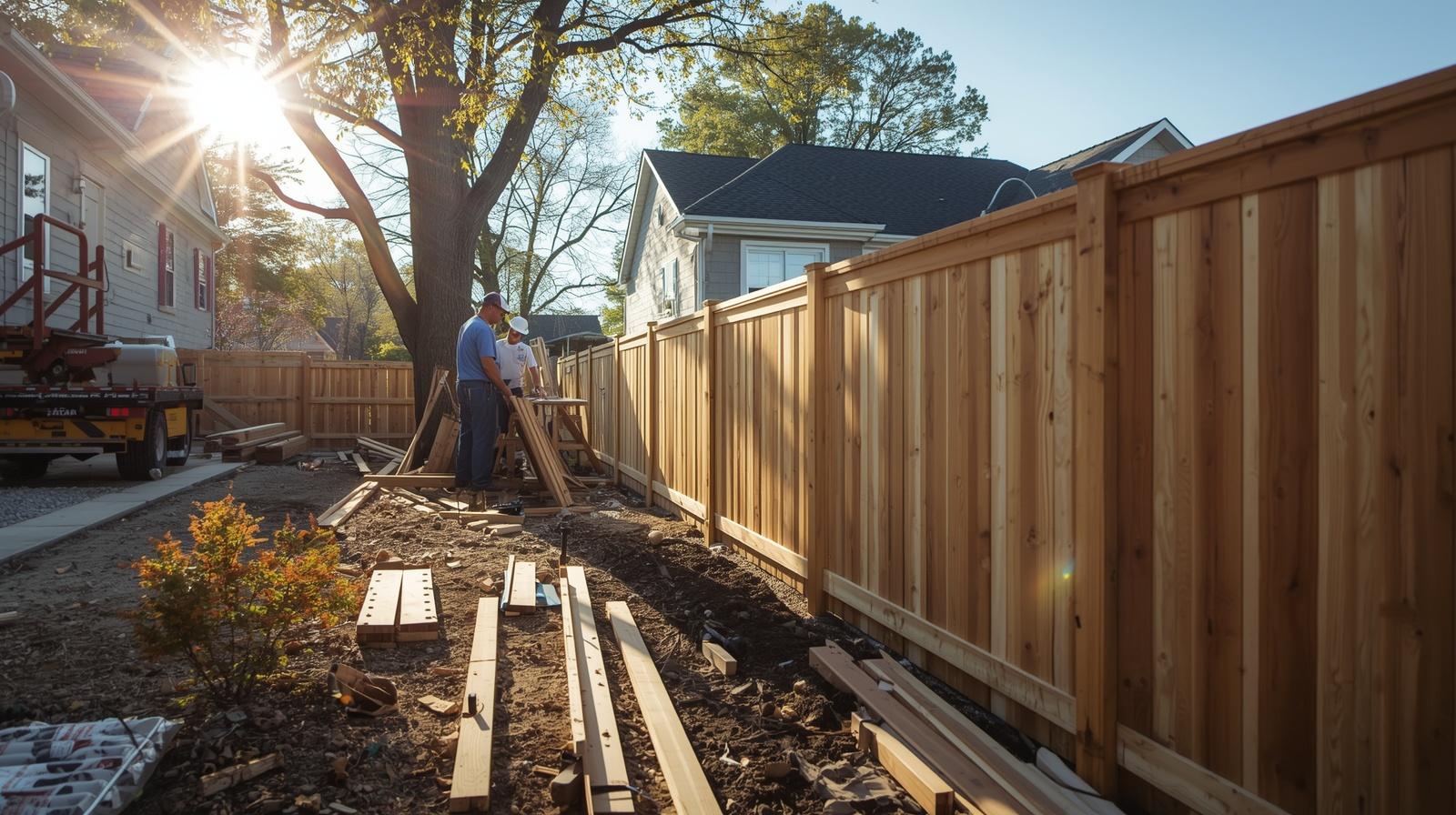
A privacy fence is one of the most meaningful upgrades you can make to your home — but the decisions you make before a single post goes in the ground determine how well it performs for the next 20 to 30 years. This guide helps Beloit homeowners think through the key considerations so they can build with confidence.
Why a Privacy Fence Is Worth Getting Right
A privacy fence isn't just a structure — it changes how you experience your own property. It's the difference between a backyard you use and one you don't, between letting the dog out freely and watching the clock, between hosting a gathering and feeling like you're on display.
In Beloit and across southern Wisconsin, homeowners deal with a climate that genuinely tests outdoor structures. Cold winters, heavy snowfall, ice storms, spring flooding, and relentless freeze-thaw cycles all have something to say about how a fence is built and what materials will last. Getting the planning right before installation day means avoiding expensive corrections later and ending up with a fence that earns its place on your property for decades.
Here's what to think through before you build.
Consider #1: Know Your Property Lines Before You Commit
This is the single most important step before any fence goes in the ground — and the one most commonly skipped. Installing a fence even a few inches over your property line can create legal disputes with neighbors, require you to relocate the fence at your own expense, or complicate a future home sale.
Don't assume your property ends where your lawn does, where an old fence was, or where you've always thought the boundary was. Previous fences are frequently misplaced. Landscaping doesn't always follow lot lines.
How to confirm your boundaries:
Review your property plat or survey documents — these are typically included in your closing paperwork from when you purchased the home.
Contact Rock County for recorded survey information if you don't have your own documents.
Hire a licensed surveyor if there's any ambiguity, dispute with a neighbor, or if the lot shape is irregular.
Once you know exactly where your property ends, you can decide whether to fence right to the line or set the fence slightly inside it. Setting it inside gives you access to both sides for maintenance but reduces usable yard space. Right on the line maximizes the enclosed area but means one side of the fence may be accessible only from a neighbor's yard.
Consider #2: Understand Beloit's Local Permit and Zoning Requirements
Wisconsin municipalities have their own rules around residential fencing, and Beloit is no exception. Before you commit to a height, style, or placement, check local ordinances and — if applicable — your homeowner's association guidelines.
Common things local regulations address:
Maximum fence height. Many municipalities limit residential fences to 6 feet in backyard areas and 3 to 4 feet in front yard setback zones. Corner lots often have additional restrictions related to sightlines at intersections.
Setback requirements. Some ordinances require fences to be placed a certain distance from the sidewalk, street, or neighboring structures.
Permit requirements. Beloit may require a permit depending on fence height, location, and property type. Your fence contractor should be familiar with current local requirements and able to help you navigate the process.
HOA rules. If your neighborhood has an HOA, check approved materials, colors, and height restrictions before choosing a style. Getting sign-off before installation is always easier than dealing with a removal request afterward.
A reputable local fence company that regularly works in the Beloit area will already know most of these requirements and help you stay compliant from the start.
Consider #3: Call 811 Before Any Digging Begins
In Wisconsin, calling 811 before digging is required by law — and for good reason. Underground utilities including gas, electric, water, and telecommunications lines run through residential properties in locations that aren't always obvious from the surface.
Calling 811 triggers the free utility marking service, which sends locators to mark the position of underground lines on your property before any digging begins. This typically takes two to three business days, so plan accordingly when scheduling your installation.
A professional fence contractor will coordinate this step as part of the project. If a company proposes starting without addressing it, that's a meaningful warning sign about how they approach the rest of the job.
Consider #4: Choose the Right Height for Your Goals
"Privacy fence" typically means 6 feet tall — that's the standard residential height, and it works well for the majority of yards. But taller or shorter may be appropriate depending on your specific situation.
When 6 feet is enough: For most backyard applications, a 6-foot fence provides genuine privacy from neighbors at ground level, blocks sightlines from the street, and creates a comfortable enclosed-yard feel.
When you may need more:
Your property borders an elevated road, raised deck, or second-story neighbor with a view into your yard
You're on a lot that slopes downward toward the street, making your yard more visible than a flat lot would be
You need height for containment of larger, more athletic dog breeds
When lower may make sense:
Front yard applications, where open decorative styles typically run 3 to 4 feet
Properties with HOA height limits
Corner lots where sightline restrictions apply near intersections
In Wisconsin, always verify local height ordinances before selecting a fence height — they vary by zone and location within the lot.
Consider #5: Pick the Right Material for Wisconsin Winters
This is where many homeowners focus their attention, and rightly so. Material selection affects upfront cost, maintenance requirements, appearance, and how the fence performs through southern Wisconsin's winters.
Wood Fencing
Wood privacy fencing has enduring appeal — a warm, natural look that fits residential properties well and works with almost any landscape style. Cedar is the top choice for Wisconsin's climate because of its natural resistance to moisture, rot, and insect damage. Pressure-treated pine is a solid budget-friendly alternative.
The trade-off is consistent maintenance. A wood privacy fence needs to be sealed or stained on a regular cycle — typically every two to three years — to hold up through Wisconsin's wet springs, humid summers, and freeze-thaw winters. The base of the posts, where they meet the soil, is the highest-risk area for rot and should be inspected annually.
Done right, a wood privacy fence lasts 15 to 20 years. Done poorly — or without consistent upkeep — it deteriorates much faster.
Best for: Homeowners who value a natural aesthetic and are committed to periodic maintenance.
Vinyl Fencing
Vinyl is the low-maintenance answer for Wisconsin homeowners who want a privacy fence that performs year after year without a maintenance schedule. It doesn't absorb moisture, won't rot or warp, doesn't splinter, and holds its color without painting or staining — because the color is built into the material rather than applied on top.
It handles freeze-thaw cycles well, which matters in a climate like Beloit's where the ground can freeze and thaw multiple times in a single winter season. The upfront cost is higher than wood, but over a 25 to 30-year lifespan, the total cost of ownership frequently favors vinyl when wood's ongoing maintenance expenses are factored in.
Best for: Homeowners who want durable, long-lasting privacy fencing with minimal upkeep.
What About Chain Link or Aluminum?
Chain link is not typically used for privacy fencing because of its open design, though it can be fitted with privacy slats for partial screening. It's more commonly used for pet enclosures, perimeter fencing on larger properties, and utility-focused applications where privacy is secondary.
Aluminum ornamental fencing delivers excellent curb appeal and long-term durability but is an open-style fence by design — better suited for decorative borders and front yard applications than true privacy.
For a privacy fence specifically, wood and vinyl are the primary options worth evaluating.
Consider #6: Think Through Post Installation — It's the Foundation of Everything
No matter what material you choose, the posts are what determine whether your fence stays straight and structurally sound over time. This is where cutting corners has the most visible and costly consequences.
In southern Wisconsin, frost depth is a real factor. The ground can freeze to significant depth through winter, and posts that aren't set deep enough will heave upward or shift laterally as the ground freezes and thaws. Once a post heaves, the panels attached to it go with it — and a leaning fence is difficult to correct without pulling posts and resetting them.
What proper post installation looks like:
Posts set a minimum of 42 to 48 inches deep — below Wisconsin's frost line
Concrete footings poured around each post for stability
Adequate cure time before panel installation begins
Gate posts set deeper and with additional concrete support, as they bear more load through daily use
Ask your fence contractor directly about post depth and footing type. A contractor who takes this seriously will answer the question clearly and confidently. One who minimizes it or talks around it may be planning to cut corners where it counts most.
Consider #7: Plan Your Gate Placement Carefully
A privacy fence encloses your yard — which means you need to think carefully about where and how you get in and out before the fence is built. Moving a gate after installation is possible but costs time and money.
Think through your daily routines:
Where do you walk from the house to the backyard most naturally?
Do you need to bring lawn equipment, a wheelbarrow, or bikes through the fence?
Is there a garbage collection point that needs side yard access?
If you have pets, how many entry points creates the safest and most convenient daily routine?
Will guests be entering from the street or driveway?
Gate types to consider:
Walk-through gate: Standard single gate for foot traffic. The most common addition to a backyard privacy fence.
Double drive gate: Two panels that swing open to create a wider opening — useful for lawn equipment, deliveries, or vehicle access.
Self-latching gate: Hardware that automatically closes and latches the gate, essential for pet owners and families with young children.
Locking gate: Adds a padlock or keyed mechanism for security.
Gate posts must be set with extra depth and concrete support. A gate that sags, swings freely, or fails to latch properly is almost always a post or hardware issue — either the post shifted, wasn't set deep enough, or the hardware wasn't properly specified for the gate's weight and size.
Consider #8: Account for Your Yard's Grade and Terrain
Not all yards are flat, and a sloped yard adds a layer of planning that can trip up homeowners who don't think about it in advance.
When a fence runs across a slope, there are two main installation approaches:
Stepped installation: The fence follows the grade in level sections that descend the slope in a stair-step pattern. Each section is level, but there are gaps at the low corners where the ground dips below the panel. This is a clean, common approach but requires addressing those low-point gaps if pet containment is a priority.
Racked installation: The fence panels follow the continuous slope of the ground, maintaining a consistent gap at the bottom throughout. This is more common with chain link and certain wood styles and handles the grade more smoothly visually.
If your yard has significant grade changes, low spots, or drainage issues along the fence line, raise these with your contractor during the site visit. Planning for them upfront prevents problems — and additional costs — after the fence is in.
Consider #9: Think About the Long View
A privacy fence is a long-term investment. Before finalizing your decisions, think past installation day:
Maintenance commitment: Be honest with yourself about whether you'll consistently seal and stain a wood fence, or whether low-maintenance vinyl makes more practical sense for your lifestyle.
Home resale: A clean, well-built privacy fence adds appeal and value. A fence that's already showing wear detracts from it. Choose materials and a contractor whose work will still look good in five or ten years.
Neighbor relationships: If the fence runs along a shared property line, the back side faces your neighbor's yard. Shadow box panel styles look the same from both sides — a thoughtful choice for shared boundaries.
Future yard changes: Are you planning a deck addition, a pool, a garden expansion? A fence that accounts for what the yard might become is more useful than one that just solves today's problem.
Arrow Fence Builds Privacy Fences Throughout the Beloit Area
Arrow Fence serves homeowners in Beloit, South Beloit, Roscoe, Rockton, Rockford, and across southern Wisconsin and northern Illinois. We specialize in residential privacy fence installation, replacement, and repair — wood, vinyl, and everything in between — built to handle Wisconsin winters from the post footings up.
We know this climate, we know these neighborhoods, and we'll give you straight answers about what makes sense for your yard, your budget, and your long-term goals.
Visit arrowfencerockford.com or call us today to schedule your free, no-obligation estimate. Let's build a fence that does exactly what you need it to do — and keeps doing it for years to come.
