
Privacy Fence Installation in Dixon, IL: Wood, Vinyl and Low-Maintenance Options
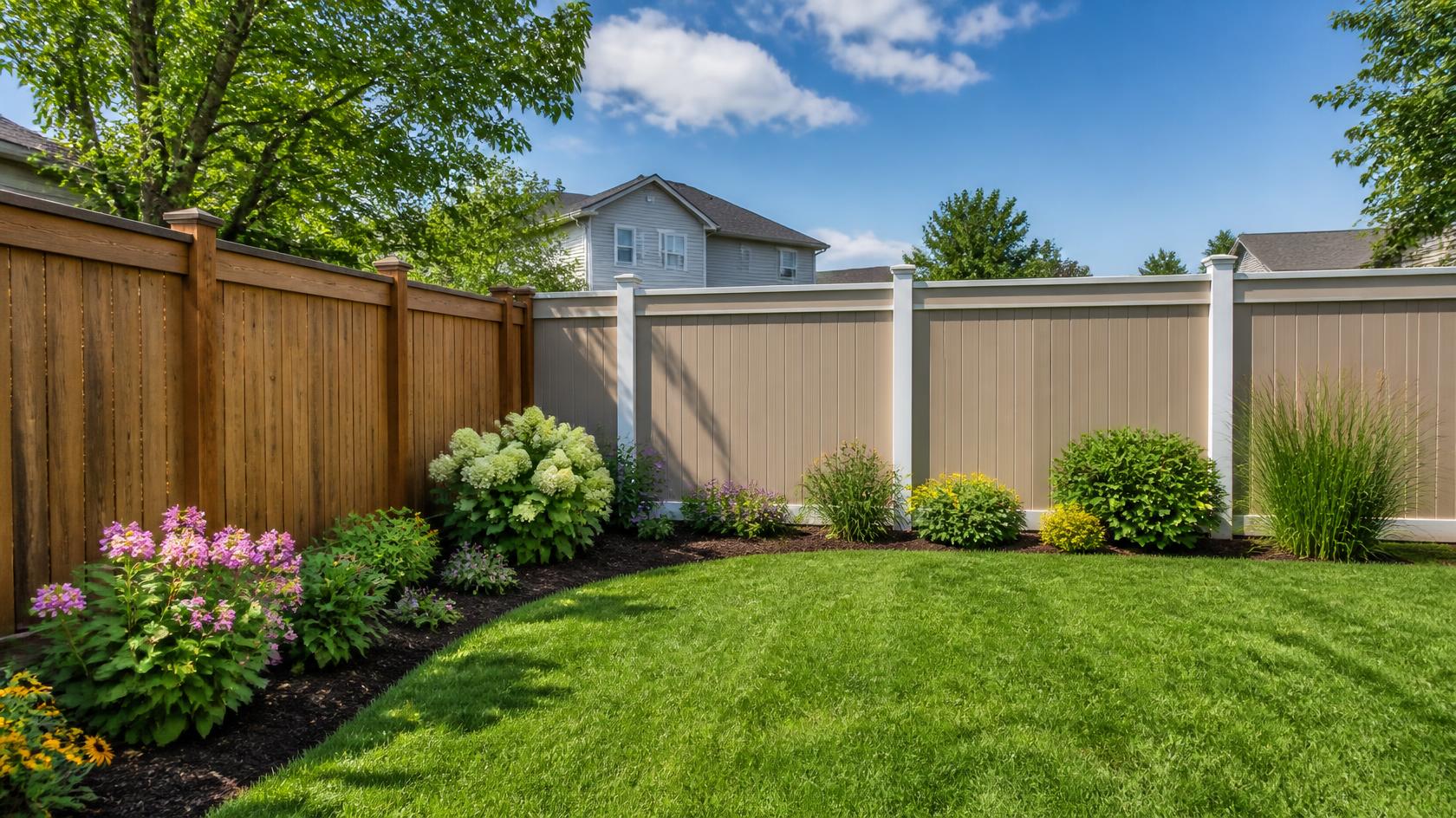
Dixon homeowners planning a privacy fence should compare more than appearance. Wood offers a natural look and flexible design, while vinyl provides consistent screening with less routine surface maintenance. The best option depends on privacy needs, pets, yard size, slopes, gate access, maintenance preferences, and how exposed the property is to Midwest weather.
Start With the Privacy Problem You Want to Solve
Before choosing a material, identify where privacy is actually needed.
Common areas include:
Patios
Decks
Side yards
Shared property lines
Neighboring windows
Pet areas
Outdoor seating spaces
Some properties need full backyard privacy, while others only need screening along one side.
Targeted privacy can help homeowners avoid enclosing more of the yard than necessary.
Wood Privacy Fence Options
Wood remains a popular option because it provides strong screening with a natural residential appearance.
Common styles include:
Solid Vertical Wood
Closely spaced vertical boards create straightforward privacy.
This style can work well along property lines, patios, and backyards where blocking outside views is the main goal.
Board-on-Board Wood
Board-on-board fencing uses overlapping boards.
The overlap helps reduce sightlines that can develop as wood naturally expands and contracts with changing moisture and temperature.
It is useful where homeowners want more consistent screening.
Shadowbox Wood
Shadowbox fencing alternates boards on opposite sides of the rails.
It provides partial privacy while allowing more airflow than a fully solid fence.
This can work well for homeowners who want separation without making the yard feel completely closed.
Horizontal Wood
Horizontal fencing can create a clean, modern appearance.
It works especially well near patios and outdoor living areas, though strong framing is important.
What to Expect From Wood Maintenance
Wood offers flexibility, but it also requires more routine care than many manufactured materials.
Homeowners should periodically check for:
Loose boards
Splinters
Cracks
Rot
Worn finishes
Weak rails
Gate problems
Depending on the material and finish, staining or sealing may also be part of long-term maintenance.
Homeowners who prefer a natural appearance may consider this upkeep worthwhile.
Vinyl Privacy Fencing
Vinyl can be a strong choice for homeowners who want solid screening with less routine surface maintenance.
It does not require regular:
Painting
Staining
Sealing
Full-privacy vinyl provides consistent coverage and a clean appearance around backyards, patios, pet areas, and side yards.
Full-Privacy vs Semi-Private Vinyl
Full-privacy vinyl blocks most direct views through the fence.
Semi-private vinyl allows more:
Airflow
Light
Visual openness
Semi-private styles may be useful along parts of the property where complete screening is unnecessary.
A Dixon backyard could use full privacy near the patio and semi-private fencing farther away.
Which Material Is Lower Maintenance?
Vinyl generally requires less routine surface maintenance than wood.
Typical vinyl care includes:
Cleaning
Gate adjustments
Checking posts
Inspecting rails
Monitoring hardware
Wood may require more regular inspection and refinishing.
The better choice depends partly on how much maintenance homeowners want to manage over the years.
Privacy Fencing for Dogs
Pet needs can influence material choice.
Solid wood and vinyl can both reduce views of:
Neighboring dogs
Pedestrians
Wildlife
Vehicles
That can be helpful for dogs that react strongly to outside activity.
Homeowners should also consider:
Fence height
Ground gaps
Digging behavior
Gate security
Jumping ability
A tall privacy fence will not solve containment problems if a dog can dig underneath or push through an unreliable gate.
Gate Planning Matters
Privacy fence installation should include gate planning from the beginning.
Consider whether the yard needs:
A walk gate
A mower gate
Double-gate access
A separate equipment entrance
Measure larger equipment before finalizing the opening.
Wide gates need stronger posts, dependable hardware, and proper support to remain aligned.
Plan Fence Height Carefully
Privacy fences are generally taller than decorative fencing, but taller is not always automatically better.
Consider:
Neighboring sightlines
Yard size
Pet behavior
Wind exposure
Patio location
A smaller yard can feel more enclosed when tall solid fencing is used everywhere.
Selective privacy may provide a better balance.
Applicable local requirements should also be reviewed before installation.
Sloped Yards Need Extra Attention
Changes in grade can affect privacy and ground clearance.
Depending on the fence system, sections may be:
Stepped
Installed to follow the grade more closely
Slopes matter especially for pet owners because uneven terrain can create openings beneath the fence.
The layout should account for these areas before installation begins.
Drainage Can Affect Any Privacy Fence
Wood and vinyl respond differently to moisture, but both rely on stable posts.
Check the proposed fence line for:
Standing water
Erosion
Downspout runoff
Soft soil
Low areas
Poor drainage can contribute to post movement, ground gaps, and gate misalignment.
Addressing these conditions before installation can help protect the fence over time.
Think About Wind Exposure
Solid privacy fencing catches more wind than open fencing.
This applies to both:
Solid wood
Full-privacy vinyl
Long straight runs and exposed areas need stable posts and secure connections.
If complete privacy is not necessary everywhere, semi-private or more open sections may reduce wind resistance.
Landscaping Can Help Soften the Fence
Privacy fencing does not need to stand alone visually.
Homeowners can use landscaping such as:
Shrubs
Ornamental grasses
Garden beds
Small trees
to soften long fence runs.
Leave enough space between plants and the fence for airflow, maintenance, and inspections.
Mixed Materials Can Be Practical
One property does not always need the same fence everywhere.
A mixed layout might use:
Vinyl privacy near a patio
Wood along a shared boundary
Chain link around a larger pet area
Aluminum near landscaping
This can balance privacy, maintenance, appearance, and open views.
Consider Long-Term Appearance
Wood and vinyl age differently.
Wood
Can develop natural weathering and may require refinishing to maintain its preferred appearance.
Vinyl
Generally maintains a more consistent manufactured look with routine cleaning.
Neither is automatically better.
Homeowners should choose the appearance and maintenance level that fit their preferences.
What to Review Before Installation
Before approving a privacy fence project, make sure you have considered:
Material
Style
Height
Fence length
Gate locations
Equipment access
Pet needs
Slopes
Drainage
Existing fence removal
Landscaping
Long-term maintenance
A well-planned layout can prevent changes after installation begins.
Request a Free Privacy Fence Estimate
Arrow Fence helps Dixon homeowners plan privacy fencing for backyards, patios, pets, side yards, and residential property lines.
Whether you are considering wood, vinyl, lower-maintenance fencing, replacement, repairs, or new gates, Arrow Fence can help you compare practical options for your property.
Contact Arrow Fence at arrowfencerockford.com to request a free estimate for your privacy fence project.
